
The S&P 500, short for the Standard & Poor’s 500, is far more than just a list of companies. It is arguably the most widely recognized and respected stock market index in the world, serving as a critical benchmark for the overall health of the U.S. economy and the broader global financial market. For investors, economists, and financial analysts alike, the S&P 500 acts as a powerful barometer, offering a real-time snapshot of the performance of large-cap U.S. equities and, by extension, corporate America itself. Understanding what the S&P 500 represents, how it functions, and why it holds such significance is fundamental for anyone looking to navigate the complexities of personal finance and investing. This comprehensive guide will demystify the S&P 500, exploring its composition, its economic importance, and the various ways individuals can gain exposure to its enduring growth.
Understanding the S&P 500: America’s Economic Barometer
At its core, the S&P 500 is a stock market index that represents 500 of the largest publicly traded companies in the United States. While the number 500 suggests a simple count, the index is carefully curated to reflect a broad cross-section of industries, ensuring it provides a comprehensive gauge of the U.S. equity market. Unlike other indices that might focus on specific sectors or company sizes, the S&P 500 aims for diversity and stability, selecting companies that are leaders within their respective fields and have a significant impact on the American economy.
A Premier Indicator of Market Health
For decades, the S&P 500 has been synonymous with the performance of the U.S. stock market. Its movements are closely watched by market participants because they are believed to reflect investor confidence, corporate earnings trends, and overall economic sentiment. When the S&P 500 rises, it often signals optimism about the future growth prospects of U.S. companies and the economy at large. Conversely, a decline can indicate concerns about economic slowdowns, geopolitical events, or other factors that might negatively impact corporate profitability. It’s not just an indicator for investors; policymakers, business leaders, and consumers often look to the S&P 500 for cues on the direction of the national economy. Its broad reach across various sectors—from technology and finance to healthcare and industrials—makes it an exceptionally reliable bellwether, far more so than an index focused on a single industry.
Beyond the Top 500: A Curated Selection
While often referred to as a list of the “500 largest U.S. companies,” this is a slight oversimplification. The selection process for the S&P 500 is rigorous and managed by a committee at S&P Dow Jones Indices. Companies are not merely included based on market capitalization alone, although that is a primary criterion. Other key factors include a company’s liquidity, profitability, sector representation, and public float (the number of shares available for trading). For instance, a company must have positive reported earnings in the most recent quarter and over the previous four quarters combined. This meticulous vetting ensures that the index comprises stable, financially sound companies that are truly representative of America’s corporate prowess. The committee also considers factors such as a company’s U.S. domicile and its listing on a major U.S. exchange like the NYSE or Nasdaq. This isn’t a static list; companies are added and removed regularly to maintain the index’s relevance and reflective quality.
The Methodology Behind the Index: More Than Just the “Top 500”
The S&P 500 isn’t just a simple average of 500 stock prices. It’s a market-capitalization-weighted index, a crucial detail that significantly impacts how it behaves and what it truly represents. Understanding this weighting methodology is key to appreciating the index’s dynamics.
Market-Capitalization Weighting Explained
In a market-capitalization-weighted index, companies with larger market capitalizations (stock price multiplied by the number of outstanding shares) have a greater influence on the index’s overall value and movements. This means that a 1% price change in a colossal company like Apple or Microsoft will have a much more significant impact on the S&P 500’s daily performance than a 1% change in a smaller constituent company. This methodology inherently gives more prominence to the most valuable companies, reflecting the actual proportion of their value within the broader market. The argument for this approach is that it provides a more accurate representation of the market’s aggregate wealth and the performance of the companies that hold the most economic weight. While it can lead to heavier concentration in a few dominant companies during periods of strong performance by market leaders, it also ensures that the index truly reflects the collective value of its components.
Diversification Across Sectors and Industries
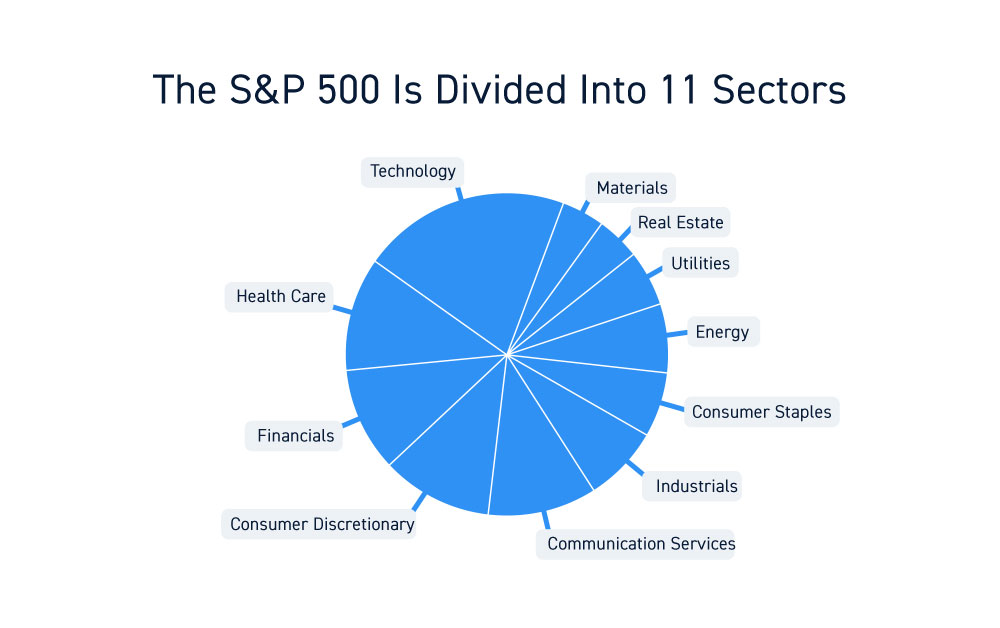
Despite its market-cap weighting, the S&P 500 committee strives for broad sector representation. The index is organized into 11 Global Industry Classification Standard (GICS) sectors: Communication Services, Consumer Discretionary, Consumer Staples, Energy, Financials, Health Care, Industrials, Information Technology, Materials, Real Estate, and Utilities. This sector diversification ensures that the index is not overly reliant on the performance of a single industry. For example, even if the technology sector experiences a downturn, strong performance in healthcare or consumer staples can help mitigate the overall impact on the index. This intentional diversification helps to make the S&P 500 a more stable and reliable benchmark for the overall market, reducing volatility that might occur if it were concentrated in just a few high-growth but potentially riskier sectors. This balance is a cornerstone of its utility as a broad market indicator.
Why the S&P 500 Matters to Investors and the Economy
The omnipresence of the S&P 500 in financial news and investment discussions is not accidental. Its significance extends across various facets of the financial world, impacting individual investors, professional fund managers, and even government policy.
A Benchmark for Investment Performance

For countless investors and financial professionals, the S&P 500 serves as the primary benchmark against which investment performance is measured. If a mutual fund manager claims to have outperformed the market, they are almost certainly referring to outperforming the S&P 500. This is because the index is widely considered the truest representation of the broader U.S. equity market’s returns. For individual investors, comparing their portfolio’s returns to the S&P 500 helps them gauge whether their investments are keeping pace with, or exceeding, the general market trend. Underperforming the S&P 500 over extended periods might suggest that an investment strategy needs re-evaluation or that simply investing in an S&P 500 index fund could be a more efficient approach. This benchmark function is critical for evaluating active management strategies versus passive, low-cost index investing.
Reflecting Economic Health and Corporate Profits
Beyond its role as an investment benchmark, the S&P 500 is a powerful indicator of the economic health of the United States. Since it comprises companies that are leaders in their respective industries, their collective performance often mirrors the broader economic cycles. Strong corporate earnings, robust consumer spending, and healthy economic growth are typically reflected in a rising S&P 500. Conversely, a prolonged decline in the index can signal a looming recession or a period of economic contraction. These 500 companies are often major employers, significant contributors to GDP, and innovators that drive economic progress. Their financial results and future outlooks are therefore closely intertwined with the overall prosperity of the nation. It’s a leading indicator, often reacting to anticipated economic shifts before they fully materialize in other economic data points.
Strategies for Investing in the S&P 500
For many investors, the S&P 500 isn’t just something to observe; it’s a target for investment. Gaining exposure to the performance of the S&P 500 has become one of the most popular and often recommended investment strategies, especially for long-term wealth building.
Passive Investing Through Index Funds and ETFs
The most common and accessible way for individual investors to invest in the S&P 500 is through index funds or Exchange Traded Funds (ETFs) that track the index. These investment vehicles hold a basket of stocks that mirrors the composition and weighting of the S&P 500.
- S&P 500 Index Mutual Funds: These funds are managed by financial institutions and pool money from multiple investors to buy and hold all 500 stocks in the correct proportions. They are typically bought and sold at the end of the trading day based on their Net Asset Value (NAV).
- S&P 500 ETFs: Similar to index mutual funds, ETFs also aim to track the S&P 500 but trade like individual stocks on an exchange throughout the day. ETFs are often favored for their lower expense ratios, intraday liquidity, and tax efficiency.
Investing in these funds offers several key advantages: instant diversification across 500 companies, typically lower expense ratios compared to actively managed funds, and historical returns that have consistently outperformed many actively managed portfolios over the long run. This passive approach aligns with the philosophy of “buy the market” rather than trying to pick individual winning stocks.
Advantages of S&P 500 Investing
Investing in the S&P 500, particularly through low-cost index funds or ETFs, offers compelling benefits for a broad range of investors:
- Diversification: With exposure to 500 large-cap U.S. companies across diverse sectors, an S&P 500 fund inherently provides broad diversification, reducing the idiosyncratic risk associated with individual stock picking. You’re not putting all your eggs in one basket.
- Simplicity and Low Cost: For those new to investing or those who prefer a hands-off approach, S&P 500 index funds are incredibly simple. There’s no need for extensive research into individual companies. Furthermore, the expense ratios for these passive funds are often very low, meaning more of your money goes towards growth rather than fees.
- Historical Performance: Over the long term, the S&P 500 has demonstrated impressive average annual returns, often cited between 8-12% (though past performance is not indicative of future results). While there are always downturns and corrections, the index has historically recovered and reached new highs over extended periods, reflecting the resilience and innovation of U.S. corporations.
- Liquidity and Transparency: S&P 500 ETFs are highly liquid, meaning they can be easily bought and sold. The holdings are also transparent, allowing investors to see exactly which companies they are invested in.
Beyond the Numbers: The S&P 500’s Role in a Diversified Portfolio
While investing solely in the S&P 500 offers substantial benefits, understanding its place within a broader, diversified portfolio is crucial for optimizing long-term financial success. The S&P 500 is a powerful component, but it’s rarely the only component.
Balancing with Other Asset Classes
For truly robust diversification, investors typically combine S&P 500 exposure with other asset classes. This might include:
- International Stocks: While the S&P 500 offers some indirect international exposure through the global operations of its constituent companies, directly investing in international stock markets (e.g., through an international equity index fund) can further diversify geographically and by economic cycle.
- Small and Mid-Cap Stocks: The S&P 500 focuses on large-cap companies. Adding exposure to smaller and mid-sized companies can potentially offer higher growth opportunities, albeit with increased volatility.
- Bonds: Bonds are often considered a counterbalance to stocks, providing stability and income, especially during periods of stock market volatility. A well-diversified portfolio often includes a strategic allocation to bonds based on an investor’s age, risk tolerance, and financial goals.
- Real Estate or Commodities: For some, adding exposure to real estate (e.g., via REITs) or commodities can provide additional diversification and inflation hedging.
The optimal mix depends entirely on an individual’s financial situation, investment horizon, and comfort with risk. The S&P 500 provides an excellent foundation for the equity portion of a portfolio, but it’s part of a larger ecosystem of investment opportunities designed to spread risk and capture various market returns.

Long-Term Perspective and Rebalancing
Investing in the S&P 500 is fundamentally a long-term strategy. Market fluctuations are inevitable, and attempting to time the market based on daily S&P 500 movements is often counterproductive. A disciplined approach involves consistent contributions (dollar-cost averaging) and periodic rebalancing of one’s portfolio to maintain the desired asset allocation. If the S&P 500 portion of your portfolio grows significantly and exceeds your target allocation, you might sell some to reallocate to underperforming assets, bringing your portfolio back into balance. Conversely, if it underperforms, you might buy more. This systematic approach helps investors stay aligned with their financial goals and manage risk effectively over many years, allowing the powerful compounding effect of the S&P 500’s long-term growth to work its magic.
In conclusion, the S&P 500 is more than just a ticker symbol; it’s a dynamic representation of America’s corporate strength and economic vitality. For investors, it offers a diversified, low-cost pathway to participate in the growth of the U.S. stock market. By understanding its composition, its economic role, and how to effectively integrate it into a comprehensive investment strategy, individuals can leverage the S&P 500 as a cornerstone of their journey towards financial independence and wealth creation. Its enduring legacy as a benchmark and an investment vehicle continues to shape the landscape of modern finance, making it an indispensable tool in any investor’s arsenal.
aViewFromTheCave is a participant in the Amazon Services LLC Associates Program, an affiliate advertising program designed to provide a means for sites to earn advertising fees by advertising and linking to Amazon.com. Amazon, the Amazon logo, AmazonSupply, and the AmazonSupply logo are trademarks of Amazon.com, Inc. or its affiliates. As an Amazon Associate we earn affiliate commissions from qualifying purchases.