
In the vast and often complex world of finance, certain terms emerge as pillars of understanding, guiding both seasoned investors and curious newcomers. Among these, the S&P 500 Index stands as one of the most recognized and influential benchmarks of the U.S. stock market. Far more than just a number, it represents a dynamic snapshot of America’s corporate giants, offering profound insights into the nation’s economic health and the performance of its leading industries. For anyone looking to understand the mechanics of investing, gauge market sentiment, or build a robust financial portfolio, comprehending the S&P 500 is not merely beneficial—it’s essential. This article will demystify the S&P 500, exploring its composition, significance, and how it serves as a critical tool in the financial toolkit of investors worldwide.

Understanding the Foundation: What Exactly is an Index?
Before delving specifically into the S&P 500, it’s crucial to grasp the fundamental concept of a stock market index. At its core, a stock market index is a hypothetical portfolio of securities representing a particular market or a segment of it. Its purpose is to track the performance of these chosen securities, providing a convenient way to measure changes in market value over time. Instead of having to analyze hundreds or thousands of individual stocks, an index offers a simplified, aggregated view of market trends.
Beyond a Single Stock: The Power of Diversification
The primary value of an index lies in its ability to offer diversification. Investing in a single company carries significant risk; if that company falters, your entire investment could be jeopardized. An index, by comprising multiple companies, inherently spreads that risk. When you invest in an index, or a fund tracking an index, you gain exposure to a broad basket of stocks. This diversification helps smooth out volatility and can lead to more consistent, albeit market-driven, returns over the long term. For instance, if one company within the index performs poorly, the strong performance of others can offset that decline, maintaining overall stability.
Market Barometer: Gauging Economic Health
Beyond diversification, market indices serve as vital economic barometers. They reflect prevailing investor sentiment, corporate profitability, and the broader economic landscape. A rising index generally indicates economic growth and optimism, as companies are expected to perform well. Conversely, a falling index can signal economic contraction, uncertainty, or pessimism. Governments, economists, and businesses closely watch these indices as they offer real-time indicators of market confidence and economic trajectory, influencing policy decisions and business strategies alike.
The S&P 500: A Deeper Dive
The S&P 500, short for the Standard & Poor’s 500, is arguably the most widely recognized and frequently cited equity index globally. Managed by S&P Dow Jones Indices, it comprises 500 of the largest publicly traded companies in the United States, selected to be representative of the U.S. economy. Its broad reach and stringent selection criteria make it an unparalleled benchmark for the overall health of the American stock market.
Who Are the “500”? Selection Criteria
The companies included in the S&P 500 are not arbitrarily chosen. S&P Dow Jones Indices employs a committee that applies rigorous criteria for inclusion, ensuring the index accurately reflects large-cap U.S. equities. Key criteria include:
- Market Capitalization: Companies must have an unadjusted market capitalization of at least $14.5 billion (this threshold can change).
- Liquidity: There must be sufficient liquidity in the company’s shares to ensure efficient trading.
- Public Float: A significant portion of the company’s shares must be available for public trading (at least 10% of its common stock).
- U.S. Company: The company must be a U.S. firm, though it can have significant international operations.
- Profitability: Companies must have positive reported earnings in the most recent quarter, and the sum of the most recent four consecutive quarters’ GAAP earnings must be positive.
- Sector Representation: The committee also considers sector balance to ensure the index is representative of the overall U.S. economy, avoiding over-concentration in any single industry.
These criteria ensure that the S&P 500 includes established, financially sound, and influential companies, providing a robust representation of the large-cap segment of the U.S. equity market.
Market-Cap Weighting Explained
A crucial aspect of the S&P 500’s construction is its market-capitalization weighting. This means that companies with larger market caps (total value of all outstanding shares) have a greater influence on the index’s performance. For example, a 1% change in the stock price of a company like Apple or Microsoft, due to their immense market capitalization, will have a much larger impact on the S&P 500’s overall value than a 1% change in a smaller company within the index. This weighting methodology ensures that the index accurately reflects the actual economic footprint and investor perception of its constituent companies. It inherently gives more prominence to the companies that contribute most to the total value of the market.
Key Sectors Represented
The S&P 500 encompasses a diverse array of sectors, mirroring the multifaceted nature of the U.S. economy. While the exact weighting shifts over time due to market dynamics, prominent sectors typically include:
- Information Technology: Often the largest sector, housing giants like Apple, Microsoft, and NVIDIA.
- Financials: Major banks, insurance companies, and investment firms.
- Healthcare: Pharmaceutical companies, biotech firms, and healthcare service providers.
- Consumer Discretionary: Companies providing non-essential goods and services, such as Amazon and Tesla.
- Communication Services: Telecommunication companies, media, and entertainment firms like Alphabet (Google) and Meta (Facebook).
- Industrials: Manufacturing, aerospace, and transportation companies.
- Energy: Oil, gas, and renewable energy companies.
This broad sectoral representation contributes to the index’s ability to act as a comprehensive benchmark for the entire U.S. stock market.
Why the S&P 500 Matters to Investors
For individual and institutional investors alike, the S&P 500 is more than just a collection of stocks; it’s a foundational element of sound financial strategy and a frequent subject of financial tools and analysis.
A Benchmark for Performance
One of the S&P 500’s most significant roles is serving as a primary benchmark. Professional money managers frequently measure their fund’s performance against the S&P 500. If a fund manager claims to be generating “alpha” (returns above the market), their returns are often compared to what the S&P 500 achieved over the same period. For individual investors, it provides a realistic expectation for long-term stock market returns and a simple way to gauge how their own investments are faring relative to the broad market.
Accessing Broad Market Exposure
Investing in the S&P 500 offers a straightforward way to gain diversified exposure to the large-cap U.S. equity market. Instead of picking individual stocks, which requires extensive research and carries inherent company-specific risk, an investment tracking the S&P 500 allows you to own a fractional share of all 500 companies. This passive investing strategy aligns with the philosophy that consistently beating the market is challenging, and simply matching its performance over the long term can lead to substantial wealth creation.
Investing in the S&P 500: ETFs and Mutual Funds
While you cannot directly “buy” the S&P 500 index itself, investors can easily gain exposure through various financial instruments. The most common methods are:
- Exchange-Traded Funds (ETFs): These are investment funds traded on stock exchanges, much like individual stocks. S&P 500 ETFs (e.g., SPY, IVV, VOO) are designed to track the performance of the index as closely as possible, holding shares in the same companies in similar proportions. They offer low expense ratios, liquidity, and diversification.
- Index Mutual Funds: These funds also aim to replicate the S&P 500’s performance by investing in its constituent stocks. They are typically bought directly from a fund company and are often popular choices for retirement accounts like 401(k)s and IRAs due to their simplicity and broad market exposure.
- Derivatives: More sophisticated investors might use options or futures contracts tied to the S&P 500 for hedging or speculative purposes, though these carry higher risk.
These tools make it accessible for virtually any investor to participate in the growth of America’s leading companies.
Historical Performance and Long-Term Perspective
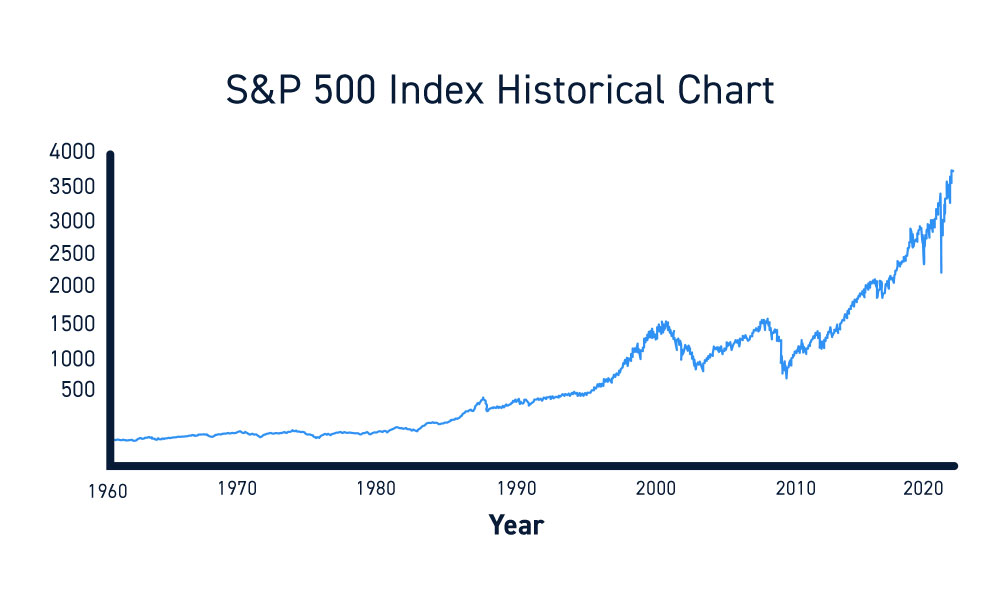
The S&P 500 has a remarkable track record of growth over the long term, cementing its reputation as a cornerstone of wealth accumulation. While past performance is never a guarantee of future results, its historical trajectory provides valuable lessons for investors.
Resilience Through Economic Cycles
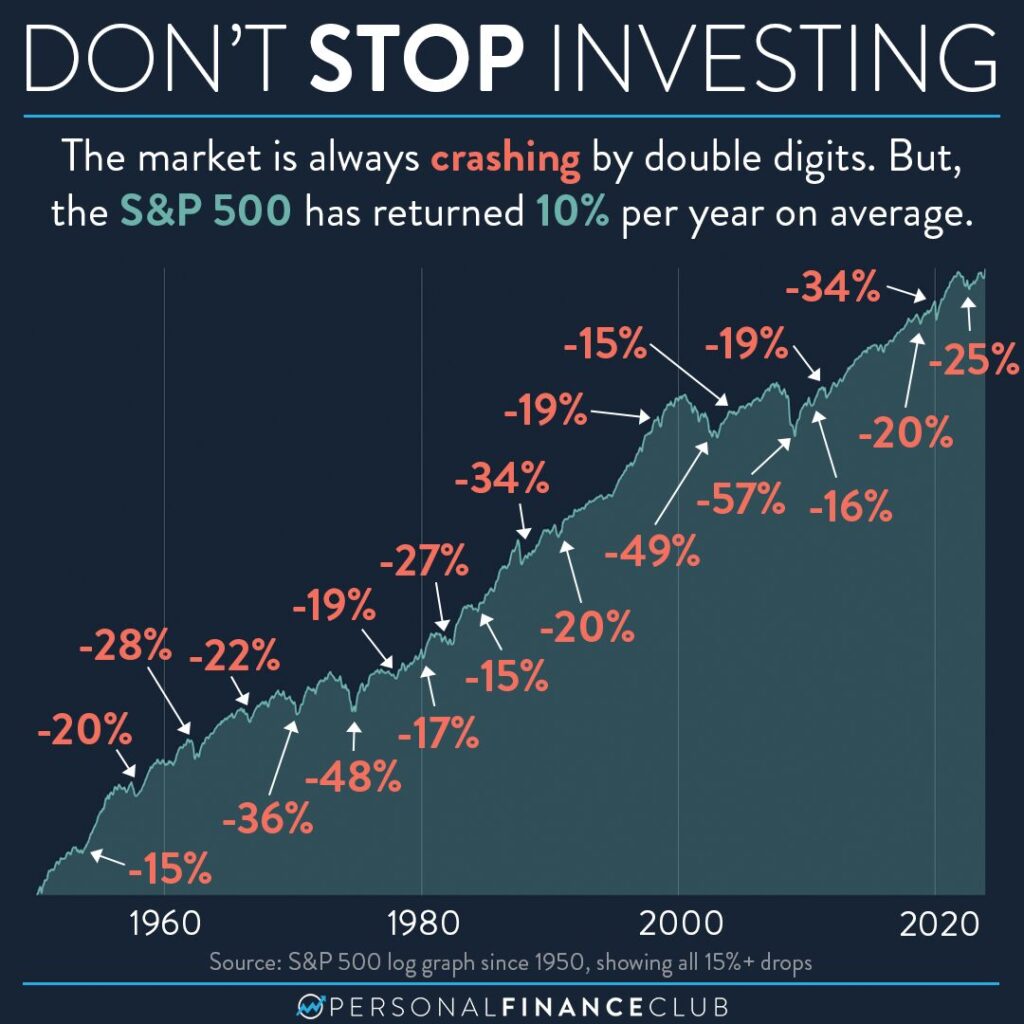
Since its inception in 1957 (with historical data back to 1928), the S&P 500 has weathered numerous economic storms—recessions, market crashes, geopolitical events, and technological disruptions. Despite these periods of volatility and downturns, the index has consistently recovered and reached new highs over extended periods. This resilience underscores the innovative capacity and adaptive nature of the U.S. corporate sector. It highlights the importance of a long-term perspective in investing, advising against panic selling during market corrections.
The Power of Compounding
The long-term average annual return of the S&P 500, including dividends, has historically been around 10-12% per year. While this figure fluctuates, consistent returns over decades demonstrate the incredible power of compounding. Reinvesting dividends and letting returns generate further returns can lead to exponential growth in an investment portfolio. This consistent growth, despite short-term fluctuations, makes the S&P 500 a powerful engine for long-term financial planning and retirement savings.
Important Considerations and Potential Risks
While investing in the S&P 500 is widely considered a prudent strategy, it’s essential for investors to be aware of its inherent characteristics and potential risks.
Not Without Volatility
Even though the S&P 500 offers diversification, it is still an equity index and is subject to market volatility. Its value can rise and fall significantly in the short term due to economic news, geopolitical events, company earnings reports, and shifts in investor sentiment. Investors must be prepared for these fluctuations and avoid making impulsive decisions based on short-term market movements. A long-term horizon is key to riding out these inevitable ups and downs.
Geographic and Sector Concentration
While diversified across 500 companies, the S&P 500 is exclusively concentrated in U.S. equities. This means it doesn’t provide direct exposure to international markets, which can be an important component of a truly globally diversified portfolio. Furthermore, at various times, the index can become heavily weighted towards certain sectors, such as technology, making it susceptible to downturns in those specific industries. Savvy investors might consider complementing an S&P 500 investment with international funds or funds focused on other asset classes (like bonds) to achieve broader diversification.
The Role of Active vs. Passive Management
Investing in the S&P 500 is a prime example of passive investing—the strategy of mimicking a market index rather than trying to outperform it. This contrasts with active management, where fund managers select individual securities with the aim of generating higher returns than a benchmark. Historically, a significant majority of actively managed funds have struggled to consistently beat the S&P 500 after accounting for fees. This has led many financial advisors to recommend low-cost S&P 500 index funds or ETFs as a core component of a diversified portfolio, especially for long-term goals. Understanding this distinction is crucial for constructing an effective investment strategy tailored to individual risk tolerance and financial goals.
In conclusion, the S&P 500 Index is far more than just a list of companies; it’s a meticulously curated representation of America’s economic engine. Its comprehensive nature, robust selection criteria, and historical resilience make it an indispensable tool for understanding market dynamics and a powerful vehicle for long-term wealth creation. For any investor navigating the financial landscape, a clear understanding of “what is the S&P 500 index” is a foundational step towards informed decision-making and achieving financial well-being.
aViewFromTheCave is a participant in the Amazon Services LLC Associates Program, an affiliate advertising program designed to provide a means for sites to earn advertising fees by advertising and linking to Amazon.com. Amazon, the Amazon logo, AmazonSupply, and the AmazonSupply logo are trademarks of Amazon.com, Inc. or its affiliates. As an Amazon Associate we earn affiliate commissions from qualifying purchases.