
In the world of personal finance and savvy travel management, every dollar spent is an investment in an experience. For frequent flyers and budget-conscious travelers alike, the Southwest Airlines ecosystem presents a unique financial puzzle: the unassigned seating model. Unlike traditional carriers that monetize specific seat assignments (charging more for exit rows or the front of the cabin), Southwest utilizes a boarding priority system. At the heart of this system is “EarlyBird Check-In.”
To the uninitiated, EarlyBird Check-In might look like a simple convenience fee. However, from a financial perspective, it is a strategic micro-transaction designed to mitigate the risks of the “open seating” lottery. Understanding the mechanics, the cost-benefit ratio, and the methods to offset this expense is essential for anyone looking to optimize their travel budget.
Understanding the Financial Mechanics of Southwest EarlyBird Check-In
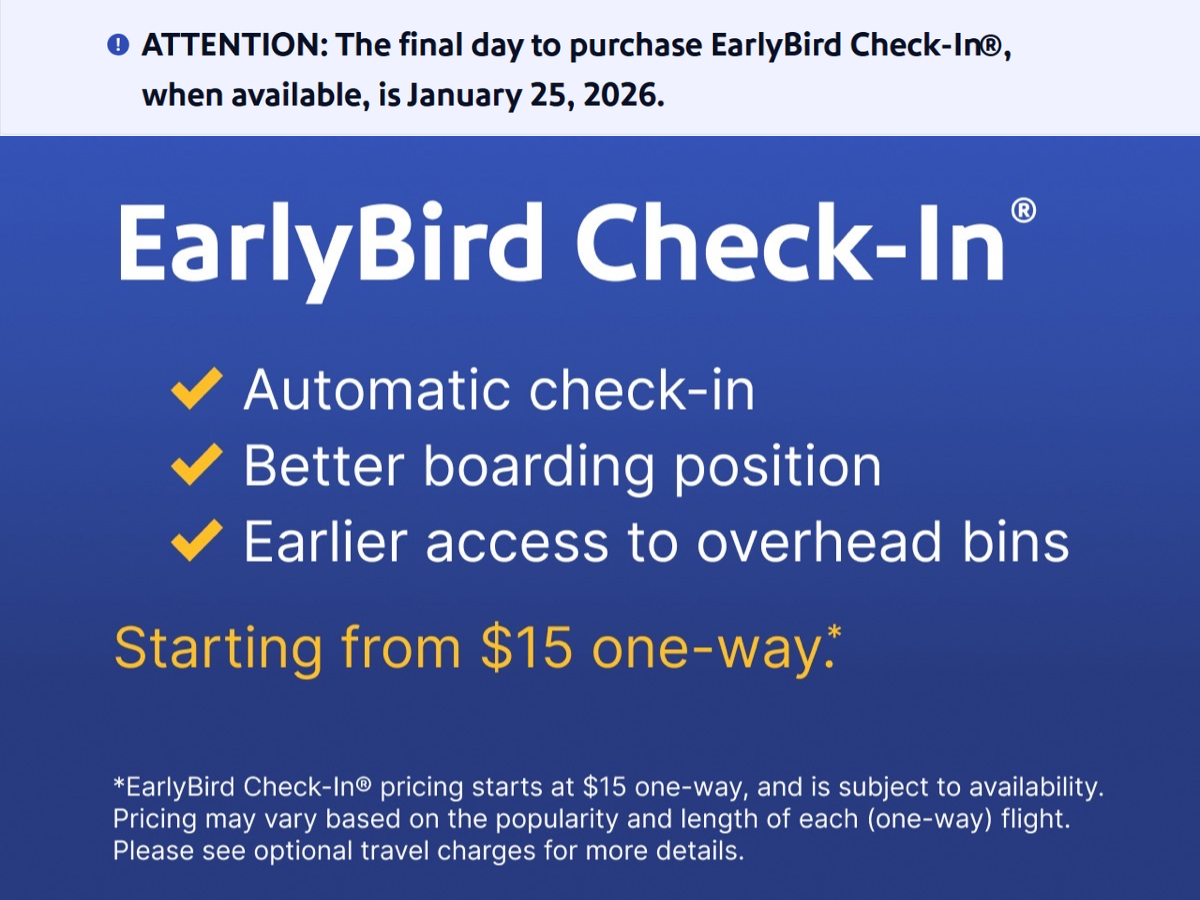
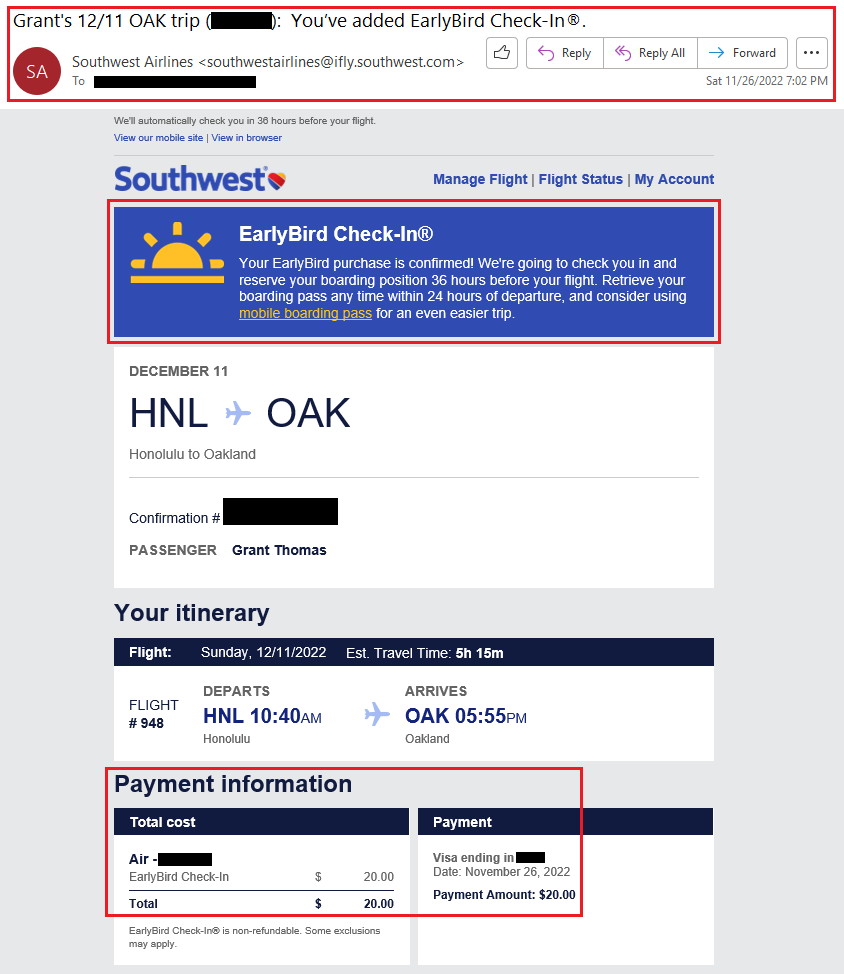
EarlyBird Check-In is an optional value-added service offered by Southwest Airlines that automatically checks a passenger into their flight 36 hours before departure. This is 12 hours earlier than the general public, who must wait for the 24-hour mark to manually check in via the app or website.
The Cost Structure and Dynamic Pricing Model
From a personal finance standpoint, the first thing to note is that EarlyBird is not a fixed cost. Southwest employs a dynamic pricing model where the fee typically ranges from $15 to $25 per one-way flight, depending on the length of the route and the demand for that specific flight.
When calculating the total cost of a round-trip journey, a traveler must account for an additional $30 to $50 on top of the base fare. Because this fee is non-refundable—even if you cancel the flight—it represents a “sunk cost” that must be factored into your initial budget. Unlike the airfare itself, which can often be converted into “Wanna Get Away” funds for future use, the EarlyBird fee is generally lost if the traveler initiates the change.
How EarlyBird Differs from Upgraded Boarding
It is vital to distinguish EarlyBird from “Upgraded Boarding.” While EarlyBird places you in the automated queue 36 hours out, it does not guarantee an “A” boarding group. It simply places you behind Business Select passengers and those with elite A-List status.
In contrast, Upgraded Boarding is a significantly more expensive financial move—often $30 to $80 per segment—available only at the gate or 24 hours before departure. Upgraded Boarding secures a position between A1 and A15. For the budget-conscious traveler, EarlyBird represents a “mid-tier” investment: it’s cheaper than a last-minute upgrade but offers more security than the standard 24-hour manual check-in.
The Cost-Benefit Analysis: Is EarlyBird Check-In Worth the Investment?
In the niche of personal finance, we often discuss the “value of time” and “risk mitigation.” Applying these principles to Southwest’s boarding process helps determine if the $15–$25 spend is a sound financial decision.
Quantifying the Value of Choice and Convenience
The primary “dividend” of an EarlyBird investment is choice. Because Southwest does not assign seats, your boarding position determines whether you get a window, an aisle, or are relegated to the dreaded middle seat in the back of the plane.
If you are a business traveler needing to work on a laptop, an aisle seat is a productivity tool. If you are a nervous flyer, a seat toward the front can minimize the duration of the boarding and deplaning process. When you divide the $20 fee by the duration of a four-hour flight, you are essentially paying $5 per hour for a significantly improved environment. For many, this is a high-yield investment in personal comfort and mental energy.
Analyzing the Risk of “The Middle Seat”
Without EarlyBird, a traveler must be poised to click “Check-In” the exact second the 24-hour window opens. If you are in a meeting, driving, or asleep during that window, you may end up in the “C” boarding group.
In a financial risk assessment, the “C” group represents the worst-case scenario: no overhead bin space (forcing you to gate-check bags and lose time at baggage claim) and a guaranteed middle seat. If your time is worth $50 an hour and you lose 30 minutes waiting at a baggage carousel because you couldn’t secure overhead space, the EarlyBird fee has technically paid for itself in time saved.
Strategic Financial Integration: Using Credit Cards to Offset Costs
One of the most effective ways to manage the cost of EarlyBird Check-In is through strategic use of financial tools, specifically credit cards. Many travelers fail to realize that the out-of-pocket cost of this service can often be reduced to zero.
Leveraging Co-Branded Southwest Rapid Rewards Cards
Chase offers several Southwest-branded credit cards that come with built-in offsets for boarding fees. For example:
- The Southwest Rapid Rewards Plus and Premier Cards: While these don’t offer free EarlyBird, they provide anniversary points that can be “spent” on these fees if you view your points as a cash equivalent.
- The Southwest Rapid Rewards Performance Business Credit Card: This card offers four “Upgraded Boardings” per year. While this is different from EarlyBird, it allows a traveler to skip the EarlyBird fee entirely on four key flights, knowing they can grab a premium A1-A15 spot for free via a statement credit.
Utilizing General Travel Credits and Reimbursements
Beyond branded cards, premium financial products like the Chase Sapphire Reserve or the American Express Platinum Card offer annual travel credits or incidental fee reimbursements.
If you have a $300 annual travel credit, the EarlyBird fee is automatically wiped out by your credit card issuer. By treating EarlyBird as a “reimbursable expense” through your credit card’s benefits package, you preserve your liquid cash while still enjoying the perks of early boarding. This is a classic example of “travel hacking”—using the rules of financial products to upgrade your lifestyle without increasing your personal debt.
Maximizing ROI: When to Buy and When to Pass
A disciplined approach to money management involves knowing when an expense is unnecessary. Not every Southwest flight requires EarlyBird Check-In to be a success.
Factoring in Route Distance and Aircraft Type
The Return on Investment (ROI) for EarlyBird fluctuates based on the flight’s duration.
- Short Hauls (e.g., Las Vegas to Los Angeles): On a 45-minute flight, the middle seat is a minor inconvenience. Investing $25 for a 45-minute preference is a low-yield move.
- Long Hauls (e.g., Baltimore to Honolulu): On a multi-hour trek across the ocean, a comfortable seat is paramount. Here, the $25 investment yields hours of comfort, making it a high-value purchase.
Furthermore, check the aircraft. If you are flying on a Boeing 737-800 or MAX 8, there are more seats available, slightly shifting the boarding math compared to the smaller 700-series planes.
Group Travel vs. Solo Travel Economics
For a family of four, EarlyBird Check-In becomes a $100–$200 round-trip proposition. This is a significant hit to a vacation budget. Financially, it might make more sense for only one or two members of the family to purchase EarlyBird. While Southwest discourages “saving seats,” having one family member board early to secure a row can be a strategic (if controversial) way to manage group dynamics without quadrupling the cost.
Long-Term Travel Wealth: EarlyBird vs. A-List Status
In the broader context of business finance and loyalty marketing, Southwest uses EarlyBird as a bridge for those who haven’t yet reached “A-List” status.
The Opportunity Cost of Paid Add-ons
If you fly Southwest frequently enough to consider buying EarlyBird every time, you should perform an audit of your annual spend. If you fly 25 segments a year and pay for EarlyBird on each, you are spending roughly $625 annually on boarding priority alone.
At that spending level, it may be more financially sound to consolidate your travel to reach A-List status (which requires 20 one-way qualifying flights or 35,000 tier-qualifying points). A-List members receive “Priority Boarding” automatically, meaning the $625 you would have spent on EarlyBird becomes pure savings.
Building Toward Permanent Boarding Benefits
The goal of any savvy financial planner is to move from “paying for access” to “earning access.” By understanding that EarlyBird is a revenue generator for the airline, you can flip the script. Use EarlyBird strategically in the short term to ensure travel comfort, but track those expenses. If the aggregate cost of these fees exceeds the cost of a higher-tier credit card or the effort required to hit status, it’s time to pivot your financial strategy.
Conclusion
Southwest EarlyBird Check-In is more than just a convenience; it is a financial tool for managing the uncertainty of open-seating travel. By viewing the $15–$25 fee through the lens of ROI, risk mitigation, and credit card optimization, travelers can make informed decisions that protect both their comfort and their wallets.
Whether you are using a statement credit to wipe out the fee or deciding to skip it on a short-haul flight to save for a nicer dinner at your destination, the key is intentionality. In the world of money and travel, the most successful individuals are those who know exactly what their “comfort” costs—and how to get someone else (like a credit card issuer) to pay for it.
aViewFromTheCave is a participant in the Amazon Services LLC Associates Program, an affiliate advertising program designed to provide a means for sites to earn advertising fees by advertising and linking to Amazon.com. Amazon, the Amazon logo, AmazonSupply, and the AmazonSupply logo are trademarks of Amazon.com, Inc. or its affiliates. As an Amazon Associate we earn affiliate commissions from qualifying purchases.