
While the term “solubility product” might sound like it belongs solely within the confines of a chemistry textbook, its fundamental principles have surprising relevance across various fields, from understanding material properties in technology to optimizing processes in industry. At its core, the solubility product is a concept that quantifies the limit of how much of a sparingly soluble ionic compound can dissolve in a solvent, typically water, at a given temperature. It’s a crucial metric for predicting and controlling chemical reactions and material behaviors.
This article will delve into the meaning of solubility product, exploring its scientific basis, how it’s calculated, and, importantly, how this seemingly abstract chemical concept intersects with the dynamic worlds of technology, branding, and finance. We’ll uncover how an understanding of solubility can subtly influence product development, marketing strategies, and even financial investments.
Understanding the Fundamentals of Solubility
Before we can truly grasp the significance of the solubility product, we need to establish a foundational understanding of solubility itself. Solubility refers to the ability of a solute to dissolve in a solvent, forming a homogeneous solution. This dissolution process involves breaking the bonds holding the solute particles together and forming new interactions between the solute and solvent molecules.
Ionic Compounds and Dissociation
Many substances that exhibit solubility product phenomena are ionic compounds. These compounds are formed by electrostatic attraction between positively charged ions (cations) and negatively charged ions (anions). When an ionic compound is placed in a polar solvent like water, the polar water molecules can surround and separate the ions, a process known as dissociation. This dissociation leads to the ions becoming dispersed throughout the solvent.
For highly soluble ionic compounds, like sodium chloride (table salt), the dissociation proceeds almost completely, resulting in a high concentration of dissolved ions. However, for sparingly soluble ionic compounds, such as silver chloride (AgCl) or calcium carbonate (CaCO₃), the dissolution process is limited.
Equilibrium in Dissolution
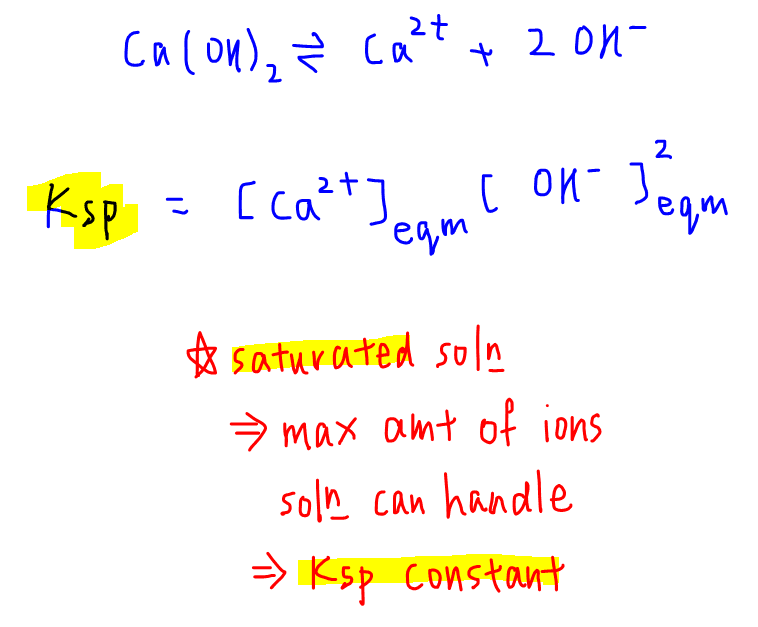
When a sparingly soluble ionic compound is added to water, it begins to dissolve, and its ions disperse. Simultaneously, a reverse process occurs: the dissolved ions can collide and re-form the solid compound, a process called precipitation or crystallization. Eventually, a dynamic equilibrium is reached. At this point, the rate of dissolution is exactly equal to the rate of precipitation. The solution is said to be saturated, meaning it contains the maximum amount of solute that can dissolve at that specific temperature and pressure.
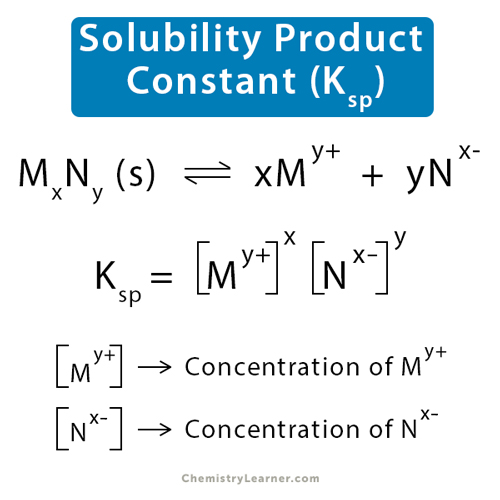
The solubility product (Ksp) is a quantitative measure of this equilibrium. It represents the product of the concentrations of the dissolved ions in a saturated solution, each raised to the power of their stoichiometric coefficient in the balanced dissolution equation.
The Dissolution Equation and Ksp Expression
Consider a generic sparingly soluble ionic compound, MX₂, which dissociates in water according to the following equilibrium:
MX₂(s) ⇌ M²⁺(aq) + 2X⁻(aq)
In this equation:
- MX₂(s) represents the solid ionic compound.
- M²⁺(aq) represents the cation dissolved in water.
- X⁻(aq) represents the anion dissolved in water.
The solubility product expression for MX₂ is then:
Ksp = [M²⁺] [X⁻]²
Here:
- [M²⁺] is the molar concentration of the M²⁺ ions in the saturated solution.
- [X⁻] is the molar concentration of the X⁻ ions in the saturated solution.
Important Note: The solid MX₂ is not included in the Ksp expression because its concentration (or more accurately, its activity) is considered constant under these conditions.
Factors Affecting Solubility Product
The solubility product of a compound is primarily dependent on temperature. For most ionic solids, solubility increases with increasing temperature, meaning Ksp values generally increase as temperature rises. This is because the dissolution process often requires energy (endothermic), and higher temperatures provide that energy. Pressure has a negligible effect on the solubility of solids in liquids.
The presence of common ions also influences the effective solubility. If a solution already contains one of the ions present in the sparingly soluble compound, the equilibrium will shift to the left (Le Chatelier’s principle), reducing the amount of the sparingly soluble compound that can dissolve. This phenomenon is known as the common ion effect.
Calculating and Interpreting Solubility Product Values
The Ksp value provides a direct quantitative measure of a compound’s solubility. A smaller Ksp value indicates lower solubility, meaning fewer ions will be present in a saturated solution. Conversely, a larger Ksp value signifies higher solubility.
Determining Ksp from Solubility Data
Often, experimental data on the molar solubility of a compound (the number of moles of solute that dissolve per liter of solution) is available. This data can be used to calculate the Ksp.
Let’s revisit our example of MX₂. If the molar solubility of MX₂ is ‘s’ moles per liter, then in a saturated solution:
- [M²⁺] = s
- [X⁻] = 2s (due to the 2:1 stoichiometry)
Substituting these into the Ksp expression:
Ksp = (s) (2s)² = s (4s²) = 4s³
Therefore, if you know the molar solubility ‘s’, you can calculate Ksp. Conversely, if you have the Ksp value, you can calculate the molar solubility.
Predicting Precipitation
The Ksp value is incredibly useful for predicting whether a precipitate will form when two solutions containing the constituent ions of a sparingly soluble compound are mixed. This is done by calculating the ion product (Q). The ion product has the same mathematical form as the solubility product expression, but it uses the actual (or initial) concentrations of the ions in the mixed solution, not necessarily those in a saturated solution.
- If Q < Ksp: The solution is unsaturated. More of the sparingly soluble compound can dissolve, and no precipitate will form.
- If Q = Ksp: The solution is saturated, and the system is at equilibrium.
- If Q > Ksp: The solution is supersaturated. The concentration of ions exceeds the equilibrium limit, and precipitation will occur until the ion product equals the Ksp.
Practical Applications of Ksp Calculations
The ability to predict precipitation has widespread practical applications:

- Water Treatment: Understanding the Ksp of minerals like calcium carbonate helps in designing water softening systems to prevent scale formation in pipes and appliances.
- Environmental Science: Ksp values are used to assess the potential for heavy metal ions to precipitate out of solution in contaminated water bodies or industrial wastewater.
- Geology: The formation and weathering of rocks and minerals involve solubility processes, where Ksp plays a role in understanding geological formations and erosion.
Solubility Product in the Realm of Technology and Product Development
While not always explicitly stated, the principles of solubility product are subtly at play in various technological applications, influencing material science, manufacturing, and the performance of devices.
Material Science and Nanotechnology
The controlled formation of precipitates is fundamental to the synthesis of many advanced materials. In nanotechnology, for example, precise control over particle size and morphology is often achieved through precipitation reactions governed by solubility.
- Nanoparticle Synthesis: When synthesizing metal oxide nanoparticles, for instance, the rate of precipitation, dictated by the Ksp of the precursor compounds, influences the size and uniformity of the nanoparticles. This is critical for applications in catalysts, sensors, and drug delivery systems.
- Thin Film Deposition: Techniques like chemical vapor deposition (CVD) or atomic layer deposition (ALD) often involve chemical reactions where the solubility of intermediate species or final product can affect film quality, uniformity, and adhesion.
- Corrosion Resistance: Understanding the solubility of oxide layers or salts that form on metal surfaces is crucial for developing corrosion-resistant alloys and coatings. A low solubility product for the protective layer means it’s less likely to dissolve and expose the underlying metal to corrosive agents.
Display Technologies and Semiconductors
In the fabrication of displays and semiconductor devices, the purity and precise composition of materials are paramount. Solubility can play a role in:
- Etching Processes: Chemical etching, used to selectively remove material during semiconductor manufacturing, relies on solutions that selectively dissolve certain compounds. The solubility of the target material and resist layers is key to achieving precise patterns.
- LED and OLED Materials: The luminescent materials used in LEDs and OLEDs are often complex organic or inorganic compounds. Their synthesis and deposition processes can be influenced by solubility considerations to ensure optimal light emission properties and device longevity.
Battery Technology
The performance and longevity of batteries are heavily reliant on the electrochemical reactions occurring within them. The formation or dissolution of solid components at the electrodes is often governed by solubility.
- Electrolyte Stability: The solubility of electrode materials in the electrolyte can affect battery performance. If electrode materials dissolve excessively, it can lead to capacity fade and reduced cycle life.
- Solid Electrolyte Interphase (SEI): The formation of a stable SEI layer on battery electrodes is crucial for preventing unwanted side reactions. The composition and formation of this layer involve precipitation and dissolution processes, where solubility plays a part.
Branding, Marketing, and the Subtle Influence of Chemical Concepts
While it may seem a stretch, the principles of chemistry, including solubility, can indirectly inform branding and marketing strategies, particularly when dealing with products that have a tangible chemical or material basis.
Product Differentiation and Perceived Quality
Understanding the intrinsic properties of materials, influenced by concepts like solubility, can be leveraged for product differentiation.
- “Natural” vs. “Synthetic”: For products like supplements, cosmetics, or even certain food additives, the perceived “naturalness” or “purity” of ingredients can be a significant marketing angle. If a brand uses a compound known for its low solubility and high stability (implying it won’t easily degrade or react), this can be subtly framed as a sign of quality or efficacy.
- Durability and Longevity: For products where material durability is a key selling point (e.g., coatings, construction materials, certain plastics), highlighting the chemical stability and resistance to dissolution or degradation can build trust and brand loyalty.
“Clean” and “Safe” Formulations
In industries like personal care and food, there’s a growing consumer demand for “clean” and “safe” products.
- Ingredient Transparency: Brands that can explain why they choose certain ingredients based on their chemical properties, including their solubility and how they behave in the body or environment, can build a more informed and trusting customer base. For instance, a sunscreen brand might emphasize the low solubility and photostability of its active ingredients, implying it stays on the skin and is less prone to degradation.
- Allergen Avoidance: For individuals with sensitivities, understanding the solubility of certain compounds can be important. A brand that formulates products to minimize the dissolution of potential allergens in the body might market this as a benefit.
Material Innovation and Sustainability Branding
As technology advances, new materials with novel properties are developed. Brands that are at the forefront of material innovation can use this as a key aspect of their branding.
- Biodegradability and Environmental Impact: The rate at which a material dissolves or breaks down in the environment is directly related to its solubility and reactivity. Brands focusing on sustainability can highlight materials with desirable solubility profiles for reduced environmental persistence.
- Recyclability: The ease with which a material can be recycled can sometimes be linked to its solubility characteristics during reprocessing.
Solubility Product and Financial Considerations
The intersection of solubility product and finance might not be immediately obvious, but consider the economic implications of chemical processes, material costs, and industrial efficiencies.
Cost-Effectiveness in Industrial Processes
The solubility product is a critical factor in optimizing industrial chemical processes, directly impacting profitability.
- Yield Optimization: In chemical manufacturing, controlling precipitation and dissolution is essential for maximizing product yield and minimizing waste. Processes that are inefficient due to uncontrolled precipitation can lead to higher production costs.
- Resource Recovery: Understanding solubility can help in designing processes to recover valuable materials from waste streams. For example, if a valuable metal is present as a sparingly soluble compound, its precipitation (or dissolution) can be manipulated for extraction.
- Process Design and Capital Investment: The design of chemical reactors, separation units, and purification systems often hinges on understanding solubility limits. Inefficient designs due to a lack of consideration for solubility can lead to higher capital expenditure and operating costs.
Investment in Chemical and Material Industries
For investors, an understanding of fundamental chemical principles like solubility can provide insights into the potential success and challenges of companies in the chemical, pharmaceutical, and materials sectors.
- Intellectual Property and Patents: Companies developing new materials or optimizing chemical processes often file patents related to specific solubility characteristics or synthesis methods. Investors might look for companies with strong IP portfolios in areas where solubility is a key differentiator.
- Commodity vs. Specialty Chemicals: The production of commodity chemicals often involves processes where cost optimization and scale are paramount, and solubility plays a role in efficiency. Specialty chemicals, on the other hand, might command higher prices due to unique material properties, which are often rooted in their solubility and reactivity.
- Environmental Regulations and Compliance: Companies operating in industries where precipitation and dissolution are significant concerns (e.g., mining, heavy industry) must comply with environmental regulations regarding the discharge of dissolved substances. Companies that can demonstrate efficient management of these processes through an understanding of solubility are likely to be more financially stable and less prone to regulatory penalties.
Pharmaceutical Development
In the pharmaceutical industry, solubility is a paramount consideration for drug efficacy and delivery.
- Drug Bioavailability: A drug’s ability to dissolve in the body’s fluids (like gastric or intestinal juices) is crucial for its absorption and subsequent therapeutic effect. Poor solubility can lead to low bioavailability, meaning only a fraction of the administered dose is absorbed. Pharmaceutical companies invest heavily in formulation techniques to improve drug solubility.
- Drug Formulation Costs: Developing effective drug formulations, especially for poorly soluble drugs, can be a complex and expensive process, impacting the overall cost of drug development and, consequently, its market price. Investors in the pharmaceutical sector will closely examine a company’s pipeline and their ability to overcome solubility challenges.
Conclusion
The solubility product, a concept born from the study of chemical equilibria, extends its influence far beyond the laboratory bench. From the intricate design of microscopic electronic components to the broad strokes of marketing a product’s durability, and even to the financial viability of industrial processes, understanding the limits of dissolution is surprisingly pervasive. By recognizing these connections, we gain a richer appreciation for the scientific underpinnings of the technologies we use, the brands we trust, and the economic systems that shape our world. The seemingly simple question, “what is solubility product,” unlocks a deeper understanding of how the material world operates and how this knowledge is harnessed for innovation and success across diverse industries.
aViewFromTheCave is a participant in the Amazon Services LLC Associates Program, an affiliate advertising program designed to provide a means for sites to earn advertising fees by advertising and linking to Amazon.com. Amazon, the Amazon logo, AmazonSupply, and the AmazonSupply logo are trademarks of Amazon.com, Inc. or its affiliates. As an Amazon Associate we earn affiliate commissions from qualifying purchases.