
In the world of performance-oriented apparel, the term “softshell” represents one of the most significant leaps in textile engineering and material science. Historically, outdoor enthusiasts and professionals were forced to choose between the insulating warmth of a fleece and the waterproof protection of a hardshell. The softshell jacket emerged as a technological solution to this binary choice, bridging the gap with a sophisticated blend of breathability, stretch, and weather resistance.
To understand what a softshell jacket is, one must look past the aesthetic and into the molecular and mechanical construction of the fabric. It is not merely a garment; it is a high-tech tool designed to manage the microclimate between the human body and the external environment.
The Material Science of Softshell Construction
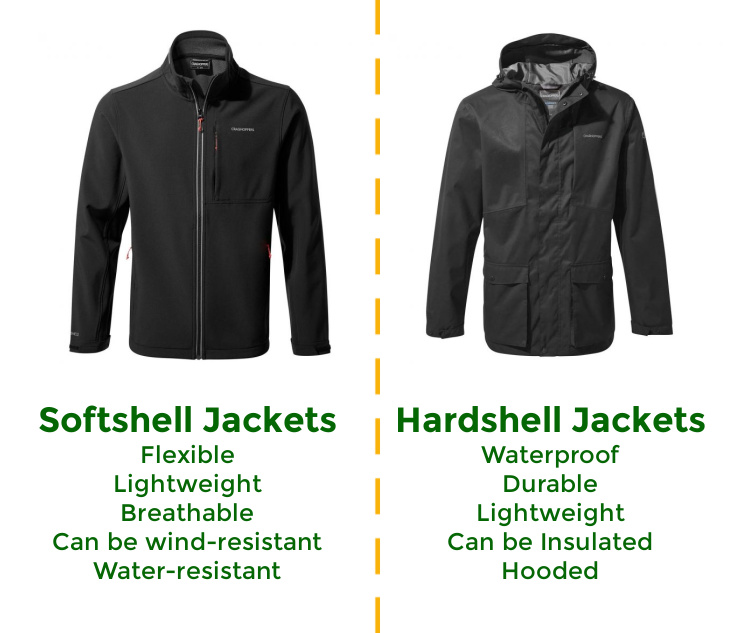
At its core, the technology of a softshell jacket is defined by its construction. Unlike hardshells, which typically rely on a rigid, non-stretch membrane (like traditional Gore-Tex), softshells utilize advanced weaving techniques and synthetic polymers to achieve high levels of durability and flexibility.
The Stretch-Woven Revolution
The primary “tech” in a softshell is the stretch-woven fabric. These materials are engineered by weaving high-tenacity nylon or polyester fibers with elastane (Spandex). This creates a four-way stretch capability that allows for a precision fit without sacrificing range of motion. For technical users—such as ice climbers or tactical operators—this mechanical stretch is a critical spec, as it prevents the “binding” common in rigid fabrics.
The DWR Interface
The first line of defense in softshell technology is the Durable Water Repellent (DWR) coating. This is a chemical treatment applied to the outer fibers that increases the surface tension of the fabric. At a microscopic level, DWR causes water molecules to bead up and roll off rather than saturating the weave. Recent technological shifts in the industry have seen a move from C8 fluorocarbons to more environmentally friendly C6 and PFC-free treatments. While this shift presents a challenge in maintaining oil resistance, it represents the leading edge of sustainable textile chemistry.
Integrated Backing Materials
Most high-performance softshells are “bonded” fabrics. This means the outer face fabric is laminated to an inner lining—usually a microfleece or a brushed polyester. This lamination process is a feat of engineering, requiring adhesives that maintain the fabric’s breathability while ensuring the layers do not delaminate under the mechanical stress of movement and washing.
The Breathability vs. Weatherproofing Matrix
The technical value proposition of a softshell jacket lies in its “Air Permeability.” While a hardshell is designed to be a total barrier, a softshell is designed to be a regulator. In technical terms, this is often measured in CFM (Cubic Feet per Minute) of airflow.
Understanding CFM Ratings
A standard hardshell has a CFM of 0, meaning no air can pass through. A high-performance softshell, however, might range from 0.5 to 10 CFM. This slight air permeability is a deliberate feature. It allows for “active cooling,” where moisture vapor generated by the body during high-exertion tasks is pushed out through the fabric by the internal pressure of the body’s heat. This prevents the “garbage bag effect” often experienced in non-breathable waterproof gear.
Moisture Vapor Transmission Rate (MVTR)
Beyond air permeability, softshells are rated by their MVTR. This metric measures how many grams of water vapor can pass through a square meter of fabric in 24 hours (g/m²/day). Premium softshells often boast MVTR ratings exceeding 20,000, placing them at the top of the hierarchy for high-aerobic activities like ski touring or mountain running. This is achieved through the use of hydrophilic and hydrophobic fibers that actively “wick” moisture away from the skin.
Wind Resistance Hardware
For environments where wind chill is the primary threat, many softshells incorporate a windproof membrane, such as Gore-Tex Infinium or Polartec Windbloc. Unlike their waterproof cousins, these membranes are engineered with larger pores that allow vapor to escape more freely while remaining 100% windproof. This is a specialized piece of hardware within the garment that transforms it into a “windshell,” providing a technical shield against the convection cooling caused by high winds.
Functional Design: The Hardware and Ergonomics

A softshell jacket is more than its fabric; it is a system of integrated components designed for maximum utility. From the zippers to the seam construction, every element is a calculated technical choice.
Articulated Patterning and Mapping
High-end softshells utilize 3D articulated patterning. Instead of cutting flat pieces of fabric, engineers use CAD (Computer-Aided Design) to create patterns that mimic the natural curvature of the human body in motion. This often includes “no-lift” gusseted underarms and articulated elbows.
Furthermore, “body-mapping” technology is frequently employed. This involves using different weights of fabric in different zones. For example, a jacket might feature a windproof membrane on the chest and shoulders (the “strike zones”) and a highly breathable, lightweight stretch-woven fabric under the arms and down the back where heat buildup is greatest.
Technical Closures and Seams
The “hardware” on a softshell often includes Vislon or AquaGuard zippers. These are treated with polyurethane coatings to prevent water ingress. Additionally, many modern softshells move away from traditional sewn seams in favor of “taped” or “welded” seams. Ultrasonic welding uses high-frequency vibrations to melt the fabric edges together, creating a bond that is stronger and flatter than a traditional stitch. This reduces bulk, prevents chafing, and improves the overall aerodynamics of the garment.
Hood and Hem Architecture
The architecture of a softshell hood is typically “helmet-compatible.” This requires a specific volume-adjustment system—usually involving cohesive embedded cord locks—that allows the user to cinch the hood tightly over a bare head or expand it over a climbing or cycling helmet. These small mechanical components are essential for maintaining visibility and protection in technical environments.
The Evolution of Softshell Utility: From Alpine to Urban Tech
While originally developed for the rigors of mountaineering, softshell technology has proliferated into various sectors, including the “Techwear” fashion movement and professional workwear.
Tactical and Professional Specs
In the tactical sector, softshells are engineered with additional “ruggedized” specs. This includes high abrasion resistance (often measured using the Martindale rub test) to withstand friction from plate carriers and backpacks. Many of these jackets also include NIR (Near-Infrared) signature reduction technology, which involves treating the fabric so it does not reflect light in the infrared spectrum, helping the wearer remain less visible to night-vision optics.
The Rise of “Urban Tech”
The crossover into urban environments has been driven by the “clean” aesthetic of softshell fabrics combined with their functional performance. The ability to repel a light rain shower while looking professional enough for a boardroom has made the softshell a staple of the modern corporate and tech wardrobe. Here, the focus shifts slightly from extreme breathability to “lifestyle tech”—features like internal cable routing for headphones, RFID-blocking pockets, and stain-resistant finishes.
The Future of Softshell Tech: Sustainability and Smart Fabrics
As we look toward the next generation of performance apparel, the definition of a softshell jacket continues to expand through innovations in biotechnology and digital integration.
Bio-Based Synthetics and Circularity
The textile industry is moving toward “circular tech.” This involves creating softshell jackets from mono-materials (e.g., 100% polyester including the zippers and threads) to make them fully recyclable at the end of their life cycle. Furthermore, engineers are experimenting with bio-synthetic polymers derived from castor oil or lab-grown collagen, reducing the reliance on petroleum-based plastics.
Smart Textiles and Sensors
The ultimate frontier for softshell technology is the integration of “Smart” features. Research is currently underway into “electro-spinning” fibers that can change their porosity based on electrical impulses or temperature changes. Imagine a softshell that “opens” its weave when your heart rate increases and “closes” to trap heat when you stop moving. While still in the prototyping phase, these phase-change materials and embedded sensors represent the logical conclusion of the softshell’s mission: to be the perfect interface between the body and the elements.
Conclusion: The Essential Layer
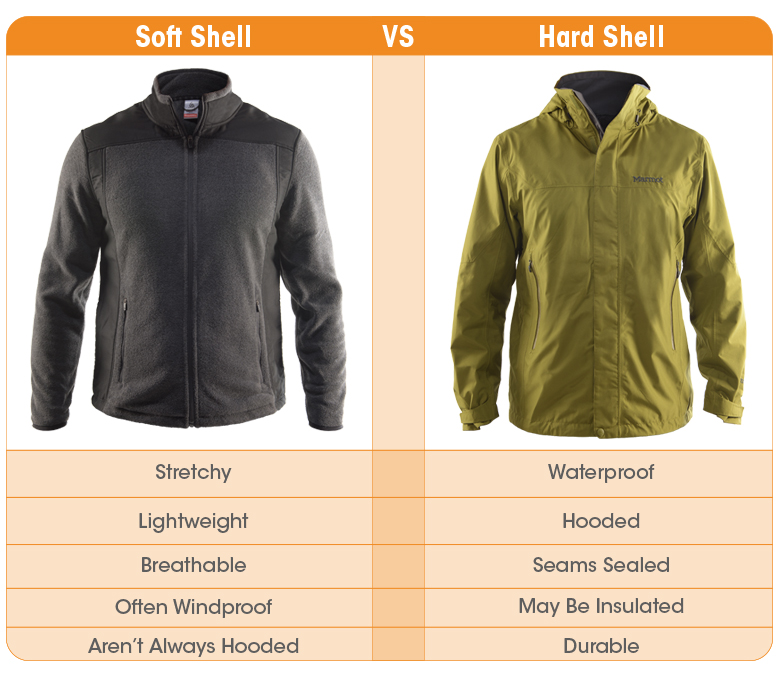
In summary, a softshell jacket is a masterclass in compromise and optimization. It is defined by its ability to balance the conflicting requirements of protection and breathability. By utilizing advanced polymer chemistry, sophisticated weaving techniques, and ergonomic design, the softshell has become the most versatile piece of equipment in the modern technical arsenal. Whether you are scaling a granite face or navigating a damp city morning, the softshell represents the pinnacle of wearable technology—a garment that works as hard as the person wearing it.
aViewFromTheCave is a participant in the Amazon Services LLC Associates Program, an affiliate advertising program designed to provide a means for sites to earn advertising fees by advertising and linking to Amazon.com. Amazon, the Amazon logo, AmazonSupply, and the AmazonSupply logo are trademarks of Amazon.com, Inc. or its affiliates. As an Amazon Associate we earn affiliate commissions from qualifying purchases.