
In the realm of global politics, the intersection of personal belief and public persona is rarely accidental. When analyzing the question of Vladimir Putin’s religion, it is essential to look beyond the theological tenets of the Russian Orthodox Church and examine the phenomenon through the lens of brand strategy. For the Russian President, Eastern Orthodox Christianity is not merely a private spiritual preference; it is a core pillar of a sophisticated personal branding architecture and a fundamental component of Russia’s corporate identity on the world stage.
Understanding the “brand” of Putin’s religion requires an analysis of how spiritual identity can be leveraged to create institutional stability, foster nationalistic fervor, and differentiate a leader from global competitors. This is a study in how a brand can be resurrected from the ashes of a secular history to become the defining characteristic of a modern superpower’s narrative.
The Foundation of a Brand Identity: Orthodoxy as a Cultural Anchor
To understand the strategic utility of Putin’s religious brand, one must first look at the “market” he inherited. Following the collapse of the Soviet Union, Russia faced a profound identity crisis. The state-sponsored atheism of the communist era left a spiritual and ideological vacuum. From a brand management perspective, the Russian state was a legacy organization that had lost its mission statement.
From Soviet Secularism to Orthodox Revival
Putin’s personal brand narrative often highlights a “secret” religious history, which serves as a powerful origin story. He frequently mentions being baptized in secret by his mother during the Soviet era, a detail that functions as a brand “authenticator.” This narrative allows him to bridge the gap between the Soviet past and the Orthodox present, positioning him as a silent guardian of tradition who waited for the right moment to lead a national spiritual revival.
By aligning himself with the Russian Orthodox Church (ROC), Putin effectively “rebranded” the Russian presidency. He moved away from the erratic, Western-leaning image of the Yeltsin years toward a brand defined by “Sobornost”—a sense of spiritual community and collective belonging. This move was not just about faith; it was about reclaiming a historical lineage that predates the 1917 Revolution, thereby giving the Russian brand a thousand-year-old heritage.
The Symbolism of the “Pious Leader”
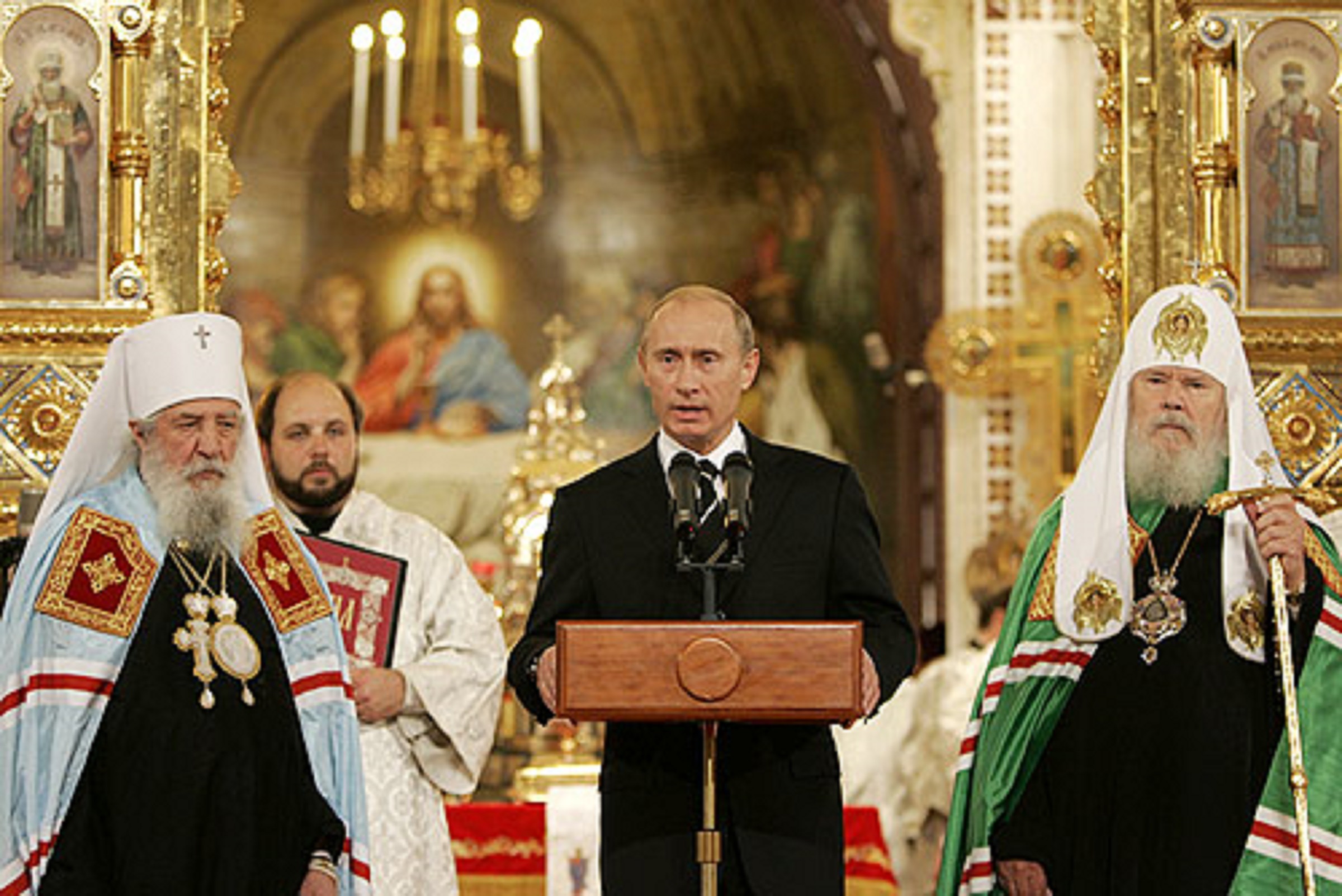
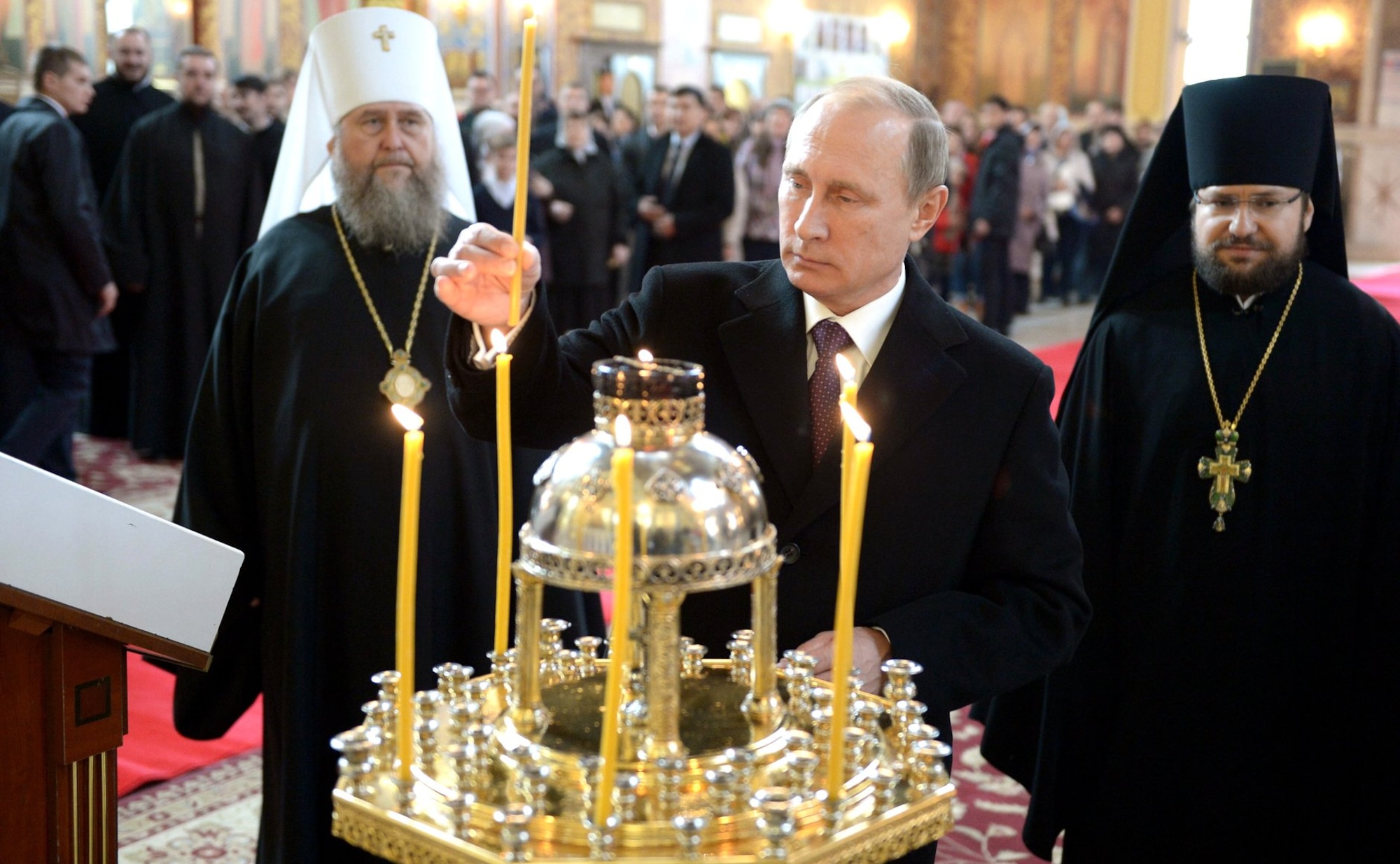
In branding, consistency is key. Putin’s religious appearances are meticulously choreographed brand touchpoints. Whether it is his annual attendance at Christmas and Easter services or his high-profile visits to Mount Athos in Greece, these events are captured with high-production value, emphasizing a leader who is both powerful and humble before God. This dual-image strategy—the “Strongman” and the “Servant of the Church”—creates a multi-dimensional brand that appeals to a wide demographic, from conservative rural populations to urban nationalists seeking a sense of pride.
Strategic Positioning: Aligning Personal Brand with Institutional Power
A successful brand strategy often relies on a “co-branding” partnership. In Putin’s case, the partnership is between the Kremlin and the Moscow Patriarchate. This alignment serves to consolidate power and provide a moral framework for state policy, effectively making the Church the “Chief Marketing Officer” of Russian traditional values.
The Partnership with the Patriarch
The relationship between Vladimir Putin and Patriarch Kirill is a study in institutional synergy. In business terms, this is a strategic alliance where both parties benefit from shared resources and mutual endorsement. The Church gains state protection, funding for the reconstruction of cathedrals, and a seat at the table of political influence. In exchange, the Kremlin receives a theological “seal of approval” for its domestic and foreign policies.
This partnership allows the Putin brand to transcend the limitations of secular politics. When policies are framed as the defense of “holy” values, they become much harder to criticize. The brand moves from the realm of “governance” (which is subject to performance metrics) to the realm of “mission” (which is driven by faith and identity).
Building the “Fortress Russia” Brand
One of the most effective uses of religion in Putin’s brand strategy is the concept of “Fortress Russia.” By positioning the nation as the last bastion of true Christian values in an increasingly secular and liberal West, Putin has created a powerful brand differentiator. In marketing, differentiation is what allows a brand to command loyalty in a crowded field.

By championing “traditional family values” and opposing what the Kremlin describes as the “moral decay” of the West, Putin has carved out a unique market position. He is no longer just the leader of a nation; he is the defender of a civilization. This positioning has allowed him to build a global sub-brand, attracting “customers” (supporters) from conservative circles worldwide who feel alienated by modern cultural shifts.
Tactical Execution: Imagery, Rituals, and Visual Storytelling
In the digital age, a brand is defined by its visuals. Putin’s religious branding is executed through a series of high-impact visual narratives that reinforce his image as a man of faith and action.
The Power of Iconography in the Digital Age
The Russian state media operates like a sophisticated PR agency, ensuring that the imagery of Putin in religious settings is distributed globally. One of the most iconic examples is the image of Putin submerged in icy water to celebrate the Epiphany. This is a masterclass in brand fusion: it combines the “Strongman” archetype (enduring extreme cold) with the “Pious” archetype (participating in a holy ritual). This single image communicates resilience, tradition, and devotion—three core pillars of the Putin brand.
The Resurrection of Sacred Spaces
Brand physical presence is also vital. The massive investment in the reconstruction of the Cathedral of Christ the Saviour and the construction of the Main Cathedral of the Russian Armed Forces are physical manifestations of the brand’s power. The latter, in particular, is a fascinating example of “Military-Religious” branding. By blending religious icons with military history, the state creates a brand identity where faith and national defense are inseparable. This “brand environment” serves to inspire awe and reinforce the idea that the Russian state is divinely sanctioned.
Brand Differentiation: Traditionalism vs. Global Liberalism
In any competitive landscape, a brand must define itself in opposition to something else. Putin’s religion is used as the primary tool to contrast the “Russian Way” with the “Western Way.”
Positioning as the Guardian of Global Conservative Values
By utilizing Orthodox Christianity as a brand marker, Putin has successfully repositioned Russia as a “moral leader” for the global right. This is a strategic pivot that uses religion to bridge ideological gaps. It allows the Russian brand to export influence not through communism, as it once did, but through “traditionalism.” This brand strategy has found resonance in parts of Eastern Europe, the United States, and even Western Europe, where certain segments of the population feel that their own national brands have become too disconnected from their historical roots.
The Risks of Brand Overextension
However, every brand strategy carries risks. The close association between the state and the Church can lead to “brand contagion.” If the state is seen as acting in ways that contradict the moral teachings of the faith, it can damage the credibility of the religious institution. Conversely, if the Church becomes too embroiled in political scandals, it can tarnish the leader’s pious image. For Putin, the challenge is maintaining the perception of authenticity. If the public begins to view his religion as a cynical marketing ploy rather than a sincere conviction, the brand’s value could plummet.
Lessons for Modern Brand Strategy: Consistency and Archetypes
While the context of Putin’s religion is unique to Russian history and politics, the underlying branding principles provide valuable insights for any organizational or personal brand.
Leveraging the “Sage” and “Ruler” Archetypes
According to Jungian archetypes often used in branding, Putin successfully blends the “Ruler” (order, control, leadership) with the “Sage” (wisdom, tradition, spiritual depth). Most leaders stick to one archetype; by successfully merging two, Putin creates a more resilient and compelling brand. The “Ruler” provides the strength, while the “Sage” (channeled through his religious affiliation) provides the moral authority.
Authentic Alignment vs. Perceived Utility
The ultimate success of any brand identity depends on the “Brand-Consumer” relationship. In Russia, the “consumers” of Putin’s brand have largely accepted the religious narrative because it aligns with their own desire for stability and a return to historical greatness. It doesn’t matter if the “internal” reality of Putin’s personal faith is deep or shallow; what matters in branding is the “external” perception and the consistency of the message.
In conclusion, “Putin’s religion” is a sophisticated strategic asset. It is a brand that offers a sense of continuity in a changing world, a moral framework for a geopolitical agenda, and a powerful symbol of national unity. By treating his faith as a core component of his personal and national brand, Putin has managed to transform the Russian presidency into something that feels ancient, inevitable, and divinely sanctioned—a feat that any corporate strategist would recognize as the pinnacle of brand equity.
aViewFromTheCave is a participant in the Amazon Services LLC Associates Program, an affiliate advertising program designed to provide a means for sites to earn advertising fees by advertising and linking to Amazon.com. Amazon, the Amazon logo, AmazonSupply, and the AmazonSupply logo are trademarks of Amazon.com, Inc. or its affiliates. As an Amazon Associate we earn affiliate commissions from qualifying purchases.