
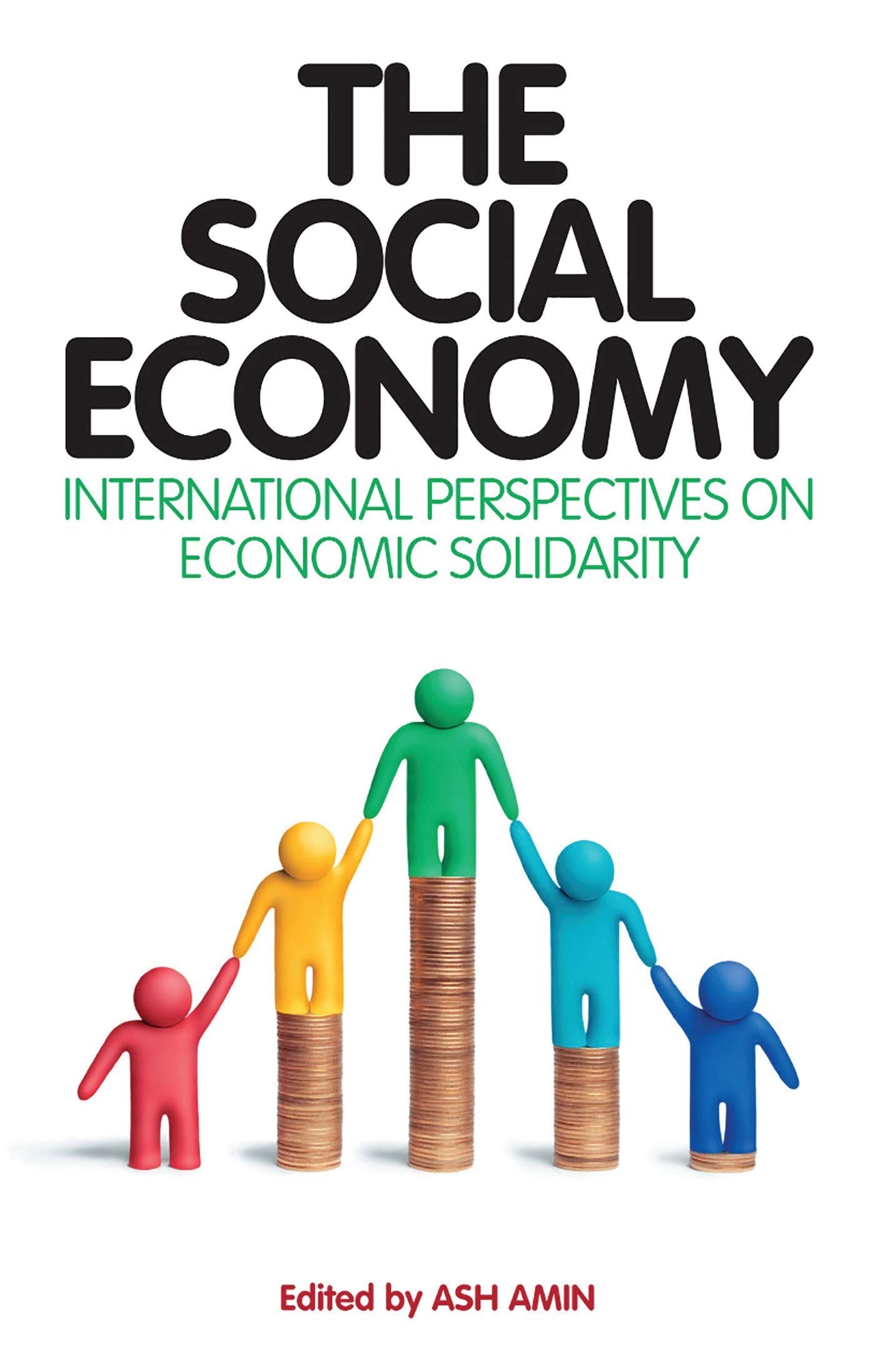
In the traditional landscape of global finance, the primary metric of success has long been the maximization of shareholder value. However, a significant shift is occurring within the “Money” sector—a movement that seeks to reconcile capitalistic efficiency with social equity. This is the realm of the social economy. Often referred to as the “Third Sector,” the social economy bridges the gap between the private sector (profit-driven) and the public sector (state-driven). It represents a multi-trillion-dollar ecosystem where business models are designed to solve societal challenges while maintaining financial sustainability.

Understanding the social economy is no longer just a requirement for non-profit leaders; it is essential for investors, business owners, and financial strategists. As global markets face increasing pressure to address inequality and environmental degradation, the social economy provides a blueprint for a more resilient and inclusive financial future.
1. The Financial Foundations of the Social Economy
To understand the social economy from a financial perspective, one must look at how capital is structured and distributed. Unlike traditional corporations, where profit is the end goal, social economy entities treat profit as a means to an end. The surplus generated is typically reinvested into the organization’s social mission or distributed among members rather than external shareholders.
The Pluralistic Economic Model
The social economy is built on a pluralistic model. This means it acknowledges that value is not just monetary but also social and environmental. In this framework, financial health is measured by the “Triple Bottom Line”: People, Planet, and Profit. By diversifying the definition of value, these organizations create a buffer against market volatility that purely profit-driven firms often lack.
Organizational Legal Structures
The “Money” niche within the social economy is populated by specific legal and financial entities.
- Cooperatives: These are member-owned businesses where financial decisions are made democratically. Whether it is a credit union or an agricultural co-op, the focus is on providing value to members rather than extracting profit for distant investors.
- Mutual Societies: Common in insurance and banking, mutuals are owned by their policyholders or clients. This aligns the incentives of the firm with the financial security of the user.
- Social Enterprises: These are hybrid organizations. They trade in the marketplace like any other business but have a legally binding social mission. They represent the “business finance” side of the social economy, proving that social impact can be a scalable revenue model.
2. Impact Investing: Financing the Social Mission
One of the most dynamic areas of modern finance is the rise of impact investing. This is the fuel that powers the social economy. Impact investing involves placing capital into companies, organizations, and funds with the intention to generate a measurable social or environmental impact alongside a financial return.
The Shift from Philanthropy to Sustainable Finance
Historically, social causes were funded by grants and charity—a one-way flow of capital. The social economy has transformed this into a circular flow. Investors now look for “Social Impact Bonds” (SIBs) and “Green Bonds.” These financial instruments allow private investors to fund social programs. If the program achieves its goals (e.g., reducing recidivism or improving literacy rates), the government pays the investor back with interest. This turns social progress into a bankable asset class.
ESG Criteria and Portfolio Diversification
Environmental, Social, and Governance (ESG) criteria have become the gold standard for modern investing. For the social economy, ESG is more than a checklist; it is the core of the business strategy. Financial advisors are increasingly moving client capital into “Social Economy Funds” because these entities tend to have lower risk profiles over the long term. They are less prone to the scandals, strikes, and regulatory fines that plague traditional firms, making them a cornerstone for stable, long-term personal and corporate portfolios.
The Role of Community Development Financial Institutions (CDFIs)
In the world of business finance, CDFIs are the unsung heroes. These are private financial institutions that provide credit and financial services to underserved populations and markets. By focusing on “under-banked” sectors, they stimulate local economies and create new markets for goods and services, expanding the overall economic pie while ensuring financial inclusion.
3. The Business Case for Social Economy Models
A common misconception in the “Money” niche is that social economy entities are less efficient or less profitable than their traditional counterparts. On the contrary, data suggests that social economy models often exhibit superior financial resilience, especially during economic downturns.
Resilience in Times of Crisis
During the 2008 financial crisis and the 2020 global pandemic, cooperative banks and social enterprises showed a lower failure rate than traditional commercial banks. Because their primary goal is to serve their members and communities rather than satisfy short-term quarterly earnings reports, they can afford to take a long-term view. This financial patience allows them to weather market volatility without the same pressure to liquidate assets or engage in mass layoffs.
Employee Productivity and Cost Reduction
From a corporate finance perspective, the social economy model reduces several “hidden” costs. Organizations with a strong social purpose report higher levels of employee engagement and lower turnover rates. In a modern economy where the “war for talent” is a major operational expense, the ability to attract and retain high-quality staff through a mission-driven culture provides a significant competitive advantage. This translates directly to the bottom line through reduced recruitment and training costs.
Market Differentiation and Brand Equity
While this falls under “Brand” in other contexts, in the “Money” niche, it is about “Goodwill” and intangible assets. Consumers are increasingly willing to pay a premium for products sourced from the social economy. This “Social Premium” allows these businesses to maintain healthy margins even in competitive markets. For a business financier, the loyalty of a social economy customer base is a high-value asset that ensures consistent cash flow.
4. Scaling the Social Economy: Challenges and Financial Innovation
For the social economy to move from a niche sector to a dominant economic force, it must overcome significant hurdles related to scaling and capital access. The financial tools of the past—designed for traditional corporations—are often ill-suited for the unique needs of social enterprises.
Access to Growth Capital
Traditional venture capital (VC) often demands an “exit strategy” (like an IPO or acquisition) within 5–7 years to maximize returns. This timeline is often at odds with the long-term goals of the social economy. Consequently, new financial instruments like “Revenue-Based Financing” and “Evergreen Funds” are emerging. These allow social enterprises to pay back investors based on a percentage of their revenue, preserving the organization’s mission while providing investors with a steady income stream.
Measuring Social Return on Investment (SROI)
One of the greatest challenges in social finance is quantification. How do you put a dollar value on a cleaner river or a more educated workforce? The development of SROI frameworks is a major trend in financial tools. By assigning a monetary value to social outcomes, analysts can compare the “total return” of a social economy investment against a traditional one. This data-driven approach is essential for attracting large-scale institutional capital from pension funds and insurance companies.
Regulatory and Policy Frameworks
The future of the social economy depends heavily on fiscal policy. Tax incentives for social enterprises, preferential procurement policies for cooperatives, and standardized reporting requirements for impact investments are all necessary components. As more countries adopt “Social Economy Action Plans,” we are seeing a shift in how tax dollars are leveraged to support business models that reduce the burden on public welfare systems.
5. The Individual and the Social Economy: Personal Finance Strategies
The social economy is not just for institutional investors; it offers powerful opportunities for personal finance and side hustles. As the “Money” niche evolves, individuals have more power than ever to align their bank accounts with their values.
Ethical Banking and Credit Unions
The simplest way for an individual to participate in the social economy is through their choice of bank. By moving money from a traditional commercial bank to a credit union or a B-Corp certified bank, individuals ensure that their deposits are being used to fund community development and social projects rather than fossil fuel expansion or predatory lending.
Micro-Investing and Crowdfunding
Platforms that allow for micro-lending or equity crowdfunding have democratized access to the social economy. For as little as $25, an individual can provide a loan to a small business owner in a developing nation or take a small equity stake in a local social enterprise. This creates a diversified “Impact Portfolio” that can offer competitive returns while fostering global economic stability.

The Rise of the “Profit-with-Purpose” Side Hustle
For those looking for online income or side hustles, the social economy offers a unique path. Rather than traditional dropshipping or affiliate marketing, many entrepreneurs are launching “One-for-One” models or community-based service platforms. These ventures often see faster growth due to the inherent shareability and trust associated with social missions, proving that in the modern economy, doing good is a viable strategy for doing well.
In conclusion, the social economy represents the maturation of the financial world. It is a movement that recognizes that money is a tool, not an end in itself. By integrating social missions into the core of business finance, the social economy is creating a more stable, equitable, and profitable future for the global marketplace. Whether through impact investing, cooperative ownership, or conscious personal banking, the financial world is finally learning to account for what truly matters.
aViewFromTheCave is a participant in the Amazon Services LLC Associates Program, an affiliate advertising program designed to provide a means for sites to earn advertising fees by advertising and linking to Amazon.com. Amazon, the Amazon logo, AmazonSupply, and the AmazonSupply logo are trademarks of Amazon.com, Inc. or its affiliates. As an Amazon Associate we earn affiliate commissions from qualifying purchases.