
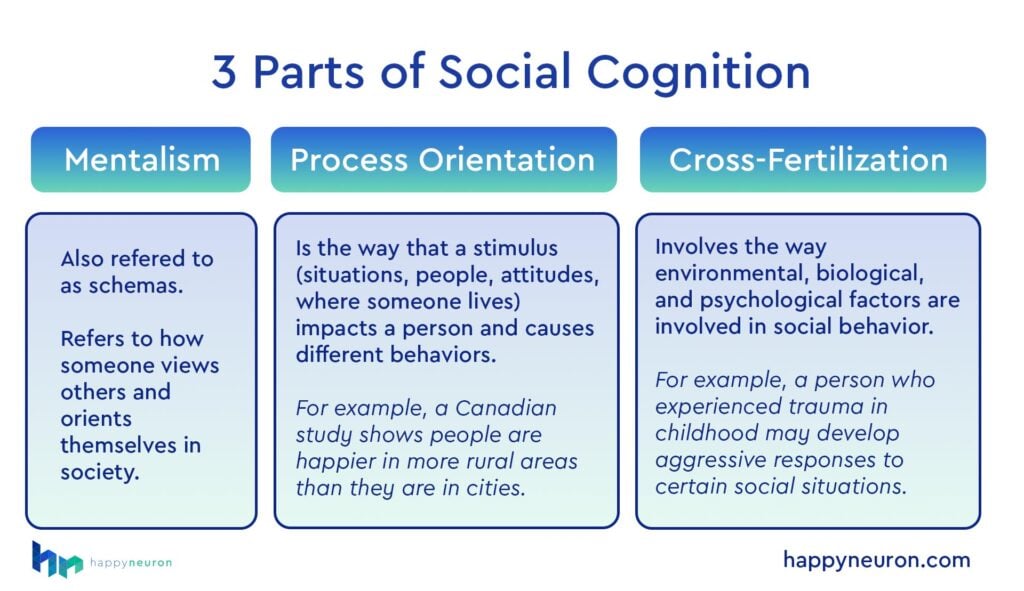
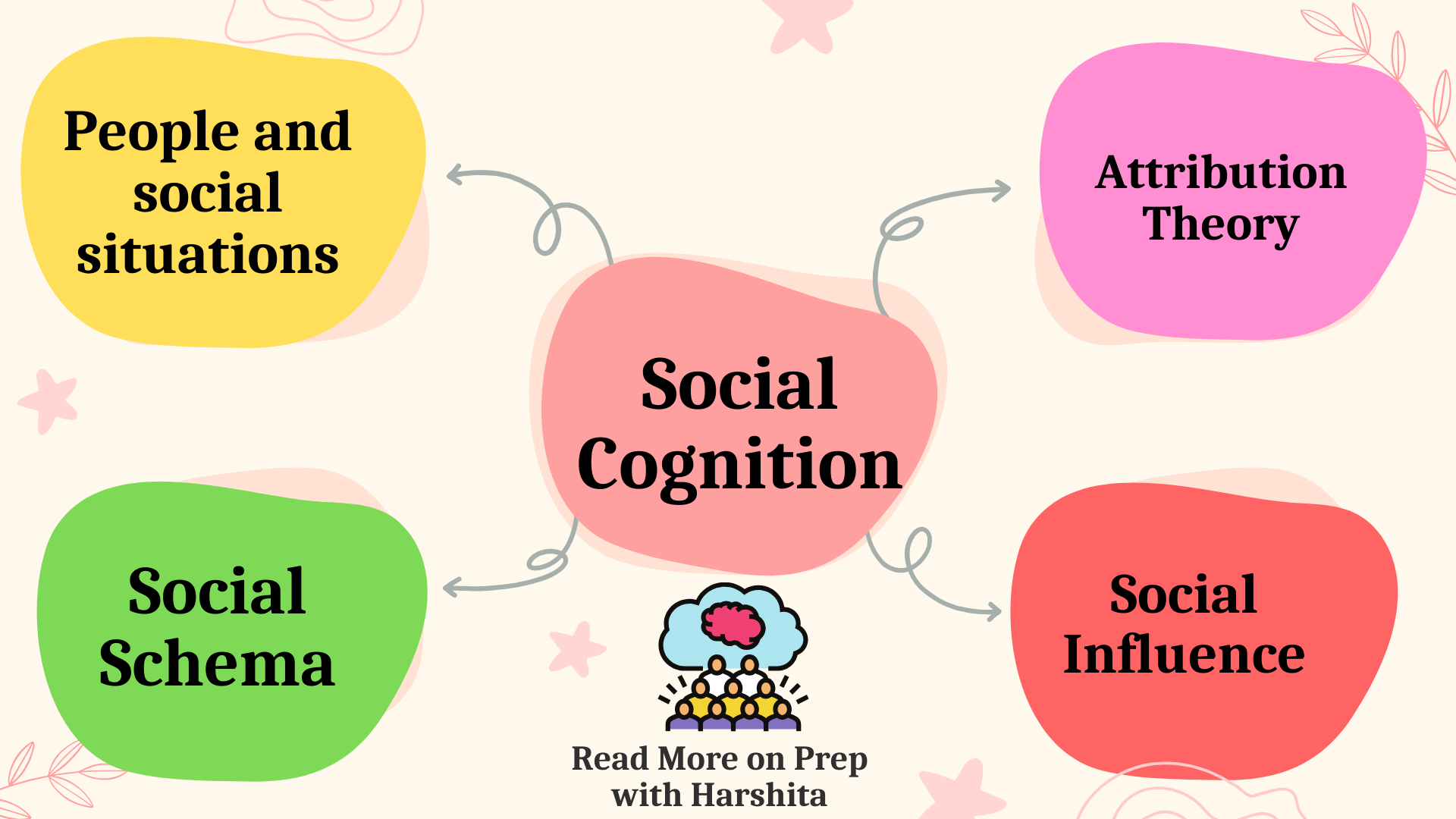
In the traditional landscape of psychology, social cognition refers to the mental processes that allow individuals to perceive, interpret, and respond to the actions and intentions of others. It is the framework through which humans navigate the complexities of social life, involving everything from empathy and facial recognition to the nuanced understanding of sarcasm or social norms. However, as we move deeper into the era of the Fourth Industrial Revolution, this concept has migrated from the laboratory of the psychologist to the laboratory of the software engineer.

In the realm of technology, social cognition is now defined as the ability of an artificial intelligence (AI) system to model, understand, and predict human social behavior. This shift marks a transition from “cold AI”—systems that excel at logic, math, and data processing—to “warm AI,” or systems capable of high-level human-computer interaction (HCI). Understanding social cognition is no longer just about understanding the human brain; it is about building the next generation of empathetic, socially intelligent machines.
The Intersection of Human Social Cognition and Artificial Intelligence
The integration of social cognition into tech represents one of the most significant leaps in computational power. Early computing was transactional; we gave a command, and the machine executed a function. Today, the goal is interactional.
Defining Theory of Mind in Large Language Models
At the heart of social cognition in tech is the concept of “Theory of Mind” (ToM). In humans, ToM is the ability to attribute mental states—beliefs, intents, desires, and knowledge—to oneself and others, and to understand that others have beliefs that are different from our own.
For modern Large Language Models (LLMs) like GPT-4 or Claude, achieving a version of ToM is the “holy grail.” Tech researchers are currently testing how well these models can navigate social scenarios. For instance, can an AI realize that a user is frustrated even if the user doesn’t explicitly state it? By analyzing syntax, response speed, and word choice, modern algorithms are beginning to mirror human social cognition by “inferring” the internal state of the user.
The Shift from Data Processing to Social Context
Social cognition in tech requires moving beyond mere data points. Traditional AI could recognize a human face in a photo. A socially cognitive AI, however, can distinguish between a smile of genuine joy and a polite, forced smile used in a professional setting. This requires “Contextual Awareness,” where the machine doesn’t just see the data, but understands the social environment in which that data exists. This is fundamental for applications ranging from autonomous vehicles—which must predict whether a pedestrian intends to cross the street—to customer service bots that need to de-escalate an angry caller.
Technical Pillars: How Machines Decode Human Intent
To replicate social cognition, technology relies on several overlapping fields of computer science. These pillars allow a machine to ingest raw sensory data and output a socially appropriate response.
Affective Computing and Sentiment Analysis
Affective computing is the study and development of systems that can recognize, interpret, and simulate human affects (emotions). This is the technical backbone of social cognition. Through Sentiment Analysis, algorithms scan text or voice data for emotional markers.
Advanced systems now use “Multimodal Sentiment Analysis,” combining text, vocal tonality, and even thermal imaging to gauge a person’s stress levels. In the enterprise tech space, companies are using these tools to monitor employee burnout or to optimize user experience (UX) in real-time. If a software suite detects that a user is struggling with a specific interface (through rapid, erratic mouse movements or frustrated typing), a socially cognitive AI can trigger a helpful, non-intrusive intervention.
Computer Vision and Non-Verbal Cues
A significant portion of human social cognition is non-verbal. We read body language, eye contact, and micro-expressions. In the tech world, high-fidelity Computer Vision is being trained to decode these signals.
In the field of robotics, this is essential. A social robot in a healthcare setting must be able to recognize if a patient is in pain or if they are withdrawing socially. By utilizing deep learning architectures, such as Convolutional Neural Networks (CNNs), engineers are mapping human facial muscles to specific emotional states, allowing machines to “read the room” with increasing accuracy.
Social Cognition in UX and Human-Computer Interaction (HCI)
The most immediate application of social cognition is in how we design the software we use every day. As machines become more socially aware, the friction between humans and technology begins to dissolve.
Designing Empathetic Interfaces
User Experience (UX) design is undergoing a revolution driven by social cognition. Traditionally, UX was about efficiency: how many clicks does it take to get from point A to point B? Now, it is about “Emotional Flow.”
Empathetic interfaces use social cognition to adapt to the user’s personality. For example, an AI personal assistant might adopt a more formal tone with a corporate executive while using casual, encouraging language with a student. This adaptability makes the technology feel less like a tool and more like a collaborator. By mirroring the user’s social cues, the technology builds trust—a foundational element of social cognition.
Social Robotics and the “Uncanny Valley”
In the hardware sector, social cognition is being built into the physical frames of robots. From Pepper the humanoid robot to advanced digital avatars in the metaverse, the goal is to create entities that can engage in social dance.
However, tech developers must navigate the “Uncanny Valley”—the point at which a machine looks and acts almost, but not quite, like a human, causing a feeling of revulsion. To overcome this, engineers focus on “Micro-Social Cues,” such as subtle head tilts or blinking patterns, which signal to the human brain that the machine is socially “present” and safe to interact with.
The Ethics and Challenges of Algorithmic Social Cognition
As we grant machines the ability to interpret our social lives, we encounter profound ethical dilemmas. If a machine can understand our social vulnerabilities, it can also be programmed to exploit them.
Privacy and the Quantification of Emotion
The primary concern in the development of socially cognitive tech is the “Quantification of Emotion.” When our emotions and social interactions are turned into data points, they become a commodity.
Digital security experts warn that if an AI can accurately predict a person’s social needs or emotional state, it could be used for predatory marketing or social manipulation. This makes “Social Data Privacy” a critical sub-niche of digital security. Protecting the data generated by our social cognition—our moods, our social circles, and our unspoken intentions—will be the next great challenge for data protection laws.
Bias in Social Data Processing
Social cognition is heavily influenced by culture. A gesture that is considered friendly in one culture might be offensive in another. If the data used to train a socially aware AI is biased toward a specific demographic, the machine’s “social cognition” will be flawed.
Tech companies are currently struggling with “Algorithmic Bias,” where AI fails to recognize social cues from minority groups or misinterpreted cultural nuances. To build truly socially cognitive technology, developers must utilize diverse datasets that reflect the global variety of human social behavior, ensuring that the AI’s “social intelligence” is inclusive rather than exclusionary.
The Future of Socially Aware Technology
We are moving toward a future where “Artificial General Social Intelligence” (AGSI) becomes a reality. This represents a world where technology doesn’t just assist us, but understands the social fabric of our lives.
From Generative AI to Socially Intelligent Agents
The current wave of Generative AI is just the beginning. The next step is the transition to “Agentic AI.” These are autonomous agents that can navigate social hierarchies, negotiate on behalf of their users, and manage complex social calendars. Imagine an AI agent that can attend a digital meeting, sense the social dynamics of the participants, and provide a summary not just of what was said, but of the “vibe” and the unspoken power dynamics in the room.
The Hyper-Personalization Frontier
As social cognition tech matures, we will see the rise of hyper-personalization. Our gadgets will become “Socially Synchronized” with us. Your smart home won’t just turn on the lights; it will recognize that you’ve had a taxing social day and adjust the environment to provide a calming, low-stimulation atmosphere. This level of technical intuition is the ultimate expression of social cognition—a machine that understands the human experience well enough to enhance it without being asked.
In conclusion, social cognition in the tech industry is the bridge between human complexity and digital precision. By teaching machines to see, feel, and interpret the social world, we are not just making them smarter; we are making them more human-centric. The challenge for the coming decade will be to ensure that this intelligence is used to foster genuine connection and ethical progress, rather than mere manipulation.
aViewFromTheCave is a participant in the Amazon Services LLC Associates Program, an affiliate advertising program designed to provide a means for sites to earn advertising fees by advertising and linking to Amazon.com. Amazon, the Amazon logo, AmazonSupply, and the AmazonSupply logo are trademarks of Amazon.com, Inc. or its affiliates. As an Amazon Associate we earn affiliate commissions from qualifying purchases.