
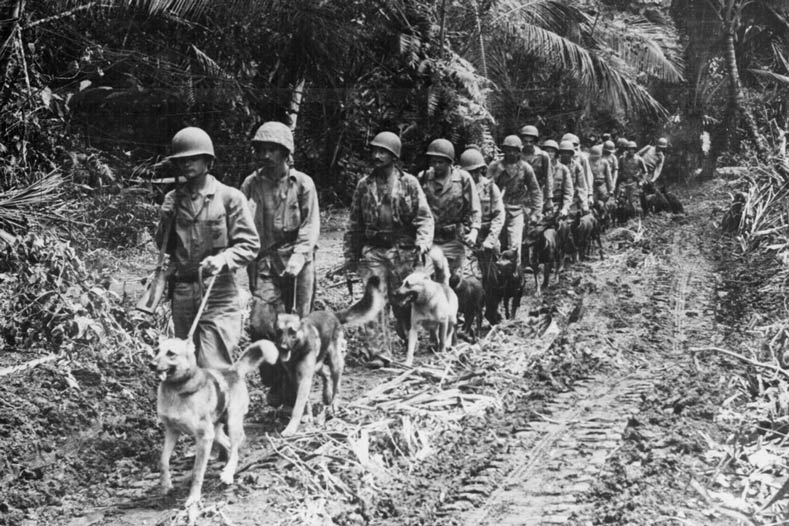
In the intricate tapestry of modern military operations, where technological prowess often dictates strategic advantage, an unexpected yet indispensable asset stands prominently: the war dog. Far from merely a loyal companion, the modern war dog, or Military Working Dog (MWD), is increasingly understood and deployed as a highly sophisticated, organic sensor system and a versatile, robust mobile platform. To truly grasp “what is a war dog” in the 21st century is to appreciate its nuanced integration into a tech-driven battlespace, serving as a critical bridge between human intelligence and machine capabilities. This article delves into the technological essence of war dogs, exploring their inherent biological “specifications,” their integration with digital systems, and the future interplay with artificial intelligence and automation.

The Organic Sensor Suite: Unpacking Canine Capabilities
At its core, a war dog is an unparalleled bio-sensor system, equipped with capabilities that, in many critical aspects, still surpass even the most advanced human-made technologies. Their sensory inputs provide real-time, high-fidelity data, making them invaluable for reconnaissance, detection, and situational awareness in complex environments where electronic systems might be jammed, compromised, or simply inadequate.
Olfactory Superiority: The Ultimate Chemical Detector
The canine sense of smell is arguably its most celebrated and critical “technology.” With up to 300 million olfactory receptors, compared to humans’ paltry 6 million, a war dog’s nose functions as an extraordinarily sensitive and sophisticated chemical analysis system. This “biological spectrometer” can detect trace amounts of explosives, narcotics, human scent (even days old), and other volatile organic compounds with pinpoint accuracy. Unlike electronic sniffers, which often struggle with environmental interference, temperature fluctuations, or complex scent mixtures, a dog’s nose is robust and adaptable. This makes MWDs indispensable for clearing routes of Improvised Explosive Devices (IEDs), locating hidden caches, or tracking individuals in vast, varied terrains. Their ability to discriminate specific target odors from a multitude of background smells is a form of organic pattern recognition that current AI-driven systems are still striving to replicate effectively in dynamic, real-world conditions.
Auditory and Visual Acuity: Situational Awareness Processors
Beyond their olfactory prowess, war dogs possess superior auditory and visual capabilities that serve as advanced situational awareness processors. Their ability to hear frequencies far beyond the human range (up to 65 kHz for dogs vs. 20 kHz for humans) allows them to detect subtle sounds of movement, distant conversations, or unusual mechanical noises long before a human. This makes them excellent early warning systems, alerting handlers to approaching threats or hidden adversaries. Similarly, their enhanced low-light vision and wider field of view provide a tactical advantage in nighttime operations or confined spaces, acting as natural night-vision devices and reconnaissance tools. These combined sensory inputs enable MWDs to process environmental data in a holistic manner, identifying anomalies and potential threats with remarkable speed and reliability, feeding crucial information back to their human counterparts.
Agility and Endurance: Robotic Mobility Platforms
The physical attributes of a war dog transform it into a highly adaptable and durable “robotic mobility platform.” Breeds commonly used as war dogs, such as German Shepherds, Belgian Malinois, and Labrador Retrievers, are selected for their combination of strength, speed, agility, and endurance. They can navigate treacherous terrains—dense forests, urban rubble, mountainous paths—with ease, often reaching areas inaccessible to wheeled or even some tracked robotic platforms. Their quadrupedal locomotion provides superior stability and maneuverability, allowing them to traverse obstacles, climb, and descend rapidly. This organic mobility, coupled with their inherent stealth and natural camouflage, makes them ideal for reconnaissance missions, pursuit, and patrol in environments where human or mechanical presence might be too conspicuous or risky.
Integration into Digital Battlefields: Enhancing the K9 “Platform”
While the war dog possesses remarkable inherent biological “technologies,” its effectiveness in contemporary military operations is significantly amplified through seamless integration with digital systems and cutting-edge equipment. This human-machine teaming transforms the MWD from a standalone asset into a networked component of a larger, technologically advanced military force.
Wearable Tech for K9 Units: Data Transmission & Command
Just as soldiers are equipped with tactical gear, MWDs are increasingly outfitted with specialized wearable technology. These sophisticated vests and harnesses are not just protective gear; they are sophisticated data transmission and command platforms. Integrated cameras (including low-light and thermal imaging) provide real-time visual feeds to handlers, offering eyes in places too dangerous or tight for human entry. GPS trackers precisely pinpoint the dog’s location, crucial for navigation and recovery. Two-way communication systems allow handlers to issue commands remotely via earpieces or vibrating pads, ensuring discreet direction. These wearable tech systems effectively transform the dog into a mobile, networked sensor node, extending the operator’s sensory reach and decision-making capabilities far beyond their immediate physical vicinity.
Remote Handling Systems: Extending the Operator’s Reach
The advent of advanced remote handling systems further extends the operational envelope of war dogs. These systems leverage wireless communication to allow handlers to direct their K9 partners from a significant distance, often out of direct line of sight. This minimizes risk to handlers, enabling dogs to precede forces into hazardous zones (e.g., suspected IED areas, hostile buildings) or conduct clandestine reconnaissance. The technology ensures that even when the handler is not physically present, the dog can receive precise commands and execute complex tasks. This capability is paramount in scenarios requiring stealth, stand-off distance, or when operating in environments where direct human intervention would be too dangerous or logistically challenging.
Data Analytics and Training Simulation: Optimizing Performance
The performance of war dogs, much like any advanced technical system, benefits immensely from data-driven insights and sophisticated simulation tools. Data collected from field exercises, training drills, and actual deployments—including GPS tracks, handler commands, dog responses, and mission outcomes—is increasingly analyzed to optimize training protocols. This process is akin to refining software algorithms, where data helps identify bottlenecks, improve efficiency, and enhance reliability. Furthermore, virtual reality (VR) and augmented reality (AR) are beginning to play a role in training, creating immersive and highly realistic simulated environments for both dogs and handlers. These simulations allow for practice in a wider range of scenarios, exposing dogs to diverse threats and environmental conditions without real-world risks, thereby accelerating their adaptability and proficiency.
AI and Automation: The Future Interplay with Canine Combatants
The rapid evolution of artificial intelligence and automation inevitably raises questions about their interplay with traditional military assets, including war dogs. Rather than seeing AI as a replacement, military strategists and researchers are exploring how these technologies can augment, support, and enhance the capabilities of canine combatants.
Autonomous Support Systems: Companion Robotics

The future battlefield may see war dogs operating in tandem with autonomous support systems. This could involve small, AI-driven ground robots (UGVs) or drones (UAVs) acting as “companion robots.” These robots could carry supplies, provide additional sensor coverage (e.g., thermal imaging, chemical detection), or even serve as mobile communication relays for the K9 unit. The AI in these robotic companions would be designed to understand and predict canine behavior, allowing for seamless integration and mutual support, enhancing the overall operational effectiveness and safety of the K9 team. The goal is not to replace the war dog’s unique biological advantages but to supplement them with robotic resilience and expanded technological reach.
Predictive Analytics for Canine Health and Performance
AI is poised to revolutionize the health and performance monitoring of war dogs. Wearable biometric sensors, combined with AI-driven analytics, could continuously track a dog’s vital signs, stress levels, fatigue, and even subtle behavioral changes indicative of illness or injury. This predictive analytics capability would enable proactive veterinary care, optimize deployment schedules to prevent burnout, and ensure that each MWD is operating at peak physical and mental condition. Early detection of health issues or performance dips could significantly extend a dog’s operational career and enhance its welfare, treating the K9 as a high-value, complex system requiring precise maintenance.
Enhanced Training through VR/AR
Beyond current simulation tools, advanced VR and AR technologies hold the potential to create highly dynamic and responsive training environments for MWDs. Imagine a war dog navigating a virtual building, encountering AI-generated threats or scent profiles that adapt in real-time based on the dog’s actions. This would allow for training in an infinitely variable and safe environment, honing a dog’s decision-making and problem-solving skills to an unprecedented degree. For handlers, AR overlays could provide real-time data about their dog’s physiological state or mission parameters, creating a more informed and cohesive human-animal team.
The Human-Machine Interface: Bridging Biology and Technology
Ultimately, the effectiveness of the war dog as a bio-technological asset hinges on the intricate and symbiotic relationship between the canine and its human handler. This partnership represents a sophisticated human-machine interface, where instinct meets intellect and biological input is translated into tactical action.
The Handler as the Control System Operator
The war dog handler is far more than just a trainer; they are the primary control system operator, interpreting the complex “data” provided by their canine partner and issuing precise commands. This involves a deep understanding of canine behavior, an ability to read subtle cues (changes in ear position, tail movement, sniffing patterns), and the skill to translate these into actionable intelligence for mission objectives. The handler effectively acts as the interface between the dog’s organic sensor suite and the broader military command structure, making critical decisions based on the dog’s input, much like a pilot interpreting cockpit instruments.
Ergonomics and Safety Tech for K9 Teams
Innovations in technology also extend to ensuring the safety and operational effectiveness of the entire K9 team. This includes advanced protective gear for dogs (ballistic vests, eye protection), specialized medical kits designed for canine trauma care, and ergonomic transportation systems that ensure comfort and minimize stress during deployment. These technological advancements not only protect the valuable MWD but also enhance the handler’s ability to operate effectively, knowing their partner is safeguarded. The design of these tools considers the unique physiological and psychological needs of the canine, integrating them seamlessly into the human-centric equipment ecosystem.
Ethical AI in K9 Deployment: Balancing Capability and Welfare
As technology advances, particularly with AI integration, ethical considerations surrounding the deployment of war dogs become increasingly pertinent. The balance between maximizing operational capability and ensuring the welfare of these sentient beings is a critical ethical challenge. Discussions revolve around autonomous decision-making in robotic companions, the psychological impact of prolonged exposure to high-stress environments, and ensuring a dignified retirement. Addressing these ethical dilemmas through responsible AI development and clear policy frameworks is paramount to maintaining the integrity and humanitarian aspects of using animals in warfare.
Evolution and Adaptability: The Continual Upgrade Cycle
The war dog, much like any advanced technological system, undergoes a continuous cycle of evolution and adaptation. This “upgrade cycle” is driven by research, specialized breeding, and adaptive training protocols, ensuring that the MWD remains at the forefront of military innovation.
Breed Selection as Hardware Specialization
The selection of specific dog breeds for war dog roles is akin to choosing specialized hardware for particular computing tasks. Each breed brings a unique set of inherent “hardware” capabilities: Malinois for their intense drive, agility, and bite work; German Shepherds for their versatility, intelligence, and endurance; Labradors for their exceptional scent detection without aggressive tendencies. This deliberate “hardware specialization” ensures that the right dog is matched to the right mission profile, optimizing their natural talents for specific combat or support roles.
Adaptive Training Protocols: Software Updates for Real-time Threats
Training a war dog is a dynamic process, analogous to continually updating software to address new threats and vulnerabilities. As adversaries develop new tactics or technologies (e.g., novel explosives, camouflage techniques), training protocols must adapt swiftly. This involves developing new detection methods, refining behavioral responses, and conditioning dogs to operate effectively in increasingly complex and unpredictable environments. This continuous “software update” ensures that the war dog remains effective against evolving challenges, maintaining its relevance in an ever-changing threat landscape.
Research and Development: The Next Generation K9 “Platform”
Ongoing research and development initiatives are focused on enhancing the next generation of K9 “platforms.” This includes studies in canine genetics to identify traits conducive to military service, advanced nutritional science to optimize physical performance and recovery, and cutting-edge behavioral science to refine training methodologies and improve human-animal communication. Efforts are also underway to explore genetic factors related to resilience, stress coping, and aptitude for specific tasks, aiming to create even more robust and capable war dogs through selective breeding and early intervention programs. This dedicated R&D ensures the continued evolution of the war dog as a critical, high-tech asset.
In conclusion, “what is a war dog” transcends a simple biological definition. It is a profound acknowledgment of an advanced bio-technological asset, meticulously trained and strategically integrated into modern warfare. Through their unparalleled organic sensor suite, seamless integration with digital systems, and a promising future intertwined with AI and automation, war dogs continue to prove their indispensable value, standing as a testament to the enduring power of a symbiotic partnership between biology and technology in the pursuit of security and defense.
aViewFromTheCave is a participant in the Amazon Services LLC Associates Program, an affiliate advertising program designed to provide a means for sites to earn advertising fees by advertising and linking to Amazon.com. Amazon, the Amazon logo, AmazonSupply, and the AmazonSupply logo are trademarks of Amazon.com, Inc. or its affiliates. As an Amazon Associate we earn affiliate commissions from qualifying purchases.