
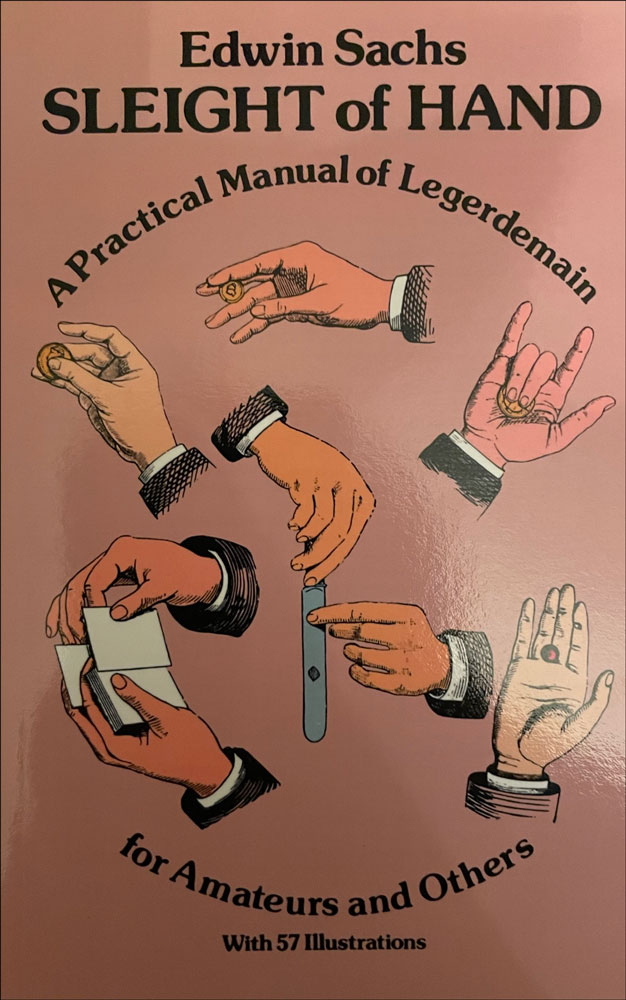
In the world of stage magic, “sleight of hand” refers to the manual dexterity used by a performer to deceive an audience, making objects appear, disappear, or transform through misdirection and secret maneuvers. In the modern technological landscape, however, sleight of hand has migrated from the physical fingertips of the magician to the digital architecture of our software, the hidden layers of our artificial intelligence, and the sophisticated tactics of cyber-adversaries.
Digital sleight of hand is the art and science of manipulating user perception and data flow to create seamless experiences, influence behavior, or—in more nefarious cases—bypass security. As technology becomes more integrated into our daily lives, understanding these “invisible” mechanics is no longer a niche requirement for developers; it is a fundamental literacy for anyone navigating the digital age.

The UX Sleight of Hand: Designing Invisible Interfaces
At the heart of every great piece of software is a series of design choices intended to minimize friction. This is the positive application of sleight of hand: the ability to make complex computational processes feel effortless and instantaneous to the end-user. When an interface is designed perfectly, the technology behind it disappears, leaving only the experience.
The Psychology of Micro-interactions
Micro-interactions are the subtle visual and haptic cues that tell a user their action has been recognized. Think of the “pull-to-refresh” animation on a smartphone or the “like” heart that pops and changes color. These are digital sleight of hand maneuvers designed to provide immediate gratification and manage the user’s perception of time. By providing an engaging visual “distraction” while the app fetches data from a server, designers mask the latency inherent in web communication. The user doesn’t feel the wait; they feel the interaction.
Progressive Disclosure: Guiding the Eye
One of the most powerful tools in a UX designer’s kit is progressive disclosure. This technique involves showing users only the information they need at a specific moment, hiding complex settings or secondary data behind menus or layers. This is a form of cognitive sleight of hand. By managing what is visible, designers prevent “choice paralysis” and ensure the user’s attention is focused precisely where it needs to be. It creates the illusion of simplicity in a system that may, in reality, be incredibly complex.
Avoiding the Dark Patterns: Ethics in Interface Deception
While sleight of hand can enhance a user’s experience, it can also be used to manipulate them against their best interests. These are known as “Dark Patterns.” For example, a “roach motel” design makes it incredibly easy to sign up for a subscription but nearly impossible to find the cancellation button. Or “confirmshaming,” where the option to decline a service is phrased in a way that makes the user feel guilty (e.g., “No, I prefer to pay full price”). In these instances, the “magic” of design is used to obscure the truth, highlighting the ethical responsibility of those who build our digital environments.
Algorithmic Sleight of Hand: How AI Performs the “Impossible”
If UX design is the surface-level magic, then Artificial Intelligence (AI) and Machine Learning (ML) are the profound illusions occurring beneath the hood. Large Language Models (LLMs) and generative algorithms perform a type of computational sleight of hand that mimics human cognition so effectively that we are often tricked into attributing consciousness or true understanding to lines of code.
The Illusion of Consciousness in LLMs
When we interact with a chatbot, it can feel as though there is a “ghost in the machine.” However, the sleight of hand here is statistical. An LLM does not “know” facts; it predicts the next most likely token (word or character) in a sequence based on massive datasets. The magic lies in the scale. By processing billions of parameters, the AI produces output so fluid and contextually relevant that the human brain naturally fills in the gaps, assuming a level of intent and intelligence that isn’t actually present in the underlying architecture.

Predictive Analytics: Anticipating User Needs
Modern software often feels like it can read our minds. Whether it’s a streaming service suggesting a movie we end up loving or a map application suggesting a route before we even type in the destination, this is the result of predictive sleight of hand. By analyzing patterns in vast quantities of “noise” (raw data), algorithms can identify signals that are invisible to the human eye. The technology “hides” the data processing and presents only the result, making the interaction feel prophetic rather than calculated.
Deepfakes and Synthetic Media: The Ultimate Digital Magic Trick
The most literal interpretation of digital sleight of hand in the AI era is the creation of synthetic media. Using Generative Adversarial Networks (GANs), AI can create hyper-realistic images, videos, and audio of people saying or doing things they never did. This is a transformation of reality that rivals any stage illusion. The “hand” here is the neural network, and the “sleight” is the ability to map one person’s facial expressions onto another’s with frame-by-frame precision. As these tools become more accessible, the boundary between the “real” and the “rendered” becomes increasingly porous, forcing a global re-evaluation of digital trust.
The Dark Side: Sleight of Hand in Cybersecurity
In the realm of digital security, sleight of hand is synonymous with deception. Hackers and social engineers are the modern equivalents of the “con man,” using misdirection to steal sensitive information or gain unauthorized access to secure systems.
Social Engineering: The Con Artist’s Digital Toolkit
Social engineering is perhaps the purest form of sleight of hand in technology. It doesn’t rely on cracking code, but on cracking people. By exploiting human psychology—fear, urgency, or curiosity—an attacker can trick a user into revealing their password or clicking a malicious link. In this scenario, the “trick” is the pretext: a fake email from a CEO, a fraudulent “security alert” from a bank, or a “free” software offer. The attacker directs the victim’s attention toward the urgent message while secretly executing a payload in the background.
Phishing, Spoofing, and Misdirection
Technical sleight of hand is frequently used in phishing attacks. An attacker might use “typosquatting” (e.g., creating a website at g00gle.com instead of google.com) or use homograph attacks where characters from different alphabets look identical to the naked eye. To the user, everything looks legitimate—the “hand” is hidden. Similarly, in “Man-in-the-Middle” (MitM) attacks, the perpetrator secretly intercepts and relays communication between two parties who believe they are talking directly to each other. The misdirection is complete; the victims have no idea an intermediary exists.
Shielding the System: Defensive Sleight of Hand
It is important to note that security professionals also use sleight of hand for defense. “Honeypots” are a classic example. A honeypot is a decoy system designed to look like a high-value target (such as a database containing financial records). When a hacker attempts to breach it, they are distracted by the “fake” prize while security teams monitor their movements and gather intelligence on their methods. This is “active deception”—using the attacker’s own curiosity and greed against them to protect the real assets.
The Future of the Digital Illusion
As we move toward a future defined by Augmented Reality (AR), Virtual Reality (VR), and even more advanced AI, the “sleight of hand” within our technology will only become more sophisticated. In a VR environment, for instance, developers use “redirected walking”—a technique that subtly rotates the virtual world so that a user believes they are walking in a straight line for miles, while they are actually walking in circles in a small room. This is the ultimate merger of physical and digital misdirection.
Understanding “what is sleight of hand” in a tech context is about recognizing that every interface, every algorithm, and every security protocol is a curated experience. Some of these illusions are designed to delight us, some to assist us, and some to exploit us. By pulling back the curtain and looking at the “mechanics” of the trick, we become more than just an audience; we become informed participants in the digital world, capable of distinguishing between the magic of innovation and the deception of the trap.
In the end, the most important “sleight of hand” in technology is the one we perform on ourselves when we forget that there is always a layer of logic, code, and intent behind the screen. To master technology is to appreciate the trick while never losing sight of the hand that performs it.
aViewFromTheCave is a participant in the Amazon Services LLC Associates Program, an affiliate advertising program designed to provide a means for sites to earn advertising fees by advertising and linking to Amazon.com. Amazon, the Amazon logo, AmazonSupply, and the AmazonSupply logo are trademarks of Amazon.com, Inc. or its affiliates. As an Amazon Associate we earn affiliate commissions from qualifying purchases.