
In the world of modern technology, we often take for granted the seamless transition of a phone call from one continent to another or the instantaneous delivery of a text message. Behind these everyday actions lies a complex web of protocols and systems that act as the invisible nervous system of the global telecommunications infrastructure. One of the most critical, yet least understood, components of this system is Signaling System No. 7, commonly referred to as SS7 or “Signal 7.”
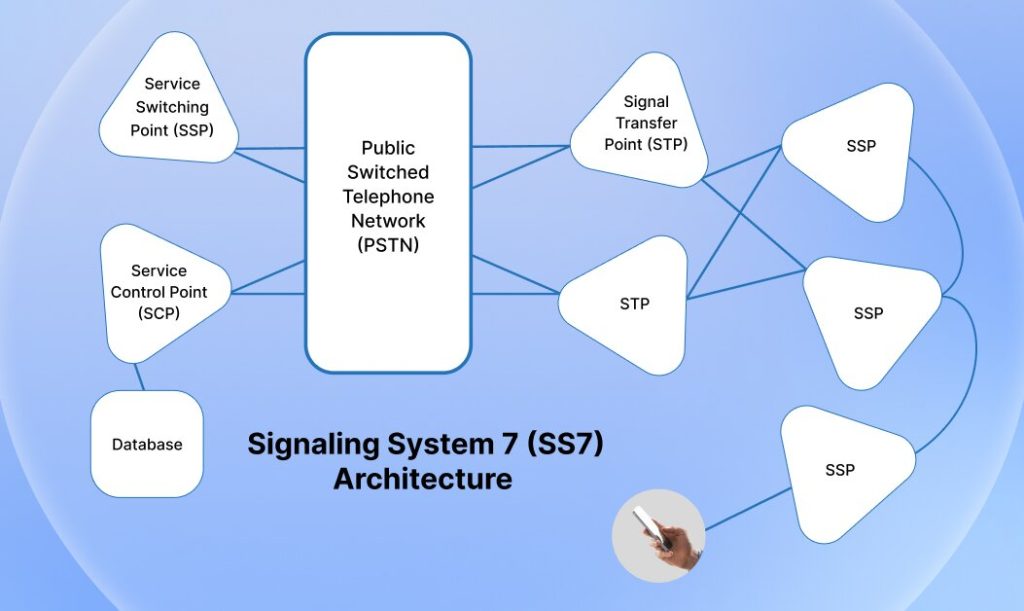
Signal 7 is a set of telephony signaling protocols developed in 1975, designed to set up and tear down most of the world’s public switched telephone network (PSTN) telephone calls. While newer protocols have emerged with the advent of 4G and 5G, SS7 remains the fundamental architecture that allows different mobile and fixed-line networks to communicate with one another. To understand the current state of digital security and global connectivity, one must first understand the mechanics, importance, and inherent risks of Signal 7.

The Fundamentals of Signaling System No. 7 (SS7)
To grasp what Signal 7 is, we must differentiate between the two types of information that travel over a phone network: the “media” (the actual voice or data) and the “signaling” (the instructions on where that media should go). SS7 is dedicated entirely to the latter.
Definition and Origins
Signaling System No. 7 is an international standard for telecommunications defined by the International Telecommunication Union (ITU-T). It was developed to replace earlier signaling methods that were slower and more prone to interference. Before SS7, signaling information was often sent over the same channel as the voice (in-band signaling), which allowed hackers—notably the “phreakers” of the 1970s—to manipulate the network using simple tone generators. SS7 moved this information to a separate, dedicated digital channel (out-of-band signaling), vastly improving efficiency and security at the time.
How the Protocol Functions
SS7 operates on a packet-switched network logic, even when it is supporting circuit-switched voice calls. When you dial a number, the SS7 protocol sends a series of data packets through the network to find the recipient. These packets handle tasks such as translating numbers (e.g., converting a dialed 800-number into a routing number), managing toll charges, and signaling to the recipient’s phone to start ringing. This process happens in milliseconds, ensuring that the connection is established before the caller even hears the first ring-back tone.
The Distinction Between Control and Data Planes
A key architectural feature of Signal 7 is the separation of the control plane from the user plane. By keeping the signaling instructions separate from the voice path, telecommunications providers can manage the network more effectively. This separation allows for “look-ahead” routing, where the network checks if the destination line is busy before committing any voice-trunk resources to the call. If the line is busy, the SS7 network sends a busy signal back immediately, saving the network from wasting bandwidth on a call that cannot be completed.
The Architectural Role of Signal 7 in Modern Networks
Despite being decades old, Signal 7 is the glue that holds global roaming and cross-carrier communication together. Without the interoperability provided by SS7, a subscriber from a European network would find their device useless the moment they stepped off a plane in North America or Asia.
Managing Global Roaming
One of the most vital functions of SS7 today is facilitating international roaming. When a mobile device powers on in a foreign country, it must announce its presence to the local network. The local network uses SS7 to communicate with the user’s “Home Location Register” (HLR) back in their native country. This exchange verifies the user’s identity, checks their subscription status, and confirms that they are allowed to roam. This high-speed data exchange is what allows your phone to “just work” regardless of geographic boundaries.
SMS and Voice Call Routing
Short Message Service (SMS) is almost entirely dependent on the SS7 framework. When you send a text, it doesn’t go directly to the recipient. Instead, it is routed through a Short Message Service Center (SMSC). The SS7 protocol is used to “ping” the network to locate the recipient’s handset and then deliver the message. Similarly, for voice calls, SS7 handles the “handoff” as you move from one cell tower to another, ensuring that your call isn’t dropped as your signal shifts between different parts of the infrastructure.
Database Management: HLR and VLR
The intelligence of a mobile network resides in its databases. The Home Location Register (HLR) contains permanent subscriber data, while the Visitor Location Register (VLR) stores temporary data for users currently served by a specific switch. Signal 7 acts as the query language that allows these databases to talk to one another. Every time you receive a call, a “Provide Roaming Number” request is sent via SS7 to determine exactly which switch is currently serving your device, allowing the call to be routed to your precise location in real-time.
Security Vulnerabilities and the “Signal 7” Threat Landscape

While Signal 7 was a masterpiece of engineering in the 1970s, it was designed for an era when the only entities with access to the core telecommunications network were state-owned monopolies or massive corporations. It was built on a foundation of implicit trust. Today, that trust has become a significant security liability.
The Interception of Calls and Texts
Because SS7 does not require authentication for many of its core commands, attackers who gain access to the SS7 gateway can trick the network. For instance, an attacker can send a request to “update” a user’s location, directing the network to route all incoming calls and SMS messages to a device controlled by the hacker. This is known as an SS7 intercept. Because the interception happens at the network level, the victim has no way of knowing their communication is being diverted; their phone may continue to show a normal signal while their data is being harvested elsewhere.
Bypassing Two-Factor Authentication (2FA)
Perhaps the most alarming modern exploit involving Signal 7 is the circumvention of SMS-based two-factor authentication. Many banks and digital services send a “one-time password” (OTP) via text to verify a user’s identity. By exploiting SS7 vulnerabilities, sophisticated cybercriminals can intercept these OTPs. Once they have the code, they can gain full access to the victim’s financial accounts or private data. This is not a theoretical threat; there have been documented cases globally where hackers used SS7 exploits to drain bank accounts by intercepting the bank’s verification texts.
Location Tracking Risks
SS7 can also be weaponized for surveillance. By sending a specific type of query (such as a “Provide Subscriber Info” request) to the SS7 network, an entity can pinpoint the exact cell tower a user is connected to. This allows for the tracking of a person’s movements with high precision without the user ever knowing their location is being monitored. This vulnerability has been exploited by “surveillance-as-a-service” companies that sell tracking capabilities to governments and private entities.
Transitioning Beyond SS7: Diameter and the Shift to 5G
As the industry recognizes the aging flaws of Signal 7, a transition is underway toward more modern, secure protocols. However, replacing a global standard that has been in place for forty years is a monumental task.
The Limitations of Legacy Protocols
The primary issue with SS7 is its lack of modern encryption and authentication. It was designed for a closed circuit, but the modern internet has made the telecom core more accessible than ever. As we move into an era of billions of connected IoT devices and high-speed data, the overhead and insecurity of SS7 have become unsustainable.
Introduction to the Diameter Protocol
With the rollout of 4G LTE, the industry introduced the “Diameter” protocol. Diameter was intended to be the successor to SS7 (the name is a play on words, as a diameter is twice the radius of a “radius” protocol). Diameter offers better security, support for IP-based communication, and more robust error handling. However, because 4G networks still need to interact with older 2G and 3G networks (which use SS7), many of the security flaws of the old system have been carried over through backward compatibility.
Security Enhancements in 5G Core Architecture
The 5G transition offers the best chance to finally move away from the “Signal 7” era. 5G’s core architecture is built on “Service-Based Architecture” (SBA), which uses standard web protocols like HTTP/2 and TLS for signaling. This brings the telecommunications world in line with modern IT security standards, including mutual authentication and end-to-end encryption for signaling traffic. While SS7 will likely linger in developing regions or as a fallback for years to come, 5G aims to eventually relegate it to the history books.
Best Practices for Digital Security in an SS7 World
Until the transition to 5G is complete and legacy SS7 gateways are fully retired, users and businesses must take proactive steps to protect themselves from the vulnerabilities inherent in Signal 7.
Moving Away from SMS-Based Security
The most immediate recommendation for any tech-savvy user is to stop using SMS for two-factor authentication. Since Signal 7 makes it relatively easy for attackers to intercept texts, SMS is no longer a “secure” second factor. Instead, users should utilize app-based authenticators (like Google Authenticator or Authy) or, better yet, physical hardware keys (like YubiKeys). These methods do not rely on the telecommunications signaling network and are therefore immune to SS7-based interception.
End-to-End Encryption (E2EE) as a Shield
To protect the privacy of voice calls and messages, the use of end-to-end encrypted platforms is essential. Applications like Signal, WhatsApp, and iMessage encrypt the data before it ever leaves the device. Even if an attacker uses an SS7 exploit to intercept the data packets as they travel through the network, they will only see scrambled, unreadable code. In an era where the network’s “Signal 7” backbone cannot be fully trusted, encryption at the application layer provides the necessary layer of defense for personal and corporate communications.
The Role of Network Operators
Finally, the responsibility lies with telecommunications providers to implement SS7 firewalls. These specialized security tools can analyze incoming signaling traffic and block suspicious queries that look like tracking or interception attempts. As awareness of SS7 flaws has grown, many major carriers have begun deploying these defenses, though global consistency remains a challenge. Understanding “Signal 7” is not just a matter of technical curiosity—it is a vital part of navigating the complex and often vulnerable landscape of modern digital life.
aViewFromTheCave is a participant in the Amazon Services LLC Associates Program, an affiliate advertising program designed to provide a means for sites to earn advertising fees by advertising and linking to Amazon.com. Amazon, the Amazon logo, AmazonSupply, and the AmazonSupply logo are trademarks of Amazon.com, Inc. or its affiliates. As an Amazon Associate we earn affiliate commissions from qualifying purchases.