
In the traditional literary world, short fiction has long been defined by its brevity—a narrative that can be consumed in a single sitting, typically ranging from 1,000 to 7,500 words. However, in the modern landscape of technology, software development, and artificial intelligence, the definition of a “short fiction story” is undergoing a radical transformation. It is no longer just a sequence of words on a page; it is a data-driven, algorithmically optimized, and often AI-augmented medium that serves as the backbone for new digital experiences.
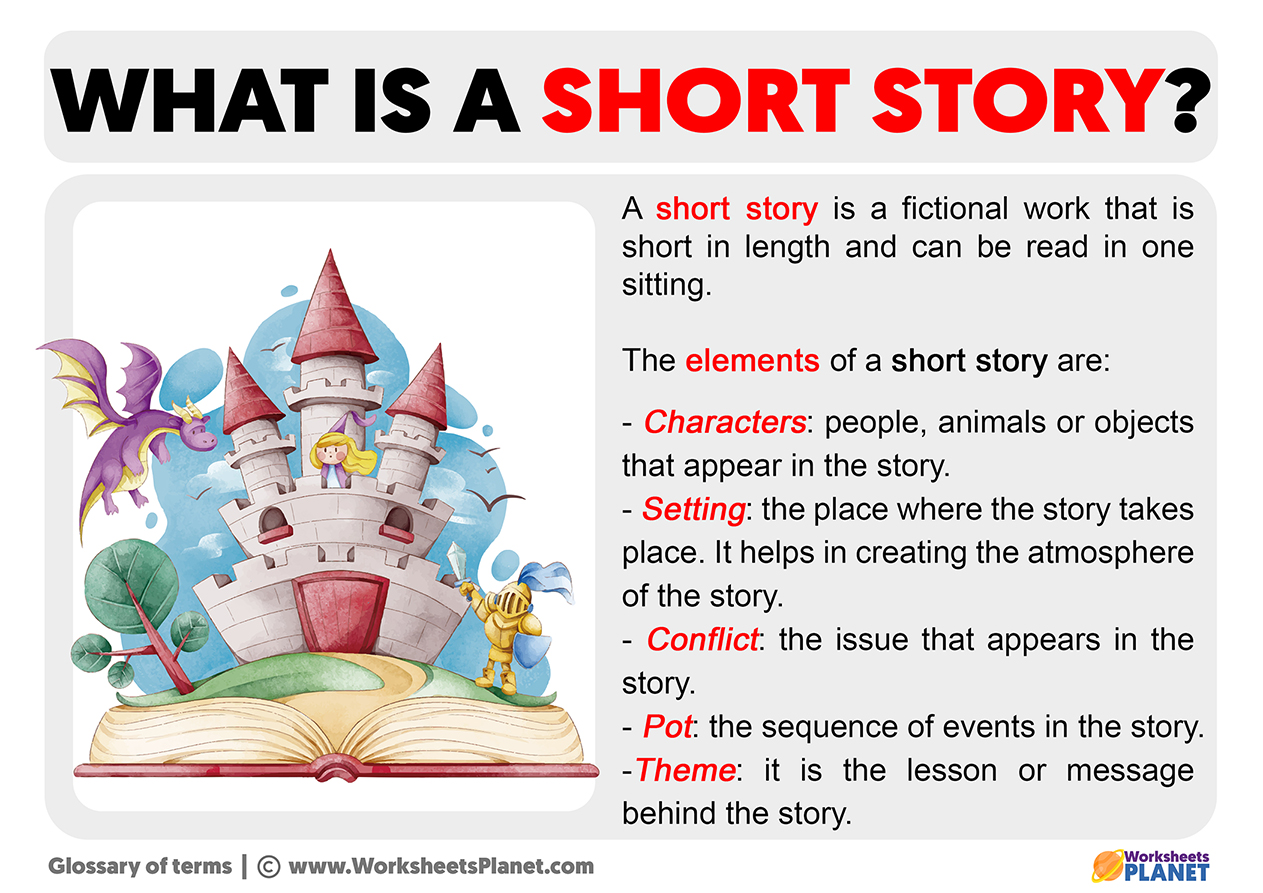
To understand what short fiction is today, we must look beyond the prose and examine the technological frameworks that create, distribute, and enhance these narratives. From the rise of Large Language Models (LLMs) to the gamification of storytelling through interactive software, short fiction has become a primary frontier for technical innovation.
The Anatomy of Short Fiction in the Digital Era
At its core, short fiction is an exercise in constraint. In the tech world, constraints are often the catalysts for efficiency. Just as a developer seeks to write the most efficient code to perform a complex task, a short story writer seeks to evoke maximum emotional resonance within a limited word count.
Defining Word Counts for Digital Consumption
In the digital space, the categorization of short fiction is often dictated by the platforms on which it resides. We now distinguish between several tech-driven sub-genres:
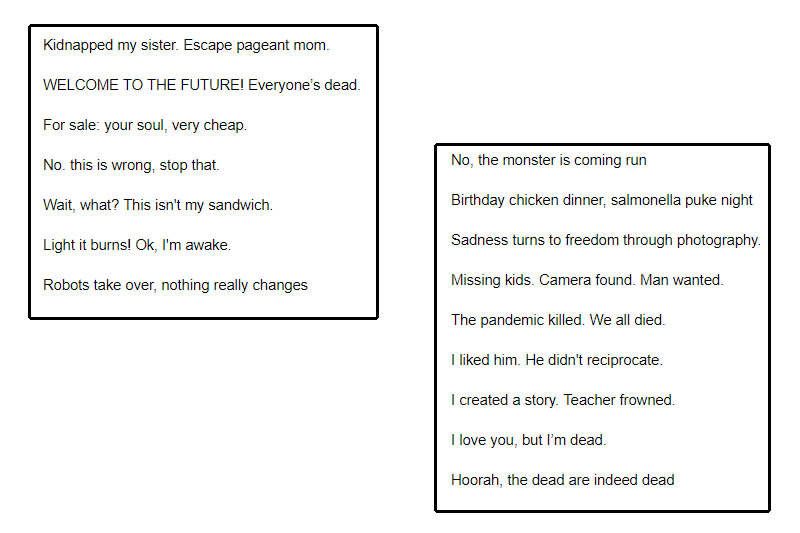
- Flash Fiction: Often under 1,000 words, these stories are optimized for mobile reading and social media “scroll-through” rates.
- Micro-Fiction: Stories that fit within the character limits of platforms like X (formerly Twitter) or Threads, requiring extreme narrative compression.
- Digital Shorts: Narrative lengths optimized for e-readers and subscription apps like Kindle Vella or Radish, where stories are broken into “episodes” to maintain user engagement metrics.
The technology behind these platforms uses metadata and user behavior analytics to determine the “ideal” length for a short story, effectively allowing data to inform the structural boundaries of the genre.
The Shift from Print to Hyperlink
The evolution of short fiction is inextricably linked to the shift from linear text to hypertext. Early digital fiction experiments used software like Storyspace to create non-linear narratives where readers clicked links to choose their path. Today, this has evolved into “interactive fiction” (IF), where the story functions more like software. The “short story” in this context is a modular script, where variables and logic gates determine the narrative flow. This fusion of literature and logic is redefining short fiction as an interactive software product rather than a static document.
AI and the Automation of Short-Form Narrative
The most significant disruption to short fiction in recent years is the advent of Generative AI. Tools like OpenAI’s GPT-4, Claude, and specialized creative writing software have changed the “what” and “how” of short-form storytelling. Short fiction is now the primary testing ground for Natural Language Processing (NLP) capabilities.
Large Language Models as Creative Partners
Short fiction is uniquely suited for AI collaboration because its limited scope allows for greater coherence within the “context window” of an LLM. Writers are increasingly using AI tools to:
- Iterate Plot Structures: Software can generate dozens of narrative arcs based on the “Hero’s Journey” or “Fichtean Curve” in seconds.
- Overcome “Cold Start” Problems: AI serves as a brainstorming engine, providing descriptions, character traits, or opening lines that the human author then refines.
- Style Transfer: Using specific prompts, tech-savvy writers can instruct an AI to draft a short story in the style of 19th-century Gothicism combined with modern cyberpunk aesthetics, a feat of linguistic synthesis that would take a human weeks to master.
In this niche, a short story is defined as a collaborative output between human intentionality and algorithmic probability.
Algorithmic Prompting and Narrative Structure

The technical mastery of “prompt engineering” has become a new form of authorship. When a user inputs a complex series of constraints into an AI—specifying tone, pacing, character motivation, and a “twist” ending—the resulting short fiction is a testament to the user’s ability to manipulate the software. We are seeing the rise of “prompt-based fiction,” where the value lies in the technical precision of the instructions given to the machine. This shift challenges the traditional notion of the short story as a purely “human-soul” endeavor, re-positioning it as a sophisticated output of advanced computational linguistics.
Platforms and Ecosystems for Modern Short Stories
The medium is the message, and in the tech niche, the platform is the story. The way we store, share, and monetize short fiction is governed by complex software ecosystems that prioritize discoverability and user retention.
Micro-Fiction and Social Media APIs
Short fiction has found a thriving home within the constraints of social media APIs. “Twitterature” and “Thread-stories” utilize the technical limitations of a platform to create a sense of urgency and community. The technical architecture of these platforms—likes, retweets, and algorithmic boosting—turns a short story into a viral asset. Writers are no longer just authors; they are content creators managing a digital pipeline. The “short story” here is a vehicle for engagement, designed to trigger the platform’s recommendation engine and reach a global audience instantaneously.
The Rise of Substack and Newsletter Tech
The resurgence of the short story is largely credited to the “Creator Economy” software stack. Platforms like Substack have built-in tools for mailing list management, payment processing (Stripe integration), and analytics. For the modern writer, a short fiction story is a “lead magnet” or a “premium tier” product. The technology allows for a direct-to-consumer model that bypasses traditional publishing gatekeepers. This software-enabled independence means that short fiction is now a data-backed business, where writers track open rates and click-through rates to see which stories resonate most with their “user base.”
The Future of Interactive and Procedural Short Fiction
Looking forward, the definition of short fiction will expand further into the realms of Virtual Reality (VR), Augmented Reality (AR), and procedural generation.
Procedural Generation and Dynamic Plotting
In the world of gaming and software development, procedural generation is used to create infinite landscapes. This technology is now being applied to short fiction. Imagine a “short story app” that generates a unique narrative every time you open it, based on your current location, the time of day, or your past reading history. Using a combination of template-based logic and AI, the story becomes a living piece of software. It is “short” not because of its word count, but because of its ephemeral nature—a one-of-a-kind experience generated in real-time by a set of algorithms.
Immersive Technology and Reader Agency
As we integrate short fiction into AR and VR, the “story” becomes an environment. Technical frameworks like Unity or Unreal Engine are being used to create “narrative spaces” where the reader walks through a 3D environment to uncover the plot. In this context, short fiction is a blend of environmental design, spatial audio, and scripted events. The “reader” becomes a “user” or “player,” and the “short story” is a 15-minute immersive simulation. This represents the ultimate tech-driven evolution of the genre: the transition from reading a story to inhabiting one.
Conclusion: The New Definition of the Narrative
So, what is a short fiction story in the current technological landscape? It is a versatile, high-compression narrative format that serves as the interface between human creativity and machine intelligence. It is a data point in an algorithm, a script in an interactive experience, and a product of the most advanced software tools ever created.
While the emotional core of storytelling remains unchanged—the desire to move, terrify, or inspire—the delivery mechanism has been completely re-engineered. For those in the tech niche, short fiction is an exciting playground for innovation. It is where we test the limits of AI, the efficiency of new publishing platforms, and the boundaries of user engagement. As technology continues to evolve, the short story will remain at the forefront, proving that even in a world of big data, the most powerful tool we have is a well-coded, well-told story.
aViewFromTheCave is a participant in the Amazon Services LLC Associates Program, an affiliate advertising program designed to provide a means for sites to earn advertising fees by advertising and linking to Amazon.com. Amazon, the Amazon logo, AmazonSupply, and the AmazonSupply logo are trademarks of Amazon.com, Inc. or its affiliates. As an Amazon Associate we earn affiliate commissions from qualifying purchases.