
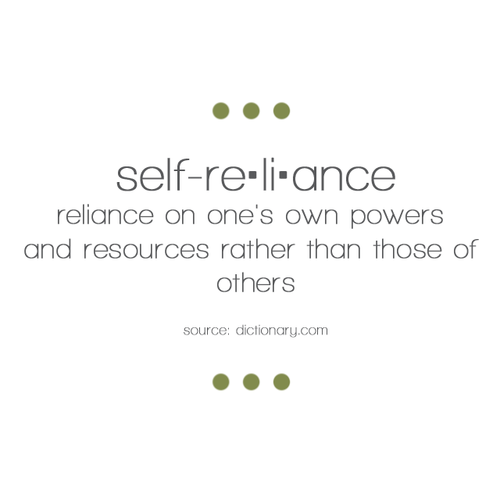
In its most traditional sense, self-reliance is a philosophical doctrine emphasizing the importance of the individual over the collective, popularized by thinkers like Ralph Waldo Emerson. However, in the 21st century, the definition of self-reliance has migrated from the philosophical to the practical, specifically within the realm of personal finance. Today, self-reliance is synonymous with financial sovereignty—the state of having enough personal wealth and economic infrastructure to live without being dependent on a single employer, a government safety net, or predatory credit systems.
To understand the definition of self-reliance in a monetary context, one must look past the simple act of “saving money.” It is a comprehensive strategy involving asset accumulation, risk mitigation, and the diversification of income streams. This article explores the multifaceted definition of financial self-reliance and provides a blueprint for achieving it through strategic planning, investment, and the utilization of modern financial tools.

The Core Definition of Financial Self-Reliance
At its heart, financial self-reliance is the capacity to sustain one’s lifestyle and future goals through one’s own resources and decision-making. It is the antithesis of financial fragility. While many people equate a high salary with self-reliance, the two are not inherently linked. A high-earner who spends their entire paycheck is still dependent on their employer; a self-reliant individual, regardless of income level, has built a system that generates value independently.
Moving Beyond the Paycheck
The traditional economic model suggests a linear path: education, employment, and eventually, a pension. Modern self-reliance rejects this total dependency on a single point of failure—the corporate paycheck. Defining self-reliance today means viewing oneself as an “Economy of One.” This involves shifting the mindset from being an employee to being an asset manager. The self-reliant individual understands that their labor is an initial source of capital, but that capital must be converted into income-producing assets as quickly as possible.
The Psychology of Economic Independence
Self-reliance is as much a psychological state as it is a mathematical one. It requires a high degree of internal locus of control—the belief that you are responsible for your own financial outcomes. This psychological shift is crucial because it drives the discipline required for long-term investing and the resilience needed to weather market volatility. When you define self-reliance, you are defining a commitment to personal accountability in every financial transaction, from the interest rates you accept to the assets you acquire.
Building the Pillars of a Self-Reliant Financial Portfolio
True self-reliance cannot exist without a robust foundation of assets. You are only as independent as your balance sheet allows you to be. To achieve a definition of self-reliance that holds up during economic downturns, one must focus on three primary pillars: liquidity, growth, and cash flow.
Asset Allocation and Diversification
A self-reliant portfolio is never over-exposed to a single sector or asset class. Diversification is the “only free lunch in finance” and the primary tool for protecting independence. This means spreading capital across equities (stocks), fixed income (bonds), real estate, and perhaps alternative assets like commodities or private equity. By diversifying, you ensure that a failure in one area of the global economy does not lead to a total loss of your personal financial sovereignty.
The Role of Passive Income Streams
If you must work to eat, you are not yet fully self-reliant. The definition of financial self-reliance fundamentally includes the generation of passive income. Whether through dividend-paying stocks, rental properties, or automated digital businesses, passive income provides the “floor” for your independence. The goal is to reach a “crossover point” where your passive income exceeds your monthly expenses. At this stage, self-reliance is no longer a goal; it is a reality.
Emergency Funds as a Safety Net
Before one can look toward growth, one must secure the perimeter. An emergency fund—typically 3 to 12 months of living expenses held in a high-yield savings account (HYSA)—is the ultimate tool of self-reliance. It acts as a buffer against the “shocks” of life, such as medical emergencies or sudden job loss. Without this liquid safety net, an individual is forced to rely on high-interest debt, which is the primary enemy of self-reliance.
Strategic Side Hustles: Cultivating Multiple Revenue Channels
In the modern era, the definition of self-reliance has expanded to include “Income Agility.” This is the ability to generate revenue from multiple different sources simultaneously. The rise of the gig economy and digital platforms has made it easier than ever to build side hustles that bolster one’s primary income.
Monetizing Digital Skills
The most scalable way to achieve self-reliance is by leveraging the internet. Skills such as software development, digital marketing, data analysis, or technical writing can be sold globally. By building a consulting practice or a freelance brand alongside a 9-to-5 job, an individual creates a “Plan B” that can eventually become their “Plan A.” This secondary income stream serves as an insurance policy against corporate downsizing and provides additional capital to fuel investments.
Leveraging the Passion Economy
Self-reliance doesn’t always have to feel like a chore. The “Passion Economy” allows individuals to monetize their niche interests through platforms like Substack, Patreon, or Etsy. Whether it’s teaching a specialized skill or creating unique products, these ventures contribute to a self-reliant lifestyle by diversifying the ways in which money flows into your household. The key is to treat these side hustles with the same professional rigor as a primary career.
Leveraging Financial Tools for Long-Term Autonomy
In the digital age, self-reliance is powered by technology. There are more tools available today than ever before to help individuals track, manage, and grow their wealth with minimal third-party intervention.
Budgeting Software and Automation
You cannot manage what you do not measure. Modern budgeting tools and apps allow for granular tracking of every dollar. Self-reliance requires a clear understanding of cash flow. By using automation—setting up automatic transfers to brokerage accounts and savings—you remove the “human error” factor from your financial plan. Automation ensures that you pay yourself first, a fundamental habit of the financially independent.
Tax-Advantaged Accounts and Retirement Planning
Understanding the tax code is a vital component of self-reliance. In the United States, utilizing accounts like the 401(k), IRA, and HSA (Health Savings Account) can save an individual hundreds of thousands of dollars over a lifetime. These tools are designed to encourage self-reliance by rewarding long-term saving with tax breaks. A self-reliant person maximizes these vehicles to ensure that their future self is not a burden on their family or the state.
The Path Forward: Achieving True Personal Financial Freedom
The journey toward self-reliance is a marathon, not a sprint. It is a continuous process of refinement, education, and disciplined execution. Ultimately, the definition of self-reliance is freedom: the freedom to choose your work, the freedom to control your time, and the freedom to live according to your own values.
Continuous Learning and Skill Acquisition
The world economy is in a constant state of flux. To remain self-reliant, one must be a lifelong learner. This means staying updated on financial trends, understanding new investment vehicles, and constantly upgrading your “human capital” (your skills and knowledge). The more you know, the less you have to pay others to manage your life for you.

Mindful Consumption and Debt Management
Finally, self-reliance is maintained through the practice of mindful consumption. It is impossible to be self-reliant while being a slave to consumer debt. High-interest credit cards and lifestyle inflation are the chains that bind individuals to jobs they dislike. By living below your means and prioritizing “wealth-building” over “status-signaling,” you preserve the capital necessary to remain independent.
In conclusion, the definition of self-reliance in a financial context is the ability to stand on one’s own feet economically. It is built through a combination of diversified assets, multiple income streams, savvy use of financial technology, and a disciplined, long-term mindset. By following these principles, any individual can transition from a state of financial dependence to a life of true, unshakeable sovereignty.
aViewFromTheCave is a participant in the Amazon Services LLC Associates Program, an affiliate advertising program designed to provide a means for sites to earn advertising fees by advertising and linking to Amazon.com. Amazon, the Amazon logo, AmazonSupply, and the AmazonSupply logo are trademarks of Amazon.com, Inc. or its affiliates. As an Amazon Associate we earn affiliate commissions from qualifying purchases.