
In an increasingly globalized economy, the intersection of education and finance has never been more prominent. While many academic achievements are viewed as mere milestones, the Seal of Biliteracy has emerged as a high-stakes credential with tangible financial implications. For students, parents, and professionals, understanding the Seal of Biliteracy is no longer just about cultural enrichment—it is about strategic financial planning and maximizing “linguistic capital.”
The Seal of Biliteracy is an award granted by schools, school districts, or state departments of education to recognize students who have attained proficiency in two or more languages by high school graduation. However, beneath its academic surface lies a powerful tool for reducing the cost of higher education and increasing lifetime earning potential. This article explores the Seal through the lens of personal and business finance, analyzing how this certification functions as a long-term investment.

Understanding the Seal of Biliteracy: A High-Value Credential
Before diving into the fiscal benefits, it is essential to define what the Seal represents in the modern marketplace. It is not merely a “participation trophy” for language learners; it is a standardized, validated assessment of a person’s ability to function professionally in multiple languages.
The Standardization of Linguistic Capital
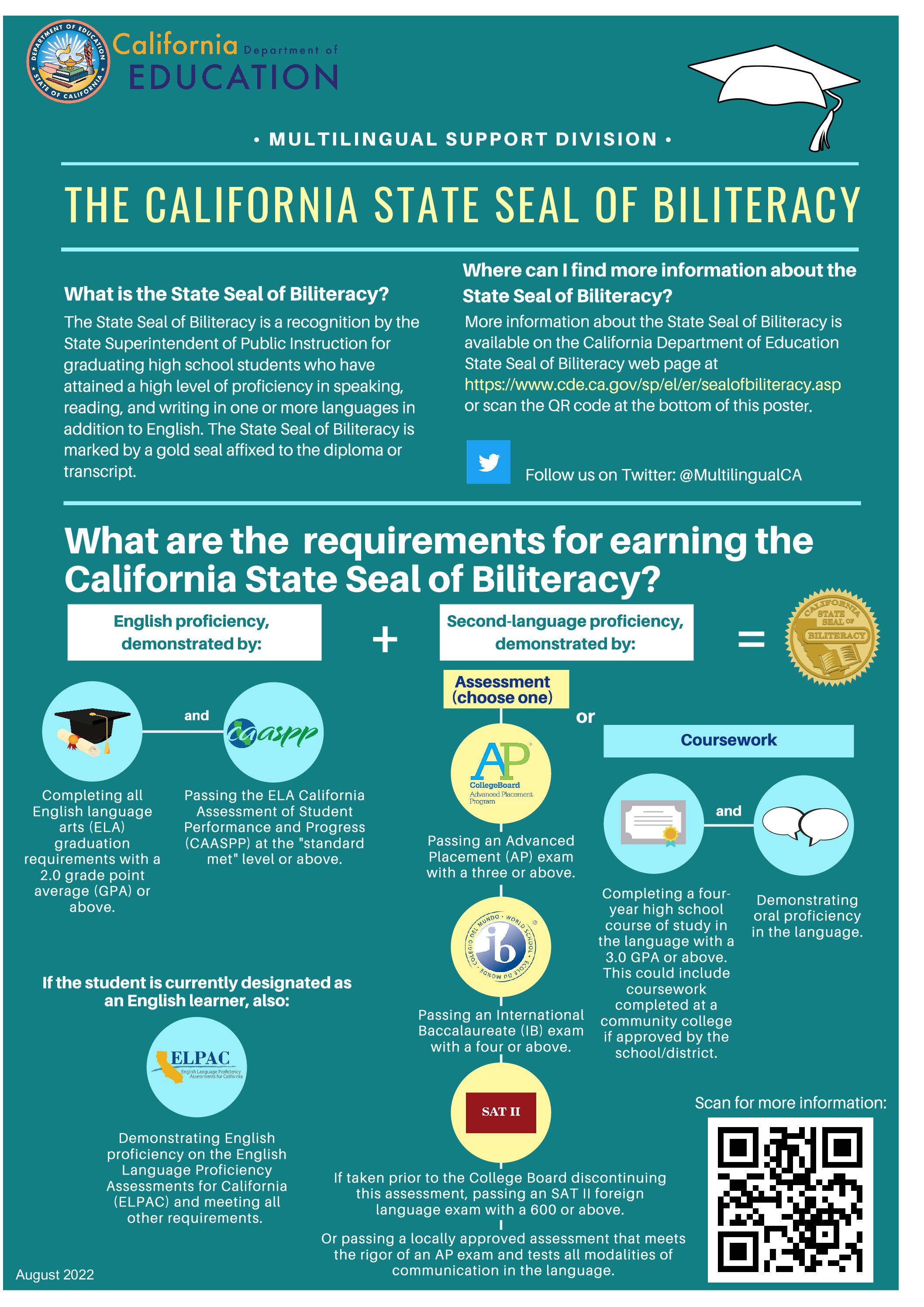
In the past, claiming to be “fluent” on a resume was subjective and often difficult for employers to verify. The Seal of Biliteracy changes this dynamic by providing a standardized benchmark. By utilizing recognized assessments such as the AP Language and Culture exams, the STAMP (Standards-based Measurement of Proficiency), or the OPI (Oral Proficiency Interview), the Seal converts a skill into a certified asset. In financial terms, this is the “commoditization” of language skills—turning an intangible ability into a verifiable credential that carries weight in both academic and corporate financial ecosystems.
The Geographic and Economic Reach
Since its inception in California in 2011, the Seal of Biliteracy has been adopted by nearly every state in the U.S. This widespread adoption has created a unified “currency” for language skills. When a credential is recognized across state lines, its value increases because it becomes portable. For a student in Illinois moving to a job in Texas, the Seal serves as a permanent mark of quality that requires no further testing or expensive recertification.
The Personal Finance Angle: Scholarships, College Credits, and Tuition Savings
For families looking to mitigate the skyrocketing costs of higher education, the Seal of Biliteracy is one of the most effective tools for achieving immediate Return on Investment (ROI). The transition from high school to college is where the financial impact of the Seal is most acutely felt.
Earning University Credits Early
One of the most direct financial benefits of the Seal of Biliteracy is its ability to bypass introductory college courses. Many state university systems and private institutions have formal policies that grant college credit to students who hold the Seal. For example, a student entering a university with a Seal of Biliteracy might be awarded between 6 and 12 credit hours in a world language.
If we look at the current average cost of tuition—ranging from $300 to over $1,000 per credit hour—the math is simple and compelling. A student who receives 12 credits for their bilingual proficiency can save anywhere from $3,600 to $12,000 in tuition costs. Furthermore, by testing out of these requirements, students can graduate a semester early, saving on room and board and entering the workforce sooner to begin earning a salary.
Accessing Exclusive Scholarship Tiers
Beyond direct credits, the Seal of Biliteracy opens doors to specific financial aid opportunities. Many organizations and universities offer “Bilingualism Scholarships” or merit-based aid specifically for students who have proven their proficiency through official certification. These scholarships are often less competitive than general academic scholarships because they require a niche, validated skill set. For a student’s personal balance sheet, the Seal functions as a key that unlocks capital that would otherwise be inaccessible.
Boosting Lifetime Earnings: The Wage Premium of Biliteracy
While the immediate savings in college are significant, the true financial power of the Seal of Biliteracy is realized over a 40-year career. Economic studies consistently show a “bilingual wage premium,” and the Seal serves as the primary verification for this income boost.
Sector-Specific Income Advantages
The financial return on the Seal of Biliteracy varies by industry, but it is almost universally positive. In sectors such as healthcare, law enforcement, social services, and finance, bilingual employees often receive “differential pay”—a percentage increase in their base salary (typically 2% to 5%) simply for their ability to communicate with a broader client base.
In the legal and financial services sectors, the premium can be even higher. Professionals who can negotiate contracts or manage investment portfolios in two languages are rare and highly sought after. For a mid-career professional earning $100,000, a 5% bilingualism premium results in an additional $5,000 per year. Compounded over 30 years, and assuming modest raises, the Seal of Biliteracy can be credited with adding over $200,000 to an individual’s lifetime earnings.
Global Marketability and Career Progression
The Seal of Biliteracy also acts as a hedge against domestic economic downturns. In a globalized economy, companies look for “global-ready” talent. Individuals with certified language skills are more likely to be selected for international assignments, which often come with higher compensation packages, housing allowances, and tax advantages. By holding the Seal, a professional signals to their employer that they are capable of expanding the company’s reach into new, lucrative markets, making them more valuable and less likely to be affected by local workforce reductions.
Corporate Financial Strategy: Why Businesses Invest in Biliterate Talent
From a business finance perspective, the Seal of Biliteracy is an indicator of operational efficiency. Corporations are increasingly looking for ways to streamline costs, and a workforce that possesses the Seal of Biliteracy provides a direct path to reducing overhead.
Reducing Translation and Operational Costs
Companies that do not have bilingual staff must rely on third-party translation and interpretation services, which can be prohibitively expensive. Rates for professional interpreters often exceed $100 per hour. By hiring employees who have earned the Seal of Biliteracy, companies can internalize these functions. This leads to faster decision-making and significant cost savings. When a business can conduct negotiations or provide customer support in-house, the ROI on those employees’ salaries increases dramatically.
Expanding Market Reach and ROI
For a business, language is more than a communication tool; it is a market entry strategy. The “buying power” of non-English speaking populations in the United States and abroad represents trillions of dollars. A company with a “Seal of Biliteracy-certified” team can tap into these demographics more effectively than a monolingual competitor.
Marketing campaigns tailored to specific linguistic and cultural nuances have a much higher conversion rate and ROI. Therefore, the Seal of Biliteracy is not just a badge for the employee; it is a strategic asset for the employer’s bottom line, enabling them to capture market share in diverse economic environments.
Conclusion: The Long-term ROI of Linguistic Certification
The Seal of Biliteracy should be viewed as a cornerstone of modern financial literacy. It represents a rare alignment between academic achievement and economic reality. For the individual, it provides a clear pathway to reduced debt and increased income. For the corporation, it provides a means to reduce costs and increase market penetration.
In the final analysis, the cost of obtaining the Seal—often just the price of a single proficiency exam—is negligible compared to the tens of thousands of dollars in tuition savings and the hundreds of thousands of dollars in increased lifetime earnings it facilitates. As the global economy continues to integrate, the Seal of Biliteracy will remain a premier financial asset, proving that the most valuable investment one can make is often in the mastery of communication. Whether you are a student looking to save on college or a professional aiming for a higher tax bracket, the Seal of Biliteracy is a certified path to financial growth.
aViewFromTheCave is a participant in the Amazon Services LLC Associates Program, an affiliate advertising program designed to provide a means for sites to earn advertising fees by advertising and linking to Amazon.com. Amazon, the Amazon logo, AmazonSupply, and the AmazonSupply logo are trademarks of Amazon.com, Inc. or its affiliates. As an Amazon Associate we earn affiliate commissions from qualifying purchases.