
In the global spirits industry, few names resonate with the historical weight and market ubiquity of Seagram’s Seven Crown. Often referred to simply as Seagram’s 7, this American blended whiskey is more than just a staple of the back bar; it is a masterclass in brand resilience, strategic positioning, and the power of a “signature serve.” To understand what Seagram’s Seven is from a brand perspective is to understand how a product can transcend its category to become a cultural touchstone through clever marketing and a relentless focus on consistency.

For decades, Seagram’s 7 has maintained its status as one of the best-selling spirits in the United States. Its success is not merely a result of its flavor profile, but rather a sophisticated brand strategy that prioritized accessibility, reliability, and strategic partnerships. By analyzing the evolution of Seagram’s Seven, brand managers and marketers can glean insights into how a legacy product navigates changing consumer tastes while maintaining a dominant market share.
The Foundations of an Iconic American Brand
The story of Seagram’s Seven begins with the Bronfman family and the expansion of the Joseph E. Seagram & Sons empire. Following the repeal of Prohibition in the United States, the spirits market was a chaotic landscape of inconsistent quality and fluctuating prices. Seagram’s recognized a market gap: the need for a reliable, smooth, and consistent whiskey that appealed to the “everyman.”
The Rise of the American Blend
While Scotch and Bourbon often lean into the complexities of single malts or high-rye mashes, Seagram’s 7 was positioned as a blended whiskey. In the world of brand strategy, “blended” was marketed as “balanced.” By combining different whiskeys and neutral grain spirits, the brand could guarantee a uniform taste profile regardless of the batch. This reliability became a core brand pillar. Consumers knew exactly what they were getting every time they saw the iconic “7” on the label, which fostered a deep level of brand trust that persists to this day.
Establishing the Bronfman Legacy
Under the leadership of Samuel Bronfman, Seagram’s focused on high-volume distribution and prestige. Despite being a value-oriented product, the branding of Seagram’s Seven utilized royal imagery—specifically the crown—to elevate the product’s perceived value. This juxtaposition of an affordable price point with “Crown” branding allowed the product to capture a broad demographic, from blue-collar workers to mid-century suburbanites. It was a strategy of “democratized luxury” long before the term became a staple of modern marketing.
Decoding the Brand Identity: The Crown and the Number Seven
The visual identity of Seagram’s Seven is one of the most recognizable in the beverage industry. From the distinct shape of the bottle to the typeface used for the number seven, every element is designed to communicate stability and heritage.
The Power of Iconography
The “7” in Seagram’s Seven is not just a number; it is a visual shorthand. In branding, the use of a single, bold character can create instant shelf recognition. The Seagram’s “7” is stylized with a specific flourish that suggests motion and history. By leaning into this single digit, the brand simplified its communication. In an era before digital marketing, having a brand name that could be shortened to a single syllable or number was a massive advantage for word-of-mouth marketing and bar-call efficiency.
The “Crown” and Corporate Identity
The “Crown” suffix in the product’s full name serves a dual purpose. First, it aligns Seagram’s 7 with the broader Seagram’s portfolio, including the more premium Seagram’s V.O. (Version Original). Second, it creates a visual link to quality. The crown logo, often rendered in gold or red, evokes a sense of tradition and authority. For the consumer, the crown serves as a “seal of approval,” mitigating the perceived risk of trying a lower-cost spirit. This brand architecture allowed Seagram’s to dominate multiple price tiers simultaneously without diluting the parent brand’s equity.
The 7&7 Strategy: A Masterclass in Co-Branding
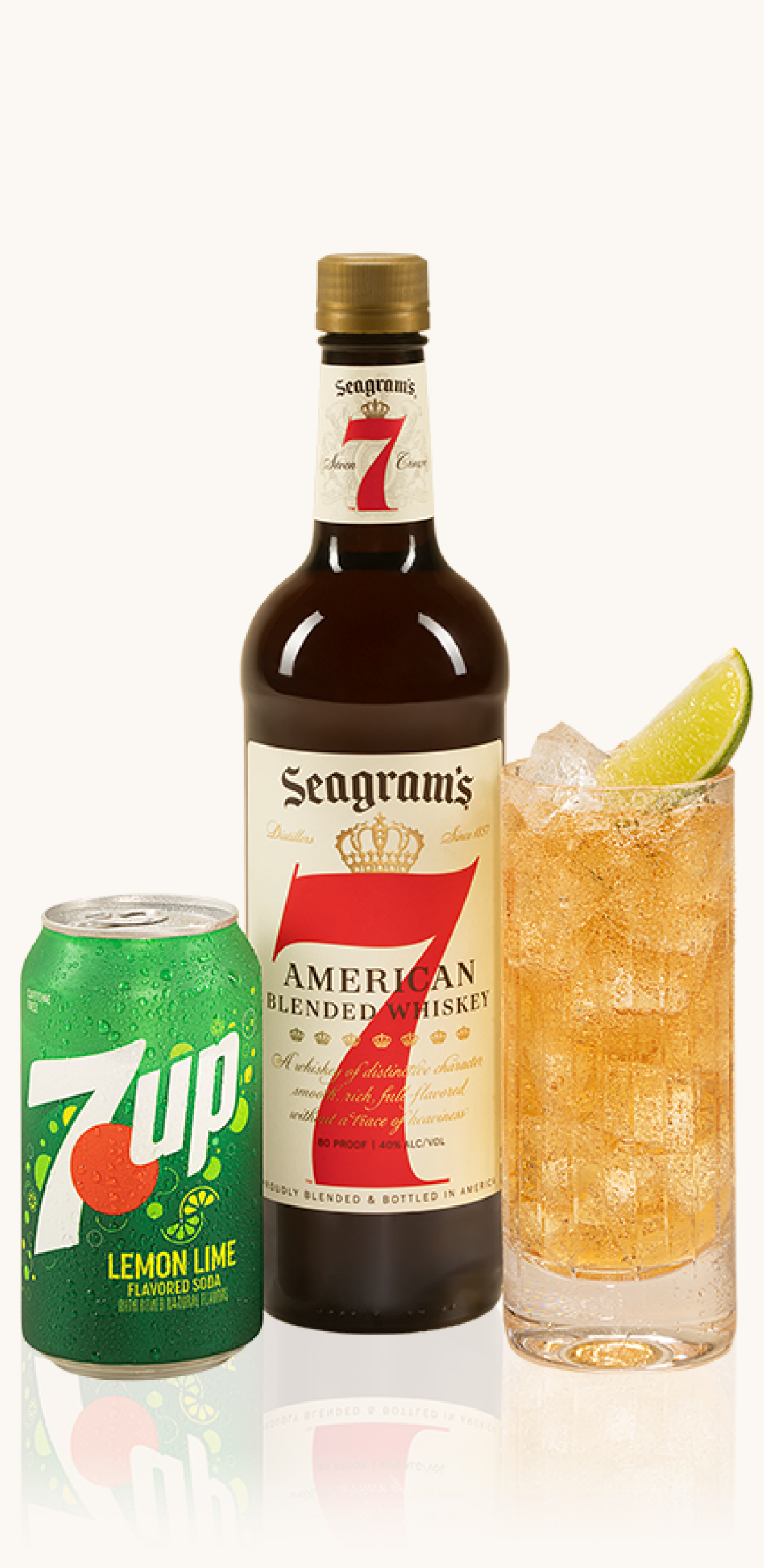
If there is one factor that solidified Seagram’s 7 as a household name, it is the “7&7” cocktail. The combination of Seagram’s Seven Crown and 7-Up lemon-lime soda is perhaps one of the most successful examples of co-branding in consumer history.
Creating the “Signature Serve”
Modern brands often struggle to dictate how consumers use their products. Seagram’s 7 bypassed this by essentially owning a specific drink. By promoting the 7&7, the brand did not just sell a bottle of whiskey; it sold a standardized experience. This “signature serve” strategy simplified the decision-making process for the consumer at the bar. Instead of pondering which whiskey to order and what mixer to pair it with, the consumer could simply ask for a “7&7.”
The Impact of Cross-Promotion
The partnership with 7-Up was a stroke of marketing genius. It allowed Seagram’s to tap into the massive marketing machine of a soft drink giant, while 7-Up gained access to the adult beverage market. Throughout the 1970s and 80s, the two brands were often featured in joint advertising campaigns. This cross-category synergy ensured that Seagram’s 7 was positioned as the default choice for a refreshing, easy-to-drink cocktail. It moved the brand away from the “dusty bottle on the shelf” image and into the “active lifestyle” category.
Navigating Market Shifts: Modern Brand Management under Diageo
As the spirits industry evolved toward “premiumization” and the craft cocktail movement, legacy brands like Seagram’s 7 faced significant challenges. When Diageo acquired the Seagram’s portfolio in the early 2000s, the brand required a strategic pivot to remain relevant to a younger, more discerning audience.
Rebranding for the Modern Era
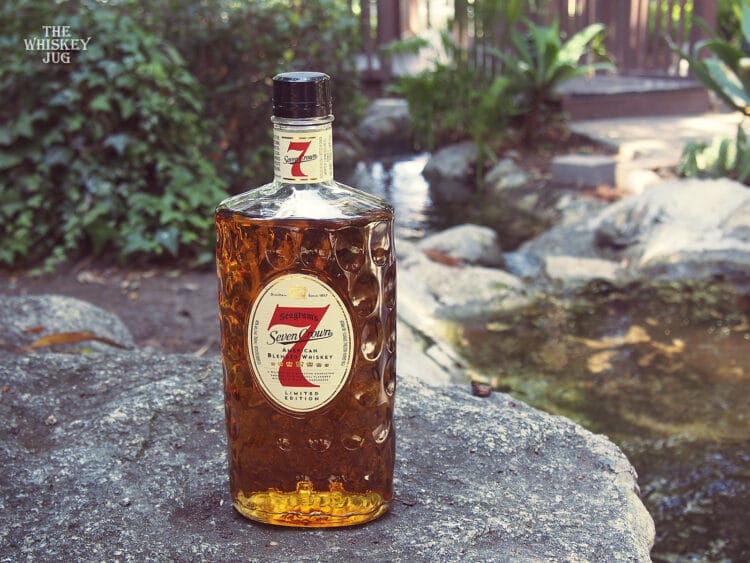
In 2018, Diageo launched a significant brand refresh for Seagram’s 7. The goal was to honor the brand’s heritage while modernizing its aesthetic. The new packaging leaned into a more “vintage-cool” look, highlighting the brand’s 1930s roots. This move targeted the “new traditionalist” consumer—those who value authenticity and history but want a product that feels contemporary. By emphasizing its American heritage, the brand distanced itself from “generic” blends and leaned into the “American Whiskey” narrative that was gaining global traction.
The “National 7&7 Day” Initiative
To drive engagement in the digital age, Seagram’s 7 introduced “National 7&7 Day” on July 7th (7/7). This is a quintessential example of modern experiential marketing. By creating a self-designated holiday, the brand generates an annual surge in social media mentions, bar activations, and retail sales. Furthermore, the brand shifted its messaging toward “Dive Bar Greatness,” positioning itself as the champion of the unpretentious, local bar scene. This move was a strategic masterstroke; as other brands fought for space in high-end mixology bars, Seagram’s 7 claimed the “authentic” dive bar space, a category with immense cultural capital and high volume.
Strategic Takeaways for Contemporary Brand Managers
The longevity of Seagram’s Seven provides several vital lessons for anyone involved in brand strategy, marketing, or corporate identity.
1. Consistency is a Brand Asset
In a world of constant disruption, Seagram’s 7 proves that there is immense value in being the “reliable choice.” By maintaining a consistent flavor profile and visual identity for nearly a century, the brand has built a level of equity that is almost impossible for new entrants to replicate. For brand managers, the lesson is clear: innovation is important, but not at the expense of the core promise that built the brand.
2. Simplify the Consumer Journey
The success of the 7&7 cocktail demonstrates the power of reducing friction. By giving consumers a simple, catchy, and repeatable way to consume the product, Seagram’s ensured its presence in the “active memory” of the market. Modern brands can apply this by focusing on a hero use-case rather than trying to be everything to everyone.
3. Lean into Brand Heritage
When faced with new competition, Seagram’s 7 did not try to pretend it was a craft startup. Instead, it leaned into its history. Authenticity cannot be manufactured, but it can be leveraged. By highlighting its role in American history—from post-prohibition to the mid-century social scene—the brand created a sense of “timelessness” that appeals across generations.
4. Own a Niche
By pivoting its marketing toward “Dive Bar” culture, Seagram’s 7 successfully differentiated itself from the increasingly crowded premium whiskey market. Understanding where your brand fits best—and owning that space entirely—is often more effective than competing in a category where you don’t have a natural advantage.
Seagram’s Seven Crown remains a titan of the industry because it understands its identity. It is not trying to be a 20-year-old single malt or a small-batch experimental rye. It is, and always has been, the reliable, accessible, and iconic American blend. Through strategic co-branding, iconic visual identity, and an astute understanding of consumer behavior, Seagram’s 7 has secured its place in the pantheon of great global brands. As it continues to evolve under modern management, it serves as a reminder that in the world of branding, the number seven is indeed a lucky charm—provided it is backed by a century of strategic excellence.
aViewFromTheCave is a participant in the Amazon Services LLC Associates Program, an affiliate advertising program designed to provide a means for sites to earn advertising fees by advertising and linking to Amazon.com. Amazon, the Amazon logo, AmazonSupply, and the AmazonSupply logo are trademarks of Amazon.com, Inc. or its affiliates. As an Amazon Associate we earn affiliate commissions from qualifying purchases.