
In the rapidly evolving landscape of the 21st century, the term “scientific consensus” is often invoked in debates ranging from climate change to public health. However, in the realm of technology—specifically within the development of artificial intelligence, cybersecurity protocols, and hardware engineering—scientific consensus takes on a structural and foundational role. It is the invisible scaffolding upon which our entire digital civilization is built.
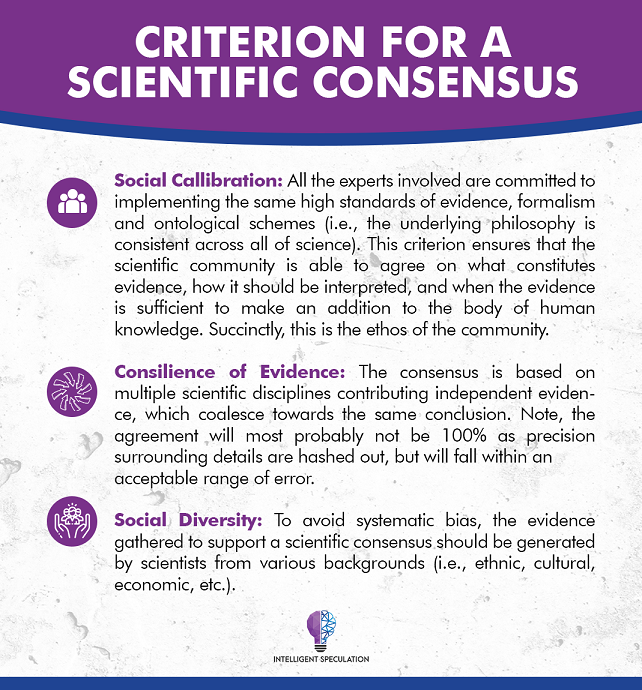
At its core, scientific consensus is not a simple majority vote; it is the collective judgment, position, and opinion of the community of scientists and experts in a particular field. It is reached through a rigorous process of peer review, replication of results, and exhaustive debate. In the tech sector, this process ensures that the tools we use—from the encryption protecting our bank accounts to the algorithms powering our search engines—are based on verified reality rather than transient hype.
The Mechanics of Consensus in Modern Tech Development
The path from a novel technological hypothesis to an industry-wide standard is long and arduous. Unlike the “move fast and break things” mantra of Silicon Valley startups, the scientific consensus that underpins the technology sector moves with a more deliberate, evidence-based pace. This creates a necessary tension between rapid innovation and systemic stability.
Peer Review vs. Open Source Collaboration
In traditional science, peer review happens in academic journals. In the tech world, this has evolved into a hybrid model involving both academia and the open-source community. When a new compression algorithm or a neural network architecture is proposed, it undergoes a “trial by fire.” Thousands of developers and researchers stress-test the code, look for vulnerabilities, and attempt to replicate performance metrics. Consensus begins to form when a critical mass of experts agrees that the technology performs as claimed under diverse conditions.
From Hypothesis to Industry Standard
Consider the development of 5G technology or the Wi-Fi protocols we use daily. These are not the result of a single company’s whim but are the product of international bodies like the IEEE (Institute of Electrical and Electronics Engineers). These organizations facilitate a form of scientific consensus where technical specifications are debated and refined until they reach a level of “standardization.” This standardization is the practical application of consensus, ensuring that hardware from different manufacturers can communicate seamlessly across the globe.
AI and the Search for Algorithmic Consensus
Perhaps no field currently feels the weight of the need for scientific consensus more than Artificial Intelligence (AI). As Large Language Models (LLMs) and generative systems become integrated into every facet of our digital lives, the tech community is racing to establish a consensus on what constitutes “safe” and “reliable” AI.
Establishing Ground Truth in Large Language Models
The challenge with AI is that it often operates as a “black box,” making it difficult to achieve consensus on how a specific result was reached. Scientific consensus in this niche is currently shifting toward “explainability.” Researchers are working toward a collective agreement on the benchmarks used to measure bias, accuracy, and hallucination rates. Without a consensus on these metrics, it is impossible to objectively compare the safety of one AI tool against another.
Ethical Frameworks as a New Scientific Frontier
In tech, consensus isn’t just about whether a circuit works; it’s increasingly about the ethical implications of how that circuit is used. We are seeing a burgeoning scientific consensus regarding AI alignment—the process of ensuring AI goals match human values. This involves interdisciplinary research combining computer science, cognitive psychology, and philosophy. When experts across these fields agree on a safety protocol, it becomes a new pillar of the tech industry’s “best practices.”

The Role of Consensus in Digital Security and Cryptography
If there is one area where scientific consensus is a matter of digital life and death, it is cybersecurity. The protocols that keep the internet running—such as SSL/TLS encryption—are based on mathematical certainties that have been verified by the global cryptographic community.
Zero-Trust Models and Mathematical Proofs
In the world of digital security, “trust” is a vulnerability. The tech industry has moved toward a “Zero-Trust” architecture, a shift that occurred because a scientific consensus emerged: traditional perimeter-based security was no longer sufficient against modern threats. This consensus was built on years of data showing how breaches occur. By moving to a model where every access request must be verified, the industry adopted a more scientifically rigorous approach to data protection.
Why Standardization Outlives Individual Innovation
Individual companies may release proprietary “secure” messaging apps, but the tech community generally views these with skepticism until their underlying protocols are published and vetted. The Signal Protocol, for instance, became an industry standard not through marketing, but because independent cryptographers reached a consensus that its “double ratchet” algorithm was superior for end-to-end encryption. This proves that in tech, the power of consensus often outweighs the power of a brand’s marketing budget.
Challenges to Consensus: Misinformation and Rapid Iteration
Despite its importance, reaching scientific consensus in the tech world is harder than ever. The speed of digital innovation often outpaces the ability of the scientific community to verify results. This gap creates a “gray zone” where misinformation and “vaporware” can flourish.
Navigating the “Move Fast and Break Things” Paradox
The tech industry is famously impatient. When a new trend like the Metaverse or Web3 emerges, there is often a rush to claim consensus on its utility and security before the empirical data is in. A professional tech landscape requires distinguishing between “market hype” and “technical consensus.” Market hype is driven by venture capital; technical consensus is driven by data. For a technology to have staying power, it must eventually transition from the former to the latter.
Building Resilient Systems through Scientific Rigor
To combat the dilution of consensus, many tech firms are now hiring “Chief Scientific Officers” to bridge the gap between R&D and product release. These roles ensure that before a feature is touted as “revolutionary,” it has been subjected to internal and external rigors that mirror the scientific method. This commitment to rigor is what separates a gimmick from a foundational tool.

The Future: Why Consensus is the Bedrock of Innovation
As we move toward a future defined by quantum computing, autonomous vehicles, and biotechnological integration, the role of scientific consensus will only grow. We are entering an era where the complexity of our tools exceeds the grasp of any single individual. In this environment, we must rely on the collective wisdom of the expert community.
Scientific consensus provides the “API” for human progress. It allows a software developer in India to build an app that runs perfectly on hardware designed in California, using a cloud server located in Germany, secured by an algorithm developed in Israel. This global interoperability is the ultimate fruit of consensus.
In conclusion, “scientific consensus” in the technology sector is more than just an academic concept; it is a practical necessity. It is the process by which we separate the signal from the noise in an increasingly crowded digital world. By adhering to the principles of empirical verification, peer review, and open debate, the tech community ensures that the innovations of today become the reliable infrastructure of tomorrow. For professionals and enthusiasts alike, understanding this process is essential for navigating the complexities of the modern digital age with insight and confidence.
aViewFromTheCave is a participant in the Amazon Services LLC Associates Program, an affiliate advertising program designed to provide a means for sites to earn advertising fees by advertising and linking to Amazon.com. Amazon, the Amazon logo, AmazonSupply, and the AmazonSupply logo are trademarks of Amazon.com, Inc. or its affiliates. As an Amazon Associate we earn affiliate commissions from qualifying purchases.