
The S&P 500, often referred to simply as “the S&P,” stands as one of the most widely recognized and influential stock market indexes in the world. It is far more than just a list of companies; it is a dynamic barometer of the U.S. economy, a crucial benchmark for investors, and a cornerstone of countless investment portfolios. For anyone looking to understand the mechanics of the stock market, gauge economic health, or build a robust investment strategy, comprehending the S&P 500 is an essential first step. This article delves into the core components, significance, and practical implications of this powerful financial instrument, providing a comprehensive guide for both nascent and seasoned investors.

Unpacking the S&P 500: A Benchmark of American Industry
At its heart, the S&P 500 is a stock market index that tracks the performance of 500 of the largest publicly traded companies in the United States. Compiled and maintained by S&P Dow Jones Indices, it represents approximately 80% of the total market capitalization of the U.S. stock market. This broad coverage makes it an excellent proxy for the overall health and performance of the American equity market. Unlike other indexes that might focus on specific sectors or a smaller number of companies, the S&P 500 aims for a broad, diversified representation across various industries.
The Origins and Evolution of the Index
The history of the S&P 500 dates back further than many realize. Its roots can be traced to 1923 when Standard Statistics Company (which later merged with Poor’s Publishing Company to form Standard & Poor’s) introduced a composite index of 233 companies. This initial index was expanded over the years, eventually including 500 companies in 1957. The introduction of the S&P 500 with daily updates on a market-weighted basis was revolutionary for its time, providing a more accurate and comprehensive measure of market performance compared to earlier, simpler averages like the Dow Jones Industrial Average. Its evolution has mirrored the growth and increasing complexity of the U.S. financial markets, constantly adapting to incorporate new methodologies and maintain its relevance.
Key Characteristics: Market-Cap Weighting and Diversification
One of the defining features of the S&P 500 is its market-capitalization weighting. This means that companies with larger market capitalizations (stock price multiplied by the number of outstanding shares) have a greater impact on the index’s value. For example, a 1% change in Apple’s stock price (one of the largest companies by market cap) will affect the index more significantly than a 1% change in a smaller S&P 500 constituent. This methodology reflects the real-world economic influence of these larger corporations, as their movements often have broader implications for the economy.
The index also boasts impressive diversification across sectors. While technology companies currently hold a significant weighting, the S&P 500 includes representatives from all major economic sectors: information technology, healthcare, financials, consumer discretionary, communication services, industrials, consumer staples, energy, utilities, real estate, and materials. This sectoral breadth helps to mitigate risk, as a downturn in one particular industry is often offset by stability or growth in others, providing a smoother representation of the broader market.
Eligibility Criteria: What It Takes to Be an S&P 500 Company
Being included in the S&P 500 is a prestigious accomplishment for a company, often leading to increased investor interest and institutional investment. However, inclusion is not automatic and is determined by a committee at S&P Dow Jones Indices, not solely by size. The criteria are rigorous and include:
- Market Capitalization: A minimum market cap threshold (which adjusts periodically, but generally in the billions of dollars).
- Liquidity: The company’s stock must be highly liquid, meaning it trades frequently and in high volumes.
- Public Float: A substantial portion of the company’s shares must be available for public trading, not held by insiders.
- U.S. Company: The company must be domiciled in the U.S. and listed on a major U.S. exchange (NYSE or NASDAQ).
- Profitability: The company must have positive reported earnings in the most recent quarter and positive aggregate earnings over the past four consecutive quarters.
- Sector Representation: The committee also considers sector balance to maintain the index’s broad market representation.
These criteria ensure that the S&P 500 remains a robust, liquid, and representative index of leading U.S. companies.
Why the S&P 500 Matters to Investors and the Economy
The S&P 500’s significance extends far beyond its function as a mere list of stocks. It plays a pivotal role in financial markets, serving as a critical benchmark, a tool for economic analysis, and a foundational element for countless investment strategies. Its performance is regularly discussed in financial news, economic reports, and investor forums, highlighting its pervasive influence.
A Barometer of Economic Health
Economists and analysts frequently look to the S&P 500’s performance as a leading indicator of the broader U.S. economy. When the index is consistently rising, it often signals investor confidence, robust corporate earnings, and a generally healthy economic environment. Conversely, a prolonged decline can suggest impending economic challenges, such as recessions or periods of slower growth. Because the index comprises 500 large, diverse companies, their collective financial performance and future outlook offer valuable insights into consumer spending, industrial production, and overall business sentiment. While not the only economic indicator, its real-time nature and broad scope make it an indispensable tool for gauging the nation’s financial pulse.
Portfolio Diversification and Risk Management
For individual and institutional investors alike, the S&P 500 offers an inherent level of diversification that is difficult to achieve by investing in individual stocks. By investing in the entire index (typically through an index fund or ETF), one gains exposure to 500 different companies across various sectors. This broad exposure significantly reduces idiosyncratic risk – the risk associated with a single company’s poor performance. If one or two companies within the S&P 500 face challenges, their impact on the overall index is diluted by the performance of the other 498 companies. This diversification is a cornerstone of prudent risk management, helping investors achieve market returns without the added volatility of picking individual winners and losers.
Historical Performance and Long-Term Growth Potential
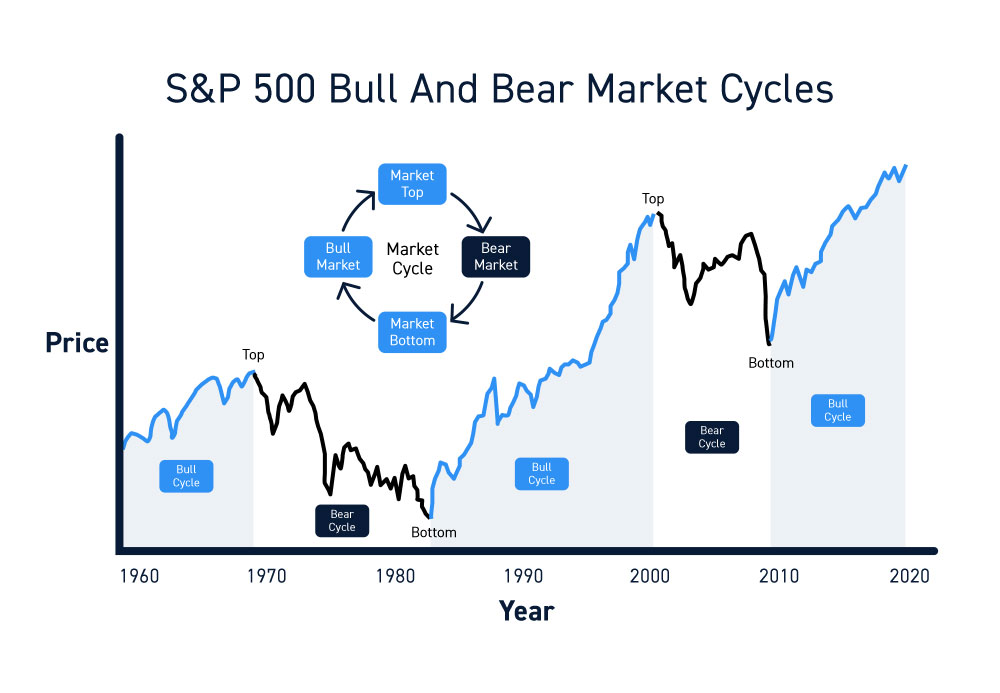
Historically, the S&P 500 has demonstrated remarkable resilience and a strong upward trend over the long term. Despite numerous economic downturns, market corrections, and global crises, the index has consistently recovered and reached new highs over multi-decade periods. While past performance is not indicative of future results, the historical average annual return (including dividends) has been approximately 10-12% over many decades. This compelling track record underscores its potential for wealth accumulation and makes it a foundational component of long-term investment strategies, particularly for retirement planning and growth portfolios. Investors seeking consistent, market-matching returns often gravitate towards S&P 500-tracking investments for this reason.
How to Invest in the S&P 500
Directly investing in all 500 companies in their correct market-cap weightings would be an incredibly complex and expensive undertaking for most individual investors. Fortunately, financial innovation has provided highly accessible and cost-effective ways to gain exposure to the S&P 500’s performance. These methods allow investors to participate in the growth of the largest U.S. companies with minimal effort and expense.
Index Funds: The Accessible Entry Point
Mutual index funds are perhaps the most traditional way for individual investors to track the S&P 500. These funds are managed by financial institutions and pool money from many investors to buy and hold the stocks of the companies within the S&P 500 in the same proportions as the index itself. The primary advantages of S&P 500 index funds include:

- Simplicity: They offer instant diversification and require no active stock picking.
- Low Fees: Because they are passively managed (they simply track an index rather than having a fund manager actively make buy/sell decisions), their expense ratios (annual fees) are typically very low compared to actively managed mutual funds.
- Broad Market Exposure: They provide comprehensive exposure to the largest U.S. companies.
Investors typically buy shares of these funds directly from fund providers like Vanguard, Fidelity, or Schwab, often through their brokerage accounts or retirement plans.
Exchange-Traded Funds (ETFs): Flexibility and Liquidity
Exchange-Traded Funds (ETFs) that track the S&P 500 have gained immense popularity over the past two decades. Similar to index mutual funds, S&P 500 ETFs hold a portfolio of stocks designed to mimic the index’s performance. However, they differ in a crucial way: ETFs trade on stock exchanges throughout the day, much like individual stocks. This offers several advantages:
- Real-time Trading: Investors can buy and sell S&P 500 ETFs at any point during market hours, allowing for more flexibility than mutual funds which are priced only once per day after market close.
- Lower Expense Ratios: Many S&P 500 ETFs boast even lower expense ratios than their mutual fund counterparts, making them incredibly cost-effective.
- Tax Efficiency: ETFs often have a more tax-efficient structure compared to mutual funds, particularly in taxable brokerage accounts, due to how they handle capital gains distributions.
Popular S&P 500 ETFs include SPDR S&P 500 ETF Trust (SPY), iShares Core S&P 500 (IVV), and Vanguard S&P 500 ETF (VOO).
Individual Stocks vs. Broad Market Exposure
While an investor could theoretically try to replicate the S&P 500 by buying 500 individual stocks, this approach is highly impractical for several reasons: the immense capital required, the significant transaction costs, and the ongoing effort to rebalance the portfolio to match the index’s precise weightings and changes. Moreover, picking individual stocks inherently carries higher risk than investing in a diversified index. Even expert stock pickers often struggle to consistently outperform the S&P 500 over the long run, leading many financial advisors to recommend broad market index funds or ETFs as the core of an investment portfolio, particularly for those seeking long-term growth with mitigated risk.
Understanding the S&P 500’s Role in Financial Analysis
Beyond direct investment, the S&P 500 serves as a crucial analytical tool within the financial world. It acts as a standard against which other investments are measured, provides insights into market sentiment, and helps to contextualize the impact of major economic and geopolitical events. Its ubiquity in financial discourse highlights its importance in shaping investment decisions and economic perspectives.
Comparing Performance: Benchmarking Against Other Investments
One of the S&P 500’s most important functions is its role as a benchmark. When evaluating the performance of an actively managed mutual fund, a professional money manager, or even a personal investment portfolio, the S&P 500 is frequently used as the standard for comparison. If an investment strategy or fund aims to outperform the broad U.S. market, its returns are typically measured against the S&P 500’s performance over the same period. This allows investors to assess whether the added risk or fees associated with active management are justified by superior returns. If a fund consistently underperforms the S&P 500, investors might question its value proposition and consider opting for a low-cost index fund instead.
Gauging Market Sentiment and Investor Confidence
The daily movements of the S&P 500 are meticulously watched by investors, analysts, and the media as a real-time indicator of market sentiment. A sharp rise often reflects optimism, positive economic news, or strong corporate earnings forecasts, signaling increased investor confidence. Conversely, a significant drop can indicate fear, uncertainty, or negative economic data, suggesting a decline in confidence. While short-term fluctuations can be driven by a myriad of factors, sustained trends in the S&P 500 provide a broad picture of how investors are feeling about the future prospects of the U.S. economy and its leading companies.
The Impact of Major Economic Events
Major economic events, political developments, and global crises frequently have a direct and often immediate impact on the S&P 500. For instance, interest rate decisions by the Federal Reserve, reports on inflation or unemployment, geopolitical tensions, or significant corporate news can all trigger movements in the index. Because the S&P 500 is so broadly representative, its reaction to these events offers insights into how the market perceives their potential consequences for corporate profits and economic stability. Analyzing these reactions helps economists and investors understand the market’s sensitivity to various factors and forecast potential future trends.
Considerations and Nuances for S&P 500 Investors
While investing in the S&P 500 is widely recommended for its simplicity and long-term potential, there are several important considerations and nuances that investors should be aware of to maximize their strategy and navigate market dynamics effectively.
Rebalancing and Index Adjustments
The S&P 500 is not a static list of companies. S&P Dow Jones Indices regularly reviews the index components to ensure they meet the eligibility criteria and maintain the desired market representation. This process involves rebalancing (adjusting the weighting of existing companies as their market caps change) and index adjustments (adding new companies and removing others). Companies might be removed due to mergers, acquisitions, bankruptcy, or if they no longer meet the size or profitability criteria. Conversely, fast-growing companies that meet the requirements can be added. These adjustments ensure the S&P 500 remains a current and relevant reflection of the U.S. economy’s largest publicly traded firms. Investors in S&P 500 index funds or ETFs benefit from these adjustments automatically without needing to take any action.
Dividend Reinvestment and Compounding
Many of the companies within the S&P 500 pay dividends to their shareholders. These dividends, while seemingly small individually, can significantly contribute to an investor’s total returns over the long term, especially when they are reinvested. Dividend reinvestment means using the cash dividends received to purchase more shares of the S&P 500 index fund or ETF. This process supercharges the power of compounding, where earnings generate further earnings, leading to exponential growth over time. Historically, dividends have accounted for a substantial portion of the S&P 500’s total returns, making dividend reinvestment a crucial strategy for long-term wealth accumulation.
The Importance of a Long-Term Perspective
Perhaps the most critical consideration for S&P 500 investors is the adoption of a long-term perspective. While the index has demonstrated consistent growth over decades, it is also subject to short-term volatility, including market corrections (declines of 10-20%) and bear markets (declines of 20% or more). Attempting to time the market – buying low and selling high – is notoriously difficult and often leads to worse outcomes than simply holding through ups and downs. A long-term horizon (10 years or more) allows investors to ride out market fluctuations and benefit from the S&P 500’s historical tendency to recover and achieve new highs. Patience, discipline, and a focus on compounding are key to successfully investing in the S&P 500.
Conclusion
The S&P 500 is more than just an arbitrary collection of stocks; it is a meticulously constructed index that serves as a cornerstone of modern finance. As a representation of 500 of America’s leading companies, it acts as a critical barometer for the U.S. economy, a vital benchmark for investment performance, and a highly accessible vehicle for diversified, long-term wealth building. Understanding its composition, its historical performance, and the simple ways to invest in it provides individuals with a powerful tool for financial literacy and strategic portfolio construction. For those seeking broad market exposure, robust diversification, and a track record of resilient growth, investing in the S&P 500 through low-cost index funds or ETFs remains one of the most prudent and effective strategies available.
aViewFromTheCave is a participant in the Amazon Services LLC Associates Program, an affiliate advertising program designed to provide a means for sites to earn advertising fees by advertising and linking to Amazon.com. Amazon, the Amazon logo, AmazonSupply, and the AmazonSupply logo are trademarks of Amazon.com, Inc. or its affiliates. As an Amazon Associate we earn affiliate commissions from qualifying purchases.