
In the rapidly evolving landscape of modern technology, we often look to silicon chips, fiber optics, and quantum processors as the pinnacles of engineering. However, the most sophisticated “technology” ever designed doesn’t exist in a cleanroom in Silicon Valley; it exists within the microscopic confines of our cells. As we move deeper into the era of bioinformatics, synthetic biology, and DNA computing, the lines between software engineering and molecular biology are blurring. At the heart of this convergence is a critical component known as the RNA primer.
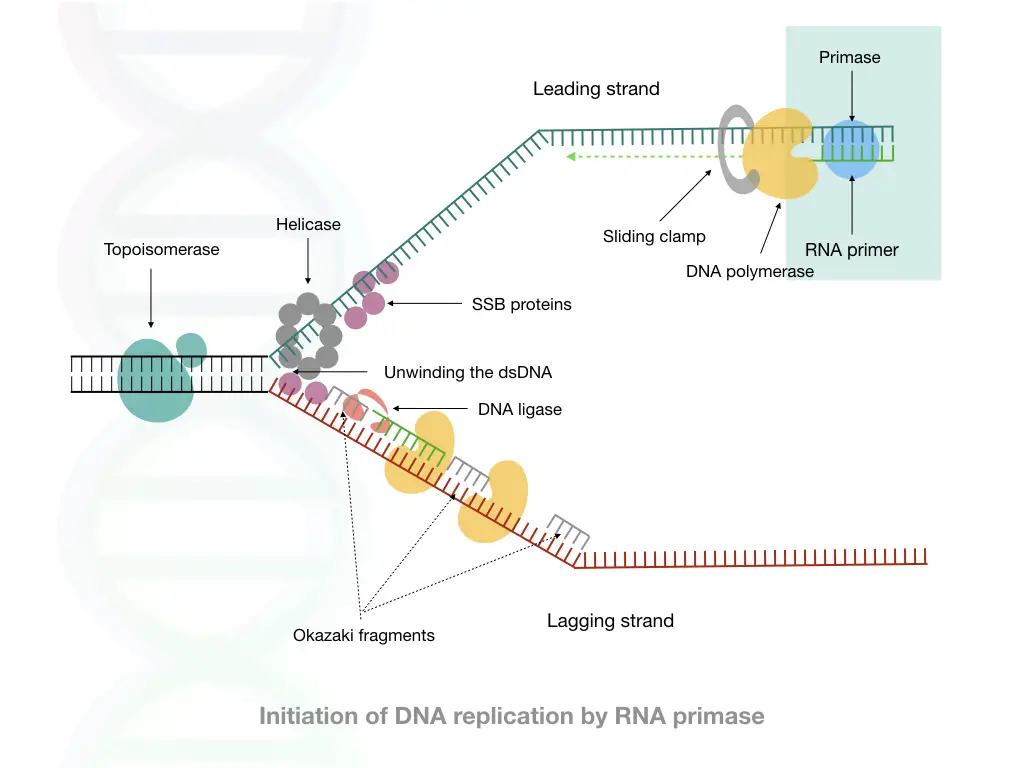
To a software developer, an RNA primer is the “bootloader” of life. It is the essential sequence that initializes the replication of data. Without it, the vast libraries of genetic information stored in DNA would remain inaccessible, much like a powerful computer with no operating system to wake the hardware. Understanding what an RNA primer is, and how it functions, is no longer just a task for biologists—it is a foundational requirement for the next generation of tech innovators, data scientists, and security experts.
The Bootloader of Life: Defining the RNA Primer in Tech Terms
In the world of computing, every process requires a starting point. Whether it’s an application opening or a server booting up, there is an initialization script that tells the system where to begin. In the biological world, the “system” is DNA replication, and the “initialization script” is the RNA primer.
Initializing the Replication Loop
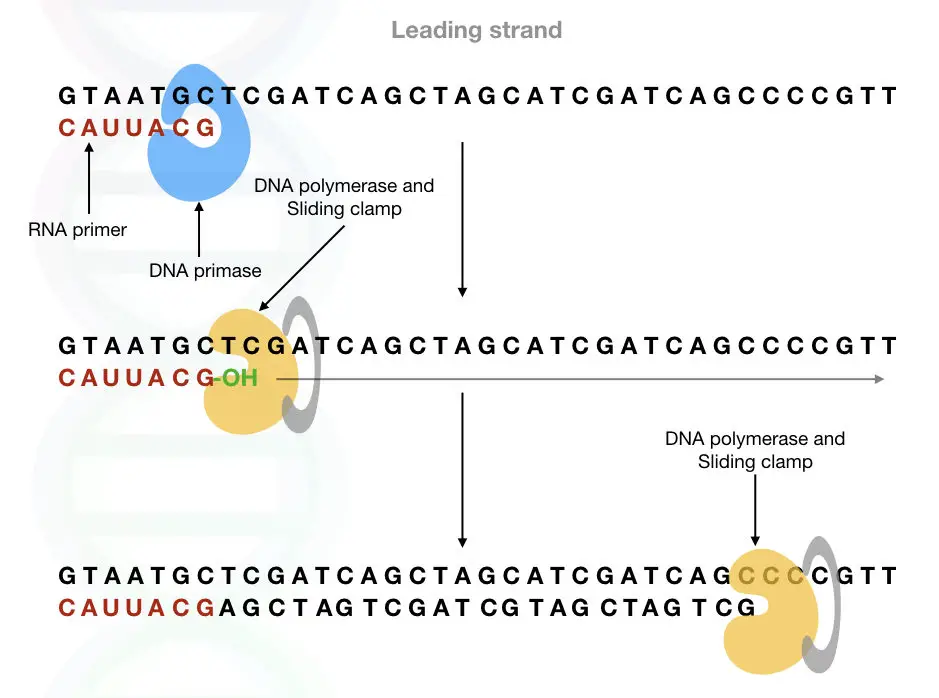
DNA polymerase, the enzyme responsible for copying genetic data, is a highly efficient “write” head, but it has one major limitation: it cannot start from scratch. It can only add new nucleotides (data points) to an existing strand. This is where the RNA primer comes in. Synthesized by an enzyme called primase, the RNA primer is a short sequence of ribonucleotides—typically 10 to 12 bases long—that binds to the template DNA.
This binding creates a double-stranded starting point that the DNA polymerase can recognize. In technical terms, the RNA primer provides the “3′-hydroxyl group” required for the polymerizing enzyme to begin its work. Without this molecular handshake, the replication of the biological “source code” would never execute.
Why Silicon Mimics Biology
The architecture of biological replication has inspired numerous advancements in computer science, particularly in the realm of error-checking and recursive algorithms. Just as an RNA primer ensures that DNA replication begins at the correct “memory address,” modern software protocols use headers and metadata to ensure data packets are processed in the correct order. The biological efficiency of the RNA primer—its ability to signal the start of a massive data transfer with minimal overhead—serves as a masterclass in optimized systems design.
Revolutionizing Bioinformatics: From Sequence Data to Actionable Code
The tech industry is currently obsessed with “Big Data,” but biological data is the largest dataset in existence. A single human genome contains roughly 3.2 billion base pairs. Processing, sequencing, and manipulating this data requires sophisticated hardware and software tools that rely heavily on the principles of RNA priming.
High-Throughput Sequencing (HTS) and Primer Design
Bioinformatics is the field that treats DNA as digital information. One of its most significant technological achievements is High-Throughput Sequencing (HTS). In these systems, synthetic RNA and DNA primers are engineered to target specific regions of a genome.
By designing “primers” digitally, scientists can program sequencing machines to “read” specific parts of a genetic code, much like a search engine indexes specific pages on the web. The precision of these synthetic primers determines the accuracy of the data output. If the primer design is flawed (a biological “bug”), the entire sequencing run can fail, leading to corrupted data or “noise” in the genetic assembly.
Machine Learning in Genomic Assembly
As we scale our ability to read genetic code, the volume of data has surpassed human capability to analyze. This has led to the rise of AI and Machine Learning (ML) tools specifically designed for primer optimization. Tech companies are now developing neural networks that can predict the most effective RNA primer sequences for complex environments. These AI tools simulate millions of potential chemical interactions to ensure that the primer binds only to the intended target, minimizing “off-target” effects. This is essentially the biological version of “debugging” a search query to ensure it returns only relevant results.
Synthetic Biology: Programming Life Using Molecular Tools
If bioinformatics is about reading the code, synthetic biology is about writing it. In this niche, the RNA primer is a tool for biological engineering, allowing tech-driven startups to create everything from lab-grown meat to carbon-capturing microbes.
PCR and the Amplification of Digital-Biological Data
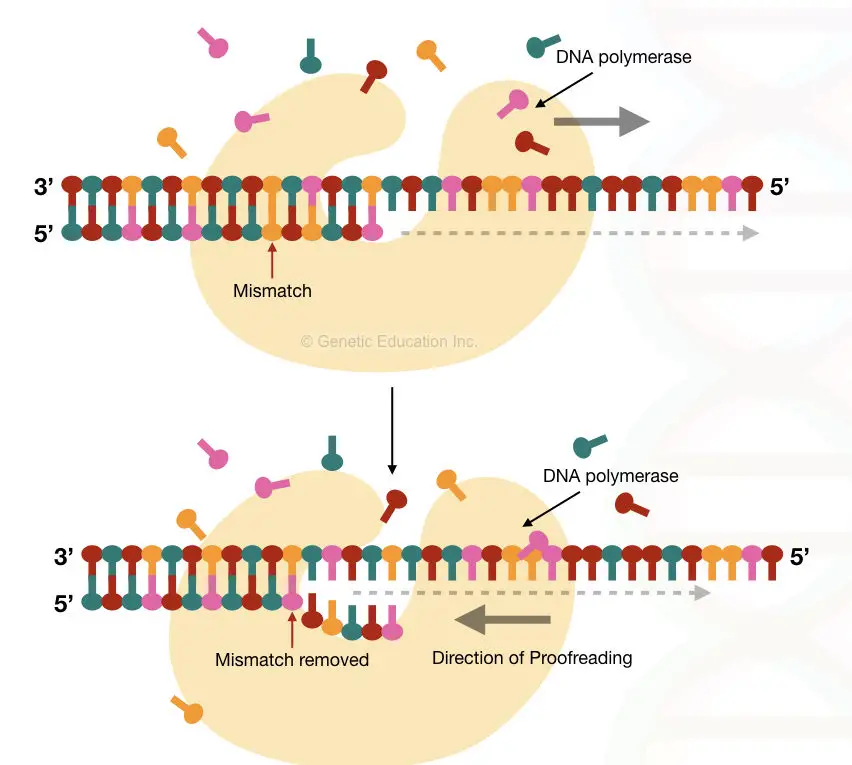
The Polymerase Chain Reaction (PCR) is perhaps the most famous application of primer technology. From a tech perspective, PCR is a “data amplification” protocol. It takes a single fragment of DNA and creates millions of identical copies. This process is entirely dependent on primers.
In the tech stack of a modern biotech lab, PCR is used to verify that a “biological program” has been successfully uploaded into a cell. By using specific primers, researchers can “ping” a cell to see if a specific gene is present. If the primer binds and the DNA is amplified, it’s the molecular equivalent of a successful “Ping” command in networking.
CRISPR and the Editing Interface
While CRISPR is often discussed as “genetic scissors,” the actual mechanism of targeting is driven by RNA. Guide RNA (gRNA) functions as a sophisticated version of an RNA primer. It contains the “coordinates” for the CRISPR-Cas9 enzyme to navigate to a specific location in the genome. For tech developers, this is akin to a “Find and Replace” function in a code editor. The ability to program these RNA guides allows us to edit the very fabric of life with the same precision we use to edit a Python script.
The Future of Data Storage: RNA and DNA as Hard Drives
As the global production of data outpaces the supply of silicon-based storage, the tech industry is looking for alternatives. Biological molecules, specifically DNA and RNA, are emerging as the most durable and high-density storage media available.
Density and Longevity: The Tech Advantage
Silicon-based hard drives and SSDs have a shelf life of perhaps a decade before data degradation occurs. In contrast, DNA can store information for thousands of years if kept stable. Because an RNA primer is the key to accessing this stored information, it is effectively the “read/write” head for the future of archival data.
Imagine a world where the entire internet is stored in a few grams of biological material. To retrieve a specific file—say, a historical video or a corporate database—you would introduce a specific RNA primer designed to target the “address” of that file, triggering a replication process that converts the biological data back into digital signals.
Overcoming the Latency Gap
The current challenge in DNA storage is “latency”—the time it takes to read and write the data. Currently, synthesis and sequencing are slow. However, tech innovators are working on “nanopore sequencing” and automated primer synthesisers that aim to reduce this time. The goal is to create a biological “RAM” where RNA primers facilitate near-instantaneous access to genetic data caches.
Cybersecurity in the Bio-Tech Era: Protecting the Source Code
As biology becomes increasingly digitized, it also becomes vulnerable to the same threats that plague our software: hacking, malware, and unauthorized access. The RNA primer is a central figure in the emerging field of Biosecurity.
Bio-Hacking and Vulnerability Management
If an attacker can design a malicious RNA primer, they could theoretically interfere with the biological processes of an organism or “corrupt” a DNA-based data storage system. This has led to the development of “Bio-Firewalls”—software tools that scan synthetic DNA orders for “blacklisted” sequences. Tech companies like Microsoft and Twist Bioscience are already collaborating on protocols to ensure that primers used in research cannot be repurposed for biological “exploits.”
Encryption at the Molecular Level
In a fascinating twist, RNA primers are being used to develop new forms of encryption. By using “primer-based steganography,” a message can be hidden within a vast sea of random DNA strands. The message can only be “decrypted” and read if the recipient possesses the exact RNA primer sequence required to initiate the replication of the hidden message. This is the ultimate form of Two-Factor Authentication (2FA), where the “key” is a physical biological molecule.
The Synthesis of Biology and Technology
The question “what is an RNA primer?” may begin in a biology textbook, but its answer concludes in the future of the technology industry. The RNA primer is the bridge between the digital and the organic. It is the mechanism by which we boot up biological systems, the tool we use to read and write the code of life, and the key to the next generation of data storage and security.
As we continue to develop AI tools that design better primers and hardware that can sequence DNA in seconds, we are witnessing the birth of a new tech stack—one that is carbon-based rather than silicon-based. For the tech professional, the RNA primer is not just a molecule; it is a fundamental component of the infrastructure that will define the 21st century. By mastering the logic of the RNA primer, we are not just learning how life works—we are learning how to program it.
aViewFromTheCave is a participant in the Amazon Services LLC Associates Program, an affiliate advertising program designed to provide a means for sites to earn advertising fees by advertising and linking to Amazon.com. Amazon, the Amazon logo, AmazonSupply, and the AmazonSupply logo are trademarks of Amazon.com, Inc. or its affiliates. As an Amazon Associate we earn affiliate commissions from qualifying purchases.