
In the realm of geophysics and computational science, the ability to “see” miles beneath the Earth’s surface is not just a feat of engineering; it is a testament to the evolution of high-performance computing and algorithmic sophistication. At the heart of this capability lies Reverse Time Migration (RTM), a seismic imaging technology that has revolutionized how we map complex geological structures. While the concept of seismic migration has existed for decades, RTM represents the pinnacle of this field, utilizing the full power of the wave equation to produce images of unparalleled clarity. As the global demand for precision in subsurface exploration grows—spanning from traditional energy sectors to the emerging fields of carbon capture and geothermal energy—understanding the technical intricacies of RTM is essential for any technologist or engineer working at the intersection of data science and physical modeling.

The Mechanics of Reverse Time Migration: Physics Meets Algorithms
At its core, Reverse Time Migration is a technique used to convert seismic data recorded at the surface into a high-resolution image of the Earth’s interior. Unlike simpler imaging methods that rely on approximations of how sound waves travel, RTM is based on the full two-way wave equation. This allows it to handle the most complex wave behaviors, including reflections, diffractions, and prismatic waves.
From Wave Equations to Subsurface Maps
The fundamental challenge of seismic imaging is that the data collected—time-stamped echoes of sound waves—does not inherently show the location of structures. Instead, it shows when a signal returned to a sensor. To turn this “time” data into “depth” data, scientists must simulate the physics of wave propagation. RTM does this by solving the wave equation twice: once forward in time (simulating the source of the sound, such as an air gun or vibrator truck) and once backward in time (starting from the recorded data at the receivers).
The Two-Way Wavefield Propagation
The “Reverse Time” in RTM refers to the unique way the algorithm handles the receiver data. Most traditional migration methods move only in a “one-way” direction, assuming waves primarily travel downward and then upward. However, in complex geologies, waves bounce in many directions. RTM propagates the recorded wavefield backward from the receivers into the earth. Where the forward-propagating wave (from the source) and the backward-propagating wave (from the receivers) coincide in space and time, an “imaging condition” is met, and a point of the subsurface map is created.
Overcoming the Limitations of Kirchhoff and Beam Migration
Before the widespread adoption of RTM, industries relied on Kirchhoff or Beam migration. While these methods are computationally “cheaper,” they fail in areas with sharp velocity contrasts, such as the edges of salt domes or deep-sea trenches. These older methods use “ray theory,” which assumes waves travel like straight lines or simple curves. RTM, by contrast, treats waves as true physical fronts that can bend, wrap around objects, and interfere with one another. This allows RTM to image near-vertical structures and “sub-salt” environments that were previously invisible to geophysicists.
The Role of High-Performance Computing (HPC) in RTM
If RTM is the “gold standard” of imaging, why wasn’t it used universally decades ago? The answer lies in its extreme computational intensity. RTM is one of the most demanding applications in the world of industrial computing, requiring massive amounts of memory, processing power, and data throughput.
Computational Demands and Parallel Processing
The process of solving the wave equation across a 3D grid involving billions of cells is a “heroic” computing task. For every shot of seismic data, the algorithm must calculate the state of the wavefield at thousands of time steps. This necessitates the use of supercomputers or massive high-performance computing (HPC) clusters. Because the calculations for different parts of the Earth can often be performed independently, RTM is a “pleasingly parallel” problem, making it a primary driver for innovations in cluster architecture and high-speed interconnects.
GPU Acceleration in Modern RTM
The most significant shift in RTM technology over the last decade has been the transition from Central Processing Units (CPUs) to Graphics Processing Units (GPUs). Because RTM involves performing the same mathematical operations over a massive grid of data, the parallel architecture of GPUs is perfectly suited for the task. A single modern GPU node can often outperform dozens of traditional CPU nodes for seismic migration. This shift has not only made RTM faster but has also made it more accessible, allowing companies to process larger datasets with higher frequencies, resulting in even sharper images.
Data Storage and Throughput Challenges
It is not just about raw processing power; RTM is also a “Big Data” challenge. A single seismic survey can generate petabytes of raw data. During the RTM process, the “forward” wavefield must often be stored so it can be cross-correlated with the “backward” wavefield. This creates a massive I/O (Input/Output) bottleneck. Modern tech solutions involve sophisticated “check-pointing” algorithms—which recalculate parts of the wavefield on the fly to save disk space—and the use of NVMe storage layers to handle the blistering speeds required for data retrieval.
Real-World Applications and Industrial Impact
The technological prowess of RTM is not merely academic; it has profound implications for global energy security and environmental management. By providing a clearer picture of the subsurface, RTM reduces the risk associated with high-stakes engineering projects.
Sub-Salt Imaging and Complex Geologies
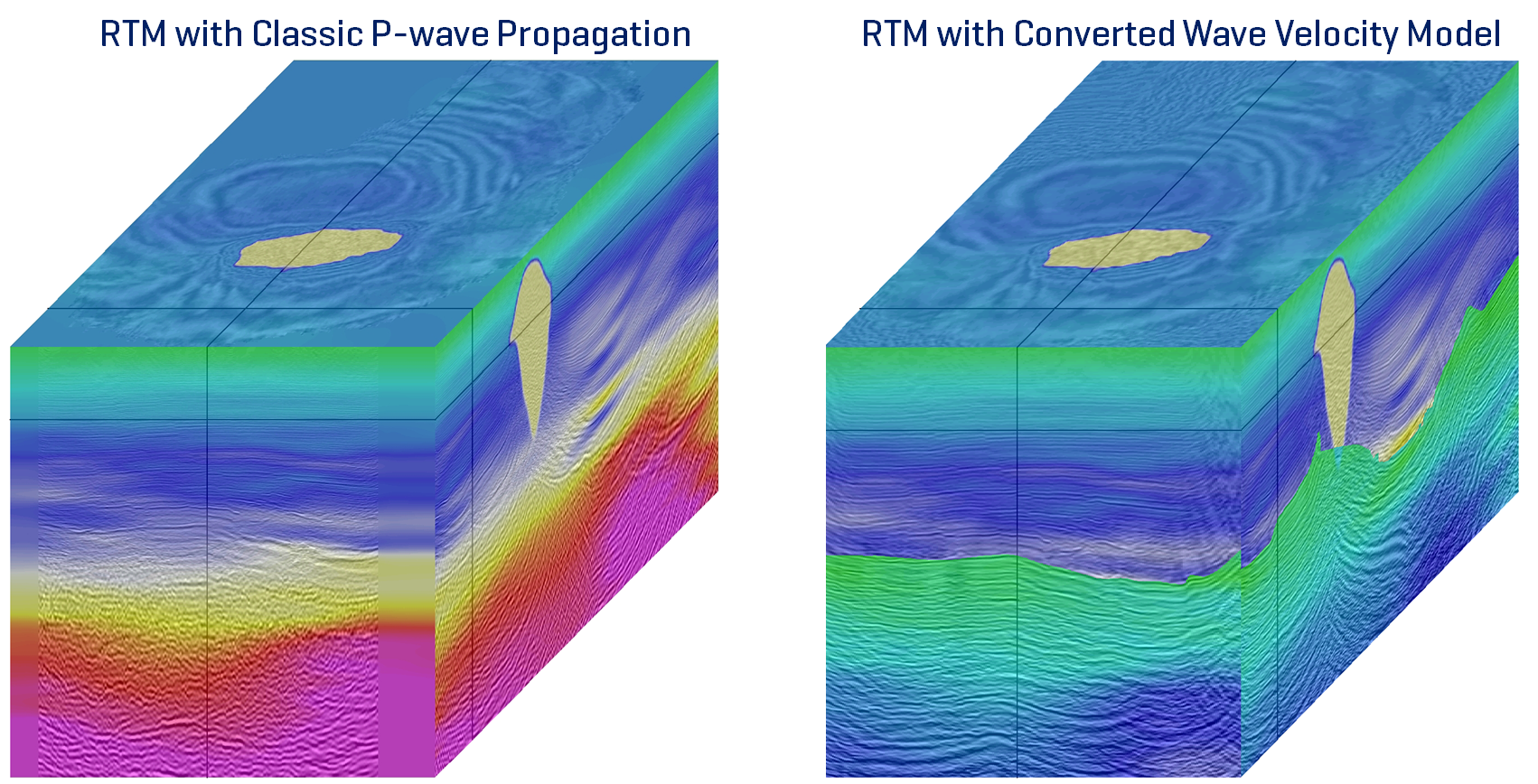
One of the most famous applications of RTM is in the Gulf of Mexico and offshore Brazil. In these regions, massive layers of salt sit above potential energy reserves. Salt acts like a warped mirror, distorting seismic waves to the point where traditional imaging sees only a blur. RTM’s ability to handle the complex physics of wave propagation through salt has allowed engineers to pinpoint drilling locations with surgical precision, preventing multi-million-dollar dry holes and improving the safety of deep-water operations.
Risk Mitigation in Offshore Exploration
Drilling a single offshore well can cost upwards of $100 million. The “Tech” behind RTM serves as a high-fidelity insurance policy. By identifying “gas pockets” or unstable geological formations before drilling begins, RTM helps companies avoid catastrophic blowouts and environmental disasters. The high resolution of RTM allows for better pressure prediction, ensuring that the casing and mud weights used during drilling are perfectly calibrated to the specific environment.
Integrating RTM with Machine Learning
As we move further into the decade, the tech industry is seeing a convergence of RTM and Artificial Intelligence (AI). Machine learning algorithms are now being used to automate “velocity model building”—the process of determining how fast sound travels through different rock layers, which is a required input for RTM. By using AI to refine these models, the output of RTM becomes significantly more accurate. Furthermore, deep learning models are being trained on RTM outputs to automatically identify geological faults and reservoirs, drastically speeding up the interpretation timeline.
The Evolution of RTM: Future Horizons in Tech
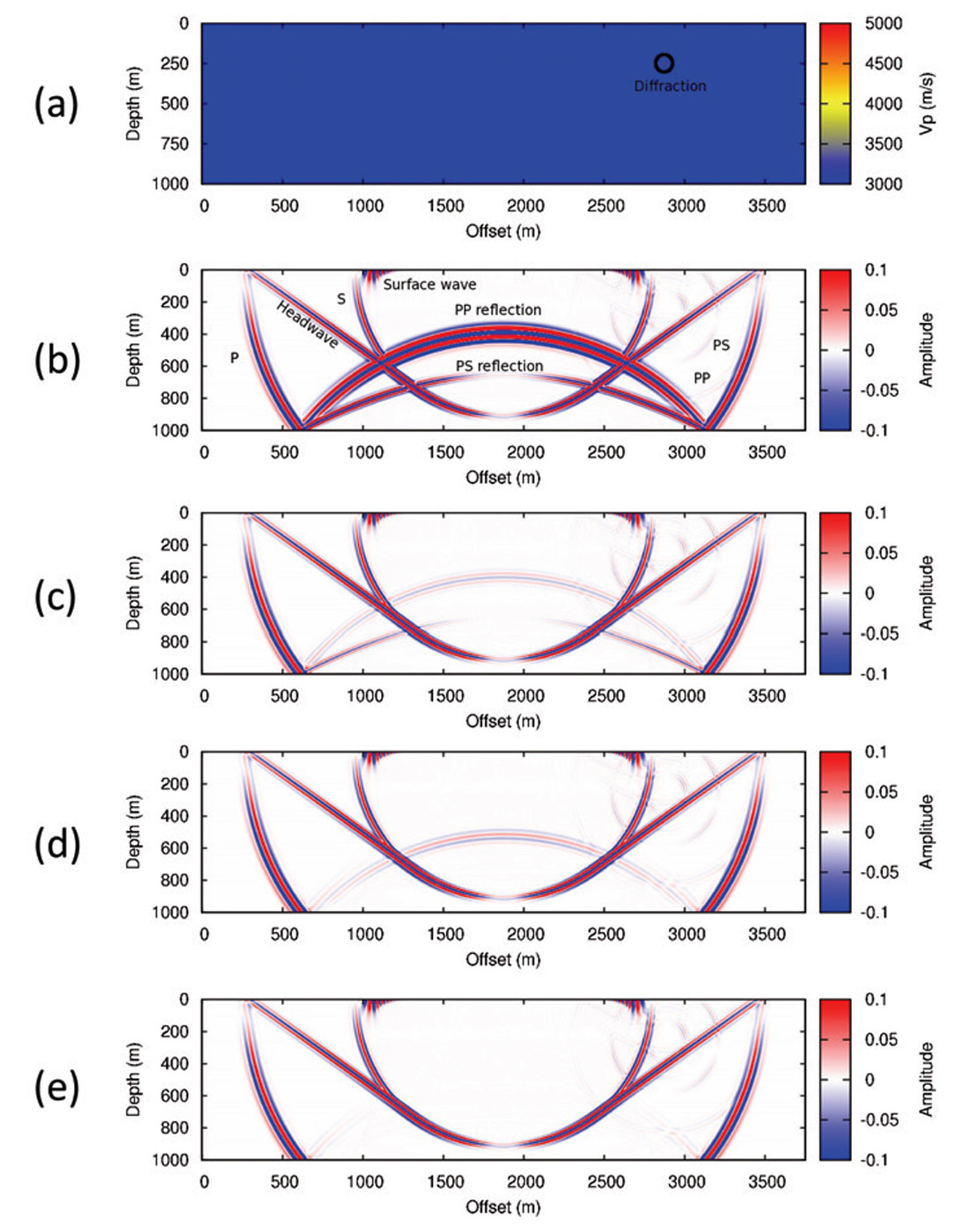
As we look toward the future, the technology of Reverse Time Migration is evolving beyond its original scope. The algorithms are becoming more “elastic,” accounting for the fact that the Earth is not a simple fluid but a complex solid that supports different types of wave vibrations (P-waves and S-waves).
Full Waveform Inversion (FWI) and the RTM Connection
The next frontier in seismic tech is Full Waveform Inversion (FWI). While RTM creates an image using a known velocity model, FWI actually uses the wave equation to discover the velocity model itself. In many modern workflows, FWI and RTM are used in an iterative loop: FWI creates a highly detailed map of rock properties, and RTM uses that map to produce the final, high-definition image. This synergy represents the current “state-of-the-art” in geophysical software.
Transitioning to Clean Energy and Carbon Capture
The utility of RTM is expanding into the green tech sector. For Carbon Capture and Storage (CCS) to be viable, we must be able to prove that CO2 injected underground is staying where it belongs. RTM provides the high-resolution monitoring necessary to track the movement of CO2 “plumes” in the subsurface over time. Similarly, in geothermal energy, RTM is used to map the fractured rock networks that carry superheated water, ensuring that geothermal plants are placed in the most thermally productive zones.
Conclusion: The Enduring Legacy of Seismic Innovation
Reverse Time Migration stands as a landmark achievement in the world of applied technology. It is a field where the abstract beauty of wave physics meets the raw power of supercomputing to solve some of the most difficult “blind” problems in science. From its origins as a computationally “impossible” theory to its current status as an industry standard, RTM demonstrates how software and hardware evolution can unlock hidden worlds. As we pivot toward a more complex and varied energy landscape, the high-fidelity imaging provided by RTM will remain an indispensable tool, proving that the better we can see the Earth, the better we can protect and utilize its resources. For the tech professional, RTM is a masterclass in how algorithmic rigor, when paired with the latest in HPC and AI, can turn raw noise into actionable, life-changing data.
aViewFromTheCave is a participant in the Amazon Services LLC Associates Program, an affiliate advertising program designed to provide a means for sites to earn advertising fees by advertising and linking to Amazon.com. Amazon, the Amazon logo, AmazonSupply, and the AmazonSupply logo are trademarks of Amazon.com, Inc. or its affiliates. As an Amazon Associate we earn affiliate commissions from qualifying purchases.