
In the intricate world of modern technology, batteries serve as the indispensable powerhouses for everything from smartphones and laptops to electric vehicles and smart home devices. While specifications like milliamp-hours (mAh) or amp-hours (Ah) are commonly cited to describe a battery’s energy storage, there’s another crucial metric, particularly for certain applications, that often goes overlooked: Reserve Capacity (RC). Understanding RC is key to truly grasping a battery’s real-world performance, especially in scenarios where sustained power delivery under load is paramount.
Understanding Battery Capacity Beyond Amp-Hours
When evaluating a battery, most consumers instinctively look for its nominal capacity, typically expressed in mAh for smaller devices or Ah for larger ones. This metric quantifies the total electrical charge a battery can deliver at a specific voltage before its charge is depleted. For instance, a 5000 mAh smartphone battery can theoretically deliver 5000 milliamperes for one hour, or 500 mA for ten hours. While useful, this figure presents a somewhat simplified picture, particularly when considering diverse discharge rates and demanding operational environments.
The Limitations of mAh/Ah
The primary limitation of mAh/Ah as a sole indicator is its failure to directly address how long a battery can sustain a specific, relatively heavy load. It’s a measure of total stored energy but doesn’t inherently convey performance under stress. Imagine two batteries with identical mAh ratings: one might be optimized for quick bursts of power, while another is designed for prolonged, steady discharge. Their real-world utility in different applications would vary significantly, even with the same nominal capacity. Furthermore, a battery’s usable capacity often decreases as the discharge current increases due to internal resistance and other factors, a phenomenon known as the Peukert effect. mAh/Ah ratings typically assume a relatively low discharge rate, which might not reflect real-world usage in high-drain devices.
Introducing Reserve Capacity (RC)
This is where Reserve Capacity (RC) steps in to provide a more practical and application-specific metric. RC specifically measures the amount of time a fully charged battery can continuously supply a minimum adequate current to a specified load before its voltage drops below a critical threshold. It’s less about the total quantity of energy and more about the duration of sustained power delivery under a consistent, moderate load. For instance, RC is often expressed in minutes, indicating how long a battery can support a critical function, like powering essential vehicle systems after an alternator failure.
The Technical Definition and Measurement of RC
Reserve Capacity is not a theoretical construct; it’s a precisely measured value derived under standardized conditions to ensure comparability across different battery manufacturers and types. This standardization is vital for engineers and consumers to make informed decisions about battery selection for specific technological applications.
The Standardized Test Conditions
For most automotive and deep-cycle batteries, the industry standard for measuring RC involves discharging a fully charged battery at a constant current of 25 amperes (A) at a temperature of 80°F (26.7°C). The test continues until the battery’s terminal voltage drops to 10.5 volts (V) for a 12-volt battery. The total time, measured in minutes, that the battery sustains this 25A discharge before hitting the 10.5V threshold is its Reserve Capacity.
This specific current of 25A is chosen because it roughly represents the typical electrical load of a vehicle with essential accessories (headlights, wipers, ignition, basic electronics) operating. By standardizing the current and the cutoff voltage, manufacturers and consumers get a clear, actionable number that directly translates to real-world backup time.
Calculating Real-World Runtime
While the 25A test provides a baseline, understanding RC allows for extrapolation to other load conditions. For example, if a battery has an RC of 120 minutes (meaning it can deliver 25A for 2 hours), you can infer its performance under lighter or heavier loads, though not always linearly due to the aforementioned Peukert effect. However, for a given application, knowing its typical current draw allows one to compare batteries effectively using their RC ratings. For critical systems, engineers often factor in a safety margin, ensuring that the battery’s RC significantly exceeds the expected operational time required for backup or emergency power.
Why Reserve Capacity Matters in Tech Applications
While mAh/Ah dominates marketing for consumer electronics, RC holds significant weight in demanding tech applications where reliability and sustained performance under specific loads are non-negotiable. Its importance spans across various sectors, from transportation to backup power.
Automotive and Marine Batteries: A Critical Lifeline
Perhaps the most common application where RC is a primary specification is in automotive and marine starting batteries, as well as deep-cycle batteries used in RVs and boats. In a vehicle, the battery’s primary role is to start the engine, but its secondary, equally critical, function is to provide emergency power if the alternator fails. If the alternator stops charging, the battery becomes the sole power source for essential systems like the engine control unit (ECU), headlights, wipers, and safety features. A higher RC rating means the vehicle can operate for a longer duration after an alternator failure, providing more time to reach a repair shop or a safe location. For marine applications, being stranded at sea due to a dead battery for navigation or communication systems can be life-threatening, making RC a paramount safety factor.
Backup Power Systems: Ensuring Continuity
Beyond vehicles, RC is a vital metric for various backup power systems. Uninterruptible Power Supplies (UPS) for servers, telecommunications equipment, and home automation hubs rely on batteries to bridge power outages. While UPS systems often specify runtime based on specific watt loads, the underlying battery chemistry and its RC directly influence that performance. Similarly, off-grid solar systems, emergency lighting, and security alarm systems depend on batteries to provide sustained power when the primary source is unavailable. A battery with adequate RC ensures that these critical systems remain operational for a predetermined period, preventing data loss, maintaining security, or providing essential illumination.
Portable Electronics: Beyond the Spec Sheet
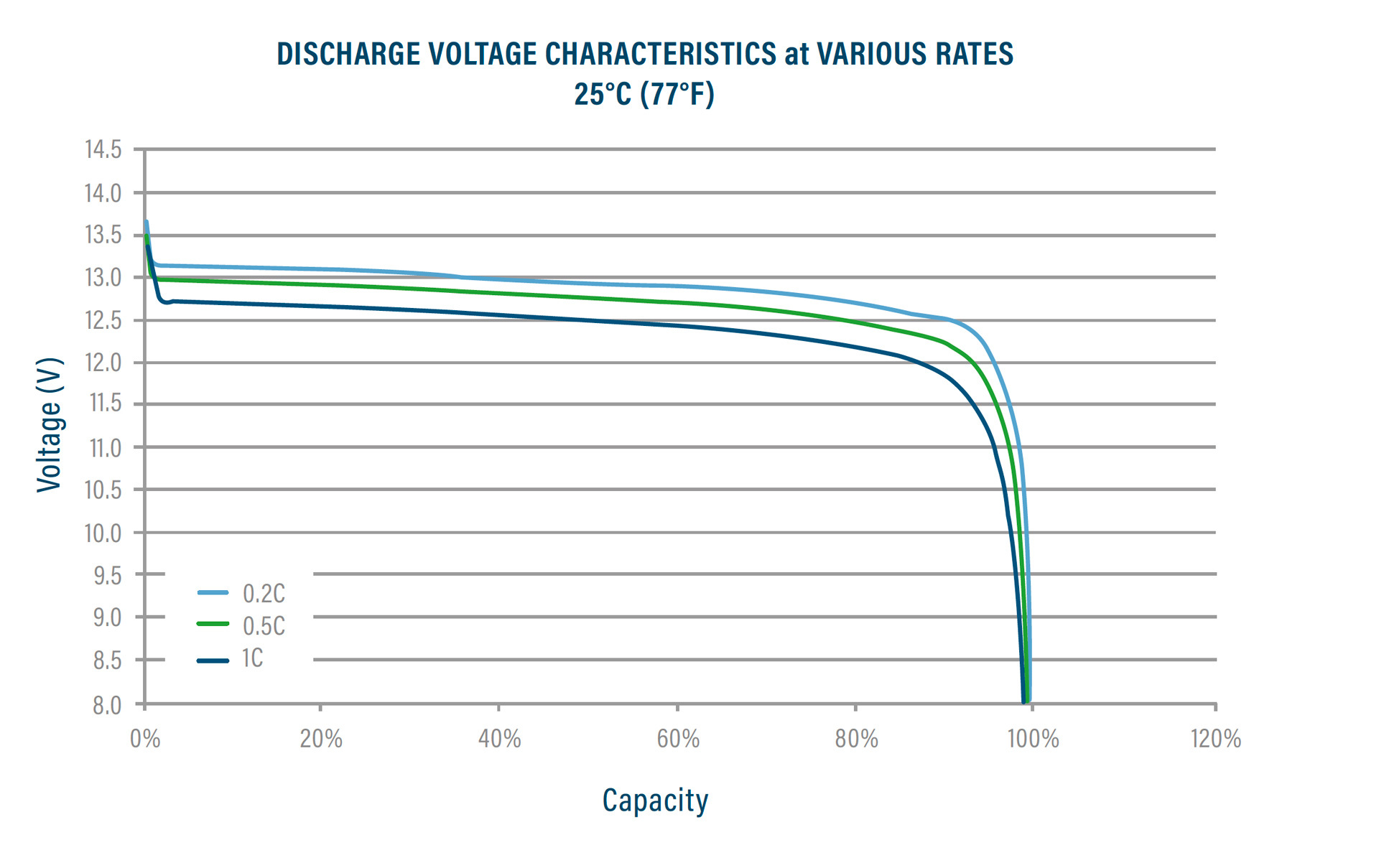
While less commonly advertised, the underlying principles of RC are subtly at play even in portable electronics. Consider a laptop or a drone operating under heavy load (e.g., intensive gaming, video rendering, or high-performance flight). The battery isn’t just delivering a nominal mAh; it’s being asked to provide a consistent, high current. While manufacturers optimize battery design for these scenarios, understanding the concept of sustained discharge capability helps appreciate why some devices might drain faster under heavy use than their mAh rating might superficially suggest. Engineers designing these devices meticulously consider discharge curves and effective runtime under various operational profiles, which is fundamentally an application of RC principles.
Factors Affecting Battery Reserve Capacity
A battery’s Reserve Capacity is not a static value throughout its life. Several factors, both intrinsic to the battery and external, can significantly influence its ability to deliver sustained power.
Battery Chemistry and Design
Different battery chemistries inherently have varying characteristics that impact RC. Lead-acid batteries, traditionally used in automotive and deep-cycle applications, are generally well-suited for the RC test due to their internal structure. Their plate design, electrolyte composition, and overall build quality directly affect their internal resistance and ability to dissipate heat, both of which are critical for sustaining a 25A discharge. Thicker plates, for instance, often contribute to higher RC ratings because they provide more active material and a larger surface area for electrochemical reactions. Modern lithium-ion batteries, while having excellent energy density (high Wh/kg), may have different discharge characteristics and RC ratings, which are typically determined by cell construction and battery management systems.
Age and Usage Patterns
Like all technological components, batteries degrade over time. As a battery ages, its internal resistance increases, and its ability to store and deliver charge diminishes. This degradation directly impacts RC, causing it to decrease over the battery’s lifespan. Frequent deep discharges, operating the battery consistently at extreme temperatures, and prolonged periods of undercharging or overcharging can accelerate this aging process. A battery that is regularly cycled (discharged and recharged) within its optimal range and not pushed to its limits will generally maintain a higher RC for longer compared to one subjected to abuse.
Temperature and Environmental Conditions
Temperature is a critical environmental factor influencing battery performance, including RC. Batteries are typically rated at 80°F (26.7°C) because this is considered an optimal operating temperature. As temperatures drop, the chemical reactions within the battery slow down, increasing internal resistance and significantly reducing its effective capacity and RC. A battery that provides 100 minutes of RC at 80°F might only deliver 50 minutes or less at 0°F (-18°C). Conversely, extremely high temperatures can accelerate electrolyte evaporation, plate corrosion, and other degradation mechanisms, leading to premature battery failure and reduced RC over time, even if immediate RC might appear slightly higher initially due to reduced viscosity of the electrolyte.
Maximizing and Maintaining Your Battery’s Reserve Capacity
For technology users relying on batteries for critical functions, understanding how to maximize and maintain RC is paramount to ensuring reliability and extending battery life. Proactive care can significantly impact a battery’s longevity and performance.
Proper Charging and Discharging Practices
The way a battery is charged and discharged plays a vital role in preserving its RC. For lead-acid batteries, avoiding deep discharges (draining the battery completely) is crucial, as this stresses the plates and can lead to sulfation, which hinders chemical reactions and reduces capacity. Keeping the battery adequately charged, especially during periods of inactivity, prevents sulfation. Using a smart charger that provides multi-stage charging (bulk, absorption, float) helps optimize the charging process and prevents overcharging. For lithium-ion batteries, avoiding prolonged full charge or full discharge states can extend life, as can charging to an intermediate level (e.g., 80%) for daily use rather than always to 100%.
Storage Recommendations
When a battery is not in active use, particularly for extended periods, proper storage is essential to prevent RC degradation. Batteries should ideally be stored in a cool, dry place, away from direct sunlight or extreme temperature fluctuations. For lead-acid batteries, storing them in a fully charged state helps prevent sulfation. Periodic maintenance charging (trickle charging) every few months can top off any self-discharge. For lithium-ion batteries, storing them at around 50-70% charge is often recommended to minimize stress on the cells. Always consult the manufacturer’s specific storage guidelines for optimal results.
Regular Maintenance and Monitoring
Consistent monitoring and maintenance can catch potential issues before they significantly impact RC. For lead-acid batteries, this includes checking electrolyte levels and topping up with distilled water if necessary (for non-sealed batteries), ensuring terminals are clean and free of corrosion, and periodically testing the battery’s voltage and specific gravity. Using a battery hydrometer can provide insights into the state of charge and overall health of each cell. For all battery types, monitoring their performance, noting any significant drops in runtime, or observing unusual heat generation during operation can be early indicators of declining RC and signal the need for replacement. Investing in quality battery monitoring systems, especially for critical applications, provides real-time data to help proactive management.
aViewFromTheCave is a participant in the Amazon Services LLC Associates Program, an affiliate advertising program designed to provide a means for sites to earn advertising fees by advertising and linking to Amazon.com. Amazon, the Amazon logo, AmazonSupply, and the AmazonSupply logo are trademarks of Amazon.com, Inc. or its affiliates. As an Amazon Associate we earn affiliate commissions from qualifying purchases.