
Securing a small business loan can be a pivotal moment for entrepreneurs, unlocking capital for growth, expansion, working capital, or simply bridging financial gaps. However, navigating the lending landscape can feel daunting, with lenders often requiring a comprehensive array of information and meeting specific criteria. Understanding what is truly required for a small business loan isn’t just about ticking boxes; it’s about presenting a compelling case that demonstrates your business’s viability, your capacity to repay, and your commitment to success. This article will demystify the requirements, offering a professional, insightful, and engaging guide to preparing your business for successful loan acquisition.
Understanding Lender Expectations and Loan Types
Before delving into the specifics of what you need, it’s crucial to grasp that not all lenders are created equal, and not all loans serve the same purpose. Your first step is to align your business needs with the appropriate type of financing and understand the general expectations of various lending institutions.
Traditional Bank Loans vs. Alternative Lenders
Traditionally, banks have been the go-to for small business loans, known for their competitive interest rates and structured repayment terms. However, they often have stringent requirements, favoring businesses with longer operating histories, strong credit scores, and substantial collateral. The application process can be lengthy.
In contrast, alternative lenders (online lenders, credit unions, community development financial institutions) have emerged as flexible options, often offering quicker approvals and more lenient criteria, making them accessible to newer businesses or those with less-than-perfect credit. However, these often come with higher interest rates or shorter repayment periods. Understanding this dichotomy helps you tailor your application and expectations. For instance, a startup might find more success with an alternative lender for initial funding, while an established business might seek a traditional bank for larger, long-term capital needs.
SBA Loans: A Popular Option
The U.S. Small Business Administration (SBA) does not directly lend money but guarantees a portion of loans made by approved lenders (banks, credit unions, etc.). This guarantee reduces the risk for lenders, making them more willing to provide financing to small businesses that might not otherwise qualify. SBA loans, such as the 7(a) Loan Program or the 504 Loan Program, are popular due to their favorable terms, including lower down payments, longer repayment periods, and competitive interest rates. However, they still require a robust application package and adherence to both the lender’s and the SBA’s specific eligibility criteria. Familiarity with SBA requirements can significantly broaden your lending options.
Different Loan Products: Matching Needs to Financing
Small business loans come in various forms, each designed for a specific purpose. Knowing your needs will guide you to the right product, which in turn dictates specific requirements.
-
Term Loans: A lump sum of cash repaid over a fixed period with interest. Best for major investments like equipment purchases or expansion.
-
Lines of Credit: Flexible access to funds up to a certain limit, allowing businesses to draw and repay as needed. Ideal for managing cash flow fluctuations or covering unexpected expenses.
-
Equipment Financing: Loans specifically for purchasing new or used equipment, with the equipment itself often serving as collateral.
-
Invoice Factoring/Financing: Selling your unpaid invoices to a third party at a discount to get immediate cash. Useful for businesses with long payment cycles.
-
Commercial Real Estate Loans: For purchasing or refinancing properties for business operations.
Each product has unique requirements, particularly concerning collateral and repayment structures, demanding a clear articulation of how the funds will be used.
Essential Documentation: The Foundation of Your Application
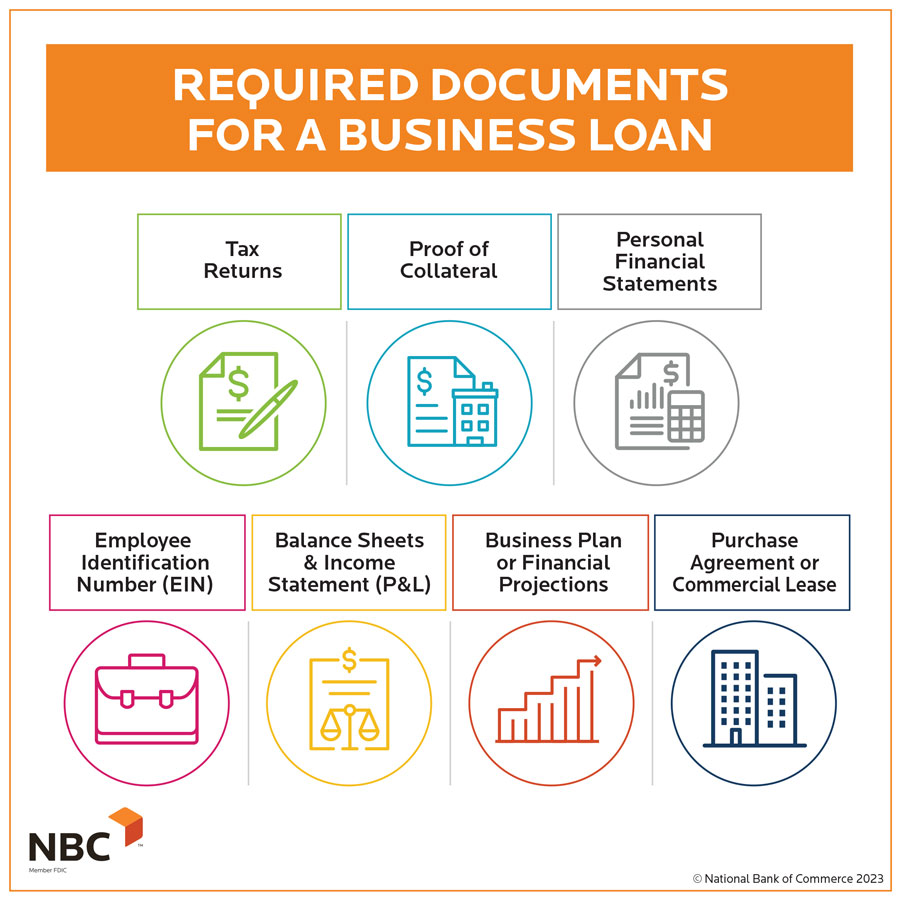
Regardless of the lender or loan type, a meticulously prepared set of documents is non-negotiable. These documents provide lenders with the hard evidence they need to assess your business’s health, potential, and your ability to repay the loan.
Business Plan: Your Roadmap to Success
A well-articulated business plan is more than just a formality; it’s your narrative. It demonstrates that you have a clear vision, a viable strategy, and a deep understanding of your market. Lenders want to see:
-
Executive Summary: A concise overview of your business, its mission, and your loan request.
-
Company Description: What your business does, its legal structure, and its history.
-
Market Analysis: Who are your customers? What’s the industry outlook? Who are your competitors?
-
Organization and Management: Your team, their experience, and legal structure.
-
Service or Product Line: What you sell and its unique value proposition.
-
Marketing and Sales Strategy: How you will reach customers and generate revenue.
-
Financial Projections: Detailed forecasts of revenue, expenses, and profitability, typically for the next 3-5 years. This is critical for showing repayment capacity.
A strong business plan reassures lenders that you are serious, organized, and have thought through the challenges and opportunities ahead.
Financial Statements: Proof of Health
These are the backbone of your application, offering a snapshot of your business’s financial performance and position. Lenders typically request:
-
Profit & Loss (P&L) Statement: Also known as an Income Statement, this shows your revenues, costs, and profits (or losses) over a specific period (e.g., quarterly, annually). It highlights profitability trends.
-
Balance Sheet: A snapshot of your assets, liabilities, and owner’s equity at a specific point in time. It indicates your business’s financial health and solvency.
-
Cash Flow Statement: Tracks the movement of cash in and out of your business over a period. It’s crucial for demonstrating liquidity and the ability to meet short-term obligations and loan payments.
Lenders usually want to see statements for the past 2-3 years, along with year-to-date statements. For startups, projected financial statements are essential. Accuracy and consistency in these documents are paramount.
Tax Returns: Verifying Financials
Both business and personal tax returns (typically for the last 2-3 years) serve as independent verification of the financial information provided in your statements. They confirm income, expenses, and overall financial standing. For sole proprietors or single-member LLCs, personal tax returns often contain business income and expenses, making them particularly important. Lenders use these to cross-reference with your other submitted financials and assess your tax compliance.
Legal Documents: Business Formation & Licensing
These documents confirm your business’s legal existence and compliance. They include:
-
Business Registration Documents: Articles of Incorporation or Organization, partnership agreements, or fictitious name (DBA) filings.
-
Employer Identification Number (EIN): Your business’s tax ID.
-
Business Licenses and Permits: Proof that you are legally authorized to operate in your industry and location.
-
Commercial Leases: If you operate from a physical location.
These demonstrate that your business is legitimate and operating within legal parameters.
The “Five Cs” of Credit: What Lenders Really Look For
Beyond the paperwork, lenders evaluate your business and you, the borrower, based on a set of core principles known as the “Five Cs of Credit.” Mastering these concepts significantly improves your chances of loan approval.
Character: Your Credit History and Reputation
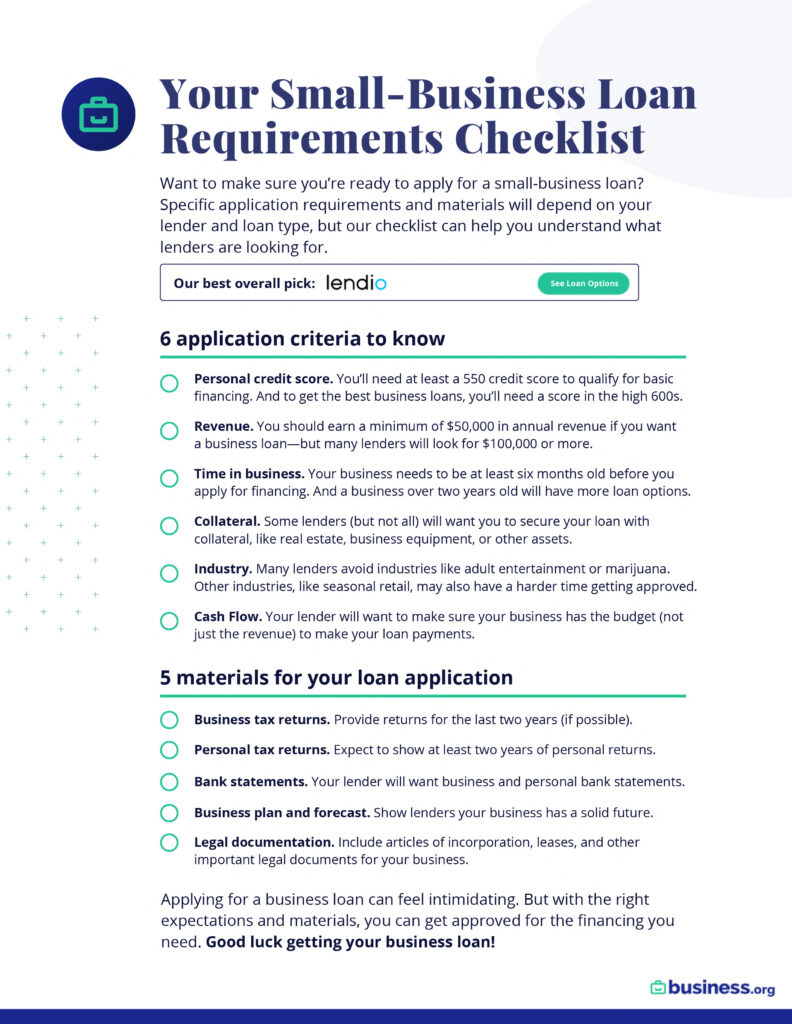
Lenders assess the borrower’s (and sometimes the business owner’s) trustworthiness and track record. This is primarily evaluated through your personal credit score (FICO score) and your business credit score. A strong credit history, showing timely payments and responsible debt management, signals reliability. Defaults, bankruptcies, or a history of late payments can severely hinder your application. Lenders want to lend to people who keep their promises.
Capacity: Ability to Repay

This is perhaps the most critical “C.” Lenders want to be confident that your business generates enough cash flow to comfortably cover loan payments, in addition to its other operating expenses. They will scrutinize your financial statements, particularly your cash flow statement and debt service coverage ratio (DSCR). A strong DSCR (typically 1.25 or higher) indicates that your net operating income is significantly more than your total debt obligations, including the proposed loan. This is where your financial projections in the business plan become crucial, especially for startups.
Capital: Your Investment in the Business
Lenders prefer to see that business owners have a personal stake in their venture. This “skin in the game” demonstrates commitment and reduces the lender’s risk. The amount of capital you’ve personally invested (equity) signifies your belief in the business’s success. It shows you’re not solely reliant on borrowed money and are willing to take on financial risk alongside the lender. A higher personal investment often translates to a lower perceived risk for the lender.
Collateral: Securing the Loan
Collateral refers to assets that you pledge to secure the loan. In case of default, the lender can seize and sell these assets to recoup their losses. Common forms of collateral include real estate, equipment, inventory, and accounts receivable. While not all small business loans require collateral (unsecured loans), providing it can often lead to better terms and higher approval rates, especially for larger loan amounts or riskier businesses. For SBA loans, lenders will generally try to secure the loan with available assets.
Conditions: Economic Climate and Loan Purpose
The “Conditions” refer to the specific terms of the loan itself, the economic environment, and the intended use of the funds. Lenders consider:
-
Purpose of the Loan: How will the money be used? Is it for growth, working capital, or an emergency? A clear, well-justified purpose strengthens your application.
-
Economic Outlook: Is the overall economy and your specific industry stable or volatile? A strong economic climate generally makes lenders more willing to lend.
-
Industry Trends: Is your industry growing or shrinking? What are the competitive pressures?
These external factors can influence a lender’s decision, even if your business’s internal financials are strong.
Strengthening Your Application: Beyond the Basics
While the fundamental requirements cover the core aspects, several additional factors can significantly bolster your application and increase your chances of securing favorable terms.
Personal Credit Score: Impact on Business Lending
Even if your business is incorporated, your personal credit score (FICO) will almost always be reviewed, especially for small businesses. Lenders see your personal financial habits as an indicator of your business financial habits. A strong personal credit score (typically 680+ for most lenders) is often a baseline requirement. If your personal credit is weak, it’s advisable to work on improving it before applying for a loan, or explore options specifically designed for borrowers with lower scores.
Strong Business Credit Profile
Just like personal credit, your business can build its own credit score. This is done by registering with business credit bureaus (e.g., Dun & Bradstreet, Experian Business, Equifax Business) and ensuring timely payments to vendors, suppliers, and other business creditors. A robust business credit profile demonstrates your company’s independent financial responsibility and reliability. Regularly monitoring and improving your business credit score is a long-term strategy that pays dividends in future financing opportunities.
Professional Presentation and Communication
The way you present your information and communicate with lenders matters. Organize your documents neatly, ensure all figures are consistent, and proofread everything for errors. Be prepared to answer questions confidently and clearly, demonstrating your deep understanding of your business and its financial standing. A professional demeanor conveys competence and trustworthiness, reinforcing the positive impression your documents aim to create.
Addressing Weaknesses Proactively
If you know your business has a weakness (e.g., limited operating history, fluctuating revenue, a lower credit score), address it head-on. Don’t hide it. Instead, explain the situation, outline the steps you’re taking to mitigate the risk, and present a compelling case for why your business is still a sound investment. Perhaps you have strong personal guarantees, substantial collateral, or a unique market advantage that offsets a perceived flaw. Proactivity demonstrates honesty and strategic thinking.
The Application Process and What to Expect Next
Once you’ve gathered all your documents and understood the criteria, the next step is the application itself and navigating the subsequent stages.
Researching Lenders and Comparing Offers
Do not apply to the first lender you find. Research multiple options, comparing their eligibility requirements, interest rates, fees, repayment terms, and customer service. Read reviews and consider working with a loan broker who specializes in small business financing. Different lenders cater to different business profiles, so finding the right match can save you time and money.
Submitting Your Application and Follow-Up
Submit a complete application package. Incomplete applications are a common reason for delays or rejections. After submission, be prepared for follow-up questions from the lender. Respond promptly and thoroughly. This shows your commitment and professionalism. Lenders may also request additional documents or clarifications based on their initial review.
Loan Approval and Disbursement
If your application is approved, you’ll receive a loan offer outlining the terms and conditions. Read this document meticulously, understanding all clauses, fees, and repayment schedules before signing. Once signed, the funds will be disbursed according to the agreed-upon timeline, allowing you to put the capital to work for your business. Remember that the responsibility to repay begins now, so integrate the loan payments into your financial planning immediately.
In conclusion, securing a small business loan is a comprehensive process that demands thorough preparation, transparency, and a solid understanding of financial principles. By meticulously preparing your documentation, understanding the “Five Cs of Credit,” and strategically positioning your business, you significantly enhance your chances of securing the capital needed to fuel your entrepreneurial journey. It’s an investment of time and effort that can yield substantial returns, helping your business thrive and achieve its full potential.
aViewFromTheCave is a participant in the Amazon Services LLC Associates Program, an affiliate advertising program designed to provide a means for sites to earn advertising fees by advertising and linking to Amazon.com. Amazon, the Amazon logo, AmazonSupply, and the AmazonSupply logo are trademarks of Amazon.com, Inc. or its affiliates. As an Amazon Associate we earn affiliate commissions from qualifying purchases.