
In the current landscape of software engineering and data science, the choice of a database architecture is one of the most critical decisions a technical architect can make. As businesses scale and the volume of data generated globally continues to explode, understanding the fundamental differences between relational and non-relational databases is no longer optional—it is a core competency. These two paradigms, often referred to as SQL and NoSQL, represent different philosophies regarding data storage, retrieval, and scalability. Selecting the wrong model can lead to performance bottlenecks, developer frustration, and significant technical debt as an application evolves.
Relational Databases (RDBMS): The Foundation of Structured Data
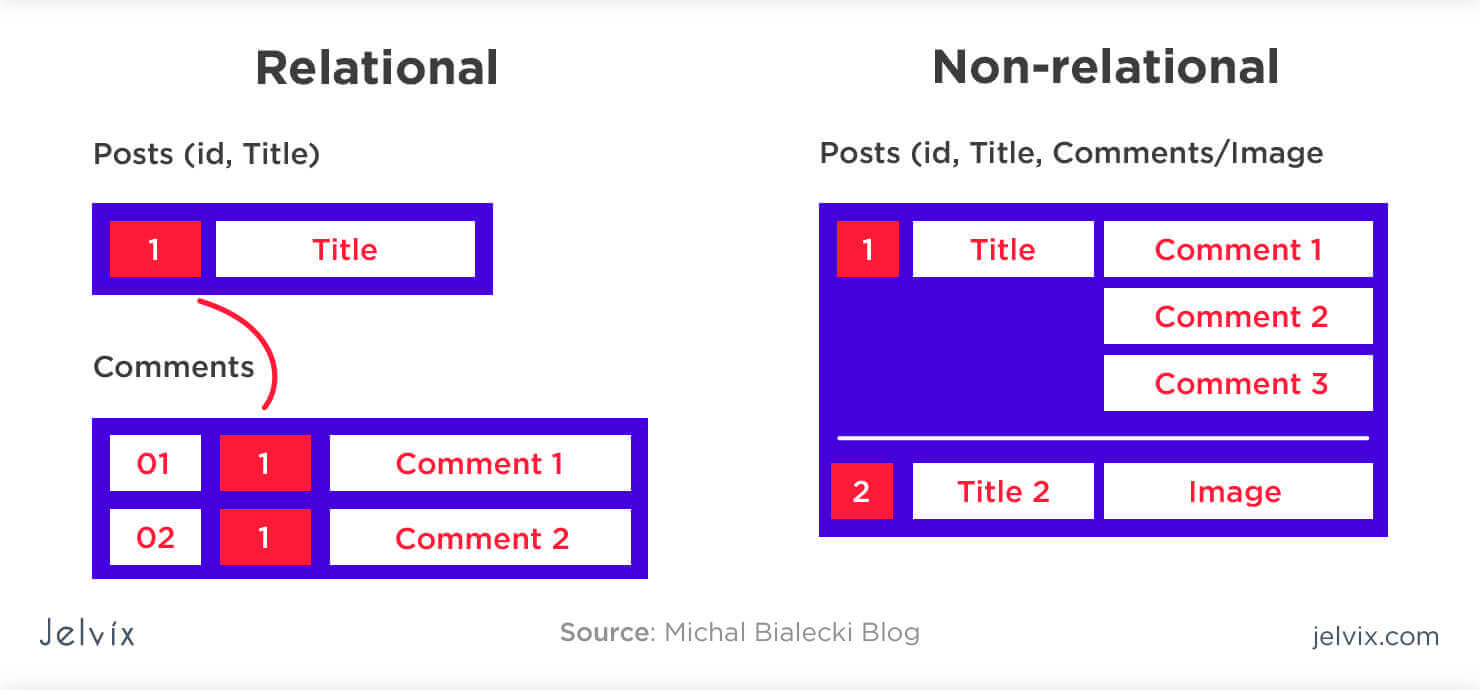
The concept of the relational database was introduced by E.F. Codd in 1970 and has since become the industry standard for structured data management. At its core, a relational database organizes data into tables (formally called relations) consisting of rows and columns. This structure relies on a predefined schema, which acts as a blueprint for the data, ensuring that every entry follows a strict format.
The Power of SQL and Rigid Schemas
Relational databases are managed using Structured Query Language (SQL). SQL provides a powerful, standardized way to interact with data, allowing developers to perform complex queries, joins, and aggregations with relative ease. The rigid schema of an RDBMS means that before you can insert data, you must define the tables, the types of data each column will hold (integers, strings, booleans), and the relationships between those tables.
This rigidity is not a limitation but a feature designed to maintain data integrity. By enforcing a schema, the database ensures that “dirty” or mismatched data cannot be written to the disk. This makes relational databases ideal for applications where data consistency is paramount.
ACID Compliance and Data Integrity
Perhaps the most significant advantage of the relational model is its adherence to ACID properties:
- Atomicity: Each transaction is treated as a single “unit,” which either succeeds completely or fails completely.
- Consistency: A transaction can only bring the database from one valid state to another, maintaining all predefined rules.
- Isolation: Concurrent transactions do not interfere with each other.
- Durability: Once a transaction is committed, it remains committed even in the event of a system failure.
These properties are essential for financial systems, inventory management, and any application where a partial update—such as deducting money from one account without adding it to another—would be catastrophic. Popular examples of RDBMS include PostgreSQL, MySQL, Microsoft SQL Server, and Oracle Database.
Non-Relational Databases (NoSQL): Flexibility at Scale
While relational databases dominated the tech world for decades, the rise of the internet and big data in the early 2000s exposed their limitations, particularly regarding scalability and the handling of unstructured data. This led to the development of non-relational, or NoSQL (Not Only SQL), databases. Unlike the tabular structure of SQL, NoSQL databases use a variety of data models that allow for much greater flexibility.
Diverse Data Models
NoSQL is an umbrella term that covers four primary types of database architectures, each optimized for specific workloads:
- Document Databases: These store data in documents similar to JSON (JavaScript Object Notation). Each document can have a different structure, making it easy to store complex, hierarchical data without mapping it to multiple tables. (e.g., MongoDB, CouchDB).
- Key-Value Stores: This is the simplest form of database, where every item is stored as a key-value pair. They are incredibly fast and are often used for caching and session management. (e.g., Redis, DynamoDB).
- Wide-Column Stores: These store data in tables but are optimized for large-scale data distributed across many servers. They use a flexible column structure rather than a fixed one. (e.g., Cassandra, HBase).
- Graph Databases: These are designed to store and navigate relationships between data points. They use nodes (entities) and edges (relationships), making them ideal for social networks and recommendation engines. (e.g., Neo4j, Amazon Neptune).
Dynamic Schemas and Horizontal Scaling
The defining characteristic of NoSQL is the “dynamic schema.” Developers can insert data without first defining a structure, allowing for rapid iteration and the storage of disparate data types. If a new feature requires a new field, you simply start saving it; there is no need for a complex “alter table” operation that might lock the database.
Furthermore, NoSQL databases were built with horizontal scaling in mind. While an RDBMS usually scales “up” (vertical scaling) by adding more power (CPU, RAM) to a single server, NoSQL databases scale “out” (horizontal scaling) by adding more servers to a cluster. This makes them the go-to choice for massive web applications with millions of concurrent users.
Key Differences and Technical Trade-offs

Choosing between SQL and NoSQL involves navigating a series of technical trade-offs. The right choice depends on the nature of the data, the expected load, and the required speed of development.
Scaling: Vertical vs. Horizontal
Vertical scaling (SQL) has a physical ceiling; eventually, you cannot buy a bigger server. While sharding (splitting data across multiple servers) is possible in SQL, it is notoriously difficult to implement and maintain. NoSQL databases are designed to be distributed from the ground up, making them much easier to scale to petabytes of data across global clusters.
Consistency vs. Availability (The CAP Theorem)
In distributed systems, the CAP Theorem states that you can only provide two out of three guarantees: Consistency, Availability, and Partition Tolerance.
- Relational databases typically prioritize Consistency and Partition Tolerance.
- Non-relational databases often prioritize Availability and Partition Tolerance, settling for “eventual consistency.”
Eventual consistency means that while all nodes in a cluster will eventually have the same data, there may be a short window where a user sees an older version of a record. In a social media feed, this is acceptable; in a banking ledger, it is not.
Query Complexity and Joins
Relational databases excel at complex queries and joining data from multiple tables. If your application requires deep analytical reporting or involves many-to-many relationships, SQL is remarkably efficient. In contrast, NoSQL databases often discourage joins. Data is typically “denormalized,” meaning you store related information together in a single document to maximize read speed, even if it results in data duplication.
Use Cases and Implementation Strategies
Understanding the theory is important, but practical application is where the value lies. Modern tech stacks often utilize a “polyglot persistence” strategy, where different parts of an application use different database types.
When to Choose a Relational Database
You should lean toward an RDBMS when data integrity is your highest priority and your data structure is predictable.
- Financial Applications: Where every transaction must be perfectly recorded and ACID compliant.
- ERP and CRM Systems: Where complex relationships between customers, orders, and products are the core of the business.
- Legacy Integration: Most enterprise tools are built to work with SQL standards.
When to Choose a Non-Relational Database
NoSQL is the better choice when speed of development, high availability, and the ability to handle massive, unstructured data sets are required.
- Real-time Analytics and IoT: When you are ingesting thousands of data points per second from various sensors that may have different data formats.
- Content Management and E-commerce: When you have products with vastly different attributes (e.g., a “shirt” has a size/color, while a “laptop” has a CPU/RAM).
- Big Data Applications: When the sheer volume of data exceeds the capacity of a single relational server.
The Hybrid Approach
In many high-growth tech companies, both are used. For instance, an e-commerce platform might use a relational database for its core order processing and financial records (SQL) but use a key-value store like Redis for the shopping cart and a document store like MongoDB for product catalogs and user-generated reviews.

The Future of Database Technology: NewSQL and Cloud-Native
The line between relational and non-relational databases is beginning to blur. We are currently seeing the rise of “NewSQL” databases. These are systems that seek to provide the horizontal scalability of NoSQL while maintaining the ACID guarantees and SQL interface of traditional relational databases. Examples like Google Spanner and CockroachDB are at the forefront of this movement, offering “distributed SQL” that scales globally without sacrificing consistency.
Additionally, cloud-native databases (provided by AWS, Azure, and Google Cloud) are abstracting the complexity of database management. Services like Amazon Aurora or Azure Cosmos DB offer multi-model capabilities, allowing developers to interact with the same data using different paradigms (e.g., treating the same data as a document or a table).
As AI and machine learning continue to integrate into software development, we are also seeing the emergence of Vector Databases. These are specialized non-relational databases designed to store and query high-dimensional vectors, which are essential for Large Language Models (LLMs) and recommendation systems.
In conclusion, the “Relational vs. Non-Relational” debate is not about which is better, but which is more appropriate for the task at hand. Relational databases offer stability, consistency, and a mature ecosystem for structured data. Non-relational databases offer the flexibility, speed, and massive scale required for modern, data-intensive web applications. By understanding the underlying mechanics and trade-offs of each, technology professionals can build more resilient, scalable, and efficient systems.
aViewFromTheCave is a participant in the Amazon Services LLC Associates Program, an affiliate advertising program designed to provide a means for sites to earn advertising fees by advertising and linking to Amazon.com. Amazon, the Amazon logo, AmazonSupply, and the AmazonSupply logo are trademarks of Amazon.com, Inc. or its affiliates. As an Amazon Associate we earn affiliate commissions from qualifying purchases.