
In the world of alternative investments, few niches offer the blend of historical gravitas and financial upside found in antique militaria. While high-ticket items like saber-swords and field uniforms often dominate the headlines at prestigious auction houses, seasoned investors and numismatists frequently focus their capital on a smaller, more liquid asset: the military button. For those examining a 19th-century American uniform or sifting through a collection of historical artifacts, one specific marking stands out as a primary indicator of historical significance and market value—the letter “I.”

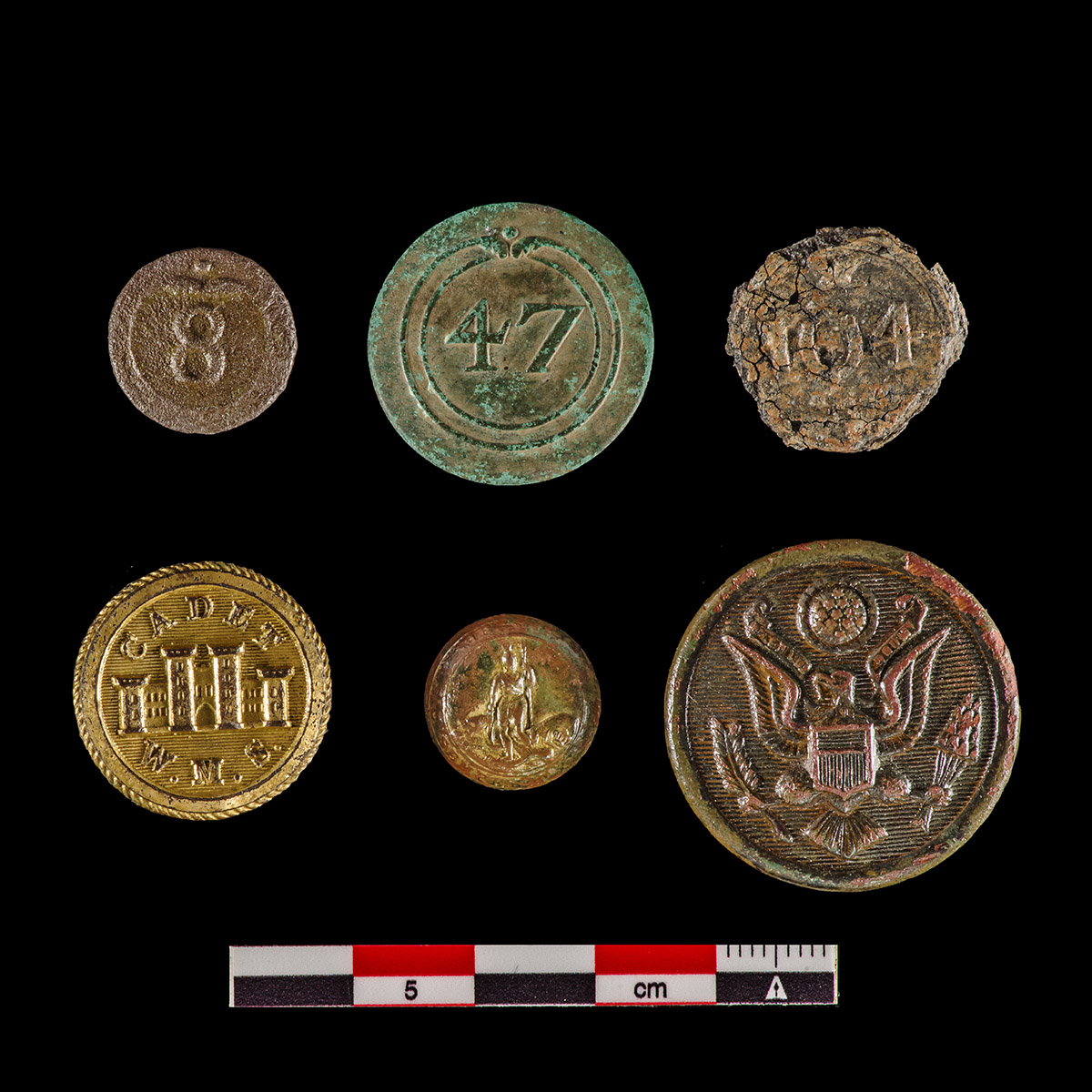
To the uninitiated, a small brass button might seem like mere scrap metal. However, to the strategic collector, the “I” represents the Infantry. Understanding the nuances of this symbol is not just an exercise in history; it is a fundamental skill in identifying high-yield assets in the antique market. During the 19th century, particularly through the American Civil War, the United States military utilized branch-specific buttons. The “I” featured prominently on the shield of the eagle’s breast, designating the wearer as a member of the Infantry. Today, these buttons are prized for their rarity, their condition, and their potential for significant capital appreciation.
Understanding the “I”: Branch-Specific Insignia as a Tangible Asset
Before 1902, the United States military did not have a “general service” button for all ranks and branches. Instead, the uniform served as a visual ledger of a soldier’s role and rank. The “I” button is the most iconic of these branch-specific markers. While “A” stood for Artillery, “C” for Cavalry, and “D” for Dragoons, the “I” button remains the cornerstone of many high-value collections due to the sheer scale of the Infantry’s involvement in pivotal historical conflicts.
The Transition from Function to Finance
From a financial perspective, the most valuable Infantry buttons are those produced between the War of 1812 and the end of the American Civil War in 1865. In 1902, the military transitioned to the “Great Seal” button, a move that standardized branding across all branches. This shift created a finite supply of branch-specific “I” buttons. In economics, finite supply paired with increasing historical interest inevitably leads to price appreciation. Collectors who identified this trend early have seen these small brass discs evolve from battlefield debris into curated financial assets.
Identifying the Infantry “I” Eagle Button
The most common “I” button found in the investment market features the “Eagle Shield” design. This design depicts an eagle holding an olive branch and arrows, with a shield on its chest containing the letter “I.” For an investor, the clarity of this letter is paramount. A crisp, well-defined “I” indicates that the button was struck with a high-quality die and has suffered minimal environmental degradation. In the world of high-end militaria, the difference between a “good” strike and a “fine” strike can represent a 200% to 300% difference in market valuation.
Valuation Drivers: Why Small Buttons Command Large Premiums
Determining the market value of a military button requires a sophisticated understanding of several valuation drivers. Much like a stock’s price is determined by earnings and market sentiment, a button’s price is determined by its manufacturer, its material composition, and its “backmark.”
The Power of the Backmark: Manufacturers and Rarity
The reverse side of a military button—known as the backmark—is often more important than the front. The backmark tells the story of the button’s origin and is the primary tool used by appraisers to determine authenticity and rarity. Major 19th-century manufacturers like Scovill, Waterbury, and Horstmann are the “Blue Chip” names of the button world.
A button marked “Scovill Mfg Co. Waterbury” is highly liquid and holds its value well, but a button from a smaller, short-lived Confederate manufacturer or a rare English import (used by the South due to blockade-running) can command a massive premium. For example, an “I” button produced by a local Southern foundry during the Civil War is significantly rarer than a standard Union-issued Scovill button. In the collectibles market, rarity is the most potent driver of price, often allowing rare specimens to outperform traditional market indices over a ten-year horizon.

Condition and “Patina” in the Collector’s Market
In the realm of personal finance and asset management, we often talk about the “liquidity” of an asset. For military buttons, liquidity is tied directly to condition. There are two primary categories of buttons in the market: “excavated” and “non-excavated.”
- Non-Excavated: These buttons never saw the dirt. They were likely kept on a dress uniform in a trunk or passed down through a family. They often retain their original gold gilt. These are the “mint condition” assets of the militaria world and carry the highest price tags.
- Excavated: These were recovered from battlefields or campsites using metal detectors. While they may have a green “patina,” they are still highly collectible. In fact, many investors prefer a natural, uncleaned patina, as it serves as a “certificate of authenticity” from the earth itself. Over-cleaning an excavated button can actually strip its value, a common mistake for novice investors.
The Investment Landscape: Market Trends for Military Antiquities
The market for military buttons is not just for hobbyists; it is an established sector of the broader $400 billion global collectibles market. As digital assets and volatile stock markets drive investors toward tangible, “hard” assets, the “I” button has emerged as a stable store of value.
Scarcity and Historical Provenance
The value of an “I” button is further amplified by its provenance. If a button can be linked to a specific regiment—for instance, the 20th Maine or the 1st Virginia—its value skyweights. This is because the button is no longer just an object; it is a piece of a specific historical narrative. Strategic investors often look for “identified” buttons, which are pieces that come with documented history or were found at specific, high-significance historical sites.
Comparative Analysis: Infantry vs. Cavalry and Artillery
While the “I” button is more common than the “C” (Cavalry) or “A” (Artillery) buttons, its market is more robust. There are more Infantry collectors than any other branch, ensuring a constant demand. In market terms, the “I” button represents a “high-volume” asset. It is easier to sell an Infantry button quickly than a rare Dragoon or Voltigeur button, which might require a very specific buyer. For a diversified portfolio, an investor might hold several “I” buttons for liquidity and one or two rare branch buttons for long-term growth.
Strategic Collecting: Building a High-Value Militaria Portfolio
Investing in military buttons requires a disciplined approach to risk management. Just as an investor would research a company’s balance sheet, a militaria investor must research die varieties and manufacturing techniques to protect their capital.
Authentication and Avoiding Modern Restrikes
The greatest risk in the militaria market is the “restrike”—a modern reproduction made to look old. Some companies still use original 19th-century dies to produce buttons for reenactors. While these are great for costumes, they are worthless as investments. To protect your investment, you must learn to identify “shank” construction. Authentic 19th-century “I” buttons typically have a shank that is brazed or soldered onto the back, whereas modern fakes might show signs of modern welding or different metal alloys. Purchasing from reputable dealers who offer a “lifetime guarantee of authenticity” is a necessary step for anyone treating these items as a financial vehicle.
Long-term Growth and Liquidity in the Antique Market
The long-term outlook for military buttons remains positive. As we approach significant anniversaries of historical conflicts, public interest tends to spike, driving up prices. Furthermore, the global nature of these conflicts—especially those involving the American Civil War or the Napoleonic Wars—means there is an international buyer base.
Unlike real estate, military buttons are highly portable and require minimal maintenance costs. They do not require property taxes or expensive insurance premiums, yet they offer a tangible connection to the past that many modern assets lack. By focusing on the “I” on the shield, an investor is not just buying a piece of brass; they are buying a stake in history, a hedge against inflation, and a portable asset with a proven track record of value retention.
In conclusion, the “I” on a military button is a symbol of the Infantry, but to the savvy financial mind, it is a symbol of opportunity. By understanding the factors of manufacturer rarity, condition, and historical provenance, an investor can navigate the militaria market with the same precision used in the equity markets. Whether you are looking to diversify a portfolio or start a collection with real intrinsic value, the Infantry button remains one of the most accessible and rewarding entries into the world of antique investment.
aViewFromTheCave is a participant in the Amazon Services LLC Associates Program, an affiliate advertising program designed to provide a means for sites to earn advertising fees by advertising and linking to Amazon.com. Amazon, the Amazon logo, AmazonSupply, and the AmazonSupply logo are trademarks of Amazon.com, Inc. or its affiliates. As an Amazon Associate we earn affiliate commissions from qualifying purchases.