
In the complex and ever-evolving landscape of digital security, understanding the various attack vectors is paramount for both defenders and practitioners. Among the classic yet still relevant threats is the “Rainbow Attack,” a sophisticated technique primarily aimed at cracking hashed passwords. While modern security practices have significantly mitigated its direct effectiveness against well-implemented systems, comprehending its mechanics remains crucial for appreciating the foundations of password security and the necessity of robust cryptographic defenses. This article delves into the intricacies of rainbow attacks, exploring their underlying principles, operational mechanisms, advantages, limitations, and, most importantly, the defenses against them.
The Core Concept: How Rainbow Tables Subvert Hashing
At its heart, a rainbow attack exploits a fundamental component of secure data storage: hashing. To grasp the attack, one must first understand hashing itself.
Understanding Hashing: A One-Way Street
Hashing is a cryptographic process that transforms an input (like a password, file, or message) into a fixed-size string of characters, known as a hash value or message digest. This process is designed to be one-way; meaning, it’s computationally infeasible to reverse the process and derive the original input from its hash value. Good cryptographic hash functions possess several key properties:
- Deterministic: The same input will always produce the same output hash.
- Irreversible: It should be impossible to reconstruct the original input from the hash output.
- Collision Resistant: It should be computationally difficult to find two different inputs that produce the same hash output (a “collision”).
- Avalanche Effect: A small change in the input should produce a drastic change in the output hash.
Common examples of hash functions include MD5, SHA-1, SHA-256, and SHA-512. For instance, if you hash the password “MySecretPass!” using SHA-256, you’d get a unique string of characters like 0a1b2c3d.... If you hash “MySecretPass!!” (a single character difference), the hash would be entirely different.
Organizations store password hashes instead of the actual passwords to protect user credentials. If a database is breached, attackers only get the hashes, not the plaintext passwords. This is where the rainbow attack comes in.
The Achilles’ Heel: Why Hashes Aren’t Always Secure
While hashing is designed to be irreversible, the security of a hashed password hinges on several factors, including the strength of the hash algorithm, the complexity of the original password, and the presence of additional security measures like salting. Without these, hashes can be vulnerable. The problem arises when attackers acquire a list of hashed passwords and aim to “reverse” them, not by mathematical inversion, but by guessing the original input.
Traditional brute-force or dictionary attacks involve calculating the hash for every possible password (or common dictionary words) and comparing it against the target hash. This can be incredibly time-consuming, especially for long or complex passwords.
Introducing Rainbow Tables: Pre-computation for Speed
Rainbow tables are a form of pre-computed lookup table used to reverse cryptographic hash functions. Instead of calculating a hash for every possible password during an attack, an attacker uses rainbow tables to perform these calculations beforehand. Think of it as creating a massive dictionary where each entry maps a hash value to its corresponding plaintext password.
The brilliance of rainbow tables lies in their optimization. Unlike a simple pre-computed table that would store every possible plaintext-hash pair (which would be astronomically large), rainbow tables use a clever chain-generation technique that significantly reduces storage requirements while still allowing for rapid lookups. This efficiency is what made them such a potent threat in the early 2000s.
Anatomy of a Rainbow Attack: The Mechanism Explained
Understanding how a rainbow attack works involves two main phases: the pre-computation phase (building the table) and the attack phase (using the table to crack hashes).
Pre-computation Phase: Building the Table
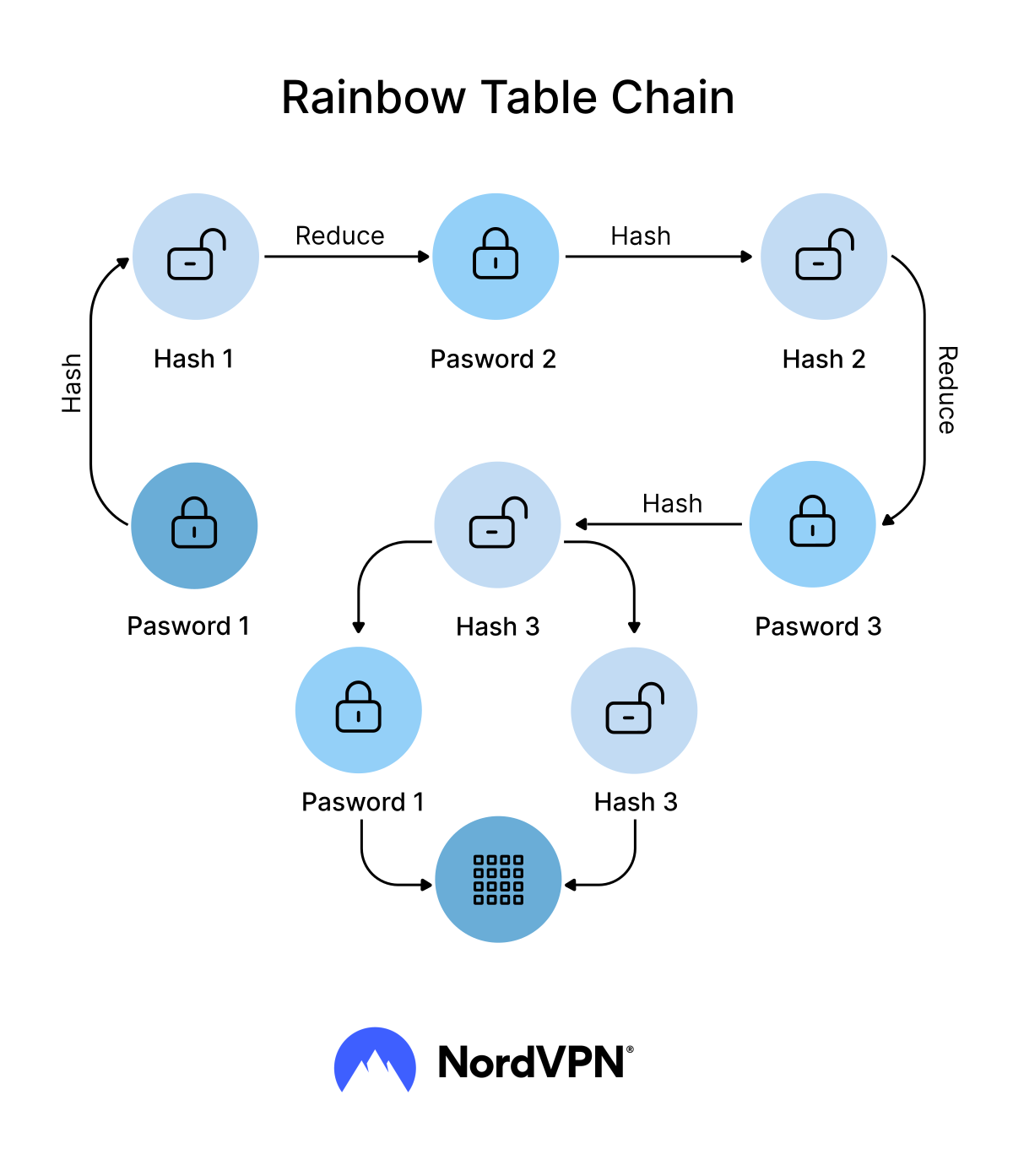
The construction of a rainbow table is an intensive, one-time computational effort. It involves creating “chains” of plaintext passwords and their corresponding hashes. Here’s a simplified breakdown:
- Starting Point: An attacker chooses a starting plaintext password (P0) from a defined character set (e.g., lowercase letters, numbers, symbols).
- Hashing: P0 is hashed using a target hash function (H), producing H0.
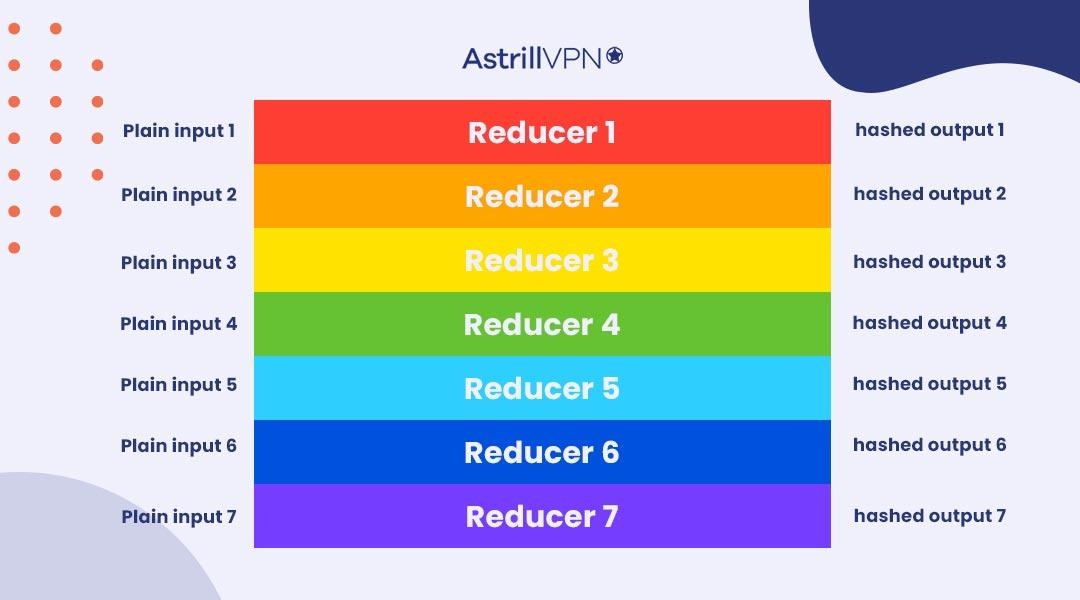
- Reduction Function: H0 is then passed through a “reduction function” (R). This function maps the hash value back to a potential plaintext password (P1) within the attacker’s defined character set. Crucially, the reduction function does not reverse the hash; it merely generates another potential password from the hash output. Multiple reduction functions are often used in a sequence.
- Chaining: The process repeats: P1 is hashed to H1, then H1 is reduced to P2, and so on. This creates a chain: P0 -> H0 -> P1 -> H1 -> P2 -> H2 … -> Pn.
- Storing Endpoints: Instead of storing every P and H in the chain, only the starting plaintext (P0) and the final hash (Hn) of each chain are stored in the rainbow table. This dramatically reduces storage space. A typical rainbow table contains millions of such chains, covering a vast range of possible passwords.
The complexity lies in designing effective reduction functions and managing the trade-off between chain length, table size, and the probability of a successful crack.
Attack Phase: From Hash to Plaintext
Once the rainbow table is built, the cracking process becomes incredibly fast:
- Obtain Target Hash: An attacker obtains a target hash (H_target) from a compromised database.
- Apply Reduction Functions: The attacker takes H_target and applies the same sequence of reduction functions (R) that were used to build the table.
- H_target -> R1 -> P1′
- P1′ -> H -> H1′ -> R2 -> P2′
- … until a potential end-of-chain hash Hn’ is generated.
- Table Lookup: The attacker then searches the rainbow table for this Hn’.
- Chain Reconstruction: If Hn’ is found in the table, the attacker retrieves its corresponding starting plaintext (P0found). They then reconstruct that specific chain from P0found until they find a plaintext (Pcrack) whose hash matches the Htarget.
Because the table stores only the start and end points of chains, the attacker might have to reconstruct a small portion of a chain to find the exact match. However, this is significantly faster than re-hashing millions or billions of potential passwords.
The Role of Reduction Functions and Chains
Reduction functions are critical to the efficiency of rainbow tables. A simple reduction function might just take the hash and select a subset of characters from it to form a potential password. Multiple, distinct reduction functions are used for each step in a chain to increase the coverage of possible passwords while minimizing the chance of two chains merging too early (a “collision” within the table construction itself). The design ensures that if a hash is part of any chain in the table, it can eventually be found.
Advantages and Limitations of Rainbow Attacks
Rainbow attacks represented a significant leap in password cracking efficiency, but they also come with inherent trade-offs.
The Power of Speed: Why Attackers Choose Rainbow Tables
The primary advantage of rainbow tables is their speed. After the initial, resource-intensive pre-computation phase, cracking a hash becomes an almost instantaneous lookup operation. This makes them ideal for attackers who have acquired a large database of hashes and want to crack as many as possible with minimal computational effort per hash. They bypass the need for real-time hashing for every guess, moving the heavy lifting to an offline, preparatory stage.
Storage Requirements and Computational Costs
Despite their optimizations, rainbow tables can still be enormously large. Covering all possible combinations of even moderately long passwords (e.g., 8-character alphanumeric) can result in tables many terabytes in size. This requires significant storage space and robust hardware for the initial pre-computation. Furthermore, the pre-computation itself is a massive computational task, often requiring specialized hardware or cloud resources. This means the initial investment for an attacker can be substantial.
The Rise of Salting: A Game-Changer for Defense
The most significant limitation, and eventually the Achilles’ heel, of rainbow attacks against modern systems is salting. A salt is a unique, random string of characters added to a password before it is hashed. Each user gets a different, randomly generated salt. The salt is then stored alongside the hash.
When a salted password is hacked, even if two users have the same original password, their hashes will be completely different because their salts are different. For example:
password+salt_A->hash_Apassword+salt_B->hash_B
This simple addition renders traditional rainbow tables ineffective. An attacker would need to generate a separate rainbow table for every single possible salt, which is computationally and logistically infeasible. Salting effectively randomizes the input to the hash function for each user, making pre-computed tables useless unless they are specifically generated for that exact salt.
Defending Against Rainbow Attacks: Best Practices for Digital Security
The evolution of security practices has largely neutralized the direct threat of basic rainbow attacks. However, these defenses are only effective if implemented correctly.
The Indispensable Role of Salting
As discussed, salting is the single most effective defense against rainbow attacks. Every time a password is stored, a unique, cryptographically strong random salt should be generated and combined with the user’s password before hashing. The salt is then stored in plaintext alongside the hash in the database. When a user attempts to log in, the system retrieves the stored salt, combines it with the entered password, hashes the combination, and compares the result with the stored hash.
Key Stretching and Iterative Hashing (e.g., PBKDF2, bcrypt, scrypt)
Beyond simple salting, key stretching (also known as password-based key derivation functions) adds another layer of defense. These algorithms intentionally make the hashing process slower by performing the hash function thousands or even millions of times in a loop. Examples include PBKDF2 (Password-Based Key Derivation Function 2), bcrypt, and scrypt.
- PBKDF2: Salts the password and then applies a hash function (like HMAC-SHA256) multiple times.
- bcrypt: Specifically designed for password hashing, it is adaptive, meaning its computational cost can be increased over time as hardware gets faster.
- scrypt: Designed to be memory-hard, requiring significant memory to compute, which makes large-scale parallel attacks (like those using GPUs) more expensive.
The increased time to compute a single hash makes brute-force and dictionary attacks (even those not using rainbow tables) significantly slower, effectively raising the cost for an attacker.
Strong Password Policies and User Education
While technical controls are paramount, strong password policies and user education remain vital. Even with perfect salting and key stretching, easily guessable or compromised passwords can still be cracked through dictionary attacks, social engineering, or credential stuffing (where attackers try username/password combinations stolen from other breaches). Users should be encouraged or mandated to use:
- Long, complex passwords (passphrases are even better).
- Unique passwords for each service.
- Multi-factor authentication (MFA).
Regular Security Audits and Monitoring
Finally, regular security audits and monitoring are essential. Organizations should routinely review their password storage mechanisms, ensuring they comply with current best practices. Intrusion detection systems (IDS) and security information and event management (SIEM) tools can help detect suspicious activity that might indicate an attempted breach or password cracking operation.
The Evolving Threat Landscape: Beyond Simple Rainbow Attacks
While the direct threat of basic rainbow attacks has diminished, the principles behind them—pre-computation for speed—continue to influence modern attack strategies.
Hybrid Attacks and Credential Stuffing
Attackers have evolved to use hybrid attacks, combining dictionary words with common permutations, numbers, and symbols. These are still essentially brute-force efforts but more targeted. Credential stuffing is another prevalent threat where attackers take lists of username/password pairs from one data breach and try them against other services. This bypasses the need to crack hashes if the user has reused a compromised password.
GPU Acceleration and Cloud Computing
Modern password cracking primarily leverages Graphics Processing Units (GPUs), which are incredibly efficient at performing the parallel computations required for hashing. Combined with inexpensive cloud computing resources, attackers can now perform brute-force attacks at speeds unimaginable a decade ago. This resurgence in brute-forcing power underscores the critical importance of key stretching algorithms that specifically slow down the hashing process.
The Continued Relevance of Understanding Basic Attacks
Even if rainbow tables are largely ineffective against modern, well-secured systems, understanding their mechanism provides invaluable insight into the historical progression of cybersecurity threats. It highlights the ingenuity of attackers and, more importantly, the continuous arms race between offensive and defensive strategies. This knowledge reinforces why salting and key stretching were developed and why they remain fundamental pillars of password security.
Conclusion
The rainbow attack stands as a testament to both the cleverness of attackers and the relentless pursuit of robust defenses in cybersecurity. While its direct impact has been largely mitigated by the widespread adoption of salting and key stretching, its legacy lives on as a foundational concept in digital security education. For any organization or individual entrusted with sensitive data, understanding such attack vectors is not merely an academic exercise; it’s a critical component of building resilient systems and safeguarding digital identities in an ever-hostile online environment. As threats continue to evolve, so too must our understanding and implementation of multi-layered security strategies to stay ahead of the curve.
aViewFromTheCave is a participant in the Amazon Services LLC Associates Program, an affiliate advertising program designed to provide a means for sites to earn advertising fees by advertising and linking to Amazon.com. Amazon, the Amazon logo, AmazonSupply, and the AmazonSupply logo are trademarks of Amazon.com, Inc. or its affiliates. As an Amazon Associate we earn affiliate commissions from qualifying purchases.