
The dream of homeownership often comes with a specific vision, and for many, that vision includes a property that exceeds the typical price point. When you set your sights on a high-value home, the conventional mortgage landscape shifts, giving way to a specialized financial instrument: the jumbo mortgage. Unlike standard loans, jumbo mortgages are designed to finance properties that fall outside the conforming loan limits set by government-sponsored enterprises like Fannie Mae and Freddie Mac. Understanding “how much is a jumbo mortgage” isn’t just about the dollar figure of the loan itself, but encompasses a comprehensive look at eligibility, costs, rates, and the strategic financial planning required to secure one. This article delves into the intricacies of jumbo mortgages, providing a professional, insightful, and engaging guide for aspiring homeowners in the luxury market.
Defining the Jumbo Mortgage: Beyond Conforming Limits
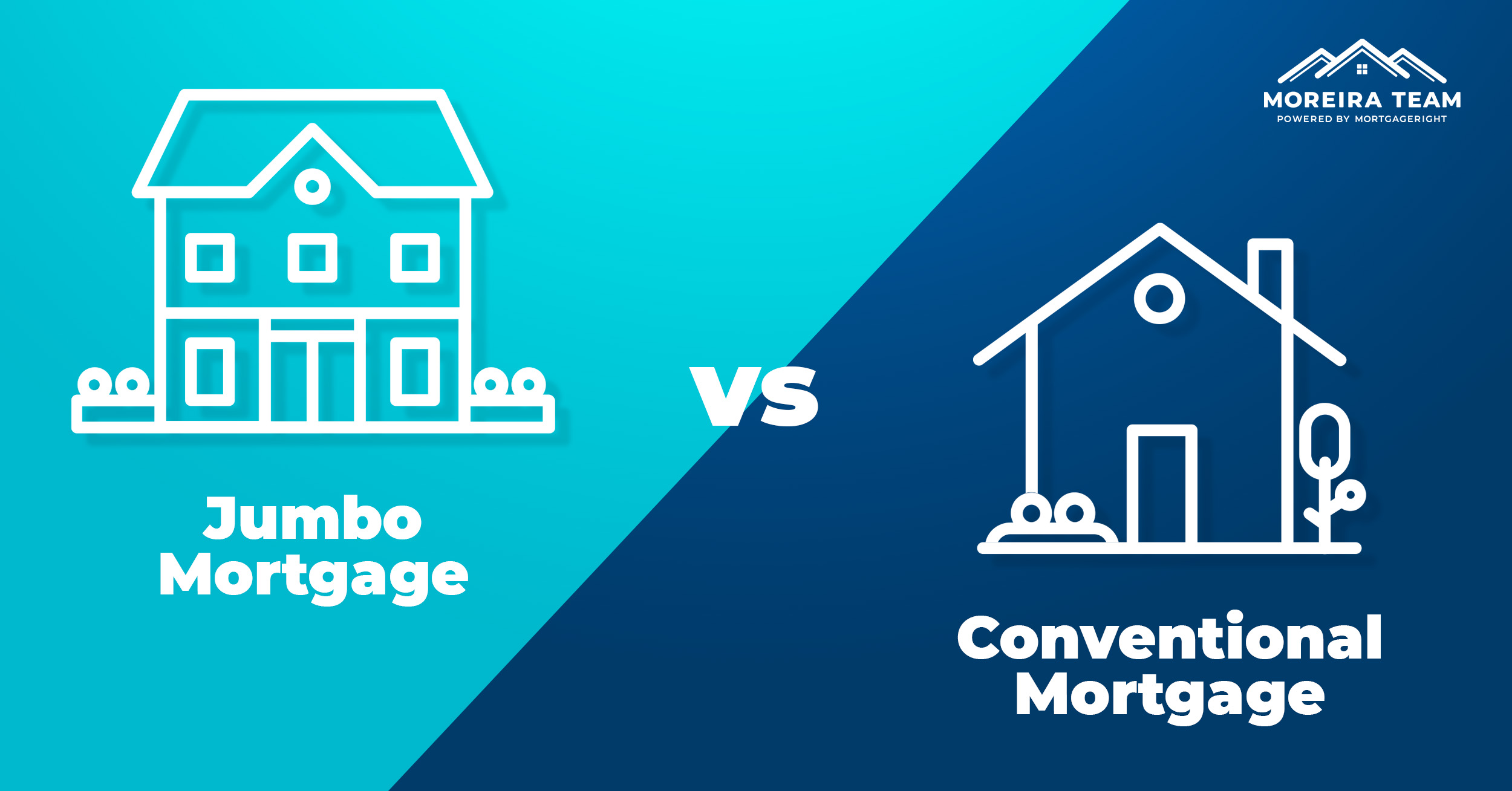
To truly grasp what a jumbo mortgage entails, it’s essential to first understand its counterpart: the conforming loan. These are the standard mortgages that adhere to specific guidelines and loan limits set annually by the Federal Housing Finance Agency (FHFA), allowing them to be bought and sold on the secondary market by Fannie Mae and Freddie Mac. When a loan amount surpasses these limits, it is then classified as a non-conforming, or more commonly, a jumbo mortgage.
Understanding Conforming Loan Limits
Each year, the FHFA updates the conforming loan limits based on national housing price trends. For most of the United States, the baseline conforming loan limit for a single-family home in 2024 is $766,550. This figure acts as the dividing line: any mortgage for an amount exceeding this national baseline (or the higher limits in designated high-cost areas) automatically becomes a jumbo loan. These limits can vary significantly, however, reflecting the diverse real estate markets across the country.
The Rationale Behind Jumbo Loans
Jumbo loans exist because high-value properties require larger sums of money than what the conventional mortgage market is designed to support. Lenders willing to offer jumbo mortgages take on greater risk due to the larger principal involved and the fact that these loans cannot be easily sold to Fannie Mae or Freddie Mac. Consequently, jumbo mortgages often come with their own distinct set of underwriting standards, which are typically more stringent than those for conforming loans. They are a critical tool for facilitating transactions in affluent markets and for individuals seeking to purchase luxury homes, estates, or properties in extremely competitive, high-priced urban and suburban areas.
Variations by Location: High-Cost Areas
It’s crucial to note that the national conforming loan limit is not uniform across all geographies. In areas where the median home value is significantly higher, the FHFA sets higher conforming loan limits, sometimes up to 150% of the baseline limit. For example, in particularly expensive counties, the conforming limit for a single-family home can reach up to $1,149,825. Even in these high-cost areas, a jumbo mortgage is required for any loan amount exceeding their specific, elevated conforming limit. This localized adjustment ensures that a wider range of homes can still be financed with conventional, conforming loans, while jumbo mortgages remain reserved for properties that truly push the upper boundaries of local market values. Understanding your local conforming limits is the first step in determining if your desired property will necessitate a jumbo loan.
When Do You Need a Jumbo Mortgage? Identifying the Tipping Point
The need for a jumbo mortgage isn’t just about a specific property price; it’s about the loan amount required to finance that property. While a multi-million-dollar mansion will almost certainly require a jumbo loan, properties just above the conforming limit also fall into this category. Recognizing the scenarios that necessitate a jumbo mortgage is key to preparing your finances appropriately.
High-Value Real Estate Markets
In certain metropolitan areas and their surrounding suburbs, the average home price routinely exceeds conforming loan limits. Major coastal cities like New York, San Francisco, Los Angeles, Seattle, and Miami, along with other thriving economic hubs, often have median home prices that push buyers into jumbo loan territory. If you’re looking to purchase an average-sized home in one of these expensive markets, you might find yourself needing a jumbo mortgage simply because the prevailing property values dictate a higher loan amount. This isn’t necessarily about buying a “luxury” home, but rather navigating a high-cost real estate environment.
Purchasing Luxury Properties
Beyond geographical considerations, the inherent value of a property itself can trigger the need for a jumbo loan. Luxury homes, large estates, properties with extensive amenities (e.g., multiple acres, guest houses, swimming pools, high-end custom features), or unique architectural masterpieces often command prices well into the seven or even eight figures. Financing these types of properties almost always requires a mortgage that far exceeds conforming limits, making a jumbo loan the primary and often only viable option. For buyers in this segment, the jumbo mortgage is a tailored financial solution to acquire their desired high-end asset.
Refinancing a Large Existing Mortgage
The application of jumbo mortgages isn’t limited to new purchases. Homeowners with existing mortgages that were originally jumbo loans, or those whose properties have significantly appreciated in value, may also require a jumbo loan when refinancing. If your current mortgage balance, or the amount you wish to pull out in a cash-out refinance, exceeds the conforming loan limit, you will need to apply for a jumbo refinance. This is particularly relevant for those looking to lower interest rates on their existing large mortgage, shorten their loan term, or tap into substantial home equity for other investments or expenses.
The Unique Landscape of Jumbo Mortgage Requirements
Given the higher loan amounts and increased risk for lenders, jumbo mortgages come with a distinct set of underwriting criteria that are notably stricter than those for conforming loans. Borrowers seeking a jumbo mortgage must demonstrate a robust financial profile to qualify.
Stricter Credit Score Expectations
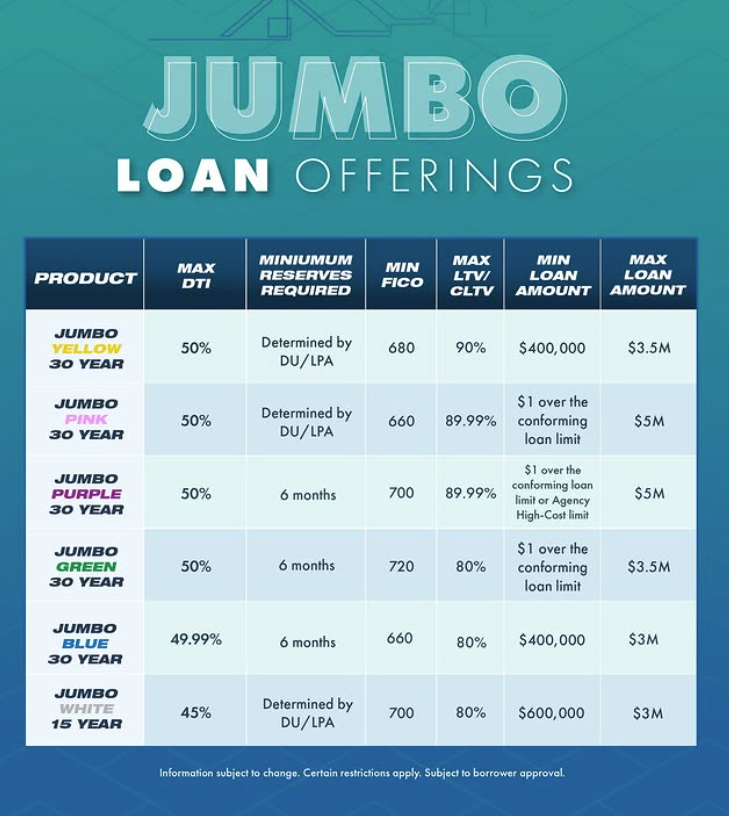
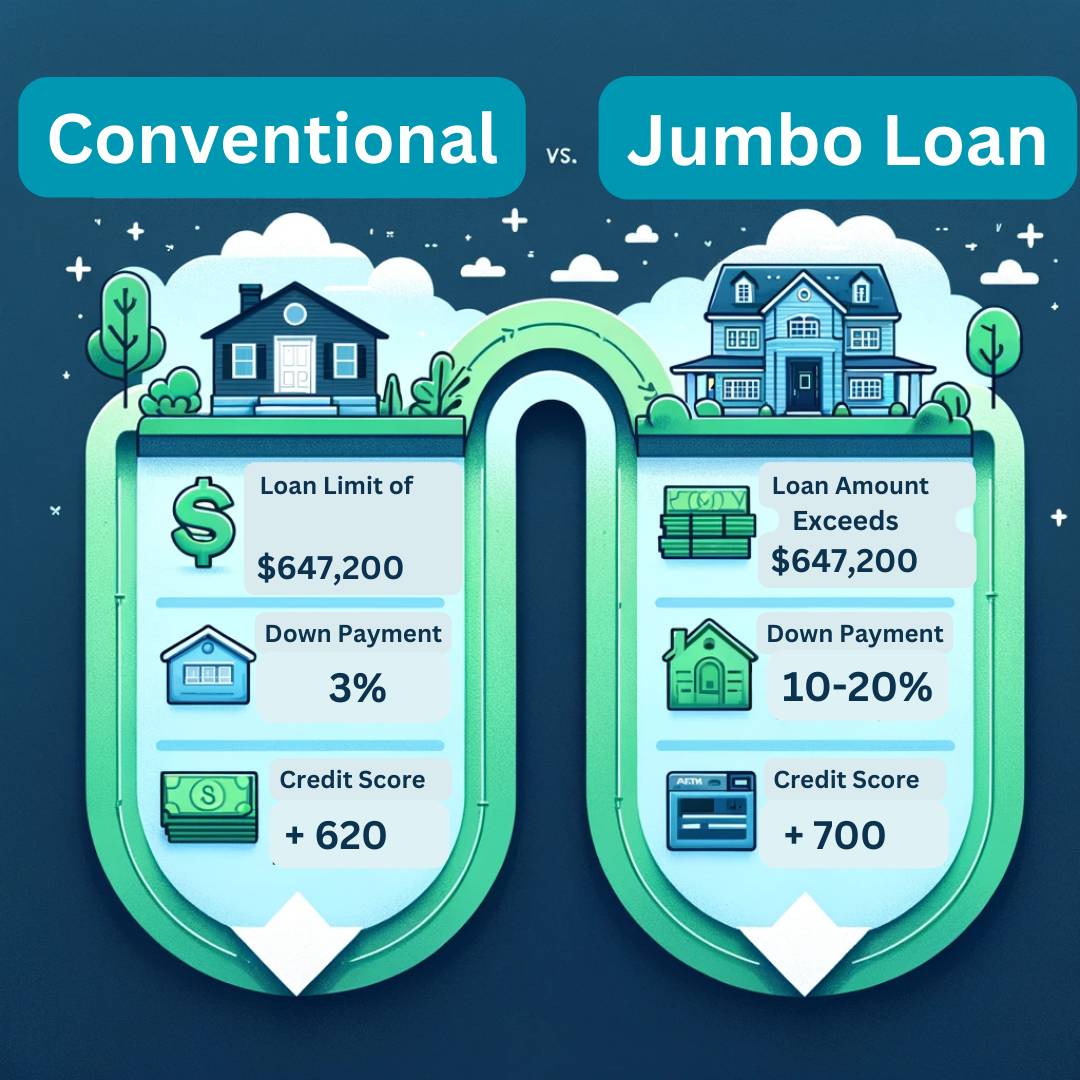
While a credit score in the mid-600s might suffice for some conforming loans, jumbo mortgage lenders typically require a significantly higher score. Expect to need a FICO score of 700, 720, or even 740 and above. Lenders want to see a history of impeccable financial responsibility, as a higher credit score indicates a lower probability of default on a large loan.
Higher Down Payment Requirements
One of the most noticeable differences is the down payment. For conforming loans, a down payment of 3-5% is often possible. For jumbo mortgages, lenders usually require a minimum down payment of 10-20%, and sometimes even more, especially for very high loan amounts or less competitive financial profiles. A larger down payment reduces the lender’s risk and demonstrates the borrower’s significant equity stake and financial commitment to the property.
Proving Substantial Income and Assets
Jumbo mortgage applicants are expected to have a verifiable, stable, and substantial income stream to comfortably afford the larger monthly payments. Lenders will scrutinize income documentation, often requiring two years of tax returns, W-2s, and pay stubs. Beyond income, a critical component is the demonstration of significant liquid assets. Lenders want to see that you have ample reserves – often six to twelve months (or more) of mortgage payments, including principal, interest, taxes, and insurance (PITI) – in accessible accounts after closing. This financial cushion provides a safety net for the borrower and reassures the lender of their ability to weather unforeseen financial challenges.
Lower Debt-to-Income Ratios
Your debt-to-income (DTI) ratio is another crucial metric. This ratio compares your total monthly debt payments to your gross monthly income. For conforming loans, a DTI of up to 43-50% might be acceptable. However, for jumbo mortgages, lenders typically prefer a DTI ratio below 43%, and often closer to 38-40%. A lower DTI ratio signifies that you have more disposable income relative to your debt obligations, making you a less risky borrower for a large loan.
Navigating Jumbo Mortgage Rates and Costs
Understanding the cost structure of a jumbo mortgage goes beyond just the principal amount. Rates, fees, and the overall financial implications can vary significantly, making thorough research and comparison essential.
Are Jumbo Rates Higher or Lower?
Historically, jumbo mortgage rates were often slightly higher than conforming loan rates due to the increased risk borne by lenders. However, in recent years, the competitive lending market and the attractive profile of many jumbo borrowers (who often have excellent credit and substantial assets) have sometimes led to jumbo rates being comparable to, or even slightly lower than, conforming rates. This inversion isn’t constant and can fluctuate based on market conditions, lender competition, and the specific borrower’s financial strength. It’s crucial to shop around and compare offers to determine the prevailing trend at the time of your application.
Understanding Closing Costs for Jumbo Loans
While the types of closing costs for a jumbo mortgage are generally similar to those for a conforming loan (origination fees, appraisal fees, title insurance, recording fees, attorney fees, etc.), the amounts can be higher. Because the loan principal is larger, fees that are calculated as a percentage of the loan amount (e.g., origination fees, some lender fees) will naturally be greater. Additionally, lenders might require more extensive appraisals or due diligence, which can add to the cost. Borrowers should anticipate these higher closing costs and factor them into their overall financial planning.
The Impact of Loan-to-Value (LTV) on Pricing
The Loan-to-Value (LTV) ratio, which compares the loan amount to the appraised value of the property, significantly influences jumbo mortgage rates and terms. A lower LTV (meaning a larger down payment) generally translates to a lower interest rate, as it reduces the lender’s risk. For instance, a borrower putting down 30% might receive a more favorable rate than one putting down the minimum 10%. Lenders view higher borrower equity as a strong indicator of commitment and a buffer against potential market downturns.
ARM vs. Fixed-Rate Options
Jumbo mortgages are available in both fixed-rate and adjustable-rate mortgage (ARM) formats. A fixed-rate jumbo mortgage offers the stability of consistent monthly payments for the life of the loan, providing predictability in budgeting. Jumbo ARMs, on the other hand, typically offer a lower initial interest rate for a fixed period (e.g., 5, 7, or 10 years), after which the rate adjusts periodically based on a market index. ARMs can be attractive for borrowers who anticipate selling the property or refinancing before the adjustment period, or those who are comfortable with potential payment fluctuations in exchange for a lower initial rate. The choice between fixed and ARM depends heavily on individual risk tolerance, financial projections, and market outlook.
Strategies for Securing the Best Jumbo Mortgage Deal
Navigating the jumbo mortgage market can feel daunting, but with a strategic approach, borrowers can significantly improve their chances of securing favorable terms and rates. Preparation and proactive engagement are key.
Enhancing Your Financial Profile
Before even approaching a lender, take steps to optimize your financial standing. Prioritize paying down existing debts to lower your DTI ratio and free up cash flow. Build up your liquid savings and investment accounts to demonstrate robust reserves. Scrutinize your credit report for any inaccuracies and work to improve your credit score. The stronger your financial profile, the more attractive you appear to jumbo lenders, giving you greater leverage in negotiations. Consider consolidating smaller debts or delaying large purchases that could impact your DTI or credit score in the months leading up to your application.
Shopping Around for Lenders
Do not settle for the first offer you receive. The jumbo mortgage market is diverse, with offerings from large national banks, regional banks, credit unions, and specialized mortgage lenders. Each institution may have slightly different underwriting guidelines, risk appetites, and pricing models. Engage with multiple lenders, obtain pre-approvals from a few, and compare their rates, fees, and terms meticulously. Even a small difference in interest rate on a large jumbo loan can translate into tens of thousands of dollars saved over the life of the loan. Leverage competitive offers to negotiate for better terms with your preferred lender.
Working with Experienced Mortgage Professionals
Given the complexities of jumbo mortgages, working with a mortgage broker or loan officer who specializes in this niche can be invaluable. These professionals have deep market knowledge, understand the specific requirements of various jumbo lenders, and can help you identify the best-fit product for your unique financial situation. They can guide you through the intricate application process, help you package your financial documents effectively, and advocate on your behalf to lenders. Their expertise can save you time, reduce stress, and potentially secure more favorable terms than you might achieve on your own.
Understanding Market Timing
Interest rates for jumbo mortgages, like all loans, are influenced by broader economic factors, Federal Reserve policies, and bond market performance. While predicting market movements perfectly is impossible, staying informed about current interest rate trends can help you decide the optimal time to lock in your rate. If rates are trending upwards, securing your rate sooner might be advantageous. Conversely, if rates are falling, waiting a bit longer could yield a better deal. An experienced mortgage professional can provide insights into current market conditions and help you make an informed decision regarding rate locks.
Securing a jumbo mortgage is a significant financial undertaking, but for those with the appropriate financial standing, it is the pathway to owning high-value real estate. By understanding the conforming limits, preparing for stringent requirements, carefully comparing rates and costs, and adopting strategic planning, borrowers can confidently navigate the jumbo mortgage landscape and achieve their dream of luxury homeownership.
aViewFromTheCave is a participant in the Amazon Services LLC Associates Program, an affiliate advertising program designed to provide a means for sites to earn advertising fees by advertising and linking to Amazon.com. Amazon, the Amazon logo, AmazonSupply, and the AmazonSupply logo are trademarks of Amazon.com, Inc. or its affiliates. As an Amazon Associate we earn affiliate commissions from qualifying purchases.