
In the world of modern investing, few symbols carry as much weight and recognition as “QQQ.” For seasoned Wall Street traders and novice retail investors alike, these three letters represent more than just a ticker symbol; they represent the pulse of the digital economy. Formally known as the Invesco QQQ Trust, this Exchange-Traded Fund (ETF) has become one of the most traded and discussed financial instruments in history.
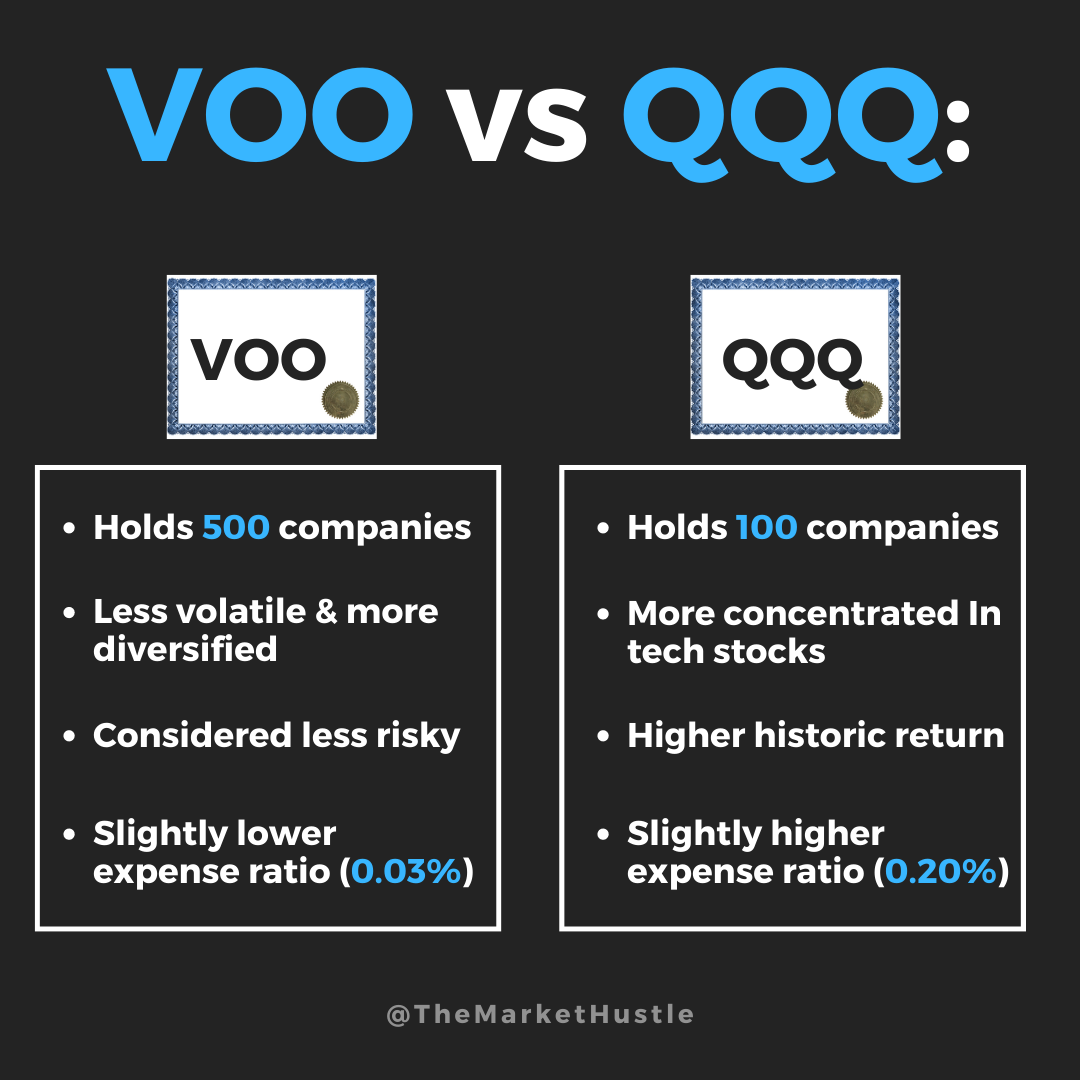
But what exactly is QQQ, and why has it captured the collective imagination of the global investment community? At its core, QQQ is an investment vehicle designed to track the performance of the Nasdaq-100 Index. By purchasing a single share of QQQ, an investor gains fractional ownership in 100 of the largest non-financial companies listed on the Nasdaq Stock Market. Since its inception in 1999, it has served as the primary gateway for investors looking to capitalize on the rapid expansion of technology, innovation, and consumer transformation.
Understanding the Fundamentals of the Nasdaq-100 Index
To understand QQQ, one must first understand the index it tracks: the Nasdaq-100. Often confused with the broader Nasdaq Composite (which includes thousands of companies), the Nasdaq-100 is a modified market-capitalization-weighted index that focuses strictly on the “best of the best” within the exchange.
How the Index is Constructed
The Nasdaq-100 is not a random collection of stocks. It is governed by strict eligibility criteria. To be included, a company must be listed on the Nasdaq, have a minimum average daily trading volume of 200,000 shares, and have been traded for at least three months. The index is rebalanced quarterly and reconstituted annually in December. This process ensures that the fund always reflects the most dominant and relevant companies in the market, effectively “weeding out” laggards and replacing them with rising stars.
The Strategic Exclusion of Financial Stocks
One of the most defining characteristics of the Nasdaq-100—and by extension, QQQ—is the total exclusion of financial companies. You will not find banks, insurance providers, or investment firms like JPMorgan Chase or Goldman Sachs in this fund. This exclusion was a deliberate choice at the index’s inception, intended to differentiate it from the S&P 500. By removing the sensitivity to interest rates and credit cycles typically associated with the banking sector, QQQ becomes a “pure-play” on growth, innovation, and industrial evolution.
Why QQQ is the Benchmark for Growth Investing
Over the last two decades, QQQ has consistently outperformed many other broad-market indices, leading many to view it as the ultimate benchmark for growth-oriented portfolios. It is often referred to as a “tech fund,” though this is technically a misnomer, as it includes significant holdings in healthcare, consumer services, and industrials.
The Dominance of “Big Tech” and Innovation
The reason QQQ is so frequently associated with technology is due to its heavy weighting in the “Magnificent Seven” and other tech titans. Companies like Apple, Microsoft, Alphabet (Google), Amazon, and NVIDIA often make up a massive percentage of the fund’s total assets. These companies are the architects of the modern world, controlling everything from cloud computing and artificial intelligence to e-commerce and mobile hardware. When global trends shift toward digitization, QQQ is usually the primary beneficiary.
Historical Performance and Long-Term Returns
Investors are drawn to QQQ because of its track record. While past performance is never a guarantee of future results, the fund’s history is compelling. During the “lost decade” of the 2000s, it struggled alongside the broader market, but since the 2010s, its growth has been meteoric. For an investor who stayed the course through market volatility, the compounded returns of QQQ have significantly outpaced the S&P 500. This outperformance is driven by the fundamental earnings growth of its underlying companies, many of which maintain high profit margins and fortress-like balance sheets.
The Mechanics of Investing in QQQ

Beyond the companies it holds, the structural efficiency of QQQ as an investment tool is a major part of its appeal. As an ETF, it offers certain advantages over traditional mutual funds, particularly regarding costs and accessibility.
Expense Ratios and Cost Efficiency
In the world of personal finance, fees are the silent killer of long-term wealth. QQQ is widely regarded as a cost-effective option, sporting an expense ratio of approximately 0.20%. This means that for every $10,000 invested, the annual management fee is only $20. While there are even cheaper “total market” funds available, 0.20% is considered very competitive for a fund that provides such concentrated exposure to high-growth leadership.
Liquidity and Trading Volume
For active traders and institutional investors, liquidity is paramount. QQQ is one of the most liquid securities in the world, often trading tens of millions of shares per day. This high volume ensures narrow “bid-ask spreads,” meaning investors can enter and exit positions at prices very close to the market rate without being penalized by transaction friction. Furthermore, QQQ has a robust options market, allowing sophisticated investors to use hedging strategies, such as covered calls or protective puts, to manage their risk.
Strategic Portfolio Allocation with QQQ
While QQQ offers immense upside potential, it is not a “one size fits all” solution. Its unique composition requires a thoughtful approach to portfolio construction and risk management.
Risk Management and Volatility
The same concentration that drives QQQ’s outperformance also introduces higher volatility. Because the fund is heavily weighted in a few specific sectors (primarily Technology and Communication Services), it is susceptible to “sector rotation.” If the market moves away from growth stocks toward “value” stocks (like energy or utilities), QQQ can experience sharper drawdowns than a more diversified index like the S&P 500. Investors must have the stomach for these swings and a long-term time horizon to see the growth thesis play out.
QQQ vs. QQQM: Which is Right for You?
In recent years, Invesco launched a “sister” fund called the Invesco NASDAQ 100 ETF (Ticker: QQQM). This has created some confusion among investors. QQQM tracks the exact same index as QQQ but features a lower expense ratio (0.15% vs 0.20%). The primary difference is liquidity. QQQ is designed for traders and institutional players who need massive liquidity, while QQQM is tailor-made for “buy-and-hold” retail investors looking to shave off every possible basis point in fees over 20 or 30 years.
The Future of Growth: Emerging Themes within the Fund
Looking forward, the value of QQQ lies in its ability to adapt. Because the Nasdaq-100 is based on market capitalization, the fund naturally evolves as new industries rise to prominence.
Beyond Software: Semiconductors and AI
While software and internet services dominated the last decade, the current era is being defined by hardware and infrastructure—specifically semiconductors. Companies like NVIDIA and Broadcom have surged in the rankings within QQQ, reflecting the global shift toward Artificial Intelligence (AI). Investing in QQQ today is less about “social media apps” and more about the processing power and data centers required to fuel the next industrial revolution.

The Role of Healthcare and Consumer Services
While tech grabs the headlines, QQQ also provides exposure to cutting-edge healthcare and consumer trends. Companies involved in biotechnology, genomics, and specialized retail are staples of the index. This ensures that if the next “big thing” comes from a lab rather than a coding room, the QQQ structure is likely to capture that growth as those companies grow in market value and earn their spot in the top 100.
In summary, the Invesco QQQ Trust is more than just a collection of tech stocks; it is a meticulously curated basket of the most influential companies in the modern economy. By offering a blend of high-growth potential, structural efficiency, and institutional-grade liquidity, it has earned its place as a cornerstone of the modern investment landscape. Whether used as a core holding for long-term wealth accumulation or a tactical tool for capturing market momentum, understanding QQQ is essential for any investor looking to navigate the complexities of the 21st-century financial markets.
aViewFromTheCave is a participant in the Amazon Services LLC Associates Program, an affiliate advertising program designed to provide a means for sites to earn advertising fees by advertising and linking to Amazon.com. Amazon, the Amazon logo, AmazonSupply, and the AmazonSupply logo are trademarks of Amazon.com, Inc. or its affiliates. As an Amazon Associate we earn affiliate commissions from qualifying purchases.