
In the landscape of the modern economy, career choices are often viewed through the lens of immediate gratification: high starting salaries, stock options, and the prestige of “unicorn” startups. However, for the astute financial planner and the career-minded individual, public sector employment remains one of the most stable and financially rewarding paths available. Understanding what public sector employment entails is not just about knowing who signs the paycheck—it is about recognizing a specific economic model of labor that prioritizes long-term wealth accumulation, risk mitigation, and unparalleled job security.

At its core, public sector employment refers to any position where the primary employer is a government entity. This encompasses federal, state, and local governments, as well as “quasi-government” agencies and public corporations. From a financial perspective, entering the public sector is a strategic move that trades the high-variance volatility of the private market for a “low-beta,” high-security career path.
The Economic Structure of Public Sector Roles
To understand the value of a public sector role, one must first understand how these positions are funded and structured. Unlike private companies that rely on venture capital, sales revenue, or equity markets, the public sector is fueled by tax revenue and government appropriations. This fundamental difference creates a unique financial environment for the employee.
The Core Levels of Government Employment
Public sector employment is generally categorized into three tiers, each with its own budgetary constraints and salary structures.
- Federal Level: These are roles within the national government (e.g., civil service, military, and federal agencies). Financially, these roles often offer the highest ceiling for specialized professional positions and are governed by the General Schedule (GS) pay scale, providing complete transparency in earnings.
- State Level: State employees manage regional infrastructure, education, and healthcare. These roles are often tied to state-specific economic health but offer significant localized benefits.
- Local Level: This includes municipal governments, counties, and school districts. While salaries may be lower than federal roles, the cost-of-living adjustments and community-based stability provide a different type of financial equilibrium.
Transparency and Predictable Income Growth
One of the primary financial advantages of the public sector is the elimination of “salary mystery.” In the private sector, pay is often a result of aggressive negotiation and can vary wildly between peers. In the public sector, pay scales are public record. For an individual focused on long-term budgeting and financial forecasting, this predictability is an asset. You can map out your projected earnings five, ten, and twenty years into the future with a high degree of accuracy, allowing for precise retirement and investment planning.
The Financial DNA of Public Service: Compensation and Benefits
When comparing public and private sector roles, many professionals make the mistake of looking only at the “top-line” salary. However, public sector employment is built on a “total compensation” model that often far exceeds the private sector when adjusted for risk and long-term value.
The Power of the Defined-Benefit Pension
While the private sector has largely migrated to defined-contribution plans (like the 401k), where the investment risk falls entirely on the employee, much of the public sector still offers defined-benefit pensions. This is a “Golden Ticket” in personal finance. A pension provides a guaranteed, monthly income for life after retirement, often adjusted for inflation. When you calculate the “net present value” of a government pension, it is frequently worth millions of dollars—a sum that would require a massive and risky private investment portfolio to replicate.
Comprehensive Healthcare and Insurance Subsidies
Public sector employees typically enjoy healthcare premiums that are significantly lower than those in the private sector. The government often subsidizes a larger portion of the insurance cost, leading to higher “take-home” pay. Additionally, these plans often have lower deductibles and out-of-pocket maximums. For a family-oriented professional, the savings on healthcare alone can be equivalent to a $10,000 to $15,000 annual salary increase in the private sector.
Student Loan Forgiveness and Educational Incentives
For many young professionals, the greatest barrier to wealth accumulation is student debt. Public sector employment offers a unique financial tool: the Public Service Loan Forgiveness (PSLF) program. By working for a government entity for ten years and making qualifying payments, employees can have the remainder of their federal student loans forgiven tax-free. In the context of “Money,” this is essentially a massive, non-taxable bonus that can accelerate one’s net worth by six figures.
Job Security as a Financial Asset
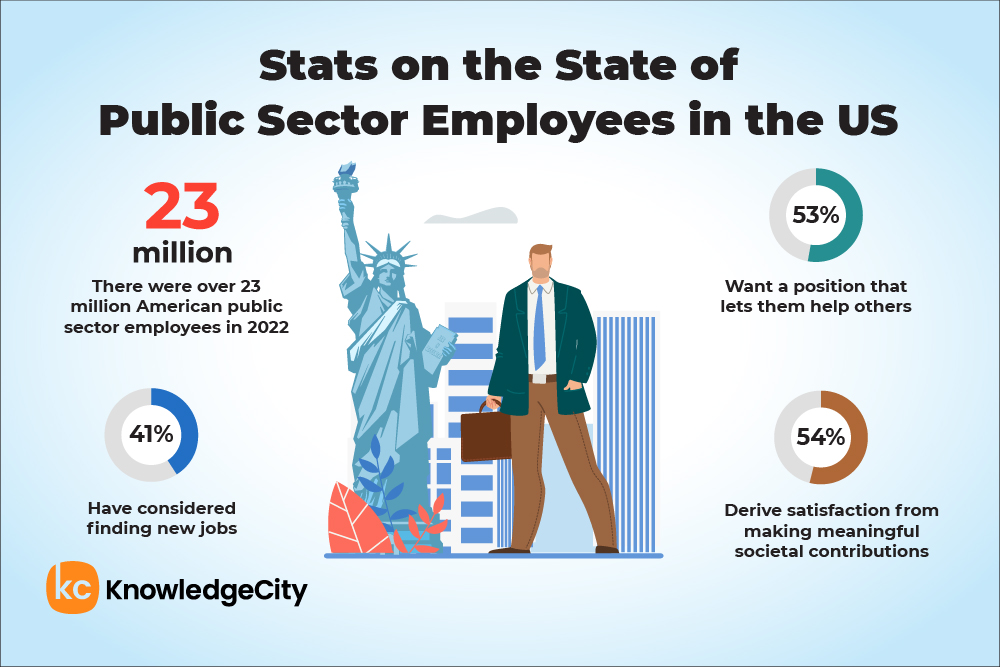
In financial theory, “risk” is the probability that an actual return will differ from an expected return. In the labor market, the greatest risk is unemployment. Public sector employment acts as a hedge against economic volatility, providing a level of job security that is virtually non-existent in the corporate world.
Recession-Proofing Your Career
When the economy enters a downturn, private corporations face “downsizing,” “right-sizing,” and layoffs to protect shareholder value. In contrast, the demand for government services—such as infrastructure, public safety, and social services—often increases during a recession. Public sector roles are remarkably resilient to market cycles. This “recession-proofing” allows employees to maintain their lifestyle and continue their investment contributions even when the broader market is in a tailspin.
Impact on Creditworthiness and Lending
Lenders value stability. A public sector employee with a steady, predictable income and high job security is often viewed as a lower-risk borrower. This can lead to better terms on mortgages, auto loans, and personal lines of credit. Over a lifetime, the ability to secure a lower interest rate because of your employment status can save tens of thousands of dollars in interest expenses, further boosting your personal net worth.
Low Volatility and Risk Mitigation
The “quit rate” and “layoff rate” in the public sector are statistically much lower than in the private sector. This low volatility allows for more aggressive long-term investing. If you know your income is secure, you may feel more comfortable allocating a higher percentage of your disposable income into equities or real estate, knowing you won’t be forced to liquidate your assets during a market crash due to a sudden loss of employment.
Opportunities for Side Hustles and Wealth Diversification
A common misconception is that public sector employment is a “dead end” for those with an entrepreneurial spirit. In reality, the structured nature of government work often provides the perfect foundation for building secondary income streams and side hustles.
Work-Life Balance as a Catalyst for Secondary Income
Public sector roles are famous for their adherence to a 40-hour workweek and generous Paid Time Off (PTO). Unlike “high-burnout” private sector roles that demand 60-80 hours a week, public service provides the time and mental bandwidth to pursue “Side Hustles.” Whether it is real estate investing, e-commerce, or freelance consulting, the predictable schedule of a government job acts as a stable “base” from which to launch higher-risk, higher-reward financial ventures.
Leveraging Expertise for Consulting and Education
Public sector employees often become subject matter experts in complex regulatory or technical fields. This expertise is highly valuable. Many government employees diversify their income by teaching as adjunct professors, writing industry white papers, or providing consulting services (within ethical guidelines). This allows them to capitalize on their “human capital” while maintaining the safety net of their primary government role.
The Evolving Landscape: Public vs. Private Sector Cost-Benefit
As we look toward the future of work, the definition of public sector employment is evolving. The gap between private sector “perks” and public sector “stability” is narrowing in some areas while widening in others.
Navigating the Hybrid Shift
Historically, the public sector was slower to adopt remote work. However, the post-pandemic economy has forced government agencies to modernize. Many public sector roles now offer hybrid or fully remote options, significantly reducing commuting costs and increasing the “geographic arbitrage” potential for employees. Being able to earn a federal-level salary while living in a low-cost-of-living area is a powerful wealth-building strategy.

The Final Calculation: Is it Right for Your Portfolio?
Choosing public sector employment is a move toward “financial peace.” It is a choice to prioritize long-term, compounding growth over short-term, speculative gains. When you factor in the pension, the healthcare subsidies, the student loan forgiveness, and the immunity to market crashes, the “real” value of a public sector salary is often 30-40% higher than the number on the paycheck.
For the individual focused on “Money”—not just as a currency, but as a tool for freedom and security—public sector employment offers a unique and formidable path. It is more than just a job; it is a strategic financial foundation upon which a robust and diversified life can be built. By understanding the nuances of this sector, you can make an informed decision that secures your financial future for decades to come.
aViewFromTheCave is a participant in the Amazon Services LLC Associates Program, an affiliate advertising program designed to provide a means for sites to earn advertising fees by advertising and linking to Amazon.com. Amazon, the Amazon logo, AmazonSupply, and the AmazonSupply logo are trademarks of Amazon.com, Inc. or its affiliates. As an Amazon Associate we earn affiliate commissions from qualifying purchases.