
A 5250 hold in California, a temporary psychiatric detention, carries significant implications that extend far beyond the immediate mental health crisis. While the primary focus is on the individual’s well-being and stabilization, the downstream effects can ripple into various aspects of their life, including their financial stability and legal standing. Understanding what happens after a 5250 hold is crucial for individuals undergoing this process, their families, and legal or financial professionals who may assist them. This article will delve into the multifaceted aftermath of a 5250 hold, exploring the critical areas of financial implications, legal considerations, and the path toward recovery and reintegration.

The Immediate Financial Disruptions of a 5250 Hold
The very nature of a 5250 hold, which mandates involuntary hospitalization for up to 72 hours for evaluation, often leads to immediate and unforeseen financial disruptions. The sudden inability to work, coupled with potential medical expenses, can create a precarious financial situation for the individual.
Loss of Income and Employment Uncertainty
The most immediate financial consequence of a 5250 hold is the abrupt cessation of income. Individuals placed on a hold are unable to fulfill their work responsibilities. This can range from hourly wage earners who lose pay for every day missed to salaried employees whose absence, if prolonged, could raise questions about their long-term viability with their employer.
- Hourly Workers: For individuals paid by the hour, even a short hold can mean a significant dent in their weekly or bi-weekly paychecks. This can impact their ability to cover immediate living expenses such as rent, utilities, and food.
- Salaried Employees: While salaried employees continue to receive their regular pay during the initial hold, the duration and underlying reasons for the hold can create uncertainty. Employers may require documentation or explanations, and repeated or prolonged absences due to mental health crises could eventually lead to concerns about job performance and stability.
- Gig Economy and Self-Employed Individuals: This group faces particularly acute challenges. Without employer-provided sick leave or disability benefits, a 5250 hold directly translates to zero income. This can have a devastating impact, especially for those relying on daily or weekly earnings.
Medical Expenses and Insurance Coverage
The costs associated with a 5250 hold, including hospitalization, medical evaluations, and any subsequent treatment, can be substantial. Navigating insurance coverage during and after such an event is a critical financial concern.
- Insurance Verification and Pre-authorization: While acute psychiatric care is often covered by insurance, the process of verifying coverage and obtaining pre-authorization can be complex, especially during an emergency hold. Delays or miscommunication can lead to unexpected out-of-pocket expenses.
- In-Network vs. Out-of-Network Providers: The facility where the individual is held and any subsequent treatment providers may or may not be in their insurance network. This can significantly impact the individual’s financial responsibility.
- Deductibles, Co-pays, and Co-insurance: Even with insurance, individuals will likely be responsible for deductibles, co-pays, and co-insurance payments, which can accumulate quickly during a hospital stay.
- Uninsured or Underinsured Individuals: For those without insurance or with inadequate coverage, the financial burden of psychiatric treatment can be overwhelming, potentially leading to significant medical debt.
Impact on Essential Bill Payments and Financial Obligations
The loss of income and the onset of medical bills can create a domino effect, making it difficult to meet existing financial obligations.
- Rent/Mortgage Payments: Failure to pay rent or mortgage can lead to late fees, eviction proceedings, or foreclosure.
- Utility Bills: Unpaid utility bills can result in service disconnection, adding further stress and inconvenience.
- Loan Payments (Car, Student, Personal): Missing loan payments can damage credit scores and lead to increased interest rates or collection efforts.
- Credit Card Debt: The temptation to use credit cards to cover immediate expenses can lead to increased debt and interest charges.
Legal and Administrative Ramifications Post-Hold
Beyond the immediate financial strains, a 5250 hold can trigger a series of legal and administrative processes that require careful navigation. These can impact an individual’s rights, responsibilities, and future legal standing.
The Legal Framework of a 5250 Hold
Understanding the legal basis of a 5250 hold is fundamental to grasping its aftermath. This section clarifies the legal justification and the rights afforded to individuals during and after the hold.
- Criteria for a 5250 Hold: The hold is initiated when a mental health professional believes an individual, as a result of a mental disorder, is a danger to themselves or others, or is gravely disabled. This is a temporary measure to allow for assessment and stabilization, not a punitive action.
- Patient Rights During a Hold: Individuals have specific rights during a 5250 hold, including the right to be informed of their rights, the right to an attorney, and the right to a hearing to contest the hold. Understanding these rights is crucial for advocating for oneself.
- The 72-Hour Window: The 5250 hold is limited to 72 hours. Within this period, a decision must be made regarding further treatment, which could include release, voluntary treatment, or extension of involuntary treatment under a different legal framework (e.g., a 5270 hold, which can be extended for longer periods).
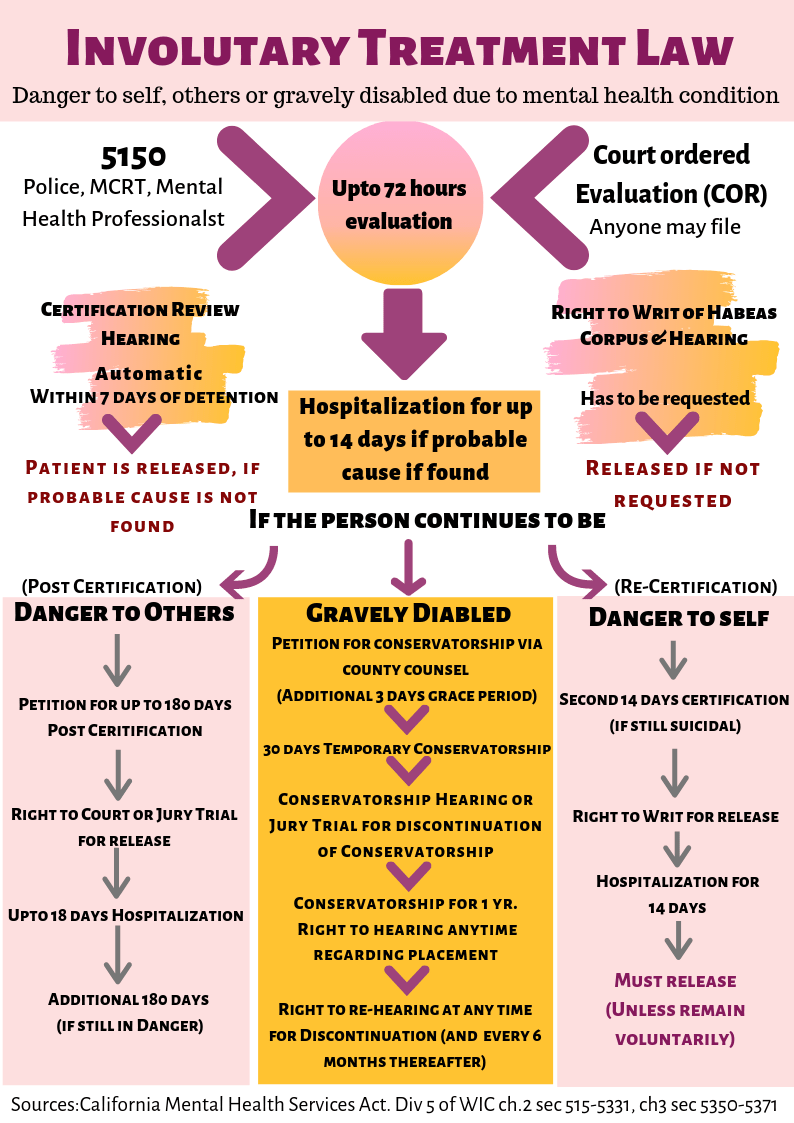
Potential for Further Legal Interventions and Conservatorship
While a 5250 hold is a short-term measure, the underlying mental health condition may necessitate further legal interventions if the individual continues to pose a risk or is unable to manage their affairs.
- Certification for Intensive Treatment (5270 Hold): If, after the 72-hour hold, the individual is still deemed to be a danger or gravely disabled, they may be certified for further involuntary treatment (known as a 5270 hold), which can last up to 14 days. This process involves further evaluations and legal reviews.
- Probable Cause Hearings: Individuals subject to extended involuntary holds have the right to probable cause hearings to determine if there is sufficient evidence to continue the detention.
- Limited Conservatorship: In more severe and persistent cases, where an individual is unable to manage their personal care or finances due to a mental disorder, a conservatorship may be sought. A conservatorship is a legal arrangement where a court appoints a conservator to make decisions on behalf of the individual. This can be a “limited conservatorship,” where the conservator’s authority is restricted to specific areas, or a “full conservatorship.” The establishment of a conservatorship has significant legal and financial implications, including potential loss of certain civil rights.
Impact on Employment and Professional Licenses
The stigma associated with mental health issues and involuntary holds can have lasting consequences on an individual’s career, especially in certain professions.
- Disclosure Requirements: Some employers, particularly in sensitive fields like healthcare, education, or law enforcement, may have policies requiring disclosure of mental health treatment or involuntary holds. This can be a complex and sensitive issue.
- Professional Licensing Boards: Individuals holding professional licenses (e.g., doctors, lawyers, nurses) may be required to report mental health episodes or involuntary holds to their respective licensing boards. These boards will then assess the individual’s fitness to practice and may impose conditions or restrictions.
- Background Checks: Involuntary holds, particularly those leading to more extensive legal interventions, could potentially appear on certain types of background checks, impacting future employment opportunities.
Rebuilding and Financial Recovery After a 5250 Hold
The aftermath of a 5250 hold is not solely about managing immediate crises; it is also about charting a course towards recovery, stabilization, and financial rebuilding. This requires a multi-pronged approach involving healthcare, financial planning, and legal support.
Accessing Mental Health Resources and Support Systems
The primary goal after a 5250 hold is continued access to appropriate mental health care to prevent relapse and promote long-term well-being.
- Outpatient Treatment: Following hospitalization, individuals are typically referred to outpatient mental health services, which may include therapy, medication management, and case management.
- Support Groups: Peer support groups can provide invaluable emotional support, shared experiences, and practical advice from individuals who have navigated similar challenges.
- Case Management Services: Case managers can assist individuals in coordinating their care, accessing resources, and navigating the complexities of the healthcare and social service systems.
Financial Planning and Debt Management Strategies
Addressing the financial disruptions caused by a 5250 hold requires proactive planning and potentially seeking professional guidance.
- Budgeting and Financial Assessment: A thorough review of income and expenses is essential. Creating a realistic budget that accounts for ongoing treatment costs and any lingering debt is a critical first step.
- Negotiating with Creditors: If facing difficulties in meeting financial obligations, individuals should proactively communicate with creditors. Many lenders and service providers are willing to work out payment plans or offer temporary relief when individuals are transparent about their situation.
- Seeking Financial Counseling: Non-profit credit counseling agencies can offer free or low-cost assistance with debt management, budgeting, and financial planning.
- Exploring Government Assistance Programs: Depending on income and circumstances, individuals may be eligible for various government assistance programs, such as Medi-Cal (California’s Medicaid program) for health coverage or other social services that can help alleviate financial strain.

Legal Assistance and Navigating Conservatorship Proceedings
If legal interventions such as conservatorship are initiated, securing legal counsel is paramount.
- Legal Aid Societies and Pro Bono Services: For individuals who cannot afford legal representation, legal aid societies and pro bono programs can provide essential legal assistance.
- Consulting with an Attorney Specializing in Mental Health Law or Conservatorships: If facing conservatorship proceedings, it is crucial to consult with an attorney experienced in these complex areas of law. An attorney can explain the process, advocate for the individual’s rights, and help navigate the legal landscape.
- Understanding the Rights and Responsibilities within a Conservatorship: If a conservatorship is established, understanding the scope of the conservator’s authority and the individual’s remaining rights is vital.
In conclusion, a 5250 hold in California is a serious intervention with far-reaching consequences that extend into an individual’s financial and legal life. While the immediate concern is mental health stabilization, a comprehensive understanding of the potential financial disruptions, legal ramifications, and the pathways to recovery is essential. By proactively addressing financial obligations, seeking appropriate mental health support, and navigating legal processes with informed guidance, individuals can work towards rebuilding their lives and regaining financial stability after a 5250 hold.
aViewFromTheCave is a participant in the Amazon Services LLC Associates Program, an affiliate advertising program designed to provide a means for sites to earn advertising fees by advertising and linking to Amazon.com. Amazon, the Amazon logo, AmazonSupply, and the AmazonSupply logo are trademarks of Amazon.com, Inc. or its affiliates. As an Amazon Associate we earn affiliate commissions from qualifying purchases.