
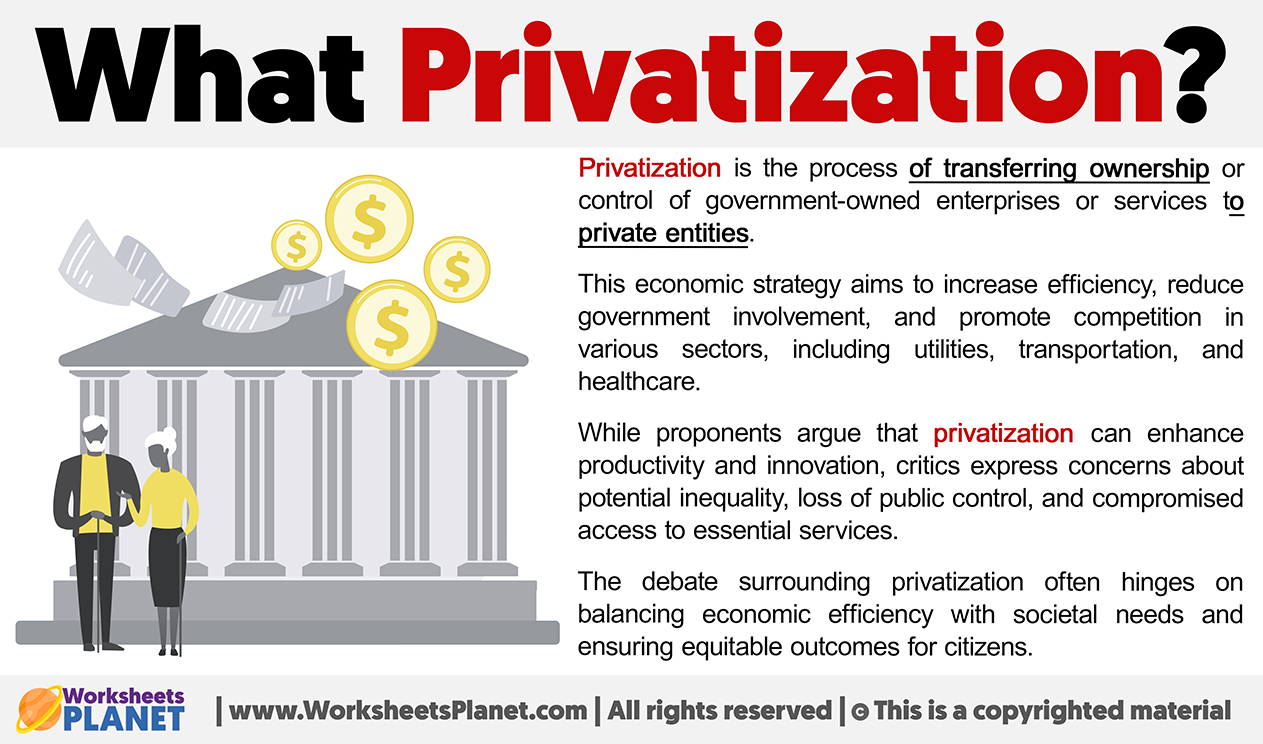
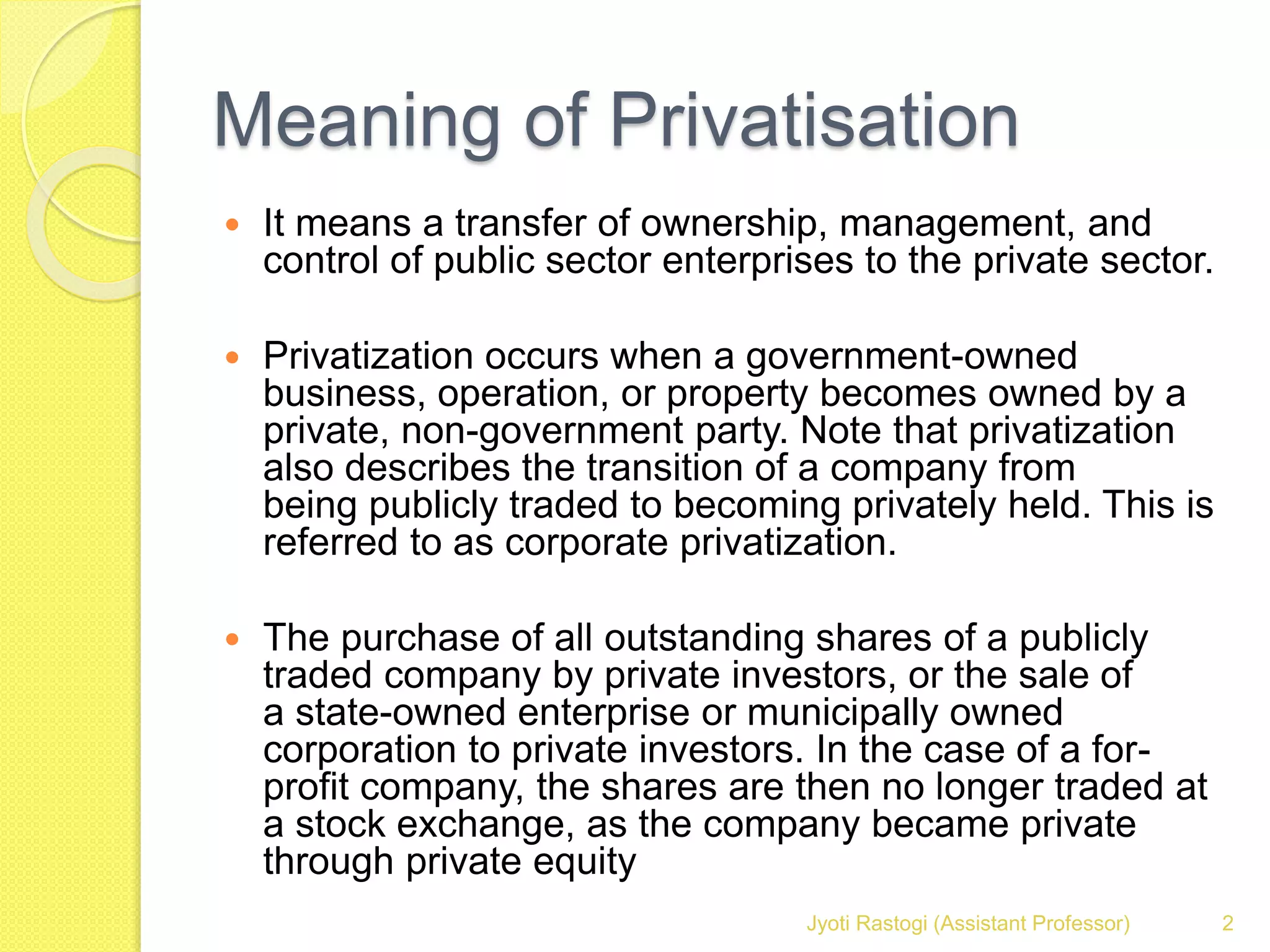
Privatisation is one of the most transformative economic processes of the modern era, representing a fundamental shift in how resources, services, and industries are managed within a global economy. At its core, privatisation is the transition of ownership, property, or business operations from the government (the public sector) to private individuals or corporations (the private sector). In the realm of finance and investment, this process is not merely a political maneuver; it is a catalyst for market liquidity, a driver of corporate efficiency, and a significant opportunity for institutional and retail investors alike.
By moving assets into the hands of private stakeholders, governments aim to foster competition, encourage innovation, and reduce the fiscal burden on the state. However, for the astute observer of business finance, privatisation is a complex mechanism with profound implications for capital allocation and market dynamics. This article explores the intricate world of privatisation, its financial foundations, and its role in the contemporary investment landscape.
The Mechanics of Privatisation: How State Assets Enter the Market
The process of privatisation is rarely a simple sale. It involves sophisticated financial structuring designed to ensure that the transition of power does not destabilize the industry or the wider economy. Depending on the goals of the state and the nature of the assets, several distinct methods are employed to move public entities into the private sphere.
Methods of Asset Transfer
The most common form of privatisation familiar to investors is the Initial Public Offering (IPO). In this scenario, the government sells shares of a state-owned enterprise (SOE) to the general public and institutional investors via the stock market. This not only raises immediate capital for the government but also subjects the company to the rigors of market discipline.
Other methods include “Direct Sales,” where a state asset is sold to a specific strategic investor or a consortium, and “Voucher Privatisation,” where citizens are given certificates representing ownership in various state enterprises. This latter method was famously used in post-Soviet economies to rapidly transition to a market-based system, though it often led to significant wealth concentration.
The Role of Government Policy and Regulation
Privatisation does not mean a total withdrawal of the state. In many sectors—particularly utilities, healthcare, and infrastructure—the government retains a regulatory role to ensure that the newly privatized entity does not abuse its position, especially if it operates as a natural monopoly. From a business finance perspective, the “Regulatory Framework” is perhaps the most critical factor in determining the valuation of a privatized company. Investors must analyze how government-imposed price caps or service mandates will affect the long-term profitability of the firm.
The Economic Rationale: Efficiency, Competition, and Profit
The primary argument for privatisation is rooted in the belief that the private sector is more efficient than the public sector. In a state-run enterprise, the lack of a profit motive often leads to bloated bureaucracies, lack of innovation, and a reliance on taxpayer subsidies to cover losses. Privatisation seeks to rectify these inefficiencies by introducing the “bottom line.”
Eliminating Bureaucracy and Political Interference
Public enterprises are often subject to political pressures that conflict with sound financial management. For instance, a state-owned airline might be forced to maintain unprofitable routes to please a specific voting bloc. Once privatized, the company is governed by a Board of Directors accountable to shareholders. The shift in focus toward “Shareholder Value” forces the management to trim operational fat, optimize supply chains, and invest in technology that enhances productivity. This lean operational model is what makes privatized firms attractive to value investors.
Driving Innovation through Market Competition
When a state monopoly is broken up and sold to the private sector, it often leads to a surge in innovation. In a competitive market, firms must differentiate themselves through better service, lower prices, or superior technology. This is clearly seen in the telecommunications and energy sectors. Prior to privatisation in many countries, telephone service was a sluggish, expensive government utility. Today, privatized telecom companies are at the forefront of the digital revolution, driven by the need to capture market share and generate returns for their investors.
Privatisation as an Investment Opportunity

For individual and institutional investors, the privatisation of a major state enterprise is often a landmark event. These deals are frequently among the largest IPOs in history, offering a unique entry point into sectors that were previously closed to private capital.
Investing in State-Owned Enterprise (SOE) IPOs
Participating in a privatisation IPO can be a lucrative strategy. Governments are often incentivized to price these shares attractively to ensure a successful “sell-off” and to encourage public participation in the stock market. These companies are typically “National Champions”—large, established entities with significant infrastructure and market dominance. For a personal finance portfolio, these stocks can provide a mix of stability and dividend income, as they often operate in essential industries with steady cash flows.
Risk Assessment: Political and Regulatory Factors
Despite the potential for high returns, investing in privatised assets carries unique risks. The most prominent is “Regulatory Risk.” Since these companies often provide essential services, they are perpetual targets for government intervention. A change in administration could lead to new taxes, stricter price controls, or even “Renationalisation”—the process of the government taking back control of the industry. Investors must perform rigorous due diligence on the political stability and legal framework of the country in question before committing capital to a privatised entity.
The Impact on Business Finance and Market Dynamics
Privatisation does more than just change the owner of a company; it changes the way capital flows through an entire economy. By moving massive entities onto the stock exchange, privatisation increases “Market Capitalization” and liquidity, making the local financial market more attractive to international investors.
Capital Allocation and Corporate Governance
In the public sector, capital is often allocated based on budget cycles and political priorities. In the private sector, capital is allocated based on “Return on Investment” (ROI). Privatized firms must compete for capital in the open market. To do this, they must demonstrate transparency, robust financial reporting, and strong corporate governance. This shift often raises the standard for all businesses in the region, as the newly privatized giants set a precedent for financial discipline.
Case Studies in Global Market Transformation
History provides clear examples of how privatisation reshapes financial landscapes. The United Kingdom in the 1980s under Margaret Thatcher saw the privatisation of British Telecom, British Gas, and British Airways. This not only revitalized these companies but also created a “share-owning democracy,” fundamentally changing the UK’s retail investment culture. Similarly, the partial privatisation of Saudi Aramco in 2019 represented a seismic shift in the Middle Eastern financial markets, signaling a move toward economic diversification and inviting global scrutiny into the world’s most profitable company.
Challenges and Ethical Considerations in Financial Terms
While the financial benefits of privatisation are often highlighted, the process is not without its critics. From a business ethics and social finance perspective, the drive for profit can sometimes lead to outcomes that are detrimental to the public good.
The Monopoly Risk and Pricing Power
One of the greatest dangers of privatisation is the transformation of a public monopoly into a private one. If a private company gains control of an essential service—like water or electricity—without sufficient competition or regulation, it can use its “Pricing Power” to inflate costs for consumers. For the investor, this might mean high short-term profits, but it also creates a high risk of public backlash and heavy-handed government intervention, which can destroy long-term value.
Social Impact vs. Bottom-Line Results
Privatisation often leads to “Labor Rationalization,” a polite term for layoffs. To increase efficiency and profit margins, private owners may cut staff or reduce services to rural or low-income areas that are not profitable. This creates a tension between the financial goals of the shareholders and the social responsibilities of the service provider. In modern finance, this has led to the rise of ESG (Environmental, Social, and Governance) investing, where shareholders demand that privatized firms balance their quest for profit with the need to provide equitable and sustainable services.
Conclusion: The Evolving Landscape of Privatisation
Privatisation remains a cornerstone of modern financial strategy, serving as a bridge between the state’s need for fiscal stability and the market’s demand for growth and efficiency. For the government, it is a tool to unlock the value of dormant assets. For the company, it is a path to modernization and competitiveness. For the investor, it represents a high-stakes opportunity to own a piece of a nation’s industrial backbone.
However, the “success” of privatisation is not measured solely by the proceeds of an IPO or the subsequent rise in share price. It is measured by the long-term sustainability of the industry and its ability to deliver value to both shareholders and the public. As we move further into a globalized, tech-driven economy, the nature of privatisation will continue to evolve, moving beyond physical assets into the realms of digital infrastructure and data. For those involved in the world of money and business finance, staying informed on these shifts is not just an advantage—it is a necessity.
aViewFromTheCave is a participant in the Amazon Services LLC Associates Program, an affiliate advertising program designed to provide a means for sites to earn advertising fees by advertising and linking to Amazon.com. Amazon, the Amazon logo, AmazonSupply, and the AmazonSupply logo are trademarks of Amazon.com, Inc. or its affiliates. As an Amazon Associate we earn affiliate commissions from qualifying purchases.