
For over a decade, the question “what is the price of Bitcoin?” has transitioned from a niche query among cryptographers to a daily fixture on global financial news networks. However, for the serious investor or the curious observer of personal finance, the numerical value displayed on a ticker represents far more than a simple cost. It is a real-time barometer of global liquidity, investor sentiment, and a shifting paradigm in how the world perceives “money.” To understand the price of Bitcoin, one must look beyond the volatile charts and delve into the economic mechanics, psychological drivers, and strategic considerations that govern its valuation.
The Fundamental Drivers of Bitcoin’s Market Value
Unlike traditional fiat currencies, which are managed by central banks and influenced by national interest rates, Bitcoin operates on a decentralized protocol with a fixed supply. This fundamental difference is the primary architect of its price action.
Supply and Demand: The Halving Mechanism
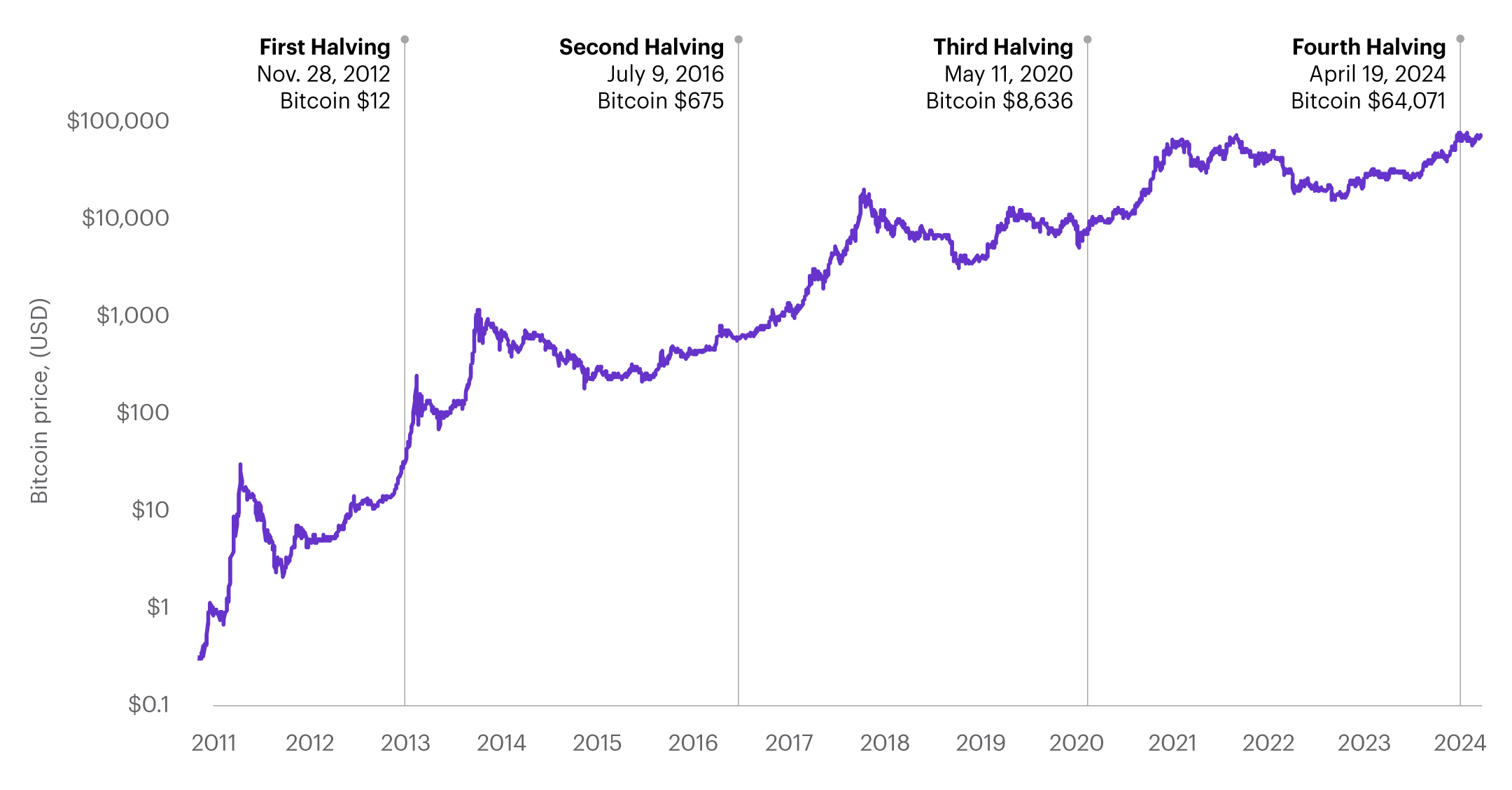
At the core of Bitcoin’s value proposition is its programmed scarcity. There will only ever be 21 million BTC. This supply is released through a process called mining, which is governed by an event known as “the halving.” Occurring approximately every four years, the halving cuts the reward for mining new blocks in half, effectively reducing the rate at which new Bitcoin enters the market. From a classic economic perspective, if demand remains constant or increases while the rate of new supply diminishes, the price must rise. This four-year cycle has historically been a major catalyst for Bitcoin’s “bull runs,” as the market adjusts to the sudden tightening of supply.
Institutional Adoption and Market Sentiment
In the early years, Bitcoin’s price was driven largely by retail speculation. Today, the landscape is dominated by institutional capital. The approval of Spot Bitcoin ETFs (Exchange-Traded Funds) has opened the gates for massive pension funds, insurance companies, and sovereign wealth funds to allocate a portion of their portfolios to Bitcoin. When firms like BlackRock or Fidelity enter the space, they bring not only deep liquidity but also a level of “legitimacy” that shifts market sentiment from skeptical to optimistic. This institutionalization reduces the extreme volatility of the past while creating a higher price floor sustained by long-term holders rather than short-term speculators.
Analyzing Volatility: Why Bitcoin Prices Fluctuate
While Bitcoin has been one of the best-performing assets of the last decade, its journey is marked by stomach-churning volatility. For the personal finance enthusiast, understanding why these swings happen is crucial for emotional and financial resilience.
Regulatory Environments and Global Policy
Bitcoin exists in a legal “grey area” in many jurisdictions. Consequently, any news regarding regulation—whether it is a potential ban in a major economy or the introduction of a supportive tax framework—sends immediate shockwaves through the price. When the U.S. Securities and Exchange Commission (SEC) provides clarity, the price often stabilizes or climbs. Conversely, news of crackdowns on mining or trading can lead to rapid “sell-offs.” For the investor, the price of Bitcoin is often a reflection of the current geopolitical stance on decentralized digital assets.
The Role of “Whales” and Market Liquidity
In the financial world, “whales” are entities that hold large quantities of an asset. Because the total circulating supply of Bitcoin is relatively small compared to global equity markets, large trades by these whales can cause significant price slippage. Furthermore, much of Bitcoin’s trading occurs on leveraged exchanges. When the price moves slightly in one direction, it can trigger a “liquidation cascade,” where leveraged positions are forced to close, causing the price to plummet or spike far beyond what the initial news would suggest. This lack of deep liquidity compared to the U.S. Dollar or Gold is a primary reason for Bitcoin’s “jagged” price chart.
Valuation Models: How to Determine if Bitcoin is Fairly Priced

Because Bitcoin does not produce cash flow, dividends, or earnings, traditional valuation metrics like Price-to-Earnings (P/E) ratios do not apply. Instead, investors use specific financial models to determine if the current price represents a “buy” or “sell” opportunity.
The Stock-to-Flow Model
The Stock-to-Flow (S2F) model is one of the most famous frameworks used in the “Money” niche to value Bitcoin. It treats Bitcoin as a “store of value” similar to gold or silver. The model calculates the ratio of the current stock (total amount available) divided by the flow (annual production). Gold has the highest S2F ratio among commodities, which explains its historical value. As Bitcoin undergoes halvings, its S2F ratio increases, theoretically pushing its price toward—and eventually beyond—the market cap of gold. While not a perfect predictor, it provides a logical basis for Bitcoin’s long-term upward trajectory.
On-Chain Analysis and Network Value to Transactions (NVT)
On-chain analysis involves looking at the actual data on the blockchain, such as the number of active addresses and the volume of transactions. The Network Value to Transactions (NVT) ratio is often referred to as the “Bitcoin P/E ratio.” If the NVT ratio is too high, it suggests that the network value (market cap) is outstripping the actual use of the network, indicating a potential price bubble. Conversely, a low NVT ratio suggests that Bitcoin is undervalued relative to the volume of value being moved across its rails.
Strategic Investing: Managing Bitcoin in a Modern Portfolio
Understanding the price is only half the battle; the other half is knowing how to act on that information within the context of a personal finance strategy.
Dollar-Cost Averaging (DCA) vs. Lump Sum
Given Bitcoin’s volatility, “timing the market” is notoriously difficult and often results in significant losses for retail investors. A more professional approach used by financial advisors is Dollar-Cost Averaging (DCA). By investing a fixed amount of money at regular intervals (e.g., $100 every month), an investor buys more Bitcoin when the price is low and less when the price is high. This strategy smoothens the entry price over time and removes the emotional stress of trying to catch the “bottom.”
Risk Management and Asset Allocation
In the context of a diversified portfolio, Bitcoin is often classified as a “high-risk, high-reward” alternative asset. Financial experts generally suggest an allocation of 1% to 5% for most conservative investors, though some aggressive “growth” portfolios may go higher. The key to managing Bitcoin’s price fluctuations is “rebalancing.” If Bitcoin’s price skyrockets and it now takes up 20% of your portfolio, selling a portion to return to your target allocation allows you to “lock in” profits and reinvest them into more stable assets like bonds or index funds.
The Future Outlook: What Influences Long-Term Price Projections
As we look toward the future, the price of Bitcoin will likely be influenced by its integration into the broader financial infrastructure and its role as a hedge against traditional economic failings.
Integration into Global Financial Systems
We are moving toward a world where Bitcoin is no longer just a speculative asset but a foundational layer of the financial system. The development of “Layer 2” solutions, like the Lightning Network, allows for instant, low-cost payments, making Bitcoin more viable as a medium of exchange. Furthermore, as more corporations add Bitcoin to their balance sheets as a reserve asset (following the lead of companies like MicroStrategy), the demand for the limited supply will likely create sustained upward pressure on the price.

The Macro-Economic Hedge
Bitcoin’s price is often inversely correlated with the strength of the U.S. Dollar and the health of the traditional banking system. In eras of high inflation or currency devaluation, investors flock to “hard assets.” If central banks continue to expand the money supply to manage national debts, the “price” of Bitcoin in fiat terms will naturally rise as the purchasing power of the fiat currency falls. In this sense, the price of Bitcoin is not just rising; it is reflecting the gradual devaluation of the traditional paper money we use every day.
In conclusion, the price of Bitcoin is a complex interplay of programmed scarcity, institutional psychology, and global macroeconomic trends. For the modern investor, focusing on the day-to-day fluctuations is often a distraction. The real value lies in understanding the underlying mechanics that make Bitcoin a unique asset class in the history of finance. Whether viewed as “digital gold” or a hedge against systemic risk, Bitcoin has solidified its place in the world of money, and its price will continue to be a vital indicator for the future of global wealth management.
aViewFromTheCave is a participant in the Amazon Services LLC Associates Program, an affiliate advertising program designed to provide a means for sites to earn advertising fees by advertising and linking to Amazon.com. Amazon, the Amazon logo, AmazonSupply, and the AmazonSupply logo are trademarks of Amazon.com, Inc. or its affiliates. As an Amazon Associate we earn affiliate commissions from qualifying purchases.