
In the realm of personal and business finance, numbers are rarely viewed in isolation. A profit of $1,000 might be an extraordinary achievement for a lemonade stand, but it represents a failure for a multinational corporation. To give numbers meaning, we use percentages. Determining the percentage of a number is more than a middle-school math exercise; it is the fundamental language of interest rates, investment returns, tax brackets, and budgeting. Understanding how to calculate and interpret these figures is the first step toward true financial literacy and strategic wealth management.

The Core Mechanics: Why Percentages are the Language of Money
At its simplest, a percentage is a way to express a number as a fraction of 100. In finance, this allows us to normalize data, making it possible to compare different investment opportunities, debt obligations, and spending habits on an even playing field. Whether you are looking at a 5% yield on a high-yield savings account or a 15% down payment on a home, the math remains the same, but the implications for your net worth are profound.
The Fundamental Formula for Financial Calculations
To determine the percentage of a number in a financial context, you follow a straightforward three-step process. First, identify the “whole” (the total amount) and the “part” (the specific value you are investigating). The formula is:
** (Part / Whole) × 100 = Percentage **
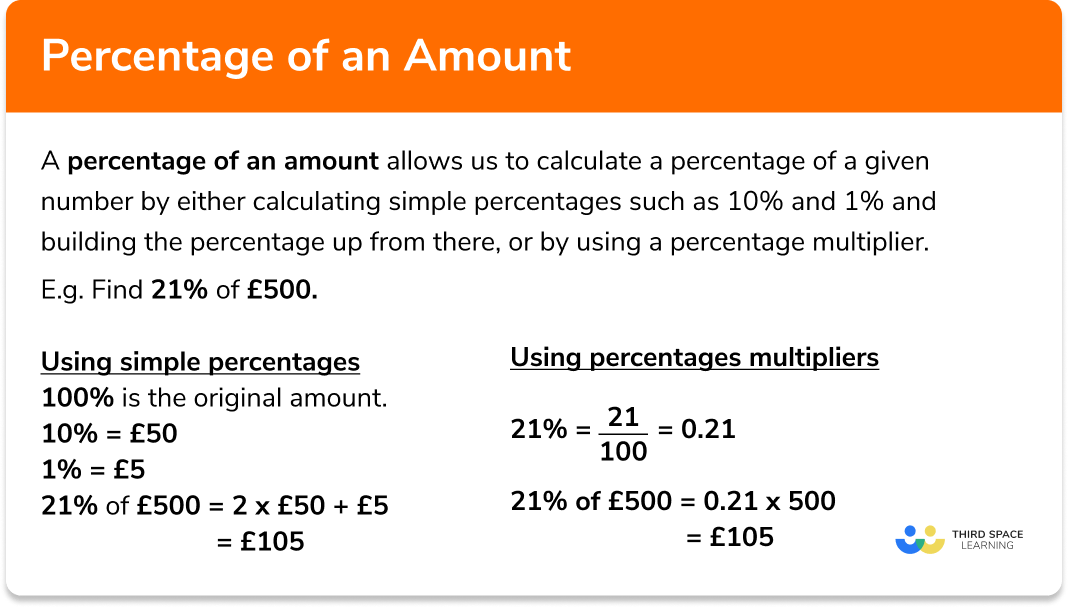
Conversely, if you need to find a specific dollar amount based on a known percentage (such as calculating a 20% tip or a 7% sales tax), the formula is:
** (Percentage / 100) × Whole = Amount **
For example, if you are analyzing a stock that pays a 3% annual dividend and you have invested $10,000, you would calculate $(3 / 100) times 10,000 = $300$. This simple calculation allows investors to project cash flow and compare the income-generating potential of various assets.
Real-World Application: Sales Tax and Discounts
Understanding how to calculate percentages on the fly is a vital skill for daily money management. When shopping, discounts are often presented as “25% off.” To find the savings, you multiply the original price by 0.25. However, a more efficient way to manage your finances is to calculate what you will pay. If an item is 25% off, you are paying 75% of the price.
Similarly, sales tax is an additional percentage added to the subtotal. If you live in a jurisdiction with an 8.5% sales tax, you multiply your purchase price by 1.085 to find the total “out-the-door” cost. Mastering these quick calculations prevents “sticker shock” at the register and ensures your daily spending remains within the confines of your established budget.
Measuring Growth: Calculating Investment Returns and Portfolio Performance
For investors, percentages are the primary metric for success. Total dollar gains are secondary to the percentage return, as the percentage accounts for the amount of capital risked. A $500 gain on a $1,000 investment is a massive success (50%), while a $500 gain on a $1,000,000 investment is negligible (0.05%).
Determining Return on Investment (ROI)
ROI is the most common percentage calculation in the world of money. It measures the efficiency of an investment or compares the efficiencies of several different investments. To calculate ROI, you subtract the initial cost of the investment from its final value, then divide that number by the initial cost.
** ROI = [(Current Value – Original Cost) / Original Cost] × 100 **
Suppose you purchased shares of a tech company for $5,000 and sold them a year later for $6,200. Your capital gain is $1,200. Dividing $1,200 by the original $5,000 gives you 0.24, or a 24% ROI. By focusing on the percentage rather than the dollar amount, you can objectively compare this tech investment against other assets, such as real estate or bonds, to see which performed better relative to the capital deployed.
The Power of Compound Interest
While simple percentages measure a static point in time, compound interest involves calculating percentages on top of previously calculated percentages. This is the “eighth wonder of the world” in finance. The formula for compound interest is more complex, but the underlying principle relies on determining the percentage of an ever-growing number.
When your investments earn a 7% annual return, that 7% is applied to your principal in the first year. In the second year, the 7% is applied to the principal plus the interest earned in year one. Over decades, this percentage-based growth creates an exponential curve. Understanding how to determine these percentages helps investors realize why starting early is more important than the specific dollar amount invested.
Debt Management: Decoding Interest Rates and Annual Percentage Rates (APR)

Just as percentages can work for you in investments, they can work against you in the form of debt. Credit cards, mortgages, and auto loans are all priced using percentages. However, the way these percentages are applied can be confusing, often leading consumers to pay far more than they realize.
How APR Affects Monthly Payments
The Annual Percentage Rate (APR) represents the yearly cost of borrowing money, including interest and fees. To understand how a credit card balance grows, you must convert the annual percentage into a daily or monthly rate. If a card has an 18% APR, the monthly interest rate is approximately 1.5% (18 divided by 12).
If you carry a balance of $2,000, the bank determines the interest for that month by calculating 1.5% of $2,000, which is $30. While $30 might seem small, if you only make the minimum payment, the “whole” number (your balance) barely decreases, and you will continue to pay a percentage of that high balance every month. This is why understanding the percentage of a number is critical for debt elimination strategies like the “Debt Avalanche,” which prioritizes paying off loans with the highest percentage rates first.
The Debt-to-Income Ratio (DTI)
Lenders use percentages to determine your creditworthiness, specifically the Debt-to-Income (DTI) ratio. This is calculated by dividing your total monthly debt payments by your gross monthly income.
** DTI = (Total Monthly Debt / Gross Monthly Income) × 100 **
Financial institutions generally prefer a DTI of 36% or lower. If your DTI climbs to 45% or 50%, you are considered a high-risk borrower. By knowing how to calculate this percentage yourself, you can audit your financial health before applying for a mortgage, ensuring you have the leverage to negotiate for better terms.
Strategic Budgeting: Using Percentages to Optimize Cash Flow
One of the most effective ways to manage personal finances is to move away from rigid dollar amounts and toward percentage-based budgeting. This approach allows your budget to scale automatically as your income increases or decreases.
The 50/30/20 Budgeting Framework
A popular financial tool is the 50/30/20 rule, which dictates how you should allocate your take-home pay:
- 50% for Needs: Housing, utilities, groceries, and insurance.
- 30% for Wants: Dining out, hobbies, and entertainment.
- 20% for Savings and Debt Repayment: Retirement contributions, emergency funds, and extra loan payments.
To implement this, you first determine your total net income. If you bring home $4,500 a month, you calculate 50% of that ($2,250) for your essentials. If your rent and bills exceed this percentage, the math tells you clearly that you are “house poor” or overextended. This percentage-based clarity removes the emotion from budgeting and provides a logical roadmap for financial adjustments.
Calculating Your Savings Rate and Financial Independence Goal
Your “Savings Rate” is perhaps the most important percentage in your financial life. It is the percentage of your disposable income that you keep. To find it, divide your monthly savings by your monthly take-home pay. A 10% savings rate is standard, but those seeking “Financial Independence, Retire Early” (FIRE) often aim for 50% or higher.
The math of early retirement is entirely based on percentages. The “4% Rule” suggests that if you can live off 4% of your total investment portfolio annually, your money will likely last forever. By understanding how to calculate 4% of a projected nest egg, you can determine exactly how much you need to save to achieve work-optional status.
Advanced Financial Metrics: Inflation and Tax Efficiency
Finally, a sophisticated understanding of money requires looking at “real” versus “nominal” values. This involves adjusting the percentages we see for the hidden percentage of inflation.
The Impact of Inflation on Purchasing Power
Inflation is the percentage by which the cost of goods and services increases over time. If inflation is 3%, your money loses 3% of its purchasing power annually. To determine your “real” rate of return on an investment, you must subtract the inflation percentage from your gain percentage. If your savings account pays 4% interest but inflation is 3%, your real growth is only 1%. Knowing how to calculate these net percentages prevents the illusion of wealth and encourages more productive asset allocation.
Marginal vs. Effective Tax Rates
Taxation is the final area where determining percentages is essential. Most modern tax systems are progressive, meaning you pay different percentages on different “slices” of your income. Your Marginal Tax Rate is the percentage paid on your last dollar earned (e.g., 22% or 24%). However, your Effective Tax Rate is the actual percentage of your total income that goes to the government.
** Effective Tax Rate = (Total Tax Paid / Total Taxable Income) × 100 **
Understanding this distinction is vital for tax planning. It allows you to see how deductions (like 401k contributions) reduce your taxable “whole,” thereby lowering the total percentage of your wealth that is diverted to taxes. In the world of money, it is not just about what you earn; it is about the percentage you keep. Mastery of these calculations ensures that you are the one in control of your financial trajectory.
aViewFromTheCave is a participant in the Amazon Services LLC Associates Program, an affiliate advertising program designed to provide a means for sites to earn advertising fees by advertising and linking to Amazon.com. Amazon, the Amazon logo, AmazonSupply, and the AmazonSupply logo are trademarks of Amazon.com, Inc. or its affiliates. As an Amazon Associate we earn affiliate commissions from qualifying purchases.