
Netflix has revolutionized the way the world consumes entertainment, transitioning from physical media to an on-demand, global streaming powerhouse. As part of its sophisticated service offering, Netflix provides various subscription tiers designed to cater to diverse viewer needs and technological setups. Among these, the “Premium” plan stands out as the pinnacle, promising the most comprehensive and technologically advanced streaming experience available on the platform. Far from being a mere label, “Premium” on Netflix signifies a deliberate upgrade in the underlying technology that powers your viewing, audio, and multi-user interactions. It’s an investment in a superior digital entertainment ecosystem, leveraging cutting-edge codecs, higher bandwidth capabilities, and expanded device support to deliver an experience that aims to rival, and often surpass, traditional broadcast or even physical media quality. Understanding what constitutes “Premium” involves diving deep into the technical specifications that differentiate it from its standard and basic counterparts, revealing how it enhances everything from picture clarity and sound immersion to the practicalities of sharing an account across multiple devices and locations.
Unpacking the Technological Advantages of Netflix Premium
At its core, the Netflix Premium plan is an upgrade rooted in technology, designed to deliver an unparalleled media consumption experience. It’s about more than just watching content; it’s about experiencing it in its most pristine and feature-rich form, pushing the boundaries of what home entertainment can achieve.
Immersive Visuals: The 4K UHD and HDR Difference
The most prominent and frequently cited advantage of Netflix Premium is its support for 4K Ultra High Definition (UHD) and High Dynamic Range (HDR) content. This is where the visual fidelity leaps forward dramatically.
-
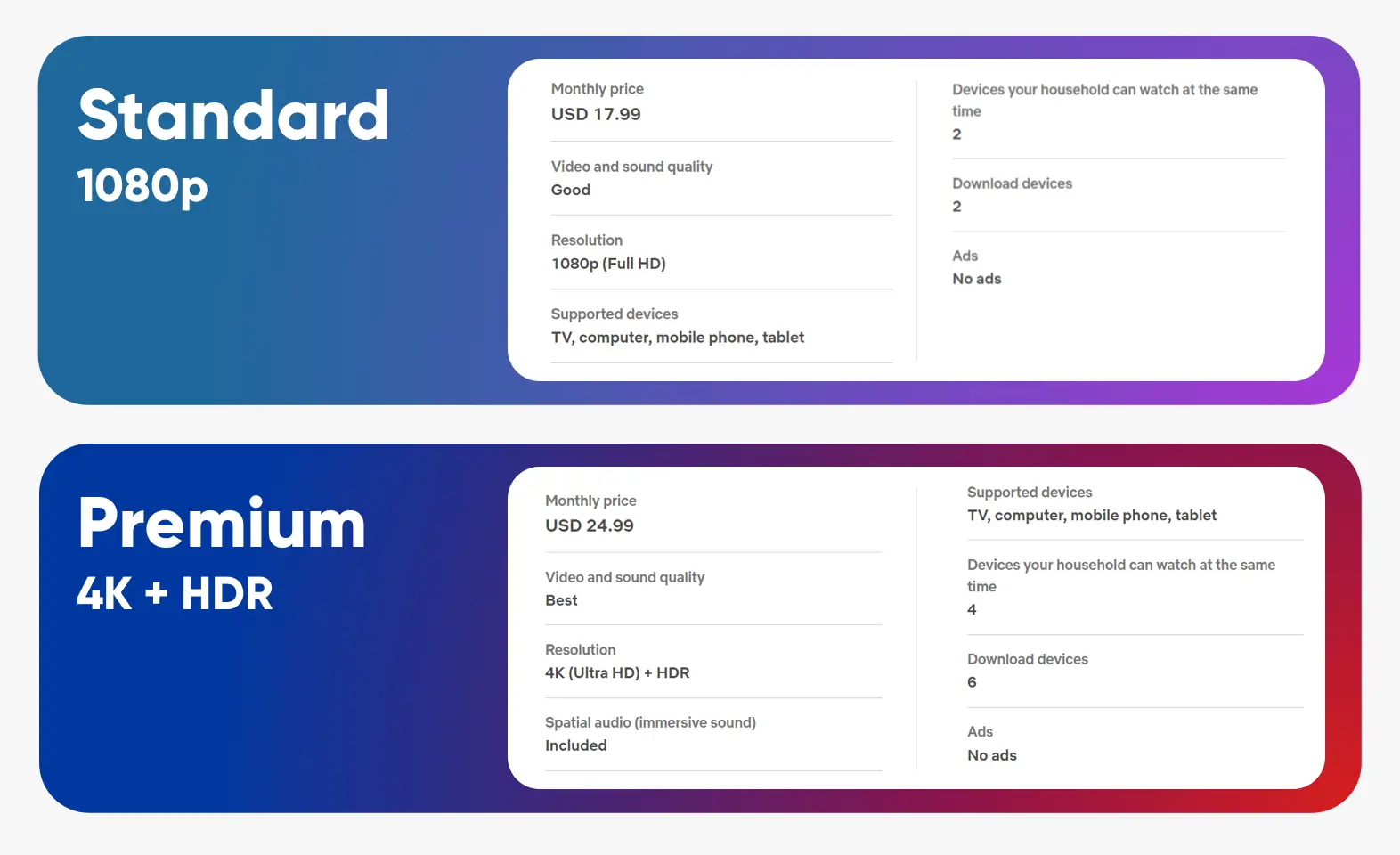
4K UHD: This refers to the resolution of the video stream. A standard HD (High Definition) resolution is typically 1920×1080 pixels (1080p). 4K UHD, by contrast, boasts a resolution of 3840×2160 pixels, which is four times the number of pixels found in a 1080p image. This monumental increase in pixel density translates into a significantly sharper, more detailed, and lifelike picture. On compatible displays, textures become more distinct, fine details in backgrounds emerge, and the overall image gains a depth and clarity that standard HD simply cannot match. For larger screens, especially those 50 inches and above, the difference is transformative, eliminating visible pixel structure and delivering a truly cinematic visual.
-
HDR (High Dynamic Range): While 4K focuses on pixel count, HDR revolutionizes the way light and color are displayed. HDR expands the contrast ratio and color palette far beyond standard dynamic range (SDR) video. This means brighter whites, deeper blacks, and a much wider spectrum of colors are rendered with greater accuracy and vibrancy. Technologies like Dolby Vision and HDR10, widely supported by Netflix Premium, allow for dynamic metadata that adjusts brightness and color on a scene-by-scene or even frame-by-frame basis, optimizing the visual experience for each specific moment. The result is a picture that appears more natural, more realistic, and bursting with lifelike tones, bringing out subtle nuances in lighting and shadows that would otherwise be lost. Combined, 4K UHD and HDR create an incredibly immersive visual spectacle, provided you have a compatible display (a 4K HDR TV or monitor) and the necessary bandwidth.
Superior Audio: Beyond Stereo
Visuals are only half the story; sound plays an equally crucial role in creating an immersive experience. Netflix Premium elevates audio quality significantly, moving beyond basic stereo to deliver truly spatial soundscapes.
-
Dolby Atmos: The cornerstone of Netflix Premium’s audio superiority is its support for Dolby Atmos. Unlike traditional surround sound systems that assign sounds to specific channels (e.g., left, right, center), Dolby Atmos is an object-based audio format. This means sounds can be precisely placed and moved within a three-dimensional space, including overhead. Imagine a helicopter flying overhead in a scene; with Atmos, you don’t just hear it on your surround speakers, you perceive it moving from front to back, and crucially, above you, creating a sense of height and envelopment. This technology requires compatible audio equipment, such as a Dolby Atmos-enabled soundbar, an AV receiver with an Atmos speaker setup (including upward-firing or ceiling-mounted speakers), and a compatible streaming device. The difference is profound, transforming a viewing room into a truly dynamic acoustic environment that places you squarely within the action.
-
Enhanced Surround Sound: Even without a full Dolby Atmos setup, Premium still ensures a high-quality surround sound experience (like 5.1 surround sound) as a baseline for its advanced audio streams. The higher bitrates associated with Premium content mean cleaner, more detailed audio fidelity across all channels, contributing to a richer and more engaging listening experience compared to lower-tier offerings. The goal is to bring the rich, multi-dimensional sound experience of a cinema directly into the comfort of your home.
Optimizing the Multi-User & Multi-Device Experience
Beyond the pure sensory upgrades, the Netflix Premium plan offers significant practical advantages for households with multiple viewers and a diverse array of devices, fundamentally changing how an account can be shared and utilized.
Simultaneous Streams: Sharing Without Sacrificing
One of the most practical and appreciated features of the Premium plan, especially for families or shared households, is the ability to support four simultaneous streams. This means up to four different users can be watching distinct Netflix titles on separate devices at the exact same time, all under a single account.
-
Importance for Diverse Households: In an era where families have disparate tastes and schedules, the four-stream allowance is invaluable. One person might be watching a documentary in the living room, another a sitcom on a tablet in their bedroom, a third a movie on a gaming console, and a fourth a kids’ show in another part of the house – all concurrently and without interruption. This eliminates the frustrating “Are you still watching?” pop-ups or the inability to start a show because someone else is using the account.
-
Contrast with Lower Tiers: This feature sharply contrasts with the “Standard” plan, which typically allows two simultaneous streams, and the “Basic” plan, which limits it to just one. For multi-person households, this technological provision ensures that the entertainment needs of everyone are met without compromise or conflict over account access. It’s a key convenience feature that significantly enhances the utility and value of the subscription for multiple users.
Enhanced Device Compatibility and Offline Viewing
The Premium plan implicitly supports a broader and more technologically advanced ecosystem of devices, ensuring that you can access the highest quality content wherever you are and on the best available screens.
-
Wider Array of High-End Devices: To fully benefit from 4K UHD, HDR, and Dolby Atmos, you need compatible hardware. The Premium plan is designed for an environment where multiple smart TVs, streaming sticks (like Apple TV 4K, Roku Ultra, Fire TV Cube), gaming consoles (PS5, Xbox Series X), and high-resolution tablets are common. While lower tiers work on these devices, Premium unlocks their full potential, allowing them to display content in their highest native resolution and audio format. This means that if you have invested in cutting-edge home entertainment technology, Premium ensures you are utilizing it to its fullest capacity.
-
Offline Viewing Flexibility: All Netflix plans generally allow for downloading content for offline viewing. However, the number of devices you can download content to simultaneously is often tied to your subscription tier. For the Premium plan, users can typically download titles on up to four devices at a time. This aligns with the simultaneous stream allowance and provides greater flexibility for users who wish to watch content while traveling, commuting, or in areas with limited internet access. Furthermore, while the quality of downloads might adjust based on storage space, the Premium tier ensures that even downloaded content is of the highest possible resolution available for that title, consistent with the overall premium viewing experience. This feature transforms any compatible device into a portable, high-quality Netflix viewer, unconstrained by internet connectivity.
The Underlying Network and Performance Requirements
While the Netflix Premium plan unlocks incredible visual and audio fidelity, these advanced features are not without their demands on your home network and viewing hardware. To truly benefit from the upgrade, a robust technological infrastructure is essential.
Bandwidth Demands for a Premium Stream
Streaming 4K UHD and HDR content, especially with high-quality audio like Dolby Atmos, consumes significantly more data than standard HD. This necessitates a strong and stable internet connection.
-
Why Higher Bandwidth?: The reason is simple: more pixels, more color information, and more complex audio streams require more bits per second to transmit smoothly. A 4K UHD stream can have up to four times the data of a 1080p stream. This increased data payload must be delivered continuously and without interruption to prevent buffering, resolution drops, or stuttering playback.
-
Recommended Speeds: Netflix itself recommends a minimum broadband connection speed of 25 Megabits per second (Mbps) for streaming 4K UHD content. However, this is a baseline, and for a household with multiple devices simultaneously streaming (even non-4K content), downloading, or gaming, a significantly faster connection (e.g., 50 Mbps, 100 Mbps, or even higher fiber optic connections) is highly advisable.
-
Impact of Slow Internet: If your internet connection cannot consistently meet these demands, the “Premium” experience will be severely degraded. You’ll encounter frequent buffering, the picture quality will automatically downgrade to a lower resolution (like 1080p or even 720p) to maintain playback, and the advanced audio features may not engage. Essentially, your internet speed becomes the bottleneck that prevents your premium subscription from delivering its full potential, turning a potentially stunning 4K HDR stream into something far less impressive.
Ensuring a Seamless Experience: Device & Software Considerations
Even with ample bandwidth, the chain of technology from Netflix’s servers to your eyes and ears must be fully compatible and optimized.
-
Compatible Devices: To watch Netflix in 4K UHD, HDR, and with Dolby Atmos, every component in your home entertainment setup must support these technologies. This includes:
-
Display: A 4K HDR television or monitor. Ensure it supports the specific HDR formats Netflix uses (HDR10, Dolby Vision).
-
Streaming Device: A 4K-capable streaming player (built into your smart TV, a dedicated streaming stick/box, or a gaming console) that is certified to stream Netflix in 4K/HDR. Not all 4K devices are created equal; some older models might only support 4K without HDR, or specific HDR formats.
-
Audio System: For Dolby Atmos, you need a compatible soundbar or an AV receiver with an Atmos-enabled speaker setup.
-
HDMI Cables: For signals between devices, use high-speed HDMI cables (HDMI 2.0 or newer) to ensure sufficient bandwidth for 4K HDR signals.
-
-
Updated Software and App Versions: Technology constantly evolves, and so do streaming standards. Keeping your smart TV’s operating system, streaming device’s firmware, and the Netflix app itself updated to the latest versions is crucial. Updates often include performance enhancements, bug fixes, and support for new codecs or features that optimize the delivery of premium content. Outdated software can lead to compatibility issues, sub-optimal performance, or even prevent 4K/HDR playback entirely.
-
Digital Rights Management (DRM): Behind the scenes, secure content delivery relies on DRM technologies. Your devices must be able to properly handle these DRM protocols (like HDCP 2.2 on HDMI) to allow 4K playback. Any component that fails this check can force the stream down to a lower resolution for security reasons. Understanding these technical prerequisites ensures that your investment in a Premium plan translates into the breathtaking viewing experience it promises.
Is Netflix Premium the Right Tech Upgrade for You?
Deciding whether to opt for Netflix’s Premium plan boils down to an assessment of your existing technological ecosystem and your viewing habits. It’s an upgrade designed for a specific set of users who are equipped to fully leverage its advanced features.
Assessing Your Home Entertainment Ecosystem
The primary determinant of whether Netflix Premium makes sense for you is the hardware you own and your internet connection. Without the right foundational technology, the premium features will largely go unnoticed or be underutilized.
-
When Premium is a Clear Benefit:
-
4K HDR Television: If you own a modern 4K TV that supports HDR (Dolby Vision or HDR10), you’re already halfway there. This is the centerpiece for experiencing the enhanced visuals.
-
Advanced Audio System: If you have a Dolby Atmos-enabled soundbar or a full home theater system with Atmos capabilities, the audio upgrade is substantial and highly immersive.
-
High-Speed Internet: A reliable internet connection consistently delivering 50 Mbps or more ensures smooth, uninterrupted 4K HDR streaming, even with other devices active on your network.
-
Multiple Users: For households with three or more individuals who frequently want to watch different content simultaneously, the four-stream allowance is a practical necessity.
-
Dedicated Streaming Device: Using a high-end streaming box (e.g., Apple TV 4K, Nvidia Shield TV Pro) or a modern game console (PS5, Xbox Series X) ensures your streaming chain is optimized for the best quality.
-
-
When Premium Might Be Overkill:
-
Older HD TV: If your primary viewing screen is an older 1080p HD television, you won’t be able to display 4K or HDR content, rendering the visual upgrades of Premium moot.
-
Basic Audio Setup: If you rely solely on your TV’s built-in speakers or a simple stereo soundbar, the benefits of Dolby Atmos or enhanced surround sound will be lost.
-
Slower Internet: An internet connection below 25 Mbps will likely force Netflix to stream at lower resolutions, negating the 4K advantage.
-
Single Viewer / Two Viewers: If you are the only one using the account, or if you only ever have two simultaneous viewers, the “Standard” plan often provides sufficient simultaneous streams.
-
Mobile-First Viewing: While premium content can be downloaded, if the majority of your viewing is on a small smartphone screen, the intricacies of 4K HDR may be less impactful than on a large TV.
-

The Future of Streaming: Premium as the Standard
The features currently categorized as “Premium” are rapidly becoming the expected standard for high-quality entertainment. As technology progresses, 4K HDR TVs are increasingly affordable and ubiquitous, faster internet speeds are becoming more accessible, and advanced audio formats like Dolby Atmos are integrating into more consumer-grade equipment.
-
Future-Proofing Your Experience: Opting for the Premium plan isn’t just about enjoying the best today; it’s also about future-proofing your streaming experience. As more Netflix content is produced natively in 4K HDR with Atmos audio, having the Premium subscription ensures you’ll always have access to the highest fidelity version of these productions.
-
Adapting to Evolving Content: The technical quality of content being produced by Netflix and other studios is consistently improving. From intricate visual effects in blockbusters to subtle lighting in dramas, content creators are leveraging these advanced display and audio technologies to tell more compelling stories. The Premium plan ensures you’re seeing and hearing these stories exactly as the creators intended, making it an essential choice for cinephiles and audiophiles who demand the best possible rendition of their entertainment. It positions you at the forefront of digital home entertainment, ready to embrace the next wave of technological innovation in streaming.
In conclusion, Netflix Premium is more than just a higher price tier; it’s a technologically sophisticated offering designed to maximize your streaming experience. It leverages advanced codecs and higher bandwidth to deliver stunning 4K UHD visuals, vibrant HDR, and immersive Dolby Atmos audio. Furthermore, it enhances practicality with four simultaneous streams and expanded device download capabilities, making it ideal for multi-user households. However, unlocking these benefits requires a compatible home entertainment ecosystem—a 4K HDR TV, a capable audio system, robust internet, and up-to-date streaming devices. For those who have invested in such technology and value the highest fidelity content, Netflix Premium is not just an upgrade, but the definitive choice for a truly cinematic and technologically advanced viewing journey.
aViewFromTheCave is a participant in the Amazon Services LLC Associates Program, an affiliate advertising program designed to provide a means for sites to earn advertising fees by advertising and linking to Amazon.com. Amazon, the Amazon logo, AmazonSupply, and the AmazonSupply logo are trademarks of Amazon.com, Inc. or its affiliates. As an Amazon Associate we earn affiliate commissions from qualifying purchases.