
In the landscape of modern gaming, the line between official releases and community-driven innovation has blurred significantly. Among the most impressive feats of technical software modification in recent years is Pokémon Seaglass. While casual observers might mistake it for a standard fan-made game, Pokémon Seaglass represents a sophisticated overhaul of the Game Boy Advance (GBA) architecture, specifically utilizing the Pokémon Emerald engine as its foundation. It is a masterclass in how legacy software can be deconstructed, optimized, and reimagined through modern programming techniques and artistic vision.

Pokémon Seaglass is a “ROM hack,” a term used to describe a modified version of an existing video game file. However, calling it a mere hack does a disservice to the level of technical complexity involved. It is an expansive software project that introduces new mechanics, high-fidelity visual assets, and quality-of-life improvements that push the 32-bit hardware of the GBA era to its absolute limits.
The Technical Architecture of Pokémon Seaglass
To understand what Pokémon Seaglass is, one must first understand the technical framework upon which it is built. Historically, ROM hacking involved “hex editing,” where developers manually changed bytes of code within a compiled binary file. This process was tedious and prone to system crashes. Pokémon Seaglass, however, benefits from the “decompilation” era of Pokémon hacking.
The Power of Decompilation
The most significant leap in the Pokémon tech community was the reverse-engineering of the original Pokémon Emerald source code into readable C code. This shift allowed developers of projects like Seaglass to modify the game’s logic at a foundational level. Instead of hacking a binary file, they are essentially rebuilding the game from a source-code level. This allows for the implementation of complex features such as updated battle engines, expanded memory for new Pokémon, and sophisticated AI routines that were previously impossible on the original hardware.
Graphical Overhaul and Asset Management
One of the most striking features of Pokémon Seaglass is its visual aesthetic. The developers have moved away from the traditional GBA pixel art style in favor of a “retro-modern” look that mimics high-end SNES titles or modern “HD-2D” games. Achieving this on a GBA engine requires significant optimization of palette swapping and tilemap management. By utilizing advanced compression algorithms, the developers are able to fit higher-density assets into the limited ROM space—typically expanded to 32MB—without causing significant frame drops or graphical glitches.
Core Software Features and Gameplay Enhancements
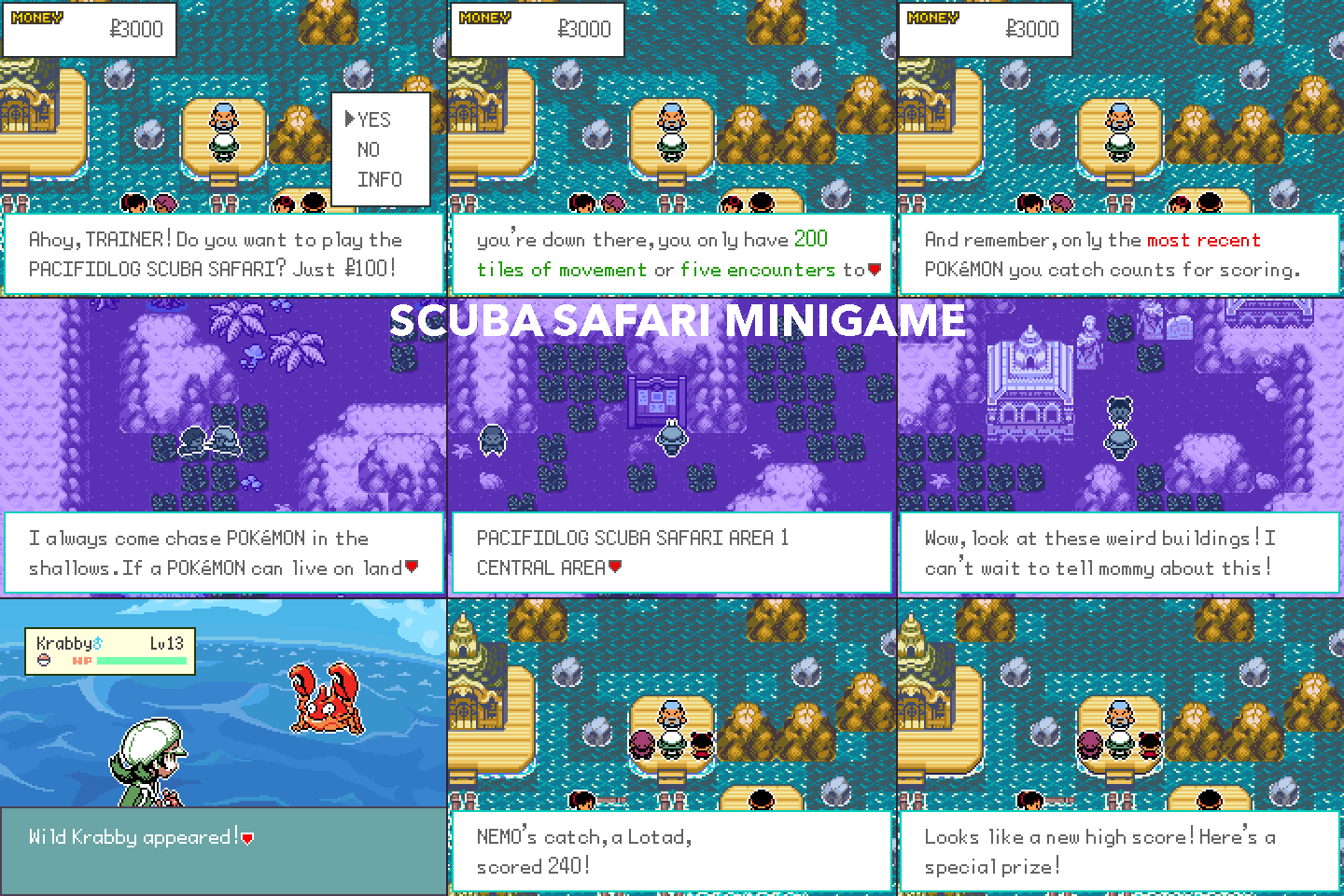
Pokémon Seaglass isn’t just a visual upgrade; it is a comprehensive software update that addresses many of the mechanical limitations found in the original 2004 release of Pokémon Emerald. These enhancements are integrated seamlessly into the existing engine, providing a user experience that feels native yet modernized.
Quality of Life (QoL) Integrations
Modern gaming software thrives on accessibility and streamlined workflows. Pokémon Seaglass incorporates several QoL features that have become standard in the industry but were absent in legacy titles.
- The Physical/Special Split: This is a fundamental change to the battle logic. In original GBA titles, whether a move was physical or special depended on its type (e.g., all Fire moves were special). Seaglass implements the modern logic where each move is categorized individually, requiring a total rewrite of the battle engine’s damage calculation subroutines.
- Seamless Navigation: The game utilizes updated UI/UX design for the bag and PC storage systems, allowing for faster item sorting and Pokémon management.
- Infinite TMs: By modifying the item consumption logic, the developers turned “Technical Machines” (TMs) into reusable software modules, a feature not introduced officially by Nintendo until several generations later.
Advanced AI and Difficulty Scaling
A common critique of legacy RPGs is the simplistic nature of opponent AI. In Pokémon Seaglass, the developers have implemented more complex decision-making trees for non-player characters (NPCs). Instead of selecting moves at random, the AI evaluates the current state of the battle—considering type advantages, stat changes, and potential “switch-ins”—to provide a more challenging and engaging experience. This level of algorithmic complexity requires careful management of the GBA’s limited CPU cycles to ensure the game remains responsive.
Emulation Technology: How Pokémon Seaglass Functions Across Devices
As a software project, Pokémon Seaglass does not exist as a standalone executable for Windows or macOS. Instead, it exists as a “patch” file (usually in .ups or .bps format). This file contains only the data that has been changed from the original Pokémon Emerald ROM. To run the game, users must utilize specific software tools to apply this patch to a legal copy of the original game, resulting in a new ROM file.
The Role of Emulators
Once the patched ROM is created, it requires an emulator to function. Emulators are sophisticated programs that simulate the hardware of the Game Boy Advance on modern devices.
- mGBA and VisualBoyAdvance: These are the primary software environments used to run Seaglass on PC. mGBA, in particular, is noted for its accuracy, ensuring that the advanced graphical tricks used in Seaglass don’t result in “tearing” or “audio lag.”
- Mobile and Handheld Integration: Because the final product is technically a GBA file, it is highly portable. It can be loaded onto mobile devices via apps like Delta or RetroArch. Furthermore, it is compatible with modern handheld “retro consoles” (like the Analogue Pocket or Miyoo Mini), which use FPGA (Field Programmable Gate Array) technology to replicate the GBA’s hardware logic at a physical level.
Digital Security and Patching Protocols
From a tech-security perspective, the distribution of Pokémon Seaglass via patch files is a strategic move. Distributing the entire modified ROM would violate copyright laws. By providing only the “delta” (the difference between the original and the new version), the developers ensure they are sharing their own code and assets without distributing Nintendo’s proprietary software. This necessitates the use of patching software like UniPatcher or ROM Patcher JS, which uses checksum verification to ensure the patch is applied to the correct version of the source file, preventing data corruption.
The Future of Community-Driven Software Development
The success and technical sophistication of Pokémon Seaglass highlight a broader trend in the tech world: the rise of open-source, community-led development in the gaming sector. This project serves as a case study for how decentralized teams can collaborate on complex software projects using tools like GitHub for version control and Discord for real-time bug tracking and beta testing.
Iterative Development and Bug Tracking
Unlike commercial software which often follows a “waterfall” development cycle, Pokémon Seaglass follows an “agile” approach. The developers frequently release updates that fix bugs reported by the community in real-time. This iterative process is made possible by the modular nature of the decompilation project. If a specific script or sprite causes a crash, it can be isolated, fixed in the source code, and re-compiled into a new patch within hours.

Pushing Hardware Limits
As we look toward the future of software modification, projects like Seaglass prove that there is still untapped potential in legacy hardware. By applying modern programming principles—such as efficient memory management, optimized rendering pipelines, and advanced logic trees—to older systems, developers can create experiences that rival contemporary indie titles. Pokémon Seaglass is not just a game; it is a testament to the longevity of well-written code and the ingenuity of the global developer community.
In conclusion, Pokémon Seaglass is a landmark achievement in the realm of software modification. It combines deep technical knowledge of GBA architecture with modern programming techniques to deliver an experience that surpasses its original source material. For tech enthusiasts, it offers a fascinating look into the world of decompilation, emulation, and the creative repurposing of legacy software. Whether viewed as a technical experiment or a high-end gaming experience, Seaglass stands as a definitive example of what is possible when community passion meets professional-grade software engineering.
aViewFromTheCave is a participant in the Amazon Services LLC Associates Program, an affiliate advertising program designed to provide a means for sites to earn advertising fees by advertising and linking to Amazon.com. Amazon, the Amazon logo, AmazonSupply, and the AmazonSupply logo are trademarks of Amazon.com, Inc. or its affiliates. As an Amazon Associate we earn affiliate commissions from qualifying purchases.