
In the landscape of modern technology, few components are as foundational yet frequently overlooked as the plug and socket system. This electromechanical duo serves as the primary interface between the vast electrical grid and the myriad of gadgets, appliances, and industrial machines that define contemporary life. While they may seem like simple hardware, the engineering behind plugs and sockets involves a complex intersection of physics, safety standards, global logistics, and increasingly, digital intelligence.
Understanding what a plug and socket system is requires looking beyond the plastic casing and metal pins. It is a standardized system designed to facilitate the safe transfer of electrical energy. In the context of technology and hardware, these components are the gatekeepers of power, ensuring that sensitive electronic components receive the specific voltage and current they require to function without risk of fire or short-circuiting.
The Fundamentals of Hardware Connectivity
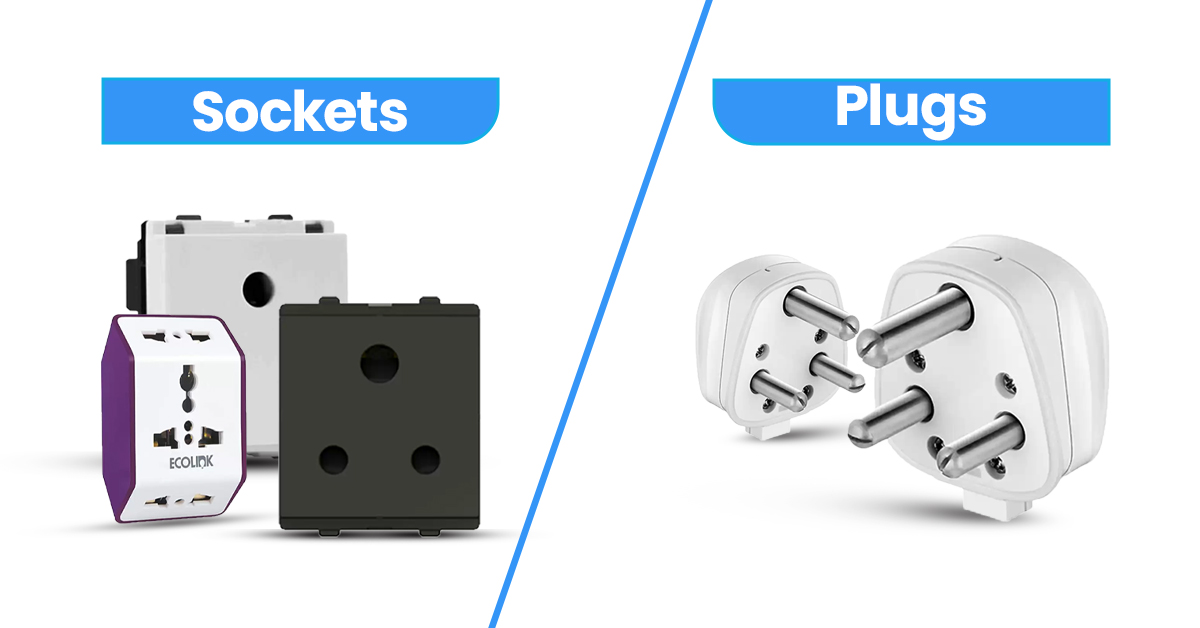
At its core, a plug and socket system is a “male-to-female” coupling mechanism. The plug, often referred to as the male connector, consists of conductive pins or blades that are inserted into the socket. The socket, or female interface, contains recessed slots or holes with internal conductive contacts designed to grip the pins and complete an electrical circuit.
Defining the Plug: The Male Connector
The plug is the movable connector attached to a device’s power cord. Its primary role is to bridge the gap between the appliance and the source of energy. Modern plugs are engineered with several key features:
- Pins/Prongs: Usually made of brass or copper (often plated with nickel or tin to prevent oxidation), these provide the path for electricity.
- Insulation: The body of the plug is made of non-conductive materials like PVC or rubber to protect the user from electric shock.
- Strain Relief: This is the flexible part where the cord enters the plug, designed to prevent mechanical stress from breaking the internal wires.
Defining the Socket: The Female Interface
The socket, also known as a receptacle or outlet, is the stationary part of the system, typically mounted on a wall or integrated into a power strip. In a tech-centric environment, sockets are the access points for the “juice” that powers data centers, workstations, and smart home hubs. They are designed to remain energized (live) while safely preventing accidental contact with the internal live components.
How Conductors and Insulators Work Together
The operation of a plug and socket relies on the principle of electrical continuity. When the plug is inserted, the live and neutral pins make contact with the internal spring-loaded clips of the socket. This allows electrons to flow from the power grid, through the device’s internal circuitry, and back through the neutral line. Most modern tech hardware also utilizes a third pin—the ground or earth pin. This is a safety feature that provides an alternative path for electricity to flow into the ground if a fault occurs, preventing the metal chassis of a device from becoming “live” and dangerous to touch.
Global Standards and Regional Variations
One of the most fascinating aspects of plug and socket technology is the lack of a single global standard. For tech enthusiasts and professionals traveling internationally, the variety of shapes and sizes can be a significant hurdle. These variations are the result of historical developments, differing views on safety, and regional manufacturing monopolies that emerged in the early 20th century.
Why the World Uses Different Plugs (Type A to Type N)
The International Electrotechnical Commission (IEC) recognizes over 15 different types of domestic plugs and sockets. For example:
- Type A and B: Common in North America and Japan, featuring flat parallel pins.
- Type C, E, and F: The standard in most of Europe, utilizing round pins.
- Type G: The distinctive three-pin rectangular system used in the UK, known for its high safety standards, including built-in fuses.
This fragmentation means that hardware manufacturers must produce different power cables (or modular “wall wart” adapters) depending on the market where the product is sold. This is why many high-end laptops use a C13 or C14 “kettle lead” connector on the power brick side; it allows the manufacturer to ship the same brick globally and only swap the wall-side cable.
The Role of Voltage and Frequency
It is not just the shape of the socket that varies; the electrical characteristics of the power delivered do too. North America generally operates on 120V at 60Hz, while much of the rest of the world uses 230V at 50Hz. Modern tech hardware—like smartphone chargers and laptop power supplies—is usually “dual-voltage,” meaning its internal switching power supply can handle anything from 100V to 240V. However, legacy equipment or high-draw appliances may require a transformer to avoid catastrophic failure when plugged into a foreign socket.
Travel Adapters vs. Voltage Converters
For the digital nomad or international tech worker, distinguishing between an adapter and a converter is vital. An adapter simply changes the physical shape of the pins so a plug can fit into a different socket. It does not change the voltage. A converter, on the other hand, uses a transformer or electronic switching to step the voltage up or down. Using a simple adapter on a device that is not dual-voltage can lead to the device overheating, catching fire, or experiencing immediate motherboard failure.
Beyond the Wall: The Evolution of Data and Power Sockets

As technology advances, the line between a power socket and a data port is blurring. We are moving toward an era where the delivery of electricity is becoming more intelligent and integrated with data transmission.
USB-C: The Universal Power Standard
Perhaps the most significant shift in the last decade is the rise of USB-C as a power delivery (PD) standard. We are seeing a transition where traditional AC wall sockets are being augmented or replaced by USB-C ports. These “sockets” can negotiate power requirements with the connected device, delivering anywhere from 5W for a pair of earbuds to 100W or even 240W for a high-performance gaming laptop. This reduces the need for bulky AC adapters and moves the “smart” conversion logic from the brick to the wall or the device itself.
Power over Ethernet (PoE)
In professional IT environments and smart buildings, the RJ45 Ethernet socket is increasingly used as a power source. Power over Ethernet (PoE) allows a single cable to provide both high-speed data and electrical power to devices like Wi-Fi access points, IP cameras, and VoIP phones. This eliminates the need for a traditional AC plug and socket near the device, simplifying infrastructure and allowing for centralized power management and backup (UPS) for all connected hardware.
Wireless Charging: Sockets Without Wires
While not a “socket” in the traditional sense, inductive charging (Qi standard) represents the next phase of the plug-and-socket evolution. By using electromagnetic fields to transfer energy between two coils, we eliminate the mechanical wear and tear associated with physical pins. While currently less efficient than a direct wired connection, the “wireless socket” is becoming a standard feature in desks, cars, and even public furniture, pointing toward a future where the physical plug may become obsolete for low-power mobile devices.
Smart Sockets and the Internet of Things (IoT)
The integration of the Internet of Things (IoT) has transformed the humble wall outlet into a sophisticated computing node. A “Smart Socket” is essentially a traditional socket with an internal relay, a Wi-Fi or Zigbee radio, and a microcontroller.
Transforming Dumb Outlets into Smart Nodes
By plugging a device into a smart socket, users gain the ability to control power flow remotely via smartphone apps or voice assistants like Alexa and Google Assistant. This allows for the automation of “dumb” hardware. For instance, a legacy lamp or a coffee maker can be integrated into a “Good Morning” routine, turning on automatically at a specific time or when a motion sensor is triggered.
Energy Monitoring and Automation
Beyond simple on/off switching, high-end smart sockets provide real-time energy monitoring. They can track kilowatt-hour (kWh) usage, allowing tech-savvy users to identify “energy vampires”—devices that draw significant power even when in standby mode. This data can be exported to home automation platforms like Home Assistant to create complex logic, such as: “If the PC’s power draw drops below 20W for ten minutes, turn off the peripheral monitors and speakers.”
Security Considerations in Connected Power
As sockets become part of the network, they also become potential entry points for cyber threats. A poorly secured smart plug could be exploited to gain access to a home network or used in a Distributed Denial of Service (DDoS) attack. Furthermore, the firmware of these devices must be robust to prevent “looping” or rapid switching that could damage the connected hardware or cause electrical interference. Professional-grade smart sockets now include encrypted communication and “power-on state” memory to ensure safety during network outages.
Future Trends in Power Distribution and Safety
The future of the plug and socket is being shaped by the need for greater efficiency and the global shift toward renewable energy.
Solid-State Circuit Breakers and Digital Fuses
Traditional sockets rely on physical fuses or centralized breakers to prevent overloads. The next generation of power interfaces may utilize solid-state technology. Silicon carbide (SiC) and gallium nitride (GaN) transistors allow for nearly instantaneous power cutoff in the event of a fault—thousands of times faster than a mechanical breaker. This level of protection is crucial for sensitive AI servers and high-speed computing clusters.
The Shift Toward DC Power Grids in Smart Homes
Most of our tech gadgets run on Direct Current (DC), yet our walls provide Alternating Current (AC). This requires every device to have a rectifier (a power brick) to convert the energy, losing 5-20% as heat in the process. There is a growing movement toward “DC Microgrids” in tech-forward buildings, where the “sockets” provide 24V or 48V DC directly. This matches perfectly with solar panel output and battery storage, significantly increasing overall system efficiency.

Sustainable Infrastructure and Green Energy Integration
As we look forward, the plug and socket will play a role in demand-response programs. “Smart-grid ready” sockets will communicate with utility providers to delay high-energy tasks (like charging an EV or running a server backup) until renewable energy production is at its peak or electricity prices are at their lowest. In this way, the simple act of plugging in a device becomes a data-driven contribution to a more sustainable and resilient energy ecosystem.
By examining the plug and socket through a technical lens, we see that they are far more than mere hardware. They are the essential conduits of the digital age, evolving from simple mechanical connectors into intelligent, data-aware interfaces that power our innovation. Whether it is the global standardization of USB-C or the security protocols of an IoT outlet, the plug and socket remain at the heart of our relationship with technology.
aViewFromTheCave is a participant in the Amazon Services LLC Associates Program, an affiliate advertising program designed to provide a means for sites to earn advertising fees by advertising and linking to Amazon.com. Amazon, the Amazon logo, AmazonSupply, and the AmazonSupply logo are trademarks of Amazon.com, Inc. or its affiliates. As an Amazon Associate we earn affiliate commissions from qualifying purchases.