
In the world of growth investing, few tickers command as much attention, debate, and volatility as PLTR. Palantir Technologies, once a shrouded data-mining firm primarily serving the intelligence community, has transitioned into a public-market powerhouse. For investors asking “what is PLTR trading at,” the answer is rarely just a numerical value on a ticker tape; it is a reflection of the market’s collective appetite for artificial intelligence, big data, and the future of enterprise decision-making.
To understand Palantir’s current trading range, one must look beyond the daily fluctuations and examine the underlying financial metrics, the shift in its business model, and the macroeconomic factors that influence its valuation multiples. Currently, Palantir trades as a high-growth software-as-a-service (SaaS) entity, but with a valuation premium that reflects its unique positioning in the burgeoning AI economy.

The Dynamics of Palantir’s Market Valuation
Palantir’s stock price is characterized by high beta and significant retail interest, which often leads to periods of intense price discovery. When analyzing what PLTR is trading at, investors typically focus on its Price-to-Sales (P/S) and Price-to-Earnings (P/E) ratios, both of which have historically sat well above the industry average for the software sector.
Valuation Multiples and Market Sentiment
Palantir has often traded at a significant premium compared to its peers in the data analytics and defense contracting spaces. While traditional defense contractors might trade at 2–3 times sales, Palantir has frequently commanded double-digit P/S multiples. This premium is attributed to the company’s high gross margins—often exceeding 80%—and its proprietary software platforms, Gotham, Foundry, and the more recent Artificial Intelligence Platform (AIP).
When the stock trades at the higher end of its historical range, it is usually because the market is pricing in “perfection”—expecting accelerated revenue growth and continued margin expansion. Conversely, when PLTR trades at lower multiples, it often reflects concerns about the “lumpiness” of government contracts or the competitive landscape of the commercial sector.
Historical Price Action and Resilience
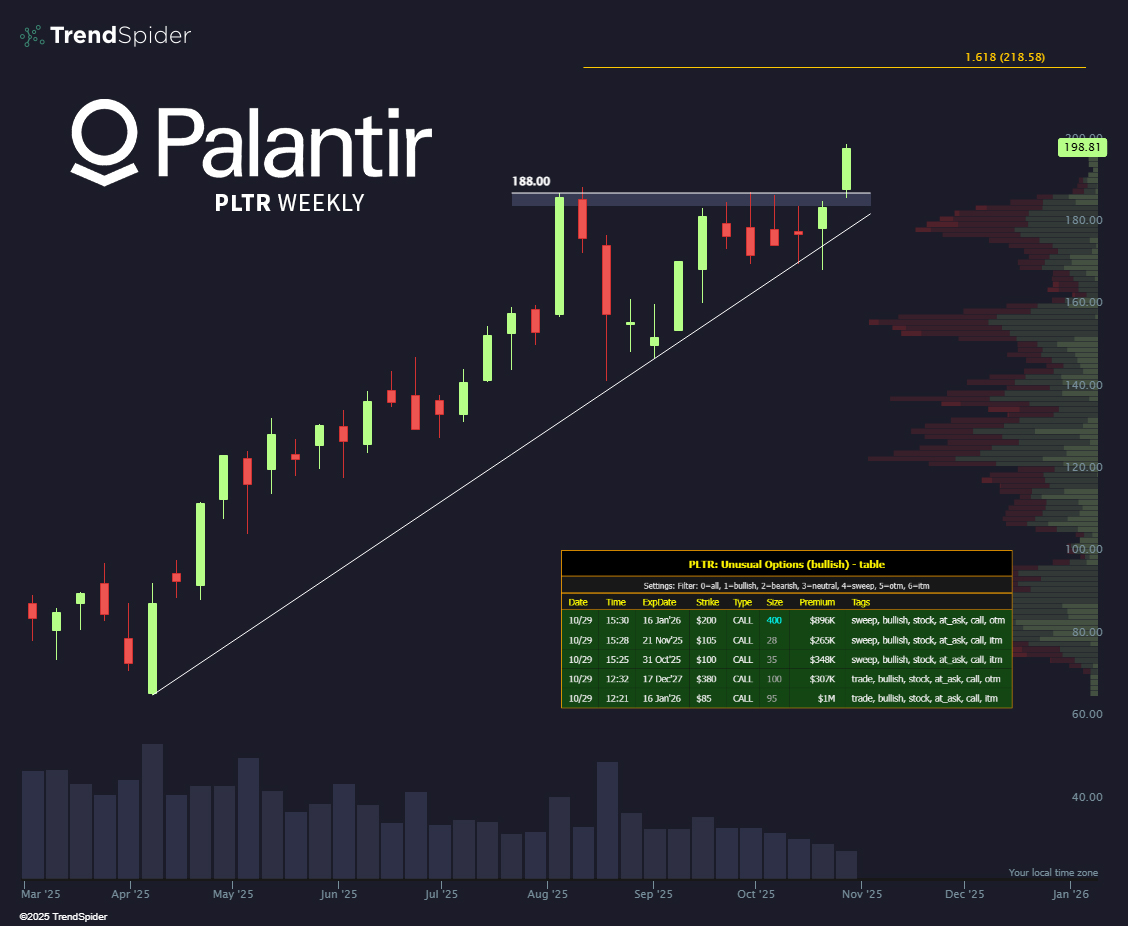
Looking at the trajectory of PLTR, the stock has moved through distinct phases: the post-IPO hype, the 2022 tech wreck, and the AI-driven recovery starting in mid-2023. Understanding what the stock is trading at today requires recognizing that it has successfully decoupled from being viewed merely as a “government consultant” and is now viewed as a core “AI infrastructure” play. This shift has allowed the stock to maintain higher support levels even during broader market pullbacks.
Revenue Growth and the Commercial Expansion Pivot
The primary driver behind Palantir’s trading value is its growth rate, particularly within the U.S. commercial sector. For years, critics argued that Palantir was too dependent on slow-moving government contracts. However, the narrative has shifted as the company’s commercial revenue began to rival, and in some quarters outpace, its government revenue growth.
The Role of AIP in Scaling Revenue
The launch of Palantir’s Artificial Intelligence Platform (AIP) has been a watershed moment for the company’s financials. Unlike previous software iterations that required long implementation cycles, AIP utilizes a “bootcamp” strategy. These bootcamps allow potential customers to see the value of Palantir’s logic layer in a matter of days rather than months.
This accelerated sales cycle is a critical component of what the stock is trading at today. Investors are paying a premium because they see a scalable, repeatable sales model that can drive exponential growth. As of recent filings, the U.S. commercial customer count has seen triple-digit percentage increases, signaling that the company has finally cracked the code on enterprise adoption.
Transitioning from Government Contracts to Enterprise Solutions
While the commercial side is the growth engine, the government side provides the “moat.” Palantir’s Gotham platform remains deeply embedded in the U.S. Department of Defense and various intelligence agencies. These are long-term, high-stickiness contracts that provide a reliable floor for the company’s cash flow. When assessing the stock’s value, investors look at the “Total Contract Value” (TCV) and “Remaining Performance Obligations” (RPO). A rising RPO is generally a precursor to a higher stock price, as it guarantees future revenue recognition.

Profitability Milestones and S&P 500 Inclusion
One of the most significant shifts in Palantir’s financial profile occurred when it achieved sustained GAAP profitability. For a long time, the bear case against PLTR centered on its heavy use of stock-based compensation (SBC), which diluted shareholders and kept the company from showing true bottom-line profits.
Sustained GAAP Profitability and Its Implications
Palantir’s journey to GAAP profitability was a prerequisite for its inclusion in major indices. By tightening its belt on operational expenses and managing its SBC more effectively, Palantir proved to the institutional world that it could be a “real” business. The achievement of four consecutive quarters of GAAP profitability was the catalyst that moved the stock from a speculative retail favorite to a legitimate institutional holding.
When Palantir trades at its current levels, it is no longer being valued solely on a “Price-to-Sales” basis. Analysts are now looking at “Price-to-Free-Cash-Flow” and forward P/E ratios. This transition is vital for long-term price stability, as it attracts conservative fund managers who are mandated to only buy profitable companies.
Institutional Ownership and Market Sentiment
The inclusion in the S&P 500 is more than just a badge of honor; it forces passive index funds to buy millions of shares. This creates a structural “bid” under the stock price. Furthermore, as institutional ownership increases, the stock’s volatility tends to decrease, as large blocks of shares are held by long-term pension funds and mutual funds rather than high-frequency retail traders. This institutionalization of the shareholder base is a key factor in why the stock has found higher price floors in recent years.
The Bull vs. Bear Case: Assessing Future Price Potential
To understand what PLTR is trading at, one must weigh the opposing forces in the market. The stock remains a battleground, with high conviction on both the buy and sell sides.
Why Bulls See a Trillion-Dollar Trajectory
The bull case is built on the idea that Palantir is becoming the “Operating System for the Modern Enterprise.” Bulls argue that in an era of generative AI, data is the most valuable asset, and Palantir has the only platform that can operationalize that data securely and at scale. They view the current valuation as early-stage, comparing Palantir to the early days of Microsoft or Oracle. If Palantir can continue to grow its commercial base at 40% or more, many believe the stock’s current price will eventually look like a bargain.
Why Bears Caution Against High Valuation Multiples
The bear case usually focuses on valuation and competition. Skeptics argue that at 20x or 30x sales, there is no margin for error. They point to the rise of open-source AI tools and competitive offerings from hyperscalers like Microsoft Azure or Amazon AWS as potential threats to Palantir’s margins. Additionally, the “lumpiness” of government spending remains a concern; a single lost contract or a shift in geopolitical priorities could lead to a significant revenue miss, causing a sharp contraction in the stock’s multiple.
Strategic Indicators for Long-Term Investors
For those monitoring what PLTR is trading at, certain financial indicators serve as a North Star. These metrics provide a clearer picture of whether the stock is overvalued or undervalued relative to its performance.
Evaluating the Rule of 40
In the software world, the “Rule of 40” is a gold standard. It states that a company’s combined revenue growth rate and profit margin should exceed 40%. Palantir has consistently aimed for and often achieved this mark. When Palantir is trading at a premium, it is usually because it is maintaining a “Rule of 40” or higher status. If this number dips, investors can expect the stock price to follow suit, as it signals a maturing growth curve or declining efficiency.
Managing Risk in a High-Beta Tech Stock
Because Palantir trades with high volatility, investors often use dollar-cost averaging (DCA) to build positions. The stock’s price action is frequently influenced by “macro” news—interest rate decisions by the Federal Reserve, geopolitical tensions, and the general “AI hype cycle.” Long-term investors tend to ignore the daily noise of what PLTR is trading at and focus instead on the quarterly growth in “Commercial Customer Count” and “Net Loss/Gain in Government TCV.”
In conclusion, Palantir’s current trading price is a complex calculation of its unique software moat, its rapid expansion into the commercial AI market, and its newly minted status as a profitable, S&P 500-level corporation. While the valuation multiples remain high by traditional standards, the company’s ability to execute on its “AIP” vision will ultimately determine if the stock is a generational investment or a victim of its own high expectations. For the disciplined investor, the question isn’t just “what is PLTR trading at,” but rather, “what will Palantir be worth when AI is the core of every global enterprise?”
aViewFromTheCave is a participant in the Amazon Services LLC Associates Program, an affiliate advertising program designed to provide a means for sites to earn advertising fees by advertising and linking to Amazon.com. Amazon, the Amazon logo, AmazonSupply, and the AmazonSupply logo are trademarks of Amazon.com, Inc. or its affiliates. As an Amazon Associate we earn affiliate commissions from qualifying purchases.