
In the world of entrepreneurship, a business plan is often touted as an essential document, yet its profound significance, particularly from a financial perspective, is frequently underestimated. Far more than a mere formality or a tedious task, a well-crafted business plan serves as the indispensable financial roadmap for any venture, whether a burgeoning startup, an expanding enterprise, or a solo side hustle. It is the bedrock upon which sound financial decisions are made, capital is secured, and long-term profitability is pursued. Without this foundational document, even the most innovative ideas risk foundering in a sea of unmanaged expenses, unrealistic projections, and unclear funding strategies.

This article delves into the critical process of creating a business plan, with an exclusive focus on its monetary dimensions. We will explore how to structure your plan to attract investors, manage cash flow effectively, project financial performance accurately, and ultimately, build a financially resilient and profitable business. Understanding the “how-to” of a business plan through a financial lens is not just about crunching numbers; it’s about crafting a compelling narrative that articulates your venture’s economic viability and potential for wealth creation.
The Indispensable Blueprint for Financial Success
A business plan, when viewed through the prism of money, transcends a simple wish list of ideas; it becomes a strategic financial instrument. It forces entrepreneurs to critically evaluate every aspect of their proposed venture, from revenue streams and operational costs to funding requirements and profitability forecasts. This rigorous financial scrutiny is what transforms a promising concept into a tangible, bankable entity.
Why Every Penny Needs a Plan
At its core, a business plan acts as a detailed financial guide, dictating how every dollar will be earned, spent, and managed. It provides a structured framework for budgeting, ensuring that resources are allocated efficiently and aligned with strategic financial objectives. By meticulously detailing expected incomes and expenditures, a business plan helps identify potential cash flow shortages before they become crises, allowing for proactive adjustments. It illuminates the path to financial sustainability by mapping out revenue generation models, pricing strategies, and cost-control measures. This level of granular planning is crucial for optimizing resource allocation, mitigating financial risks, and ultimately, maximizing profitability. It’s the difference between blindly hoping for success and strategically planning for it, making informed decisions that impact your bottom line directly.
Attracting Capital: The Investor’s Perspective
For many new ventures or those seeking expansion, securing external funding is paramount. Whether approaching venture capitalists, angel investors, banks, or even applying for government grants, a robust business plan with a compelling financial section is your most potent tool. Investors and lenders are primarily interested in the financial viability and return on their investment. They want to see clear evidence that their capital will be well-managed, generate substantial returns, and that the business has a credible path to profitability and scalability.
Your business plan must articulate not just what you’re selling, but how it will make money, how much money it will make, and when. This means providing realistic financial projections, a clear understanding of your burn rate, detailed use of funds, and a convincing narrative of your break-even point and long-term profitability. A well-researched market analysis, coupled with conservative yet ambitious financial forecasts, will instill confidence and differentiate your proposal from countless others. Remember, investors aren’t just buying into your idea; they’re investing in your financial plan and your ability to execute it responsibly.
Key Financial Components of Your Business Plan
While a complete business plan encompasses various sections, the financial components are often the most scrutinized by external stakeholders and the most vital for internal strategic guidance. These sections are where the rubber meets the road, translating your vision into tangible numbers.
Executive Summary: Your Financial Snapshot
Though typically written last, the Executive Summary is arguably the most critical section, as it’s often the first (and sometimes only) part an investor reads in detail. From a financial perspective, it must immediately capture the essence of your venture’s economic potential. This includes a concise overview of your projected revenue, profit margins, funding requirements, and the expected return on investment. It should quickly convey the financial viability and attractiveness of your business, acting as a powerful hook that compels readers to delve deeper into your detailed financial statements. Think of it as your venture’s financial elevator pitch, distilled into a few impactful paragraphs.
Financial Projections: Forecasting Your Future
This is the heart of your business plan’s financial section. Financial projections are not mere guesses but educated estimates based on thorough market research, competitive analysis, and realistic assumptions. They typically include:
-
Income Statement (Profit & Loss Statement): Projecting revenues, cost of goods sold, operating expenses, and ultimately, net profit or loss over a specific period (e.g., 3-5 years, monthly for the first year, quarterly thereafter).
-
Cash Flow Projections: A critical document illustrating the actual movement of cash in and out of your business. This shows your ability to pay expenses, invest in growth, and manage liquidity. It’s often more important than the income statement for early-stage businesses, as “cash is king.”
-
Balance Sheet: Providing a snapshot of your company’s financial health at a specific point in time, detailing assets, liabilities, and owner’s equity.
-
Break-Even Analysis: Calculating the point at which your total revenue equals your total costs, signifying when your business starts to generate a profit. This is a crucial metric for understanding risk and setting sales targets.
Each projection should be accompanied by a clear explanation of the underlying assumptions (e.g., sales growth rate, pricing, cost of customer acquisition, operational efficiencies), demonstrating a credible and well-thought-out financial model.
Funding Request: How Much and For What?
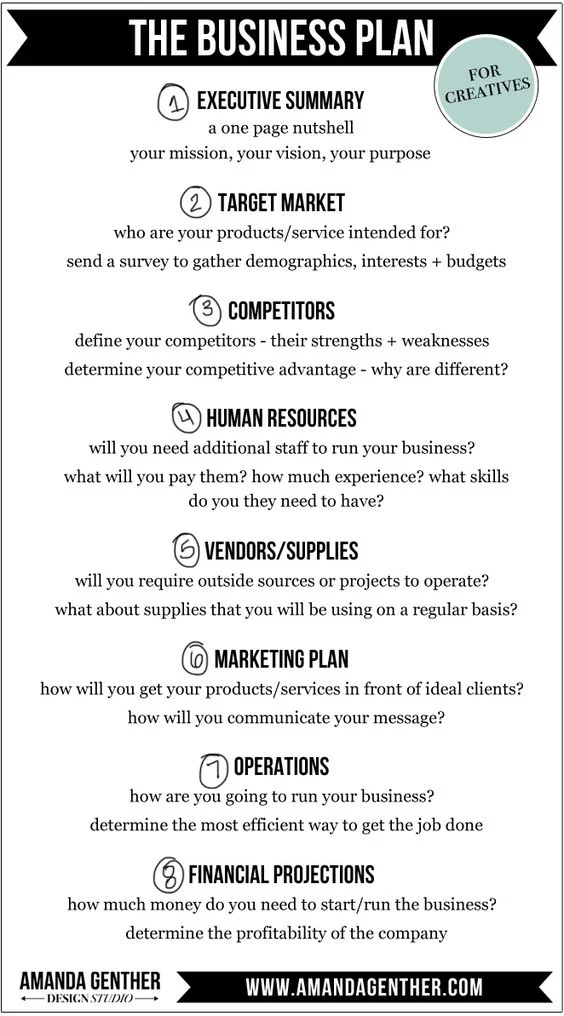
If you’re seeking external funding, this section explicitly outlines your capital needs. It must detail the exact amount of money you are requesting, specify precisely how these funds will be utilized (e.g., equipment purchase, marketing, working capital, hiring), and outline the expected outcomes of this investment. Investors want to see a clear correlation between the funds requested and the projected growth and profitability of your business. Additionally, you should address the type of funding sought (debt, equity) and, if applicable, the proposed terms or equity stake. Transparency and justification are key to convincing potential investors that their money will be invested wisely and yield a strong return.
Operational Budgeting: Allocating Resources Wisely
Beyond high-level projections, a business plan needs to break down how resources will be allocated on a day-to-day and month-to-month basis. This involves creating detailed operational budgets for various departments and activities. This includes budgeting for inventory, marketing campaigns, technology infrastructure, salaries and benefits, rent, utilities, and administrative overheads. A robust operational budget demonstrates your meticulous planning and understanding of the true costs associated with running your business. It serves as an internal control mechanism, allowing you to track actual spending against planned spending, identify variances, and make timely adjustments to keep your financial goals on track.
Crafting a Robust Financial Strategy
A business plan is not merely a collection of numbers; it’s a strategic document that outlines how your business intends to achieve financial success. This requires developing a cohesive financial strategy embedded within the plan.
Market Analysis with a Monetary Lens
While market analysis typically focuses on identifying target customers and understanding industry trends, for a business plan, it must be intrinsically linked to your financial strategy. This involves not just understanding who your customers are, but how much they are willing to pay, how many of them there are, and how much it will cost to acquire them. You need to assess the overall market size in monetary terms, identify potential revenue streams from different market segments, and analyze competitors’ pricing strategies and financial performance. This monetary lens helps validate your revenue projections, informs your pricing model, and establishes the realistic financial potential and competitive positioning of your venture within the broader market.
Revenue Models and Profitability
A core element of your financial strategy is defining your revenue model – how your business will generate income. Will it be through direct sales, subscriptions, advertising, licensing, commissions, or a hybrid approach? Each model has different implications for cash flow, scalability, and profitability. Your business plan must clearly articulate your chosen revenue model and provide detailed justifications for its viability. Furthermore, you must demonstrate a clear path to profitability by outlining your cost structure, projected profit margins for each product or service, and strategies for achieving economies of scale. Understanding and communicating your break-even point and the levers that drive profitability are crucial for both internal planning and investor confidence.
Risk Assessment and Mitigation (Financial)
No business operates in a vacuum, and every venture faces inherent financial risks. A comprehensive business plan doesn’t shy away from these challenges; instead, it addresses them head-on. This section should identify potential financial risks such as market downturns, increased competition, supply chain disruptions leading to higher costs, unexpected operational expenses, or changes in regulatory policy that could impact revenue or profitability. More importantly, it must outline specific strategies for mitigating these risks. This could include developing contingency funds, diversifying revenue streams, implementing hedging strategies, securing insurance, or having alternative suppliers. Demonstrating a proactive approach to financial risk management underscores your preparedness and enhances your credibility with potential investors and lenders.
Tools and Best Practices for Financial Planning
Creating a financially sound business plan can seem daunting, but a wealth of tools and best practices can streamline the process and enhance the quality of your output.
Leveraging Financial Software and Templates
In today’s digital age, numerous tools can simplify the complex task of financial forecasting. Spreadsheet software like Microsoft Excel or Google Sheets remains a powerful, flexible option for building custom financial models. For more structured approaches, specialized business planning software (e.g., LivePlan, Bplans) offers templates and guided prompts that help you construct each section, including detailed financial projections. Accounting software (e.g., QuickBooks, Xero) can integrate with your plan by providing historical data for existing businesses or helping manage finances once you launch. Utilizing these tools not only saves time but also helps ensure consistency and accuracy in your financial data, presenting a professional and coherent financial narrative.
The Importance of Professional Guidance
While many entrepreneurs prefer a DIY approach, knowing when to seek professional help can be invaluable, especially concerning the financial aspects of your business plan. Consulting with experienced accountants or financial advisors can ensure the accuracy of your projections, optimize your tax strategy, and help you navigate complex financial regulations. Business mentors or industry experts can provide critical insights into realistic market expectations, pricing strategies, and operational efficiencies specific to your sector. Their expertise can validate your assumptions, identify blind spots, and enhance the overall credibility and robustness of your financial plan, making it more appealing to investors and lenders.

Iteration and Adaptability
A common misconception is that a business plan is a static document, completed once and then filed away. In reality, a truly effective business plan, particularly its financial components, is a living document that requires regular review and adaptation. Market conditions change, competitive landscapes evolve, and internal operational efficiencies fluctuate. Your financial projections and strategies should be revisited periodically (e.g., quarterly or annually) to reflect new data, adjust for unforeseen circumstances, and incorporate lessons learned. This iterative process allows you to maintain financial agility, pivot when necessary, and continually optimize your financial strategy for sustained growth and profitability.
In conclusion, “how to do a business plan” is fundamentally about crafting a compelling financial narrative for your business. It’s about meticulously planning how you will generate income, manage expenses, secure funding, and ultimately build a financially viable and prosperous enterprise. By focusing on the monetary aspects – from precise financial projections and robust budgeting to strategic risk mitigation and a clear funding request – you transform a mere document into an indispensable tool for achieving your entrepreneurial dreams and securing a strong financial future. This comprehensive financial blueprint is not just a requirement; it is your ultimate guide to turning vision into tangible wealth.
aViewFromTheCave is a participant in the Amazon Services LLC Associates Program, an affiliate advertising program designed to provide a means for sites to earn advertising fees by advertising and linking to Amazon.com. Amazon, the Amazon logo, AmazonSupply, and the AmazonSupply logo are trademarks of Amazon.com, Inc. or its affiliates. As an Amazon Associate we earn affiliate commissions from qualifying purchases.