
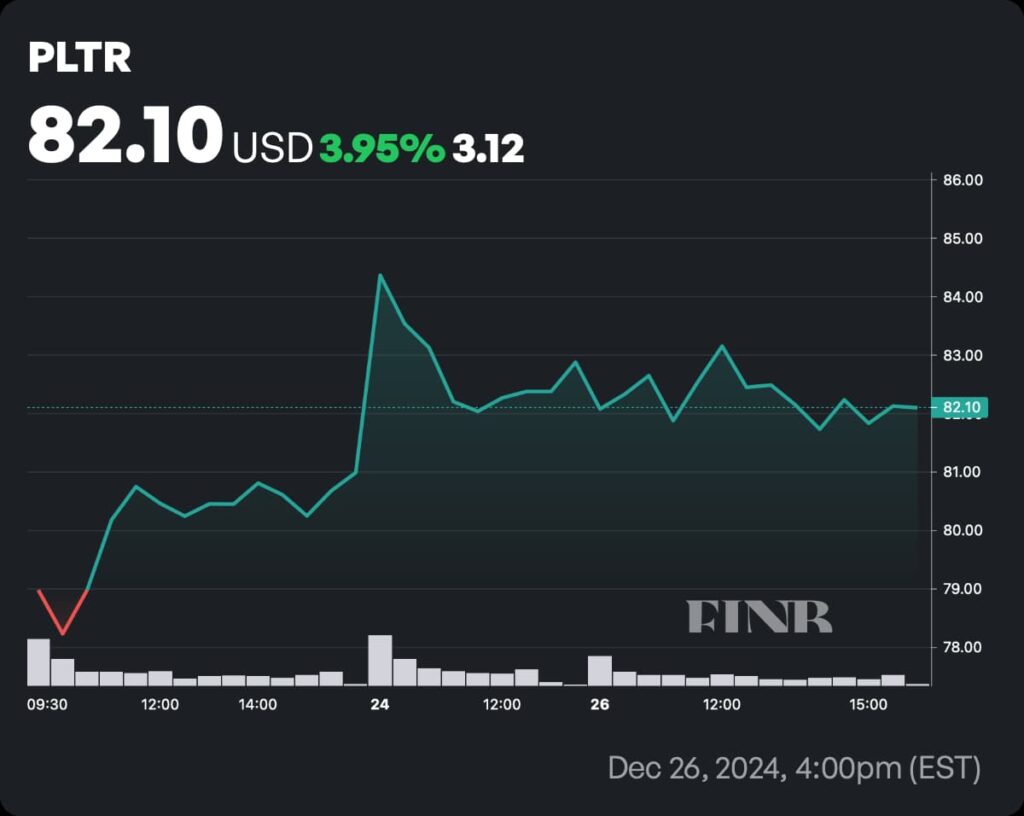
Palantir Technologies (PLTR) has transitioned from a secretive data analytics firm serving intelligence agencies to one of the most talked-about equities in the modern stock market. For investors asking “what is PLTR stock price,” the answer extends far beyond a simple numerical figure on a ticker. The price represents a complex intersection of institutional sentiment, retail enthusiasm, and a fundamental shift in how the market values artificial intelligence (AI) integration within the enterprise software sector.
Understanding the PLTR stock price requires an analysis of the company’s recent inclusion in the S&P 500, its pivot toward GAAP profitability, and the unprecedented growth of its US commercial business. As of late 2024, the stock has become a bellwether for the “AI trade,” moving in high correlation with sector leaders while maintaining a unique volatility profile that attracts both long-term value investors and short-term speculators.
Understanding the Fundamentals of PLTR Stock Valuation
The valuation of PLTR is often a point of contention between traditional value investors and growth-oriented tech enthusiasts. Unlike many software companies that prioritize growth at any cost, Palantir has undergone a rigorous financial transformation designed to satisfy institutional requirements.
The Significance of S&P 500 Inclusion
In September 2024, Palantir achieved a milestone that fundamentally altered its price dynamics: inclusion in the S&P 500 index. This move forced passive index funds to purchase millions of shares, providing a baseline of institutional support that the stock previously lacked. For the individual investor, this means that the PLTR stock price is now influenced by broader market flows and index rebalancing, reducing some of the “meme-stock” volatility that characterized its early days post-Direct Listing.
Moving Beyond the “Black Box” Narrative
For years, the stock price was weighed down by the perception that Palantir was a “black box” company with opaque government contracts. However, the financial narrative has shifted. The market now values Palantir based on its ability to scale its Artificial Intelligence Platform (AIP) across the private sector. The price today reflects a premium for a company that has proven it can generate consistent cash flow while maintaining high double-digit revenue growth.
Revenue Growth and the Transition to GAAP Profitability
One of the most critical factors influencing the PLTR stock price is the company’s track record of profitability. In the world of high-growth tech, the transition from burning cash to generating net income is the ultimate signal of a maturing business.
Five Quarters of GAAP Net Income
The catalyst for Palantir’s recent price surge was its achievement of five consecutive quarters of GAAP profitability. This metric is vital for institutional investors who operate under mandates that prohibit investing in non-profitable companies. By demonstrating that it can manage operational expenses while scaling revenue, Palantir has de-risked its financial profile. This shift has led to a re-rating of the stock’s multiples, as investors are now willing to pay a higher price for each dollar of earnings.
Rule of 40 Performance
In the software-as-a-service (SaaS) world, the “Rule of 40” is a benchmark stating that a company’s combined growth rate and profit margin should exceed 40%. Palantir has consistently outperformed this benchmark. This operational efficiency is a primary driver of the stock price, signaling to the market that the company is not only growing fast but doing so in a sustainable, highly profitable manner.
The Commercial Revolution: AIP and Its Impact on Share Price

While government contracts provided the foundation for Palantir, the modern PLTR stock price is driven by its US commercial success. The launch of the Artificial Intelligence Platform (AIP) has changed the company’s go-to-market strategy and, consequently, its revenue projections.
The AIP Bootcamp Strategy
Palantir’s “bootcamp” strategy—where they allow potential clients to test AIP on their own data in a matter of days—has drastically shortened the sales cycle. From a financial perspective, this is revolutionary. Traditional enterprise software sales can take months or years; Palantir is closing deals in weeks. This acceleration in customer acquisition is a leading indicator for future revenue growth, which the stock market often “prices in” months before the actual earnings reports are released.
Diversification of Revenue Streams
Investors look favorably upon companies that are not dependent on a single customer or sector. The rapid growth of the US commercial segment—often exceeding 40% year-over-year—provides a hedge against the slower, more bureaucratic government contracting process. As the commercial side of the business grows to represent a larger share of the total revenue mix, the stock price becomes less sensitive to government budget cycles and more aligned with the broader enterprise tech spending environment.
Assessing Risks: Is the Price Justified by the Metrics?
No financial analysis of PLTR is complete without addressing the valuation concerns. By many traditional metrics, Palantir appears expensive. High price-to-earnings (P/E) and price-to-sales (P/S) ratios suggest that the market has very high expectations for the company’s future.
The Challenge of High Multiples
When a stock trades at a high P/E ratio, it means investors are paying for growth that hasn’t happened yet. If Palantir misses an earnings target or if its growth rate slows down even slightly, the stock price can experience significant downward pressure. This is the inherent risk of investing in high-growth AI stocks. The current price assumes that Palantir will continue to dominate the “operating system for the modern enterprise” niche without significant interference from competitors like Microsoft or snowflake.
Competition and Market Saturation
As the AI sector matures, competition will inevitably intensify. While Palantir currently enjoys a “moat” due to its deep integration and high switching costs, the market is constantly looking for signs of margin compression. If competitors begin to offer similar capabilities at a lower price point, Palantir’s ability to command premium pricing may be challenged, which would directly impact its stock valuation.
Future Outlook and the Strategic Investor’s Perspective
Looking ahead, the PLTR stock price will likely be dictated by the company’s ability to turn its technological advantage into a global standard. For the strategic investor, the focus should remain on long-term capital allocation rather than daily price fluctuations.
Institutional Ownership Trends
A key indicator of a stock’s health is the level of institutional ownership. As more hedge funds and mutual funds add Palantir to their portfolios, the stock gains “stickiness.” Institutional buyers tend to have longer time horizons than retail traders, which can lead to more stable price appreciation over time. Monitoring the 13F filings of major asset managers can provide insight into whether the “smart money” believes the current price is a fair entry point.

The Macroeconomic Environment
Finally, external factors such as interest rates and inflation play a significant role in the PLTR stock price. Growth stocks are particularly sensitive to interest rate hikes, as higher rates increase the discount rate used to value future cash flows. Conversely, a stable or declining interest rate environment can act as a tailwind for Palantir, making its future earnings more valuable in today’s dollars.
In conclusion, the PLTR stock price is a reflection of a company at a crossroads. It is no longer just a speculative bet on the future of data; it is an established, profitable, and S&P 500-verified entity that sits at the heart of the AI revolution. For those looking to invest, the price should be viewed through the lens of a long-term business cycle. While the short-term movements may be driven by headlines and market sentiment, the long-term trajectory will be determined by Palantir’s ability to maintain its aggressive growth in the commercial sector while expanding its already impressive margins. Whether the stock is “cheap” or “expensive” depends entirely on one’s belief in the permanence of the AI transformation in global business.
aViewFromTheCave is a participant in the Amazon Services LLC Associates Program, an affiliate advertising program designed to provide a means for sites to earn advertising fees by advertising and linking to Amazon.com. Amazon, the Amazon logo, AmazonSupply, and the AmazonSupply logo are trademarks of Amazon.com, Inc. or its affiliates. As an Amazon Associate we earn affiliate commissions from qualifying purchases.