
Percentages are one of the most fundamental mathematical concepts we encounter daily, yet their profound importance, especially within the realm of finance, often goes underappreciated. Far more than just a numerical expression, percentages provide a universal language for comparing quantities, understanding change, and making informed decisions about money, investments, and business operations. Without a solid grasp of percentages, navigating the complexities of budgeting, interest rates, investment returns, or even deciphering a sales discount becomes a daunting task. This article aims to demystify percentages, illustrating their critical role in personal and business finance and equipping you with the knowledge to wield them confidently.
The Core Concept: Why Percentages Matter in Finance
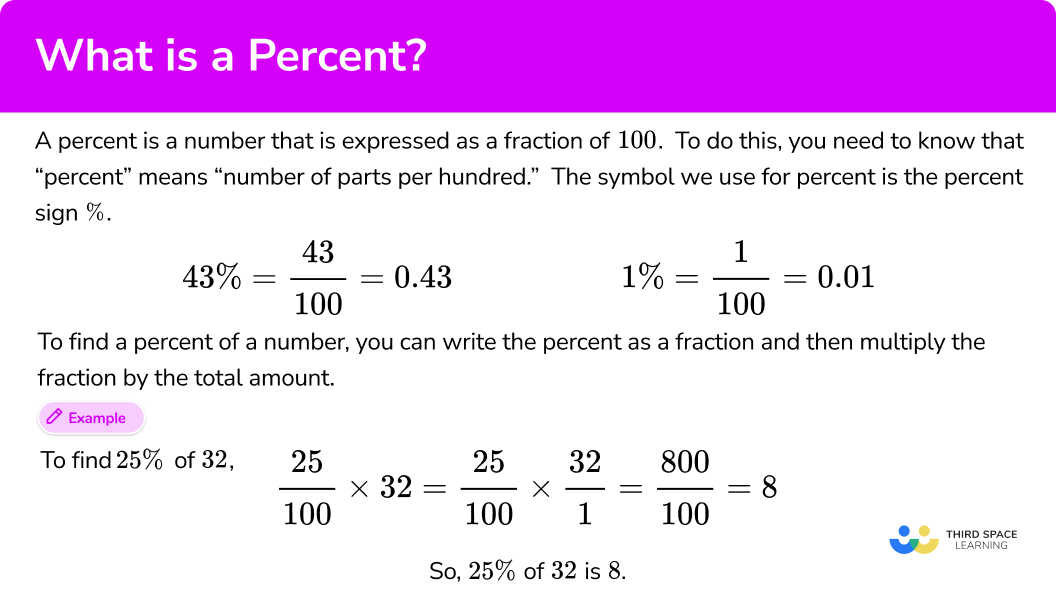
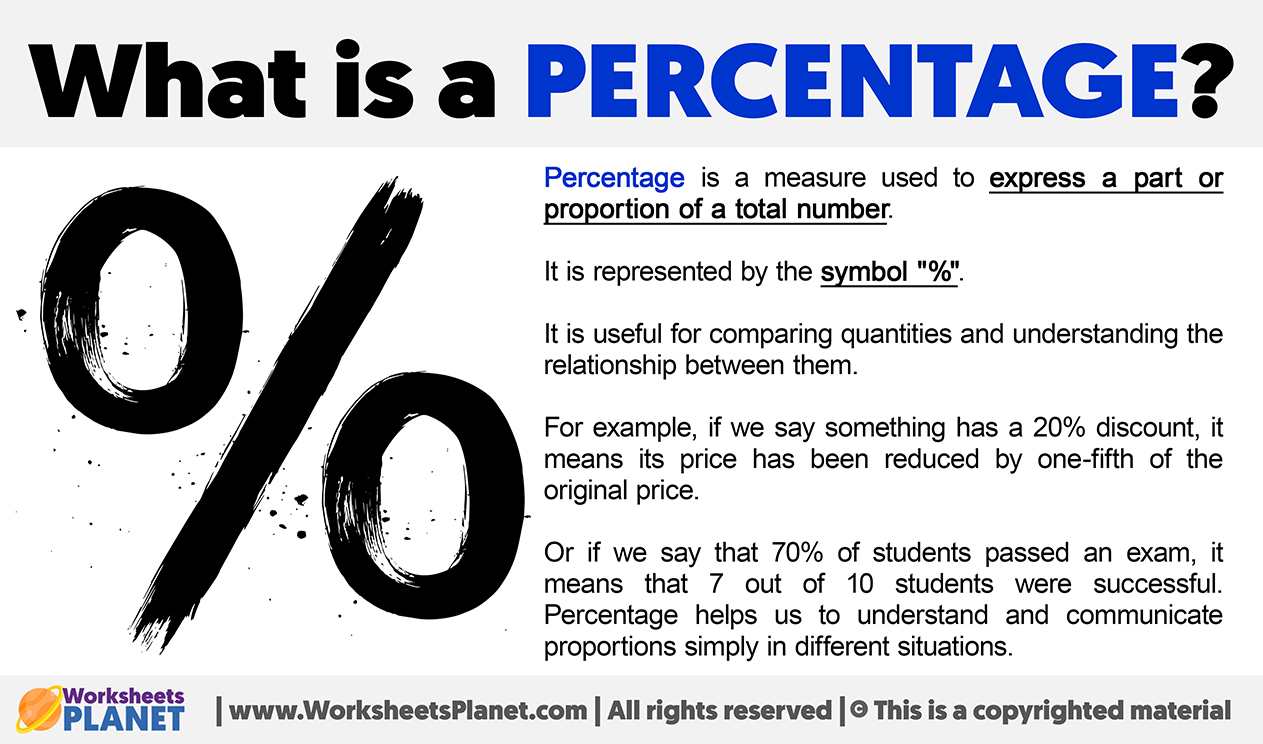
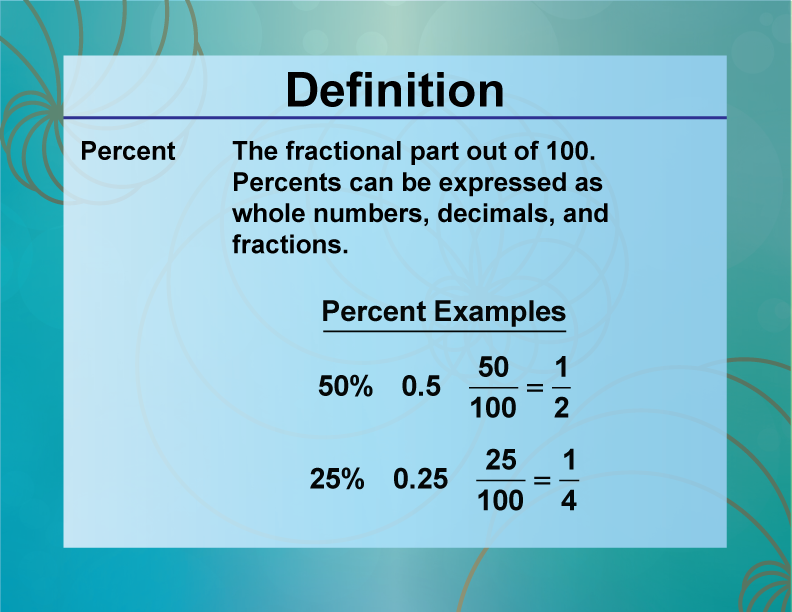
At its heart, a percentage represents a proportion or a fraction of a whole, expressed as a number out of 100. The term “percent” derives from the Latin “per centum,” meaning “by the hundred.” This standardized way of expressing parts of a whole makes percentages an indispensable tool for comparison and analysis, particularly when the ‘whole’ varies in size.
Defining the Basics: A Fraction of the Whole
Imagine a pie cut into 100 slices. If you take 5 slices, you have 5 percent of the pie. If you have a total budget of $1,000 and you spend $100 on groceries, you’ve spent 10 percent of your budget on groceries. The beauty of this system lies in its universality: regardless of the total amount, expressing a portion as a percentage allows for immediate understanding of its relative size. This standardization is crucial in finance, where comparing the performance of different investments, the cost of various loans, or the allocation of diverse budgets requires a common metric.
From Fractions to Decimals to Percentages: The Conversion Process
Understanding how to convert between fractions, decimals, and percentages is vital for financial literacy.
- Fraction to Percentage: Divide the numerator by the denominator, then multiply by 100. For example, 1/4 = 0.25, and 0.25 * 100 = 25%.
- Decimal to Percentage: Simply multiply the decimal by 100. So, 0.75 becomes 75%.
- Percentage to Decimal: Divide the percentage by 100. Thus, 40% becomes 0.40.
This fluid conversion ability is key to performing calculations and interpreting financial data, as different financial tools and reports may present figures in varying formats. For instance, an interest rate might be listed as 3.5%, but to calculate the actual interest on a loan, you’d convert it to its decimal form (0.035).
The Ubiquity of Percentages in Everyday Financial Life
From the moment you check your bank balance to the monthly budget meeting at work, percentages permeate our financial world. They quantify changes in stock prices, define interest rates on loans and savings accounts, calculate discounts during sales, and determine the taxes you pay. Without them, financial statements would be mere lists of numbers, devoid of the comparative context needed for meaningful analysis. Their constant presence underscores the necessity of a clear understanding for effective financial management.
Navigating Personal Finance with Percentages
For individuals, percentages are not just theoretical concepts; they are practical tools for managing personal wealth and making everyday financial decisions. Mastering their application can significantly enhance your financial well-being.
Budgeting and Expense Tracking: Allocating Your Income
One of the most powerful applications of percentages in personal finance is budgeting. The popular 50/30/20 rule, for example, suggests allocating 50% of your after-tax income to needs, 30% to wants, and 20% to savings and debt repayment. This percentage-based framework provides a flexible yet structured approach to managing your money, adapting easily to varying income levels. Tracking expenses as percentages of your total income or specific budget categories helps reveal spending habits and identify areas for adjustment. For instance, if dining out consumes 25% of your discretionary budget, and your goal is to save more, that percentage clearly flags an area for reduction.
Understanding Interest Rates: Loans, Savings, and Credit
Interest rates, fundamentally expressed as percentages, dictate the cost of borrowing money and the earnings on savings. A loan with a 5% annual interest rate means you pay 5% of the principal amount in interest over a year. Conversely, a savings account offering 2% interest means your money grows by 2% annually. Understanding the difference between nominal and effective interest rates, or how compounding interest (interest calculated on the initial principal and accumulated interest) dramatically impacts long-term growth or debt, is entirely reliant on grasping percentage mechanics. A seemingly small percentage difference in an interest rate can translate into thousands of dollars over the lifetime of a mortgage or significantly alter the growth trajectory of your retirement savings.
Discounts, Sales, and Value Added Tax (VAT): Saving and Spending Wisely
When shopping, percentages are your guide to smart spending. A “20% off” sale means you save 20% of the original price. Calculating that saving quickly allows you to assess the real value of a deal. Similarly, understanding sales tax or Value Added Tax (VAT), which is typically a percentage of the purchase price, is crucial for knowing the final cost of an item. These everyday applications highlight how percentages empower consumers to make informed purchasing decisions and effectively manage their spending.
Investing and Business Finance: The Power of Percentage Growth
Beyond personal finance, percentages are the backbone of investment analysis and business financial health. They provide the metrics for assessing performance, profitability, and risk.
Return on Investment (ROI) and Portfolio Performance
In investing, percentages are paramount for evaluating performance. Return on Investment (ROI), often expressed as a percentage, measures the gain or loss generated on an investment relative to its cost. If you invest $1,000 and it grows to $1,200, your ROI is 20% (($200 gain / $1,000 initial investment) * 100). Comparing the ROI of different assets or an entire portfolio allows investors to make strategic decisions about where to allocate capital. Annualized returns, dividend yields, and expense ratios of funds are all percentage-based metrics that guide investment choices, helping individuals and institutions track progress towards financial goals.
Profit Margins and Business Health
For businesses, percentages are vital for assessing profitability and operational efficiency. Gross profit margin, operating profit margin, and net profit margin are all percentages that reveal how much profit a company makes from its sales after deducting various costs. A gross profit margin of 40% means that for every dollar of revenue, 40 cents remain after the cost of goods sold. These margins are critical indicators of a company’s financial health and its ability to manage costs effectively. They allow management, investors, and analysts to compare a company’s performance against competitors or industry benchmarks, providing insights into its competitive positioning and operational strengths or weaknesses.
Inflation and Purchasing Power: The Hidden Cost of Money
Inflation, expressed as a percentage, is the rate at which the general level of prices for goods and services is rising, and consequently, the purchasing power of currency is falling. If inflation is 3% annually, it means that, on average, what cost $100 last year will cost $103 this year. Understanding inflation is crucial for investors, as it erodes the real return on investments. A savings account yielding 2% interest when inflation is 3% actually results in a loss of purchasing power. Businesses must also factor in inflation when setting prices and planning for future costs.
Mastering Percentage Calculations: Essential Skills for Financial Literacy
Being able to confidently perform percentage calculations is a fundamental skill that underpins sound financial decision-making. These calculations are not just for accountants; they are for everyone managing money.
Calculating Percentage Change: Growth and Decline
The ability to calculate percentage change is critical for understanding trends in finance. Whether it’s the growth of your investment portfolio, the decline in a stock price, or the increase in your salary, percentage change provides context.
The formula is: ((New Value - Old Value) / Old Value) * 100.
For example, if your stock portfolio grew from $10,000 to $11,500, the percentage change is ((11,500 - 10,000) / 10,000) * 100 = 15%. This allows for direct comparison of growth rates across different periods or assets.
Finding a Percentage of a Number: Discounts and Taxes
This is perhaps the most common percentage calculation. To find a percentage of a number, convert the percentage to a decimal and multiply by the number.
For example, to calculate a 15% discount on an item priced at $200: 0.15 * $200 = $30.
Or, to calculate 8% sales tax on a $50 purchase: 0.08 * $50 = $4.
These calculations are essential for calculating final prices, understanding deductions, or determining the amount of interest due.
Working Backwards: Finding the Original Amount
Sometimes, you know the final amount after a percentage change and need to find the original amount. This is common when calculating the original price before a discount or determining a pre-tax amount.
If an item costs $80 after a 20% discount, what was its original price? The $80 represents 80% (100% – 20%) of the original price. So, Original Price = Final Price / (1 - Discount Percentage as a decimal).
Original Price = $80 / (1 - 0.20) = $80 / 0.80 = $100.
This ‘working backwards’ skill is particularly useful for savvy shoppers and for financial analysis where understanding the starting point is crucial.
Advanced Applications and Critical Thinking with Percentages
Beyond basic calculations, percentages form the basis for more sophisticated financial concepts and require careful interpretation.
Compounding Interest: The Eighth Wonder of the World
Albert Einstein is often attributed with calling compound interest the “eighth wonder of the world.” This concept relies entirely on percentages. It’s interest calculated on the initial principal, which also includes all of the accumulated interest from previous periods on a deposit or loan. The power of compounding means that a relatively small percentage interest rate, over a long period, can lead to substantial growth or debt accumulation. Understanding the compounding frequency (daily, monthly, annually) and its percentage impact is critical for long-term financial planning, from retirement savings to credit card debt management.
Understanding Financial Ratios: Debt-to-Income, Price-to-Earnings
In both personal and business finance, numerous ratios are expressed as percentages to provide snapshots of financial health and performance. The debt-to-income (DTI) ratio, a personal finance metric, helps lenders assess your ability to manage monthly payments and repay debts. If your monthly debt payments are $1,000 and your gross monthly income is $4,000, your DTI is 25%. In business, the price-to-earnings (P/E) ratio, though often presented as a multiple, fundamentally involves percentages, comparing a company’s share price to its earnings per share to gauge its valuation. Other ratios like current ratio, quick ratio, and debt-to-equity ratio all leverage percentages to provide critical insights into liquidity, solvency, and operational efficiency.
Avoiding Misinterpretation: Context is Key
While powerful, percentages can also be misleading if not interpreted within their proper context. A “200% increase” sounds impressive, but if it’s an increase from $1 to $3, the absolute change is small. Conversely, a “5% decrease” in a multi-billion dollar budget represents a massive absolute amount. Understanding the base amount against which the percentage is calculated is vital. Similarly, comparing percentages without understanding the underlying populations or methodologies can lead to flawed conclusions. Critical thinking, always asking “percent of what?”, is essential to avoid being swayed by statistics.
Conclusion: Empowering Financial Decisions with Percentage Fluency
Percentages are far more than a mathematical notation; they are the lingua franca of finance. From managing your daily budget and navigating sales to understanding complex investment returns and business profitability, a robust understanding of percentages empowers you to make informed, strategic financial decisions. They provide the necessary context to interpret data, compare options, and track progress towards your financial goals. By embracing and mastering the concepts and calculations associated with percentages, you unlock a deeper understanding of the financial world, moving from a passive observer to an active, confident participant in your economic journey.
aViewFromTheCave is a participant in the Amazon Services LLC Associates Program, an affiliate advertising program designed to provide a means for sites to earn advertising fees by advertising and linking to Amazon.com. Amazon, the Amazon logo, AmazonSupply, and the AmazonSupply logo are trademarks of Amazon.com, Inc. or its affiliates. As an Amazon Associate we earn affiliate commissions from qualifying purchases.