
In an increasingly data-driven world, understanding and manipulating percentages is a fundamental skill, essential across personal, professional, and academic domains. From calculating sales discounts and interest rates to analyzing market share and scientific data, percentages provide a standardized way to express proportions and changes. While the mathematical principles behind them are straightforward, the manual calculation can be prone to errors, especially when dealing with large datasets or complex scenarios. This is where the percentage calculator steps in—a simple yet profoundly powerful digital tool that has become an indispensable component of our technological landscape.
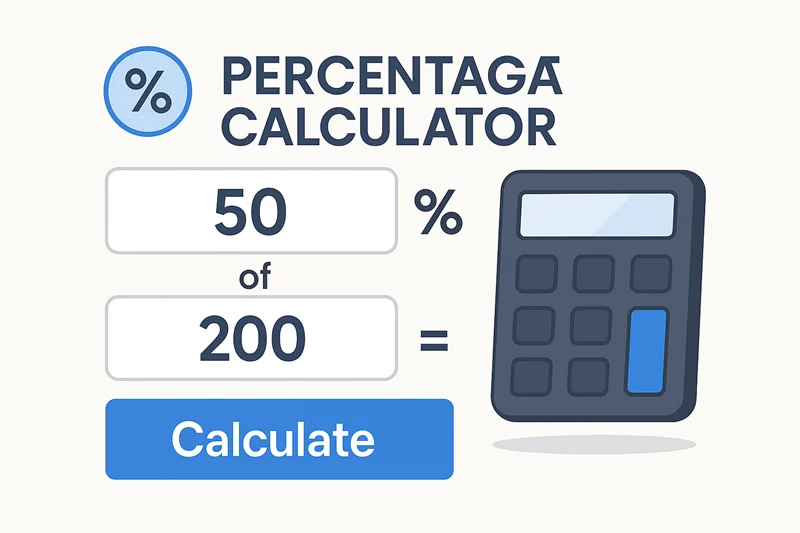
A percentage calculator, at its core, is a software application or a feature embedded within a larger system, designed to automate the computation of percentages. It takes away the tediousness and potential for human error associated with manual calculations, offering instant and accurate results. Far from being a niche utility, these calculators are integrated into operating systems, web browsers, mobile applications, and specialized software, reflecting their universal utility. This article delves into the essence of what a percentage calculator is, exploring its diverse functionalities, the technological forms it takes, its underlying mechanisms, and its broader impact on enhancing accuracy and efficiency in our digital lives.
The Core Functionality: Demystifying Percentage Computations
The fundamental purpose of any percentage calculator is to simplify and expedite the process of determining a percentage value based on given inputs. While the specific interface might vary, the underlying mathematical operations are consistent, translating common percentage-related queries into automated processes.
Basic Percentage Computations
Percentage calculators are built to handle several standard types of percentage problems, each serving distinct analytical needs:
-
“What is X% of Y?”: This is perhaps the most common query. For instance, finding 15% of 200 (which is 30) to calculate a sales tax, a discount amount, or a commission. The calculator multiplies Y by (X/100). This functionality is vital in e-commerce platforms for displaying discounted prices or calculating total costs including VAT.
-
“X is what percentage of Y?”: This function determines the proportion of one number relative to another, expressed as a percentage. For example, if you scored 85 out of 100 on an exam, the calculator reveals you achieved 85%. Similarly, a business might use this to determine market share: if a company sells 500 units in a market of 2000 units, it has 25% of the market. The calculator divides X by Y and then multiplies by 100.
-
“Percentage Increase/Decrease”: This calculation measures the relative change between two values over time or across different scenarios. If a product’s price increases from $50 to $60, the percentage increase is 20%. Conversely, a decrease from $60 to $50 is a 16.67% decrease. This is crucial for tracking growth rates in business, inflation rates in economics, or performance metrics in various fields. The calculator computes the difference, divides it by the original value, and multiplies by 100.
-
“Reverse Percentage Calculations”: More advanced but equally useful, these calculations allow users to find the original value before a percentage change was applied. For instance, if an item costs $120 after a 20% sales tax was added, a reverse percentage calculation helps determine the original price was $100. This is invaluable in accounting, budgeting, and retail for deciphering base values.
By automating these diverse computations, percentage calculators eliminate the need for manual formula application, significantly reducing the risk of errors and freeing up users to focus on interpreting the results rather than the mechanics of calculation.
Types of Percentage Calculators in the Digital Landscape
The ubiquity of percentage calculations has led to the development of various forms of digital percentage calculators, each optimized for different user contexts and technological platforms. Their proliferation highlights the diverse ways software and digital tools adapt to user needs.
Standalone Web-Based Tools
Many percentage calculators exist as dedicated web pages. These are often minimalist websites designed for a single purpose: to provide quick and easy percentage calculations. Users input values into specific fields, click a “calculate” button, and instantly receive results.
- Advantages: Accessibility from any device with a web browser and internet connection, no installation required, and typically free to use. They are browser-agnostic, working seamlessly across Chrome, Firefox, Safari, and other browsers. Their simplicity makes them incredibly user-friendly for ad-hoc calculations.
Mobile Applications
The rise of smartphones and tablets has made mobile applications a primary platform for utilities. Dedicated percentage calculator apps, or those integrated into broader scientific or financial calculators, are commonplace on iOS and Android app stores.
- Advantages: Portability, offline access (for most basic functions), often richer and more intuitive user interfaces (UI/UX) tailored for touchscreens, and the ability to integrate with other mobile device features (e.g., sharing results). Some advanced apps offer history logs, unit conversions, and customizable themes.
Integrated Software Features
Beyond standalone tools, percentage calculation capabilities are often built directly into other software applications, making them contextually relevant and highly efficient.
-
Spreadsheets: Applications like Microsoft Excel, Google Sheets, and LibreOffice Calc are powerful tools for managing and analyzing data, and percentage calculations are fundamental to their operation. Users can write formulas (e.g.,
=A1*0.15for 15% of cell A1, or=(A2-A1)/A1*100for percentage change) to perform complex calculations on vast datasets. This integration is crucial for business finance, scientific research, and data analytics. -
Business Software: Accounting software, CRM (Customer Relationship Management) systems, ERP (Enterprise Resource Planning) platforms, and e-commerce solutions frequently incorporate percentage calculations. For example, an e-commerce site automatically calculates sales tax and discounts during checkout, while accounting software computes profit margins or depreciation based on percentages.
-
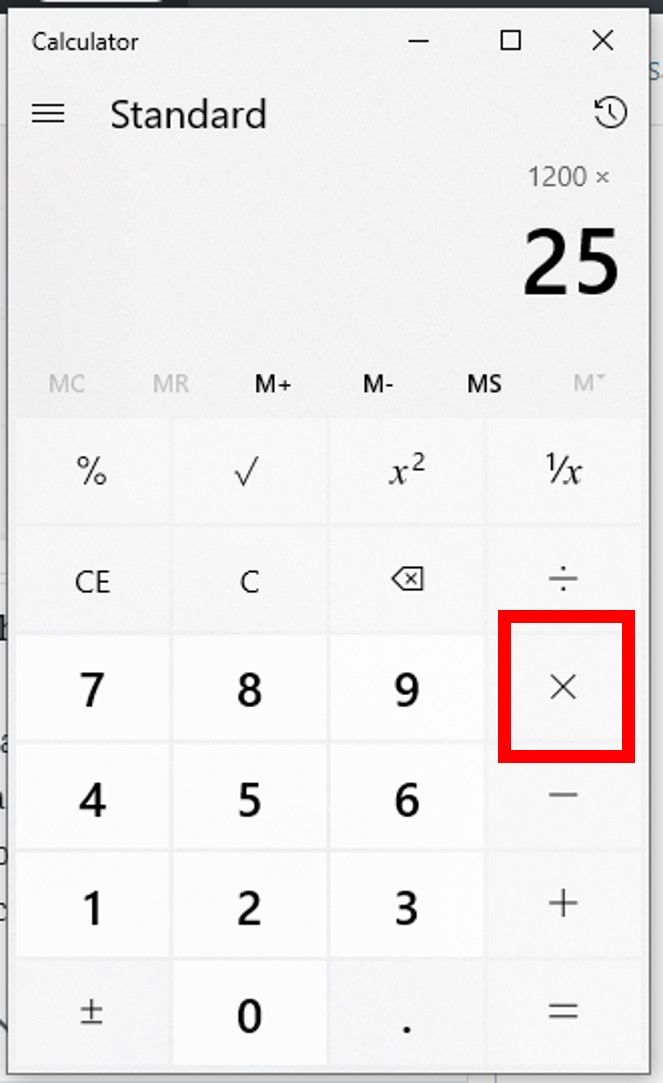
Operating System Utilities: Many operating systems (Windows, macOS) include a basic calculator utility that supports percentage operations, often with a dedicated ‘%’ button or function. This provides immediate access to calculations without needing to open a browser or a specialized app.
AI-Enhanced and Voice-Activated Calculators
The evolution of artificial intelligence and natural language processing (NLP) has further integrated percentage calculation into everyday tech. Virtual assistants like Apple’s Siri, Google Assistant, and Amazon’s Alexa can interpret spoken queries such as “What is 20 percent off of 75?” and provide instant auditory answers. More sophisticated AI tools may even contextualize these calculations, suggesting relevant follow-up actions or integrating them into larger analytical workflows, pointing towards a future where computational assistance is seamless and proactive.
The Technological Underpinnings: How They Work
Beneath the user-friendly interfaces, percentage calculators, regardless of their form, rely on foundational programming principles and design considerations to deliver accurate and efficient results.
Algorithmic Simplicity and Efficiency
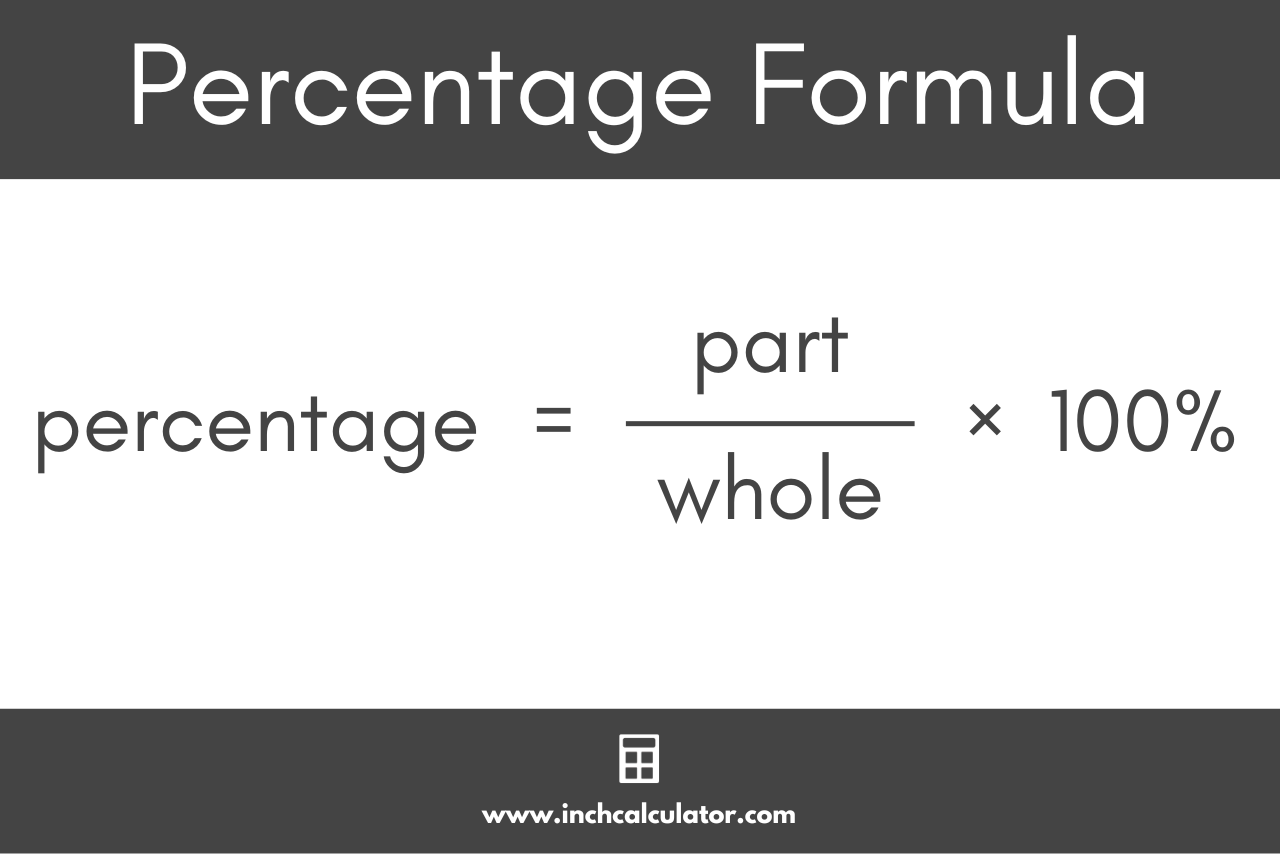
The core algorithm for percentage calculation is remarkably simple, primarily involving basic arithmetic operations: multiplication and division. For “X% of Y,” the calculation is (X/100) * Y. For “X as a percentage of Y,” it’s (X/Y) * 100. The simplicity of these algorithms means they execute almost instantaneously, even on basic hardware.
- Floating-Point Precision: A crucial technical detail is managing floating-point numbers. Since percentages often involve decimal values, calculators must use data types that support high precision (e.g., double-precision floating-point numbers in programming languages) to avoid rounding errors that could lead to inaccurate results, especially in financial or scientific contexts where precision is paramount. Modern calculators are engineered to handle these complexities gracefully.
User Interface/User Experience (UI/UX) Design
The effectiveness of a percentage calculator is not just in its computational accuracy but also in its ease of use. UI/UX design plays a critical role:
-
Intuitive Input Fields: Clear labels for inputs (e.g., “Original Value,” “Percentage”) and distinct output areas.
-
Clear Output Display: Results are presented clearly, often formatted with appropriate decimal places or currency symbols if applicable.
-
Responsiveness: For web-based or mobile tools, the interface must adapt seamlessly to different screen sizes and orientations, ensuring usability across desktops, tablets, and smartphones.
-
Accessibility: Incorporating features for users with disabilities, such as screen reader compatibility, keyboard navigation, and sufficient color contrast, ensures that the tool is inclusive.
Backend Logic and Frontend Presentation
The architecture of a percentage calculator depends on its deployment:
-
Frontend (Client-Side): For most simple web-based or mobile percentage calculators, the entire calculation logic resides on the client side (in the user’s browser or on their device). This is achieved using languages like JavaScript for web applications (HTML for structure, CSS for styling), or Swift/Kotlin for native mobile apps. This approach makes them fast and efficient as there’s no need to communicate with a server for each calculation.
-
Backend (Server-Side): For more complex applications where percentage calculations might be part of a larger data processing pipeline, or when real-time external data (like currency exchange rates for percentage-based currency conversions) is involved, a server-side component might be present. Languages like Python, Node.js, or Java could power the backend, handling data processing, API integrations, and serving the frontend. However, for a basic percentage calculator, a server is often unnecessary, emphasizing the efficiency of client-side computing for such utilities.
The Broader Impact and Evolution of Percentage Calculators
While seemingly a minor utility, the percentage calculator has a profound impact, shaping how individuals and organizations interact with data and make decisions. Its evolution reflects broader trends in digital tools and computational assistance.
Empowering Data Analysis and Decision-Making
Percentage calculators are crucial enablers of informed decision-making across various sectors:
-
Business Intelligence: Companies use them to analyze sales growth, profit margins, cost reductions, and market share trends. The speed and accuracy provided by digital tools allow for rapid iterations of analysis, informing strategic planning and operational adjustments.
-
Financial Modeling: In finance, calculating compound interest, return on investment (ROI), depreciation, and portfolio performance heavily relies on accurate percentage computations. Automated calculators allow financial professionals to model complex scenarios quickly and reliably.
-
Scientific Research: From calculating experimental error percentages to analyzing statistical distributions and demographic shifts, percentage calculators are fundamental tools for researchers to quantify relationships and changes within data.
Educational Tools
For students, percentage calculators serve as invaluable educational aids. They allow students to:
-
Verify Answers: Instantly check their manual calculations, providing immediate feedback on their understanding.
-
Explore Concepts: Experiment with different numbers to grasp the relationship between values and their percentage representations, fostering a deeper conceptual understanding.
-
Focus on Application: Shift their focus from rote calculation to understanding when and why percentages are used, bridging the gap between theoretical knowledge and practical application.
Accessibility and Inclusivity
Digital percentage calculators democratize access to mathematical computations. They make complex calculations manageable for:
-
Non-Mathematicians: Individuals who may not be comfortable with manual arithmetic can still perform necessary calculations accurately.
-
Users with Learning Disabilities: Tools with clear interfaces and auditory feedback can assist those with dyscalculia or other learning challenges.
-
Visually Impaired Users: Screen reader compatible calculators ensure that individuals with visual impairments can also leverage these essential tools through assistive technologies.
The Future: Integration with Predictive Analytics and AI
The evolution of the percentage calculator is set to extend beyond simple computation. As AI and machine learning become more sophisticated, we can expect:
-
Predictive Analytics: Calculators that not only compute current percentages but also forecast future percentage changes based on historical data and predictive models. For example, projecting sales growth percentages or stock price changes.
-
Smart Dashboards: Business intelligence dashboards will increasingly feature dynamic percentage calculations that automatically highlight significant shifts, outliers, or trends, providing actionable insights without manual prompting.
-
Contextual Assistance: AI-powered assistants will likely offer more proactive percentage calculations based on user context, such as suggesting percentage discounts for a product based on inventory levels or recommending investment percentages based on risk profiles. This moves from reactive calculation to proactive, intelligent support.
Conclusion
The percentage calculator, in its myriad digital forms, stands as a testament to how simple yet powerful software tools can significantly enhance efficiency, accuracy, and accessibility in our daily lives. From basic web utilities and mobile apps to integrated spreadsheet functions and voice-activated AI, these tools demystify complex proportional relationships and empower users across all walks of life to make informed decisions.
Far from being a static utility, the percentage calculator continues to evolve, integrating with cutting-edge technologies like AI and predictive analytics. This ongoing development underscores its enduring role as a fundamental technological component, constantly adapting to serve the growing demand for precise, instant, and intelligent computational assistance in an ever-more data-rich world. Its unassuming nature belies its profound impact, making it truly one of the most ubiquitous and essential digital tools available today.
aViewFromTheCave is a participant in the Amazon Services LLC Associates Program, an affiliate advertising program designed to provide a means for sites to earn advertising fees by advertising and linking to Amazon.com. Amazon, the Amazon logo, AmazonSupply, and the AmazonSupply logo are trademarks of Amazon.com, Inc. or its affiliates. As an Amazon Associate we earn affiliate commissions from qualifying purchases.