
In the high-stakes world of pharmaceutical investing and healthcare business finance, few acronyms carry as much weight as PDUFA. Standing for the Prescription Drug User Fee Act, PDUFA is a cornerstone of the American regulatory and financial landscape. For investors, a “PDUFA date” is often the most significant catalyst in a company’s fiscal year, capable of doubling a market capitalization overnight or sending a stock into a tailspin.
Understanding PDUFA is not merely about understanding science; it is about understanding the financial mechanics of the Food and Drug Administration (FDA), the cost of bringing a product to market, and the strategic milestones that define the biotech sector. This guide explores PDUFA through the lens of business and finance, detailing how it functions, why it exists, and how it shapes the investment landscape.
The Economics of Regulation: Why PDUFA Exists
To understand the financial implications of PDUFA, one must first look at the history of drug regulation as a matter of resource allocation. Prior to the early 1990s, the FDA was funded entirely by federal appropriations. As the complexity of biotechnology increased, the agency faced a massive backlog of new drug applications. For pharmaceutical companies, “time is money”—every month a drug sat in regulatory limbo was a month of lost patent life and potential revenue.
The 1992 Legislative Shift
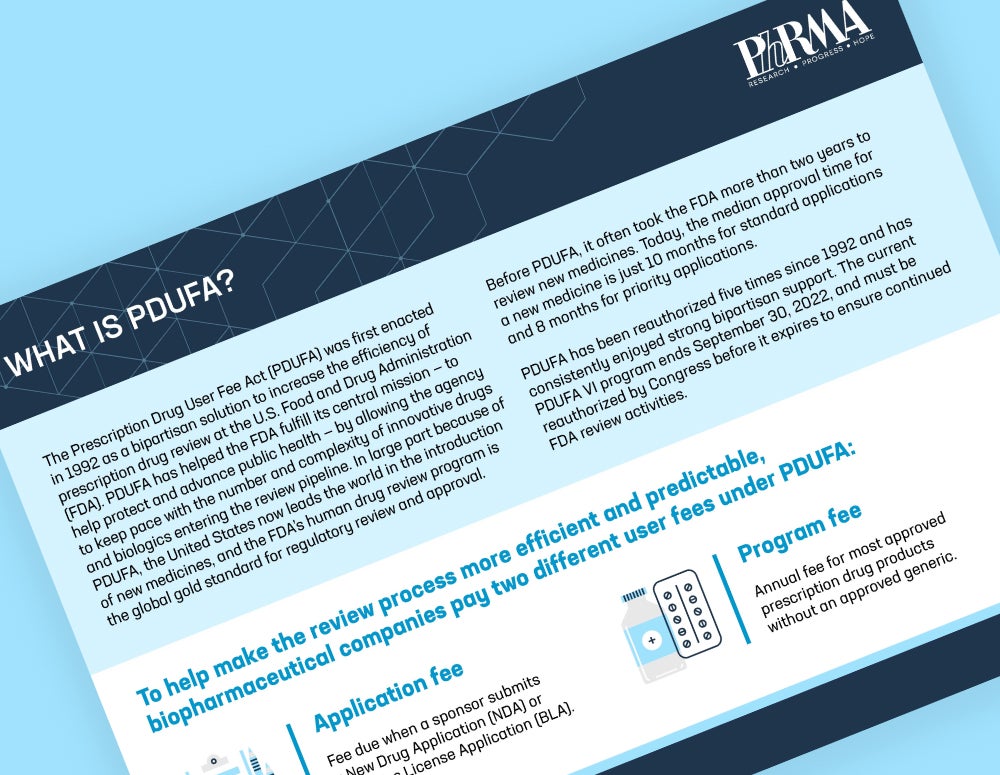
Enacted in 1992, PDUFA was a revolutionary piece of legislation that shifted the financial burden of drug reviews from the taxpayer to the industry. Under this act, pharmaceutical companies agree to pay “user fees” to the FDA when submitting a New Drug Application (NDA) or a Biologic License Application (BLA). In exchange, the FDA commits to meeting specific performance goals, primarily regarding the speed of the review process.
Funding the Modern FDA
Today, PDUFA fees account for a substantial portion of the FDA’s budget for human drug reviews—often exceeding 45% of the total costs. This public-private funding model has significantly shortened the time it takes for a drug to reach the market, which is a critical variable for venture capitalists and institutional investors who need to calculate the Net Present Value (NPV) of a drug candidate.
The Reauthorization Cycles
PDUFA is not a permanent law; it must be reauthorized by Congress every five years (e.g., PDUFA VI, PDUFA VII). Each reauthorization involves intense negotiations between the FDA and industry trade groups. These negotiations determine the fee structures for the coming half-decade and set new goals, such as incorporating “real-world evidence” or “patient-focused drug development” into the review process, both of which have long-term financial implications for how companies design their clinical trials.
The “PDUFA Date”: A High-Stakes Financial Catalyst
In the lexicon of biotech investing, the “PDUFA date” refers to the deadline by which the FDA is expected to deliver a decision on a drug application. For a publicly traded company, this date represents a binary event—a moment of extreme risk and potentially massive reward.
Standard vs. Priority Review Timelines
When a company submits an application, the FDA determines the review speed. A Standard Review typically targets a 10-month window, whereas a Priority Review aims for a 6-month window. From an investment perspective, a Priority Review designation is a significant financial signal. It suggests the drug addresses an unmet medical need for a serious condition, potentially leading to a faster path to revenue and a longer period of market exclusivity before patent expiration.
Market Volatility and the “Run-up”
The months leading up to a PDUFA date often see increased trading volume and volatility. Investors frequently engage in a “PDUFA run-up” strategy, where they buy shares months in advance, betting on positive sentiment, and sell just before the actual decision to avoid the “binary risk.” This behavior reflects the speculative nature of biotech finance, where the anticipation of approval is often as profitable as the approval itself.
The Complete Response Letter (CRL)
If the FDA does not approve a drug by the PDUFA date, it issues a Complete Response Letter (CRL). This is a financial catastrophe for small-cap biotech firms. A CRL outlines the reasons for non-approval, which may include manufacturing issues, clinical trial deficiencies, or safety concerns. For an investor, a CRL often means the company will need to raise more capital (diluting existing shareholders) or, in the worst-case scenario, file for bankruptcy if the drug was their only viable asset.

The Cost of Innovation: Fee Structures and Corporate Budgeting
The financial barrier to entry in the pharmaceutical world is high, and PDUFA fees are a major line item in any biotech company’s budget. For CFOs and business strategists, managing these costs is a vital part of capital allocation.
Application Fees and Program Fees
As of the current PDUFA cycle, the fee for a new drug application requiring clinical data can exceed $3 million. However, the costs don’t end there. The FDA also charges annual “program fees” for each prescription drug product. For a multi-billion dollar “Big Pharma” company, these fees are a cost of doing business. For a pre-revenue startup, these fees require careful cash-runway management.
Small Business Waivers
Recognizing that high fees could stifle innovation among smaller players, the PDUFA framework allows for certain waivers. A “small business waiver” can exempt a company from the application fee for its first human drug application. For a biotech startup, this waiver is effectively a multi-million dollar grant from the regulatory system, allowing them to preserve capital for further research and development or marketing prep.
Strategic Implications of the Review Fee
Because the fees are so high, companies do not submit applications lightly. A submission signal to the market that the company’s internal legal and scientific teams believe the data is “fileable.” This acts as a quality filter in the marketplace; the mere payment of the PDUFA fee is a financial commitment that reinforces the company’s confidence in its product’s commercial viability.
Risk Assessment and Financial Due Diligence
For those looking to generate income or build a portfolio in the healthcare sector, PDUFA dates require a specific type of financial due diligence. Investing in a company based solely on a PDUFA date without understanding the underlying financial health of the organization is a common mistake.
Evaluating the “Cash Runway”
A critical metric for biotech investors is the “cash runway”—how long the company can survive before it needs to raise more money. If a PDUFA date is scheduled for December, but the company only has enough cash to last until October, the company will likely be forced to do a secondary stock offering, which can depress the share price. Savvy investors look for companies where the PDUFA date falls comfortably within their current funding cycle.
AdComs: The Financial Precursor
Sometimes, before the PDUFA date, the FDA will convene an Advisory Committee (AdCom). This is a panel of outside experts who vote on whether the drug should be approved. While the FDA is not bound by the AdCom’s vote, it usually follows it. An AdCom meeting is a major financial volatility event. A positive vote can cause a stock to gap up 20-50%, while a negative vote can be a precursor to a total loss of value.
Post-PDUFA Commercialization Risks
Approval (meeting the PDUFA goal) is only half the battle. From a business perspective, the focus then shifts to commercialization. Investors must analyze the company’s “launch trajectory.” Does the company have a sales force? Do they have a partnership with a larger firm? The financial success of a drug post-PDUFA depends on insurance reimbursement levels and market uptake, which are often more complex to predict than the FDA decision itself.

Conclusion: The Bottom Line on PDUFA
PDUFA is the engine that drives the timing and cost of the American pharmaceutical market. For the government, it is a way to fund essential regulatory oversight. For pharmaceutical companies, it is a predictable, albeit expensive, pathway to bringing products to market. For investors, it is a calendar of high-impact events that can define an entire year’s portfolio performance.
In the world of money and business, PDUFA represents the intersection of regulatory law and capital markets. Success in this niche requires more than just an understanding of medicine; it requires an analytical approach to timelines, an appreciation for the costs of entry, and a disciplined strategy for managing the binary risks associated with the FDA’s decision-making process. Whether you are a retail investor looking for a side hustle in biotech trading or a corporate strategist planning a multi-year product launch, PDUFA is the framework within which your financial success will be determined.
aViewFromTheCave is a participant in the Amazon Services LLC Associates Program, an affiliate advertising program designed to provide a means for sites to earn advertising fees by advertising and linking to Amazon.com. Amazon, the Amazon logo, AmazonSupply, and the AmazonSupply logo are trademarks of Amazon.com, Inc. or its affiliates. As an Amazon Associate we earn affiliate commissions from qualifying purchases.