
In the intricate world of retail and business finance, acronyms often serve as shorthand for complex, yet fundamental, concepts. Among these, “OTB” stands out as a cornerstone for effective inventory management and financial planning. OTB, or Open-To-Buy, is a critical financial planning tool used by retailers to determine how much inventory they need to purchase over a specific period to meet projected sales while also maintaining desired inventory levels. It’s not merely a calculation; it’s a strategic framework that empowers businesses to optimize cash flow, minimize waste, and ultimately, maximize profitability.
At its core, OTB represents the dollar amount a retailer has left to spend on inventory purchases for a given period, after accounting for planned sales, existing inventory, and committed purchases. Without a clear understanding and diligent application of OTB principles, businesses risk a multitude of costly issues, from debilitating stockouts that lead to lost sales to crippling overstock situations that tie up capital and necessitate aggressive markdowns. This comprehensive exploration will delve into the nuances of OTB, revealing its profound impact on financial health and operational efficiency, and demonstrating why it remains an indispensable tool for any forward-thinking retail enterprise.
Decoding OTB: The Foundation of Retail Inventory Management
The concept of Open-To-Buy is deceptively simple in its objective: to ensure that a retail business has the right amount of product, at the right time, to satisfy customer demand without incurring excessive costs. However, achieving this balance requires meticulous planning and a deep understanding of market dynamics, sales patterns, and financial constraints.
Definition and Core Purpose
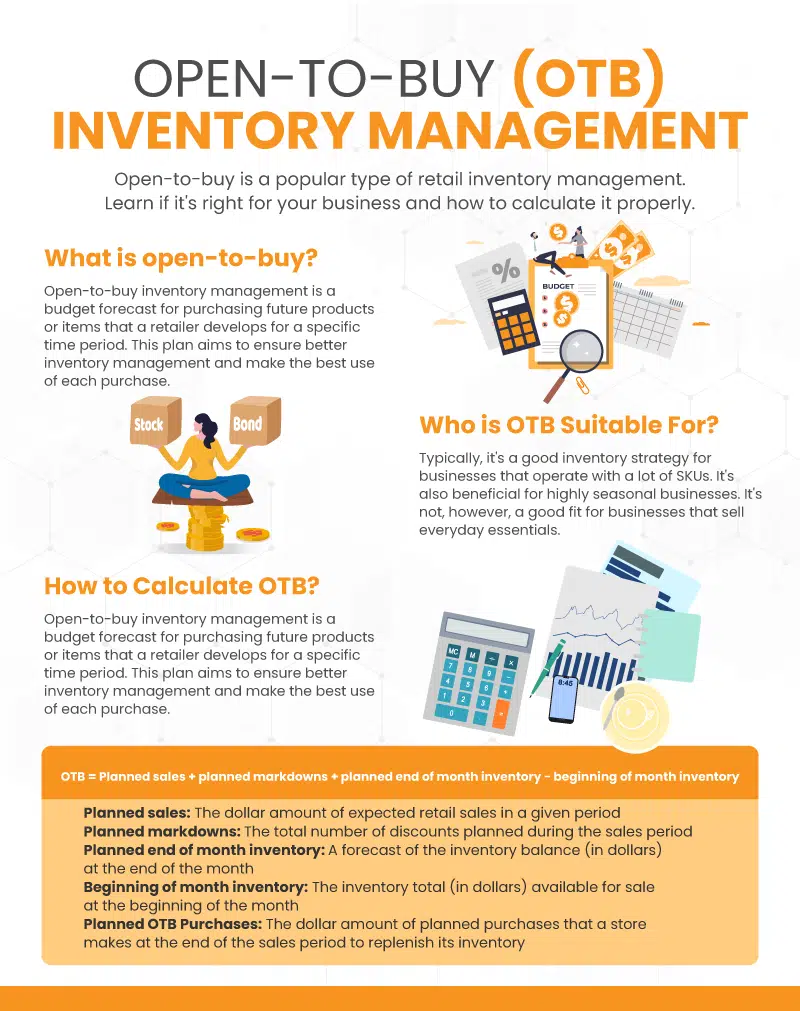
Open-To-Buy is a financial budget tool used by retail buyers to manage inventory purchases. It calculates the difference between how much inventory is needed and how much inventory is already available or on order for a specific future period (e.g., month, quarter, season). The primary purpose of OTB is to:
-
Prevent Overstocking: By limiting purchases to what is truly needed, OTB prevents capital from being tied up in excessive inventory, reducing carrying costs, storage expenses, and the risk of obsolescence.
-
Avoid Understocking (Stockouts): It ensures that sufficient inventory is available to meet anticipated customer demand, preventing lost sales and customer dissatisfaction.
-
Optimize Cash Flow: By synchronizing purchases with sales forecasts, OTB helps manage the outflow of cash for inventory, allowing for better allocation of funds to other operational areas.
-
Support Merchandise Planning: It acts as a guide for buyers, directing their purchasing decisions and ensuring alignment with the overall merchandising strategy and financial goals of the business.
In essence, OTB provides a clear, actionable budget for inventory acquisition, transforming what could be a chaotic, reactive purchasing process into a strategic, proactive one.
Why OTB is Critical for Retail Success
The retail landscape is notoriously dynamic, influenced by shifting consumer trends, economic fluctuations, and intense competition. In such an environment, the ability to agilely manage inventory is not just an advantage; it’s a prerequisite for survival and growth. OTB offers several critical benefits that underscore its importance:
-
Enhanced Profitability: By minimizing markdowns due to overstocking and maximizing full-price sales through adequate stock levels, OTB directly contributes to healthier profit margins.
-
Improved Cash Flow Management: Inventory represents a significant investment for most retailers. OTB ensures that this investment is productive, releasing capital for other strategic initiatives or working capital needs.
-
Better Vendor Relationships: Strategic purchasing, guided by OTB, allows for more predictable ordering, potentially leading to better terms and stronger relationships with suppliers.
-
Reduced Risk: It mitigates the financial risks associated with unpredictable demand or supply chain disruptions by providing a flexible framework for adjustments.
-
Data-Driven Decision Making: OTB compels retailers to engage in detailed sales forecasting and inventory analysis, fostering a culture of data-driven decision-making rather than relying on intuition alone.
Without OTB, businesses are essentially flying blind, making purchasing decisions based on guesswork, which can lead to disastrous consequences for their financial health.
The Strategic Link to Profitability
The direct correlation between effective OTB management and a retailer’s bottom line cannot be overstated. Profitability in retail is not just about selling products; it’s about selling them efficiently. Overstocked inventory incurs storage costs, insurance, potential theft, and the inevitable need for markdowns to clear excess stock, all of which erode profit margins. Conversely, understocked inventory results in lost sales opportunities and drives customers to competitors, also impacting revenue and profitability negatively.
OTB acts as the bridge between sales targets and purchasing activities. By aligning these two critical functions, it ensures that every dollar spent on inventory is purposeful and contributes to the overall financial objectives. It allows businesses to be agile, responding to sales performance by either accelerating or deferring purchases, ensuring that capital is always deployed optimally. In an era where every percentage point of margin counts, OTB stands as a fundamental pillar of sustainable retail profitability.
The Mechanics of OTB: Calculation and Components
Understanding the ‘why’ behind OTB is crucial, but implementing it effectively requires grasping the ‘how.’ The calculation of OTB involves several key financial and operational variables, meticulously assembled to yield an actionable purchasing budget.
Key Variables in OTB Calculation
The OTB calculation is a dynamic formula, integrating various components that reflect the retailer’s financial goals and operational realities. The primary variables include:
-
Planned Sales: The projected revenue from sales for the specific period. This is typically derived from historical sales data, market trends, promotional plans, and economic forecasts. Accurate sales forecasting is paramount.
-
Planned Markdowns: The anticipated reductions in selling price needed to clear inventory (e.g., promotional sales, clearance, damaged goods). These reduce the value of inventory and must be accounted for.
-
Planned End-of-Month (EOM) Inventory: The desired value of inventory that should be on hand at the end of the planning period. This is often based on an inventory-to-sales ratio, ensuring enough stock for the following period without being excessive.
-
Beginning-of-Month (BOM) Inventory: The actual or projected value of inventory on hand at the start of the planning period.
-
Committed Purchases (On Order): The value of inventory that has already been ordered from suppliers but has not yet been received. This represents inventory that is already “spent” from the OTB budget.
Each of these variables contributes to painting a comprehensive picture of the retailer’s inventory needs and financial capacity for new purchases.
Step-by-Step OTB Formula Breakdown
The standard OTB formula can be expressed in a few ways, but the core logic remains consistent. A common approach to calculate OTB for a given month is:
OTB = Planned Sales + Planned Markdowns + Planned EOM Inventory – BOM Inventory – Committed Purchases
Let’s break down each part of the formula:
-
Start with Needs: Begin with the total amount of inventory needed to cover sales, markdowns, and the desired ending inventory level.
-
Planned Sales: This is the revenue you expect to generate. To cover these sales, you need stock. -
Planned Markdowns: If you anticipate selling some items at a reduced price, this reduces the value of your inventory at full price, so you need to account for replacing that value. -
Planned EOM Inventory: This is the target inventory level you want to have at the end of the month to smoothly transition into the next period and avoid stockouts.
-
-
Subtract What You Already Have/Are Getting: From your total needs, subtract the inventory you already possess or have committed to receive.
-
BOM Inventory: The inventory you already have at the beginning of the month. -
Committed Purchases: Orders you’ve already placed that will arrive during the month.
-
The resulting figure is your Open-To-Buy – the dollar amount you can still spend on new inventory to hit your targets. This figure can be positive, indicating a budget for new purchases, or negative, signaling that you are overstocked or have too many orders already placed.
Understanding Inventory Turnover and Its Role
While not directly part of the OTB calculation, inventory turnover is a critical metric closely related to effective OTB management. Inventory turnover measures how many times a company’s inventory is sold and replaced over a period. It’s calculated as:
Inventory Turnover = Cost of Goods Sold / Average Inventory
A high turnover generally indicates efficient inventory management, as products are selling quickly and capital is not tied up for long periods. A low turnover might suggest overstocking, poor sales, or obsolete inventory.
OTB indirectly influences inventory turnover by controlling the rate at which new inventory is introduced. By setting appropriate EOM inventory targets and making data-driven purchasing decisions, retailers can optimize their turnover rates. A healthy turnover ensures that the OTB budget is used to acquire fresh, sellable merchandise, rather than simply replenishing stagnant stock. Integrating turnover goals into the planning process for OTB helps refine the target EOM inventory figures, ensuring that the OTB strategy is not just about avoiding extremes but also about achieving operational excellence.
Implementing OTB: Practical Applications and Best Practices
The theoretical understanding of OTB gains its true power through practical application. Effective implementation requires more than just crunching numbers; it demands strategic foresight, adaptability, and a commitment to continuous monitoring.
Setting Realistic Sales Forecasts

The accuracy of your OTB plan hinges critically on the realism of your sales forecasts. Underestimating sales can lead to stockouts and lost revenue, while overestimating can result in excess inventory and markdowns. Best practices for sales forecasting include:
-
Historical Data Analysis: Review past sales performance, identifying trends, seasonal peaks, and troughs. Analyze specific product categories, not just overall store performance.
-
Consider External Factors: Account for broader economic conditions, upcoming holidays, local events, competitive activities, and marketing campaigns that might influence demand.
-
Utilize Statistical Tools: Employ forecasting software or statistical methods (e.g., moving averages, exponential smoothing) to derive more robust projections.
-
Collaborate Cross-Functionally: Involve sales teams, marketing departments, and even store managers in the forecasting process to gain diverse perspectives and ground-level insights.
-
Segment and Refine: Forecast at a detailed level (e.g., by SKU, category, or store location) and then roll up these forecasts, rather than relying solely on a high-level aggregate.
Regularly review and adjust forecasts as new information becomes available, as even the best initial predictions can deviate from reality. This iterative approach ensures that your OTB remains agile and responsive.
Managing Markdowns Effectively
Markdowns are an inevitable part of retail, used to clear slow-moving inventory, stimulate sales, or manage seasonal transitions. However, poorly planned markdowns can severely impact profitability. OTB helps manage markdowns by:
-
Forecasting Markdowns: Integrate anticipated markdowns into the OTB calculation from the outset. This pre-planned approach reduces the element of surprise and ensures that the financial impact is accounted for.
-
Strategic Timing: Use OTB insights to strategically time markdowns, such as clearing end-of-season items before the new season’s inventory arrives, optimizing space and capital.
-
Category-Specific Planning: Understand that markdown rates vary by product category. High-fashion items might have higher markdown risk than basic necessities. Tailor markdown planning within OTB accordingly.
-
Minimizing Unplanned Markdowns: By maintaining optimal stock levels through OTB, retailers can reduce the need for aggressive, unplanned markdowns that often cut deeply into margins.
The goal is not to eliminate markdowns entirely, but to manage them as a predictable part of the business model, leveraging OTB to make them a controlled strategy rather than a reactive necessity.
Adapting OTB to Seasonal Fluctuations and Market Trends
Retail is rarely static; demand often surges and recedes with seasons, holidays, and emerging trends. A rigid OTB plan will quickly become obsolete. Adaptability is key:
-
Seasonal OTB Budgets: Develop distinct OTB plans for different seasons or peak periods. For instance, a clothing retailer’s OTB for winter wear will differ significantly from its summer collection OTB.
-
Trend Monitoring: Stay attuned to market trends and consumer preferences. If a new trend emerges or an old one fades, adjust OTB to either capitalize on the opportunity or mitigate the risk of being stuck with unwanted stock.
-
Flexibility in Planning Periods: While monthly OTB is common, consider shorter (weekly) or longer (quarterly/seasonal) planning periods depending on the product lifecycle and market volatility.
-
Scenario Planning: Prepare multiple OTB scenarios (e.g., best-case, worst-case, most likely) to build resilience into your purchasing strategy.
OTB is a living document; it should be reviewed and revised regularly to reflect the dynamic nature of the market and internal performance.
Integrating OTB with Other Financial Planning Tools
OTB is most powerful when it’s not an isolated calculation but an integrated component of a broader financial planning ecosystem.
-
Merchandise Financial Plan (MFP): OTB is typically derived from the MFP, which sets high-level sales, inventory, and margin targets for product categories. OTB operationalizes the MFP’s inventory components.
-
Cash Flow Projections: Link OTB directly to cash flow forecasts. Understanding when inventory payments are due helps manage liquidity and ensure funds are available.
-
Assortment Planning: OTB informs assortment decisions by dictating the budget available for different product types or brands, ensuring purchases align with strategic goals.
-
Vendor Management Systems: Integrate OTB figures with vendor ordering systems to streamline purchase order creation and tracking, improving efficiency and reducing manual errors.
By connecting OTB with other financial and operational tools, businesses create a holistic view of their financial health, ensuring consistency and strategic alignment across all departments.
Benefits and Challenges of OTB Management
While the advantages of a well-executed OTB strategy are substantial, its implementation is not without its complexities. Acknowledging both the benefits and challenges is crucial for successful adoption.
Optimizing Cash Flow and Reducing Waste
One of the most tangible benefits of OTB is its direct impact on a company’s financial liquidity and efficiency:
-
Improved Cash Flow: By limiting inventory purchases to genuine needs, OTB prevents capital from being unnecessarily tied up in excess stock. This frees up cash for other critical areas like marketing, technology investments, or debt reduction.
-
Reduced Carrying Costs: Less inventory means lower storage costs (warehouse space, utilities), reduced insurance premiums, and minimized capital tied up in non-performing assets.
-
Minimized Obsolescence and Shrinkage: Optimal stock levels decrease the risk of inventory becoming obsolete or unsellable (especially for fashion or tech goods) and lessen losses due to theft or damage, directly impacting the bottom line.
-
Higher Return on Investment (ROI) for Inventory: Each dollar spent on inventory is more likely to generate a return when purchases are strategic and demand-driven.
This optimization of financial resources is fundamental to sustainable growth and profitability in retail.
Preventing Stockouts and Overstocking
OTB acts as a powerful preventative measure against two of retail’s most debilitating problems:
-
Avoiding Stockouts: By projecting future sales and setting target EOM inventory levels, OTB ensures that sufficient stock is ordered in advance, minimizing the chances of running out of popular items. This prevents lost sales, maintains customer satisfaction, and protects brand reputation.
-
Eliminating Overstocking: The “Open-To-Buy” figure acts as a ceiling for purchases. If OTB is negative, it signals that the business already has too much inventory or too many commitments, preventing further misguided purchases that would exacerbate the problem. This avoids the need for heavy markdowns and keeps inventory fresh.
Striking this delicate balance between too much and too little is a perpetual challenge in retail, and OTB provides the framework to navigate it effectively.
Common Pitfalls and How to Avoid Them
Despite its benefits, several pitfalls can undermine the effectiveness of an OTB system:
-
Inaccurate Sales Forecasting: This is perhaps the biggest pitfall. Poor forecasts cascade through the entire OTB calculation, leading to incorrect purchasing decisions.
- Avoid: Invest in robust forecasting tools, integrate diverse data sources, and conduct regular forecast reviews and adjustments.
-
Lack of Flexibility: A rigid OTB plan that doesn’t adapt to unforeseen market shifts or supply chain issues will quickly become irrelevant.
- Avoid: Build flexibility into the plan, allow for monthly or even weekly adjustments, and have contingency plans for both higher and lower than expected sales.
-
Ignoring Committed Purchases: Forgetting to subtract outstanding purchase orders from the OTB calculation leads to overspending and overstocking.
- Avoid: Maintain meticulous records of all committed purchases and integrate them systematically into the OTB formula.
-
Over-reliance on Historical Data: While valuable, historical data alone might not predict future performance accurately, especially in fast-changing markets.
- Avoid: Supplement historical data with qualitative insights, market intelligence, competitive analysis, and an understanding of upcoming trends.
-
Siloed Planning: OTB planning done in isolation from other departments (e.g., marketing, finance, store operations) can lead to disconnects.
- Avoid: Foster cross-functional collaboration and communication to ensure all departments are aligned with the OTB plan and its underlying assumptions.
Addressing these challenges proactively is essential for realizing the full potential of OTB.
Leveraging Technology for OTB Efficiency
Manual OTB calculations, especially for businesses with diverse product lines or multiple locations, can be time-consuming and prone to error. Technology offers powerful solutions:
-
Merchandise Planning Software: Specialized retail planning software integrates forecasting, OTB, and other financial planning functions, automating calculations and providing real-time insights.
-
Enterprise Resource Planning (ERP) Systems: Modern ERPs often include modules for inventory management, purchasing, and sales forecasting that can feed directly into OTB calculations.
-
Business Intelligence (BI) Tools: BI platforms can visualize OTB data, highlight trends, and provide dashboards for quick decision-making, turning raw numbers into actionable insights.
-
Data Analytics and AI: Advanced analytics and AI can enhance sales forecasting accuracy by identifying complex patterns and predicting future demand with greater precision, directly improving the reliability of OTB.
By embracing technological solutions, retailers can transform OTB from a tedious task into a dynamic, strategic advantage, enabling faster, more accurate decisions that drive profitability.
OTB Beyond Retail: Broader Business Finance Implications
While Open-To-Buy is most prominently associated with traditional retail, its underlying principles of controlled procurement and inventory optimization have broader implications across various business finance contexts, especially in the evolving digital landscape.
Applying OTB Principles in E-commerce
E-commerce businesses, despite not having physical store shelves, face similar, and sometimes amplified, inventory challenges. The core tenets of OTB are highly relevant:
-
Virtual Inventory Management: Even if products are drop-shipped, understanding the ‘open-to-buy’ capacity for virtual inventory (i.e., how many units a supplier can reliably provide to meet projected demand) is crucial to avoid overselling.
-
Warehouse and Fulfillment Centers: For e-commerce businesses that hold their own stock, OTB is essential for managing inventory in fulfillment centers, preventing costly overstocking that ties up capital and incurs storage fees, and avoiding stockouts that lead to abandoned carts and customer frustration.
-
Rapid Product Cycles: E-commerce often deals with faster product cycles and trends. OTB helps these businesses remain agile, quickly allocating budget to trending items and scaling back on underperforming ones.
-
Promotional Planning: Online promotions and flash sales require precise inventory planning. OTB ensures that adequate stock is available to support these events without excessive leftover inventory.
-
Cross-Border Commerce: Managing inventory for international sales, with longer lead times and customs considerations, makes OTB even more critical for optimizing working capital and delivery timelines.
The digital storefront may look different, but the financial principles of managing product flow and capital efficiency remain strikingly similar, making OTB an invaluable tool for online retailers.

The Future of Inventory Planning in a Dynamic Market
The future of inventory planning, and by extension OTB, is being shaped by several transformative forces:
-
Supply Chain Volatility: Recent global events have highlighted the fragility of supply chains. Future OTB models will need to incorporate greater flexibility, risk assessment, and scenario planning to account for potential disruptions and extended lead times.
-
Personalization and Customization: As consumer demand shifts towards personalized products, OTB will need to evolve to manage a greater variety of SKUs, potentially with lower volumes per SKU, necessitating more sophisticated forecasting and agile purchasing.
-
Sustainability and Circular Economy: Growing emphasis on sustainability will influence purchasing decisions. OTB may incorporate metrics for ethical sourcing, material efficiency, and the lifecycle of products, moving beyond purely financial considerations.
-
Artificial Intelligence and Machine Learning: AI will continue to revolutionize forecasting accuracy, demand sensing, and automated reordering. Future OTB systems will likely be highly predictive and adaptive, using machine learning to continuously refine purchasing recommendations.
-
Integrated Retail (Omnichannel): As the lines between online and offline retail blur, OTB will need to manage inventory seamlessly across all channels, optimizing stock allocation for brick-and-mortar stores, e-commerce, and click-and-collect services simultaneously.
OTB, in its fundamental essence, will continue to be about bridging the gap between demand and supply with financial prudence. However, the tools, data, and complexities involved will only grow, underscoring the enduring importance of this concept for all businesses engaged in selling physical goods in an increasingly interconnected and unpredictable world. Mastering OTB is not just about understanding a formula; it’s about embracing a strategic mindset that prioritizes financial health, operational efficiency, and customer satisfaction in every inventory decision.
aViewFromTheCave is a participant in the Amazon Services LLC Associates Program, an affiliate advertising program designed to provide a means for sites to earn advertising fees by advertising and linking to Amazon.com. Amazon, the Amazon logo, AmazonSupply, and the AmazonSupply logo are trademarks of Amazon.com, Inc. or its affiliates. As an Amazon Associate we earn affiliate commissions from qualifying purchases.