
In the vast and ever-evolving landscape of digital entertainment, few applications have managed to carve out a niche as distinct and enduring as Osu!. More than just a game, Osu! represents a fascinating intersection of software design, community-driven content, and precision-based human-computer interaction. At its core, Osu! is a free-to-play rhythm game primarily developed by Dean “peppy” Herbert, first released in 2007. It tasks players with interacting with on-screen elements to the beat of a song, requiring acute timing, accuracy, and quick reflexes. However, to truly understand “what is Osu! game,” one must delve deeper into its technological architecture, its reliance on user-generated content, and its profound impact as a dynamic software ecosystem. It stands as a testament to the power of a simple, elegant core mechanic amplified by an active community and robust digital infrastructure.

Osu!: A Digital Symphony of Rhythm and Precision
Osu! is a prime example of software designed for intricate human-computer synchronization. It transforms audio tracks into an interactive visual experience, where the player’s primary goal is to maintain rhythmic harmony through precise digital inputs. This core concept, while seemingly straightforward, underpins a complex system of real-time processing, visual feedback, and user performance analysis.
The Core Gameplay Loop: Tapping, Sliding, Spinning
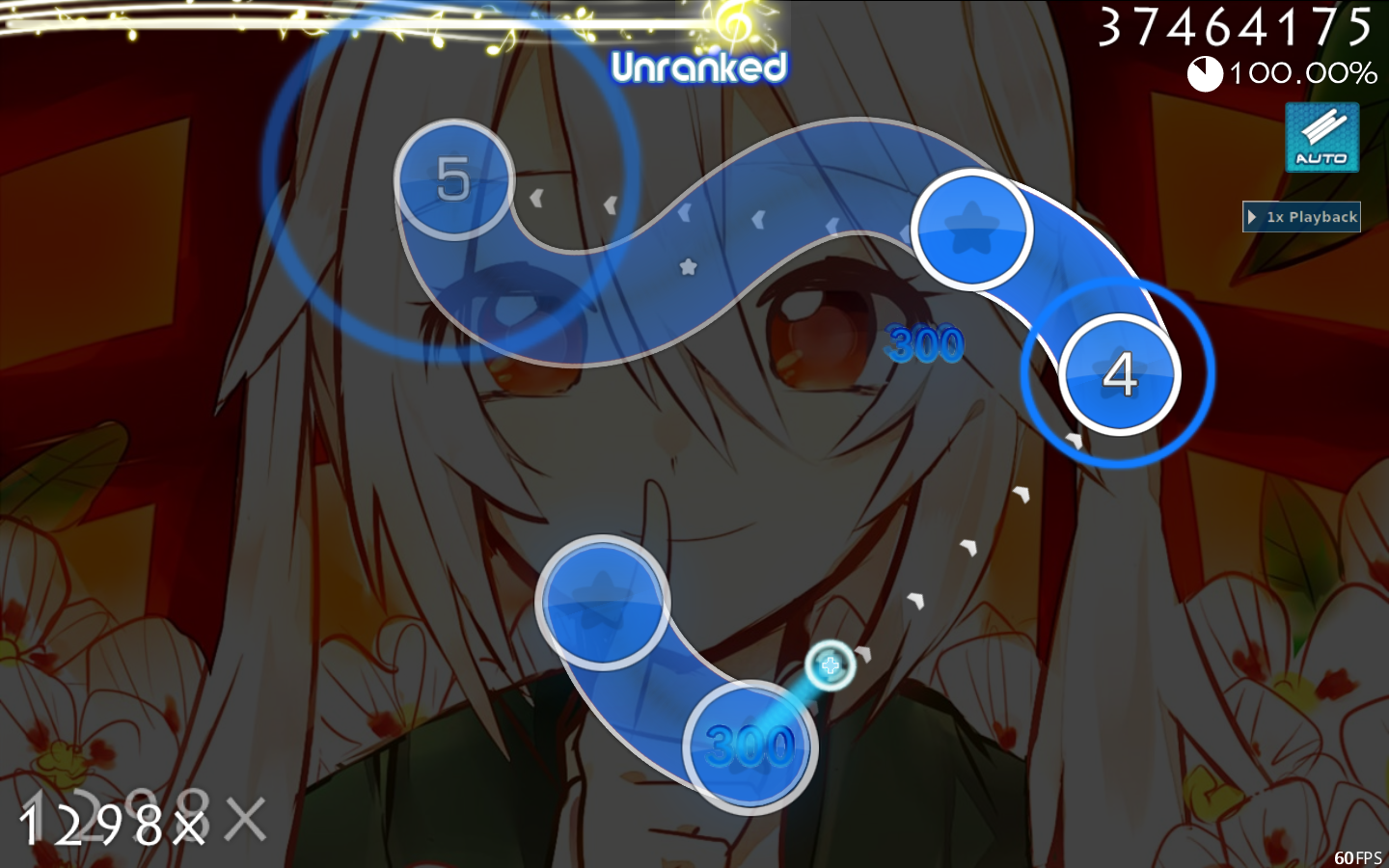
The fundamental interaction model of Osu! revolves around three primary on-screen elements, all meticulously synchronized with the underlying audio track:
-
Hit Circles: These appear on the screen and must be clicked or tapped exactly as an approach circle converges on them, signifying the beat. The software calculates timing accuracy to award points.
-
Slider Objects: Players must click the start of a slider and hold their input device, tracing a path along a designated line until its end, all while maintaining rhythm. This involves continuous input tracking and path validation by the software.
-
Spinners: These require the player to rapidly rotate their input device (e.g., mouse, pen tablet) within a designated circle until the spinner gauge fills, often signaling a frantic, high-energy segment of a song. The software measures rotation speed and duration.
Each of these elements demands a specific type of input and reaction, all processed in milliseconds. The game’s engine continually monitors the player’s actions, comparing them against the programmed timing data embedded within each beatmap. The visual and auditory feedback (hit sounds, scores, combo counters) are immediate, reinforcing the real-time, responsive nature of the software interaction. The elegance lies in how this digital interpretation of music translates into a tangible, skill-based challenge for the human player.
A Platform of User-Generated Content: Beatmaps and Skins
A significant technological differentiator for Osu! is its profound reliance on user-generated content (UGC), particularly beatmaps. Unlike many commercial games with finite, pre-designed levels, Osu! functions more as a platform. The core software provides the engine and tools, but the vast majority of playable content – the beatmaps themselves – are created, uploaded, and curated by its global community.
Beatmaps are essentially digital blueprints that dictate when and where hit circles, sliders, and spinners appear on the screen in relation to a specific song. This user-driven content model offers several key advantages from a software perspective:
-
Infinite Replayability: The community continuously produces new beatmaps for an endless array of songs, drastically extending the software’s lifespan and replay value beyond what a development team could ever achieve.
-
Diverse Content: Beatmaps span an immense range of musical genres and difficulty levels, catering to a broad spectrum of player preferences and skill sets. This organic diversification of content makes the software appealing to a wider audience.
-
Community Engagement: The act of creating and sharing beatmaps fosters a vibrant, active community that directly contributes to the software’s growth and relevance. It transforms passive users into active contributors, blurring the lines between developer and player.
Beyond beatmaps, players can also customize the game’s aesthetic through “skins.” These are custom graphical assets that alter the appearance of hit circles, cursors, fonts, and other UI elements. This level of user-driven customization further enhances the personalized nature of the software, allowing players to tailor their experience visually, beyond just the gameplay content. This extensibility is a core design principle that has allowed Osu! to remain fresh and engaging for over a decade.
The Technological Underpinnings of Osu!
Understanding Osu! from a technological standpoint involves examining its architecture, its design for performance, and the tools it provides for both consumption and creation of content. The game’s longevity and global appeal are deeply rooted in its robust and flexible software design.
Input Methods and Latency: Optimizing the Player Experience
For a rhythm game where timing is measured in milliseconds, input latency is paramount. Osu! is designed to be highly responsive, processing player inputs from a variety of hardware devices with minimal delay.
-
Diverse Input Devices: Players commonly use a combination of mouse and keyboard, but the game is also highly popular with digital graphics tablets (like Wacom or Huion) paired with a keyboard, or even touchscreens for its mobile iterations. The software is engineered to interpret inputs from these diverse devices consistently and accurately.
-
Minimizing Latency: The game’s rendering engine and input processing pipeline are optimized to reduce delay between a player’s action and the game’s reaction. This involves efficient code, direct hardware access where possible, and carefully managed buffering. Any perceptible lag would severely hinder gameplay and player performance, making low-latency a critical performance metric for the application. The internal clock synchronization with the audio stream is also a complex engineering feat to ensure visual cues align perfectly with sound.
The Beatmap Editor: Empowering Community Creation
One of Osu!’s most powerful technological features is its integrated Beatmap Editor. This is not merely an auxiliary tool but a sophisticated piece of software that democratizes content creation, allowing users without programming knowledge to design complex interactive levels.
The editor provides a comprehensive suite of tools:
-
Audio Synchronization: Users can precisely align musical beats and timestamps to the game grid, ensuring perfect rhythm mapping. This involves advanced audio waveform analysis and time-stamping functionalities within the editor.
-
Object Placement: A drag-and-drop interface allows creators to place hit circles, sliders, and spinners, defining their exact position, timing, and properties (e.g., slider velocity, spinner duration).
-
Difficulty Settings: The editor allows for granular control over various gameplay parameters like circle size, approach rate, overall difficulty, and health drain, enabling mappers to tailor the challenge for different skill levels.
-
Timing Section Control: Advanced features enable mappers to manage intricate timing changes, such as different BPMs (beats per minute) or time signatures within a single song.
This powerful editor transforms the game from a consumer product into a platform for creative expression. It’s a testament to good software design when complex tasks can be simplified for an end-user, fostering a thriving ecosystem of content developers.
Performance and Accessibility Across Hardware
Despite its visually engaging nature and precision requirements, Osu! is remarkably lightweight and accessible. This is a deliberate design choice that has contributed significantly to its widespread adoption, especially in regions or households with less powerful computing hardware.
-
Low System Requirements: The game can run smoothly on older machines or integrated graphics cards, making it accessible to a broader global audience. This optimization involves efficient rendering techniques, minimal reliance on computationally intensive graphical effects, and careful memory management.
-
Scalable Graphics: While visually simple at its core, Osu! offers various graphical settings, allowing players to fine-tune performance on their specific hardware. This scalability ensures that both low-end machines can run it stably and high-end systems can enjoy crisp visuals and ultra-high frame rates, crucial for competitive play.
-
Cross-Platform (Unofficial/Official): While the primary client is Windows-based, community efforts have led to ports or similar games on other platforms. The ongoing development of Osu!lazer aims for true cross-platform compatibility (Windows, macOS, Linux, Android, iOS), showcasing the evolution of its underlying technology stack to embrace modern software development practices. This focus on performance and accessibility underscores its design as a truly inclusive digital experience.
Beyond Gameplay: Osu!’s Software Ecosystem and Community
Osu! is more than just an offline application; it is a networked service with deeply integrated online features that foster competition, collaboration, and continuous evolution. Its design as a connected platform elevates it from a simple game to a dynamic online ecosystem.
Online Integration: Ranking, Leaderboards, and Multiplayer
The online components are fundamental to Osu!’s appeal, creating a competitive and social environment.
-
Performance Points (PP) System: The game employs a sophisticated algorithm known as “Performance Points” to quantify player skill. This system dynamically evaluates a player’s scores on various beatmaps, factoring in accuracy, combo, difficulty, and specific mods used. The PP system is a complex piece of software logic designed to provide a fair and accurate measure of skill, driving players to improve and compete on a global scale.
-
Global Leaderboards: Every beatmap features online leaderboards, allowing players to compare their scores against friends and the global community. This data management system processes millions of score submissions, sorts them, and displays them efficiently.
-
Multiplayer Modes: Osu! includes real-time multiplayer lobbies where players can compete head-to-head or cooperatively on chosen beatmaps. This involves robust networking code to synchronize gameplay across multiple clients, manage latency, and ensure fair play, a significant challenge for any real-time online application. The persistent online profile and statistics tracking provide a continuous feedback loop for player progress.
Modding and Customization: Personalizing the Software
While user-created beatmaps and skins are forms of content modification, Osu! also offers “mods” that alter gameplay mechanics, adding another layer of software customization. These are toggled by the player and include:
-
Difficulty Modifiers: Mods like “Hard Rock” increase difficulty by modifying map properties (e.g., smaller circles, faster approach rate), while “Easy” simplifies them.
-
Gameplay Modifiers: Mods like “Hidden” make hit objects disappear before they reach the hit window, demanding memorization, while “Flashlight” severely restricts the visible play area.
-
Performance Mods: “Double Time” and “Half Time” alter the speed of the song and beatmap elements, providing both increased challenge and practice opportunities.
These mods are programmatic alterations to the game’s core logic, dynamically changing how the software behaves in response to player input and beatmap data. This extensive system of in-game modifications showcases the flexibility of Osu!’s software architecture, allowing for a vast permutation of gameplay experiences within the same core engine. It empowers players to personalize their challenges and explore new dimensions of skill development.
The Role of Community in Software Evolution
Osu!’s success is inextricably linked to its community, which acts not just as content creators but also as active participants in the software’s ongoing evolution.
-
Feedback and Bug Reporting: The community forums and official Discord channels are vital sources of feedback for the development team. Players report bugs, suggest features, and provide insights that help refine the software.
-
Beatmap Nominators (BNs): A dedicated group of community members, the Beatmap Nominators, are entrusted with the crucial task of quality assurance for new beatmaps. They review submissions to ensure they meet quality standards and mapping guidelines, effectively acting as an extension of the development team in content curation.
-
Open-Source Contributions (Osu!lazer): The current development iteration, Osu!lazer, is open-source, allowing community developers to directly contribute code. This collaborative model harnesses the collective intelligence and skills of its user base, accelerating development, fixing bugs, and implementing new features. This transition to an open-source model represents a significant evolution in its software development philosophy, fostering a truly collaborative and transparent development cycle.
The Enduring Appeal and Future of Osu!
Osu!’s journey from a niche rhythm game to a global phenomenon highlights the power of well-executed software design, community empowerment, and a continually evolving digital platform. Its enduring appeal is multifaceted, touching upon both skill development and adaptive innovation.
Skill Development and Cognitive Benefits
From a technological interaction perspective, Osu! serves as an exceptional tool for cognitive and motor skill development. The demands of high-level play involve:
-
Hand-Eye Coordination: Rapidly tracking objects and executing precise clicks.
-
Reaction Time: Responding to visual cues in fractions of a second.
-
Rhythm Perception: Internalizing and synchronizing with complex musical patterns.
-
Pattern Recognition: Identifying and anticipating common beatmap structures.
-
Concentration and Focus: Maintaining intense focus over extended periods.
The game’s progressive difficulty, facilitated by the enormous library of user-created beatmaps, allows players to continuously challenge themselves and observe tangible improvements in their cognitive and motor skills. This aspect elevates Osu! beyond mere entertainment, positioning it as a dynamic training tool for critical digital competencies.

Challenges and Opportunities in a Dynamic Digital Landscape
As a long-standing piece of software, Osu! faces both challenges and exciting opportunities.
-
Modernization of the Codebase: The original Osu! client, while robust, uses older technologies. The development of Osu!lazer addresses this by rewriting the game from scratch using modern frameworks (specifically .NET and OpenTK), aiming for improved performance, cross-platform compatibility, and easier maintainability. This is a massive undertaking, common for legacy software products needing a refresh.
-
Sustaining Community Engagement: Maintaining a vibrant and active community over many years requires continuous effort, including consistent communication, fair moderation, and the introduction of new features that keep players engaged.
-
Competitive Digital Entertainment: The rhythm game genre and competitive gaming landscape are constantly evolving. Osu! must continue to innovate, adapt, and refine its features to remain relevant amidst new titles and technological advancements. This includes exploring VR/AR possibilities, enhanced accessibility features, and deeper integration with streaming platforms.
-
Monetization and Sustainability: As a free-to-play game, Osu!’s sustainability relies on voluntary support (Osu!supporter tags) and efficient operational management. Balancing user experience with financial viability is a constant challenge for open-source and community-driven projects.
In conclusion, Osu! is far more than just a “game.” It is a dynamic software platform, a robust community ecosystem, and a testament to the power of user-generated content. Its technical design prioritizes precision, responsiveness, and accessibility, enabling a diverse range of players to engage in a unique form of digital rhythm and skill mastery. As it continues its evolution with Osu!lazer, it stands poised to navigate the challenges of modern software development while continuing to redefine what a community-driven digital experience can achieve.
aViewFromTheCave is a participant in the Amazon Services LLC Associates Program, an affiliate advertising program designed to provide a means for sites to earn advertising fees by advertising and linking to Amazon.com. Amazon, the Amazon logo, AmazonSupply, and the AmazonSupply logo are trademarks of Amazon.com, Inc. or its affiliates. As an Amazon Associate we earn affiliate commissions from qualifying purchases.