
The unassuming dime, a staple of American currency, often passes through hands with little more than a fleeting glance. Yet, this small coin, valued at merely ten cents, carries a rich tapestry of history, symbolism, and economic significance on its reverse side. Far from being a mere metallic disk, the back of a dime offers a compact lesson in national identity, financial resilience, and the enduring power of symbolic representation within the realm of monetary instruments.
The Emblematic Design of a Financial Stalwart
To truly understand what adorns the reverse of the modern U.S. dime, one must appreciate its deliberate and symbolic design. Since 1946, the dime has featured the profile of Franklin D. Roosevelt on its obverse (front) and a carefully chosen set of symbols on its reverse (back), collectively communicating core American values.
The Roosevelt Dime: A Legacy in Metal
The current design, known as the Roosevelt Dime, was introduced shortly after President Roosevelt’s death in 1945. It replaced the Mercury Dime, a design that had graced the ten-cent piece since 1916. The decision to honor Roosevelt was a testament to his immense popularity and his pivotal role during the Great Depression and World War II, periods that profoundly shaped the economic and social fabric of the nation. While his portrait dominates the front, the reverse side completes the narrative, reflecting the ideals and aspirations he championed.
Decoding the Reverse Side’s Symbolic Emblems
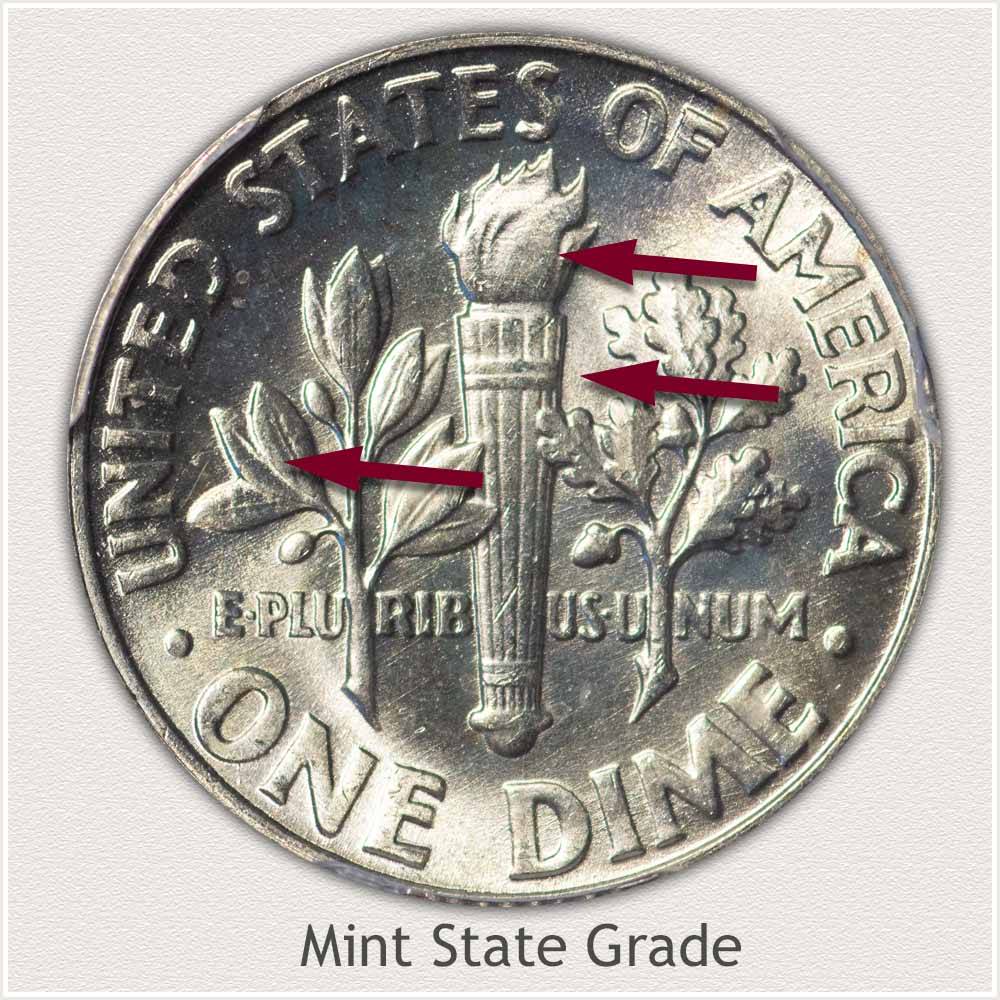
The reverse of the Roosevelt Dime presents a clear, uncluttered design featuring three distinct elements flanked by text. Each component was carefully selected to convey powerful messages about the nation’s character and its place in the world following a tumultuous era.
The Torch: Liberty and Enlightenment
Dominating the center of the design is a torch, its flame reaching upward. In classical and modern iconography, the torch is a potent symbol of liberty, enlightenment, and knowledge. Its inclusion on the dime underscores the foundational American value of freedom and the pursuit of truth. Economically, liberty often translates to free markets and individual enterprise, cornerstones of the American financial system. The torch thus subtly reinforces the principles that allow individuals to pursue economic prosperity within a free society.
The Oak Branch: Strength and Independence
To the right of the torch is an oak branch. The oak tree, known for its longevity, resilience, and strength, has long been a symbol of robustness and unwavering character. On the dime, it represents the strength and independence of the United States as a nation. This was particularly significant in the post-World War II context, where America emerged as a global economic and political power. The oak branch signifies the nation’s capacity to withstand economic shocks and maintain its financial sovereignty.
The Olive Branch: Peace
To the left of the torch is an olive branch. Universally recognized as a symbol of peace, the olive branch on the dime conveys America’s aspiration for international harmony and an end to global conflict. Following the devastation of two World Wars, the pursuit of peace was paramount. From an economic perspective, peace is a prerequisite for stable global trade, international investment, and sustained economic growth. The olive branch on the dime thus reflects a desire for an environment conducive to financial stability and prosperity, both domestically and internationally.
“E Pluribus Unum”: Out of Many, One
Arching above these symbols is the national motto, “E Pluribus Unum,” Latin for “Out of Many, One.” This phrase encapsulates the idea of the United States as a unified nation forged from diverse states and peoples. In a financial context, it speaks to the unified economic system, a single currency, and a national market that binds together disparate regions and industries. It signifies the collective strength derived from a common economic purpose and shared financial destiny.
“United States of America” and “One Dime”
Encircling the entire design are the inscriptions “UNITED STATES OF AMERICA” at the top and “ONE DIME” at the bottom. These provide the essential identification of the coin’s origin and its monetary value. This seemingly straightforward detail is crucial for financial transactions, establishing the legal tender status and ensuring clarity in commerce. It grounds the symbolic artistry in practical financial utility.
The Historical Context and Economic Resonance
The selection of these specific emblems for the dime’s reverse was not arbitrary; it was deeply rooted in the historical moment and the prevailing national sentiment. Understanding this context enriches our appreciation of the coin’s significance beyond its face value.
From Mercury to Roosevelt: A Design Evolution Reflecting National Change
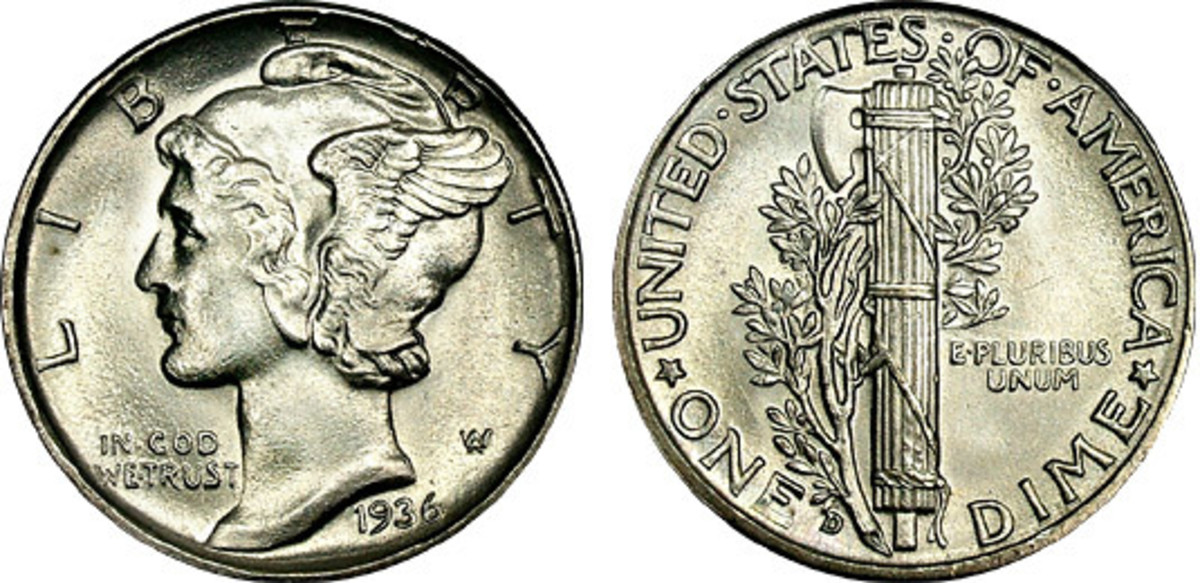
Before the Roosevelt Dime, the Winged Liberty Head dime, often called the Mercury Dime (due to its resemblance to the Roman god Mercury), featured a fasces (a bundle of rods with an axe) and an olive branch on its reverse. While the olive branch remained, the fasces – a symbol of authority and unity, but also tragically associated with fascism in the mid-20th century – was replaced. The transition to the torch, oak, and olive branches on the Roosevelt dime marked a conscious shift towards symbols that unequivocally celebrated democratic ideals and aspirations for global peace after the trauma of World War II. This evolution in coinage design mirrors shifts in national priorities and economic strategies.

Why These Symbols Were Chosen Post-WWII
The post-WWII era was a period of immense rebuilding and reorientation for the United States and the world. The U.S. emerged as a dominant global economic power, responsible for much of the world’s industrial output and holding significant gold reserves. The symbols on the dime reinforced America’s commitment to democratic values, a strong domestic economy, and its role as a beacon of peace and freedom. The financial stability and international leadership America displayed were symbolized through its currency, projecting confidence both domestically and abroad.
The Significance of Coinage in National Identity and Economic Messaging
Throughout history, coinage has served as a powerful medium for national messaging. From the faces of emperors to allegories of virtue, coins communicate a nation’s values, aspirations, and power. For a democracy like the United States, currency designs are often chosen through public discourse and legislative action, making them a collective statement. The dime, as a frequently circulated coin, constantly reiterates these messages, subtly reinforcing a shared economic and cultural identity among its citizens. It’s a daily touchpoint with the nation’s economic philosophy and historical journey.
Beyond the Imagery: The Dime’s Role in Modern Finance
While its symbolism is profound, the dime also plays a concrete role in the broader financial landscape. Its physical existence, production, and place in transactions reveal much about the enduring nature of physical currency.
The Enduring Value of Small Denominations
In an increasingly digital economy, the persistence of physical coins like the dime might seem anachronistic. However, small denominations remain crucial for everyday transactions, especially for cash-based economies and for making exact change. They facilitate countless small purchases and represent the granular units that underpin larger financial sums. The dime ensures that even the most minor economic exchanges can occur efficiently, maintaining liquidity in the lowest tiers of commerce.
Production and Economic Costs of Minting
The production of dimes, like all U.S. coinage, is undertaken by the U.S. Mint. The cost of minting a dime, including materials (copper-nickel clad copper), labor, and overhead, fluctuates. Historically, there have been periods where the cost of producing a penny or a nickel exceeded its face value, leading to discussions about metal composition and efficiency. For dimes, the composition has been stable, ensuring that its intrinsic material value remains well below its face value, thus avoiding hoarding and maintaining the integrity of the currency system. This cost-benefit analysis is a continuous financial exercise for the government.
The Role of Physical Currency in a Digital Age
Even with the rise of credit cards, mobile payments, and cryptocurrencies, physical currency retains its importance. It offers privacy in transactions, serves as a backup during technological outages, and is accessible to all, including those without bank accounts. Dimes, quarters, and other coins are vital for vending machines, public transport, and various small-scale retail operations. They represent a fundamental layer of the financial system, providing tangible value and a readily accepted medium of exchange that transcends digital divides.
Collectibility and Numismatic Value
For some, the dime’s financial value extends beyond its ten cents. Certain dimes, particularly those with rare mint marks, errors, or from specific historical years, can command significant prices in the numismatic market. This market represents a unique intersection of history, art, and finance, where tangible assets (coins) are invested in for their potential appreciation in value. Factors like rarity, condition, and historical significance transform a common coin into a valuable collectible asset, demonstrating another dimension of its financial impact. Investors and collectors scrutinize details like the mint mark (a small letter, e.g., “D” for Denver, “S” for San Francisco, or no mark for Philadelphia) to identify potential treasures.
Financial Literacy and the Details of Everyday Currency
The humble dime serves as an excellent starting point for understanding basic principles of financial literacy and economics. Its design and function are tangible lessons in how money works.
Understanding Your Money: More Than Just a Number
Teaching individuals, especially children, about currency often begins with recognizing coins. The distinct designs of dimes, quarters, and pennies help differentiate their value. Understanding what’s on the back of a dime isn’t just trivia; it’s a step towards deeper engagement with the financial tools we use daily. It prompts questions about where money comes from, why it looks the way it does, and what its true value represents.
The Educational Value of Coin Designs
Coin designs are not merely aesthetic; they are educational. They encapsulate history, national values, and economic principles in miniature. By examining the symbols on the dime, one can initiate discussions about American history, democratic ideals, and the global economic role the U.S. plays. This makes currency a silent teacher, imparting cultural and financial knowledge with every transaction.
From Pocket Change to Macroeconomics
The journey from a single dime in one’s pocket to the broader field of macroeconomics is shorter than one might think. The dime represents a unit of value within a larger monetary system managed by central banks and governments. Its design, production, and circulation are all elements of national financial policy. Understanding the dime, therefore, provides a microcosm for grasping concepts like legal tender, inflation (how the purchasing power of that dime changes over time), and the role of government in regulating currency. It reminds us that every piece of money, no matter how small, is part of a grander financial ecosystem.
In conclusion, the back of a dime is much more than a simple identifier of its denomination. It is a carefully crafted tableau of national symbols – a torch for liberty, an oak for strength, an olive branch for peace, and the motto “E Pluribus Unum” for unity. These elements are not just historical artifacts; they are enduring messages about America’s core values, its economic aspirations, and its place in the world. As we continue to navigate an increasingly complex financial landscape, the humble dime serves as a constant, tangible reminder of the foundations upon which our monetary system and national identity are built.
aViewFromTheCave is a participant in the Amazon Services LLC Associates Program, an affiliate advertising program designed to provide a means for sites to earn advertising fees by advertising and linking to Amazon.com. Amazon, the Amazon logo, AmazonSupply, and the AmazonSupply logo are trademarks of Amazon.com, Inc. or its affiliates. As an Amazon Associate we earn affiliate commissions from qualifying purchases.