
In the era of the “software-defined vehicle,” the dashboard has evolved from a collection of analog needles into a sophisticated command center driven by high-speed processors and complex algorithms. Among the various data points presented to a driver, the “Oil Life Percentage” is perhaps one of the most misunderstood. Contrary to popular belief, this figure is rarely a measurement of the physical volume of oil in the engine. Instead, it represents a triumph of automotive software engineering—a predictive model based on real-time data ingestion and algorithmic analysis.

As vehicle technology moves closer to total digitization, understanding the “how” behind oil life monitoring reveals a fascinating intersection of thermodynamics, sensor physics, and machine learning. This digital metric is the primary interface between the mechanical reality of an internal combustion engine and the digital logic of the Engine Control Unit (ECU).
The Evolution of Diagnostic Software: From Odometers to Algorithms
Historically, vehicle maintenance was governed by a simple, static variable: mileage. For decades, the industry standard was the 3,000-mile interval. This was a “dumb” system that relied entirely on mechanical distance tracking, regardless of whether those miles were accumulated during a gentle highway cruise or high-stress stop-and-go city driving in sub-zero temperatures.
The transition to oil life percentage indicators represents a shift toward dynamic, intelligent monitoring. This evolution began with the introduction of the first Oil Life Systems (OLS) in the late 1980s and early 1990s, but it has reached its zenith in the modern era of the connected car. Today’s oil life monitoring systems are sophisticated software packages integrated into the vehicle’s firmware. They replace the arbitrary “mileage sticker” with a granular, data-driven approach that accounts for the specific environmental and operational stresses placed on the engine.
Predictive Modeling vs. Direct Sensing
In the tech landscape of automotive engineering, there are two primary schools of thought regarding oil life tracking: mathematical modeling and physical sensing.
- Mathematical Modeling (Software-Centric): The majority of manufacturers, including giants like General Motors and Honda, utilize complex software algorithms. These systems do not “look” at the oil. Instead, they monitor a suite of engine variables—revolutions per minute (RPM), operating temperature, load, and ambient climate—to calculate the rate of additive depletion and viscosity breakdown.
- Direct Dielectric Sensing (Hardware-Centric): High-end European manufacturers often supplement software models with physical sensors that measure the dielectric constant of the oil. As oil degrades and accumulates metallic shavings or soot, its electrical properties change. The sensor detects these changes and feeds the data back to the ECU to adjust the percentage accordingly.
Deciphering the Algorithm: How the Computer Calculates Longevity
The core of the oil life percentage is the algorithm residing within the ECU. This code is a proprietary secret for most manufacturers, but its logical foundation is built on the physics of lubricant degradation. The software treats the engine oil as a finite resource of “protection units” that are consumed at different rates depending on telemetry data.
Variable Weighting and Data Ingestion
The algorithm does not treat every mile equally. Instead, it assigns a “weight” to various operational factors. For instance, a mile driven at a steady 2,000 RPM at an optimal operating temperature might consume 0.01% of the oil’s life. Conversely, a mile driven during a “cold start” in winter conditions—where the oil is thick and fuel dilution is high—might consume 0.05% of the oil’s life.
Key variables tracked by the software include:
- Thermal Cycles: Every time an engine reaches operating temperature and cools down, the oil undergoes thermal stress. Frequent short trips, where the engine never reaches its optimal heat range, are identified by the software as “severe service,” causing the percentage to drop faster.
- Engine Revolutions: The ECU tracks the cumulative number of crankshaft rotations. Higher RPMs equate to higher friction and shear stress on the oil molecules.
- Idle Time: Modern software recognizes that an engine running at a standstill is still degrading its lubricant. Excessive idling is a “hidden” wear factor that traditional odometers could never capture.
The Role of Edge Computing in Vehicles
The calculation of oil life percentage is a prime example of edge computing. Rather than sending data to a central cloud for processing, the vehicle’s onboard processors handle these high-frequency calculations locally. This ensures that the driver has access to real-time diagnostics even in areas without cellular connectivity. The software must be robust enough to handle years of continuous data logging without corruption, highlighting the importance of digital security and data integrity within the automotive framework.
Sensor Technology and Physical Data Inputs
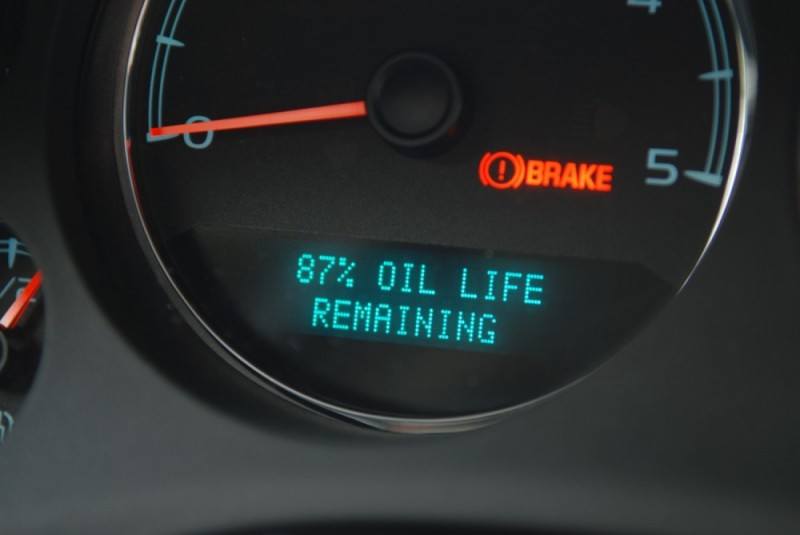
While the algorithm provides the predictive framework, it relies on a web of hardware sensors to provide the raw inputs. In a modern vehicle, the oil life percentage is the final output of a massive sensor array that monitors the health of the entire powertrain.
Temperature and Pressure Transducers
The most critical inputs for the oil life software are temperature and pressure. High-precision transducers monitor the oil temperature to ensure it stays within the “sweet spot” where moisture and unburnt fuel can evaporate. If the sensors detect that the engine is consistently running too cool or too hot, the software adjusts its degradation model. This is a level of digital precision that protects the hardware from premature failure due to chemical breakdown.
Conductivity and Optical Sensors
In more advanced tech suites, cars utilize sensors that measure the physical properties of the lubricant.
- Conductivity Sensors: These measure the ability of the oil to conduct electricity. As the oil oxidizes and accumulates acidic byproducts, its conductivity increases. The sensor translates this physical change into a digital signal, providing a “reality check” for the software algorithm.
- Optical Sensors: Some experimental systems use light-based sensors to check the clarity of the oil. By passing a beam of light through a small channel of oil, the sensor can detect the presence of particulates or soot, which are signs of contamination.
Data Synthesis and The “Digital Twin”
Many modern vehicles use these inputs to maintain what is essentially a “digital twin” of the oil’s chemical state. The software compares the real-time sensor data against a baseline model of fresh synthetic oil. When the delta between the baseline and the real-time data reaches a specific threshold, the “Service Required” alert is triggered.
The Digital Interface: UX and the Driver Experience
The way oil life percentage is presented to the user is a study in User Experience (UX) design. For the average driver, a raw data stream of dielectric constants or thermal cycles would be meaningless. The tech challenge for automotive designers is to distill millions of data points into a single, intuitive percentage.
Visualization of Data
Modern digital instrument clusters use high-resolution displays to communicate vehicle health. The oil life percentage is often buried within a “Maintenance” or “Health” sub-menu, requiring intuitive menu architecture. Designers use color-coded alerts—transitioning from green to amber and eventually red—to create a sense of urgency. This is a classic example of “Nudge Theory” in software design, where the interface encourages specific user behavior (in this case, preventative maintenance) through visual cues.
Cybersecurity and Maintenance Records
In the connected car ecosystem, the oil life percentage is more than just a dashboard display; it is a data point logged in the vehicle’s digital history. This data is often synced with a manufacturer’s mobile app via Bluetooth or 4G/5G telematics.
This connectivity introduces the need for robust digital security. Maintenance records are becoming a critical part of a vehicle’s digital identity. If the ECU’s data is tampered with or “rolled back” digitally, it could lead to hardware failure or fraud. Consequently, manufacturers are implementing encrypted logs to ensure that when the software says the oil has 50% life remaining, that data is accurate and untampered.
The Future of Maintenance: AI and Predictive Analytics
As we look toward the future of automotive technology, the oil life percentage is likely to be replaced or augmented by even more advanced predictive analytics. We are moving away from simple “if-then” algorithms toward machine learning models that can predict failures before they happen.
Artificial Intelligence Integration
Future ECUs will likely use AI to analyze historical driving patterns and predict exactly when a vehicle will need service weeks in advance. Instead of reacting to a 0% oil life alert, the vehicle might notify the driver’s smartphone: “Based on your current commute and the predicted heatwave next week, your oil will reach critical degradation in 450 miles.” This level of proactive maintenance is the hallmark of the next generation of IoT-enabled transportation.

The Impact of Electrification
The shift to Electric Vehicles (EVs) changes the narrative but doesn’t eliminate the need for liquid health monitoring. While EVs don’t have engine oil, they have complex thermal management systems and gear reduction oils that require similar monitoring. The “Oil Life” screen may eventually become a “Coolant Health” or “Battery Thermal Efficiency” screen, but the underlying technology—sensors, algorithms, and digital interfaces—will remain the foundation of vehicle longevity.
In conclusion, the oil life percentage is a sophisticated digital tool that bridges the gap between mechanical wear and digital awareness. It is a testament to how far automotive software has come, transforming a simple oily stick into a high-precision diagnostic system that ensures the peak performance of modern machinery. Understanding this technology allows us to appreciate the invisible layers of code that keep our world moving.
aViewFromTheCave is a participant in the Amazon Services LLC Associates Program, an affiliate advertising program designed to provide a means for sites to earn advertising fees by advertising and linking to Amazon.com. Amazon, the Amazon logo, AmazonSupply, and the AmazonSupply logo are trademarks of Amazon.com, Inc. or its affiliates. As an Amazon Associate we earn affiliate commissions from qualifying purchases.