
The narrative of Apple TV+’s Severance serves as a profound allegory for the modern workplace, but beneath its sterile, mid-century modern aesthetic lies a complex exploration of speculative neurotechnology. At the heart of the show’s first season is the mystery of Peter “Petey” Kilmer, the former head of Data Refinement at Lumon Industries. To understand what happened to Petey is to understand the catastrophic failure of a Brain-Computer Interface (BCI) and the biological consequences of attempting to “jailbreak” human consciousness.
From a technological perspective, Petey’s trajectory represents the ultimate system crash. He is the primary case study for “reintegration,” a process that attempts to reverse the proprietary Severance procedure. His story highlights the volatile intersection of neural mapping, data encryption, and the physiological limits of the human brain when subjected to invasive firmware updates.

The Architecture of the Severance Chip: A Proprietary Neural Firewall
To analyze Petey’s fate, one must first understand the technology that defined his existence: the Lumon Severance chip. In the tech niche, we view this as a sophisticated form of neural partitioning. The chip is implanted into the brain—specifically targeting the hippocampus and the prefrontal cortex—to create a spatial-dictated memory barrier.
The Mechanics of Spatial Memory Triggers
The Severance procedure does not delete memories; it creates a “geofenced” access protocol. When an employee enters the “severed” floor, the chip detects a specific frequency or signal—likely transmitted through the elevator—that toggles the user’s consciousness between two distinct datasets: the “Innie” (the work persona) and the “Outie” (the personal life).
This is essentially an extreme version of a Virtual Private Network (VPN) for the mind. The “Innie” has no access to the “Outie’s” external server (home life), and vice versa. For years, Petey functioned as a stable node within this network. He was the quintessential Lumon employee, managing the Data Refinement (MDR) department with cold efficiency. However, the stability of this neural firewall relies on the complete isolation of the two data streams.
The Vulnerability of the Binary Split
The primary flaw in the Lumon architecture, which Petey eventually exploited, is that the human brain was never designed for hard-partitioning. While the chip manages memory access, the biological hardware—the neurons, the synapses, and the endocrine system—remains shared. Petey began to experience “leaks” or “latency issues” in his cognitive processing, leading him to seek out a way to merge his fragmented identities. This desire for wholeness led him to the radical, unvetted process of reintegration.
Reintegration: The Failed Firmware Patch
Petey’s departure from Lumon was not a simple resignation; it was an unauthorized technical bypass. He sought the help of a rogue scientist, Reghabi, who claimed to have developed a method to “reintegrate” the severed consciousness. In technical terms, reintegration is an attempt to force two disparate encrypted partitions to merge into a single, cohesive operating system.
The Agony of Data Corruption
When Petey underwent reintegration, he became a living example of data corruption. The brain is not a hard drive where files can be simply dragged and dropped; it is a fluid, plastic organ. By forcing the “Innie” and “Outie” memories to occupy the same conscious space simultaneously, Reghabi triggered a massive internal conflict.
Petey described the sensation as “two worlds superimposed.” This is a classic visualization of a “race condition” in computing—where two processes compete for the same resource at the same time, leading to system instability. For Petey, this manifested as “reintegration sickness.” He suffered from spatial disorientation, auditory hallucinations, and a total breakdown of chronological perception. He was experiencing his work memories and his home memories in a disorganized, non-linear loop, as if his internal clock (the SCN in the hypothalamus) had been desynchronized from the hardware.
The Biological Cost of Overclocking the Brain
Lumon’s official stance is that reintegration is impossible and fatal. While this serves their corporate interests, Petey’s physical decline suggests there is a physiological basis for their claim. The stress of managing two conflicting neural maps caused Petey’s brain to undergo a form of “thermal throttling.” His nervous system was overtaxed, leading to the seizures and eventual brain hemorrhage that killed him.

The reintegration process was essentially an “overclocking” of his neural pathways. By trying to force the brain to bypass the chip’s restrictions without the proper “drivers” or stabilization protocols, Petey’s biological hardware simply gave out under the pressure of the data influx.
Data Integrity and the Ethics of Human-Computer Interaction (HCI)
The mystery of what happened to Petey also brings to light the darker side of data security and surveillance technology. In the world of Severance, the employees are not just workers; they are the hardware. Petey’s attempt to reclaim his memories was seen by Lumon not as a human right, but as a breach of corporate intellectual property.
Surveillance Beyond the Desk
Petey’s post-Lumon life was characterized by a desperate attempt to map the “unmapped” floor of the company. Even after leaving the physical premises, he felt the ghost of the chip. This raises significant questions about the “Right to Repair” in the context of BCI. If a corporation installs a device in your cranium, who owns the data it generates?
When Petey died, Lumon moved swiftly to recover the chip. This wasn’t out of respect for the deceased, but for “data recovery.” The chip contained the logs of his reintegration, the proof of the “exploit” he used to bridge his consciousness. To Lumon, Petey’s brain was a company-owned asset that had been compromised by a third-party hack.
The Role of Data Refinement (MDR)
What makes Petey’s fate even more chilling is the nature of his work at Lumon. The “Refiners” categorize numbers based on the emotions they evoke—fear, joy, sadness, and “malice.” From a tech perspective, this looks like manual data labeling for a massive machine-learning model. Petey was essentially a human processor training an AI.
The tragedy of his reintegration is that he began to see the patterns in the numbers. He suspected that the “scary numbers” were actually encrypted representations of the employees themselves or perhaps the chip’s own feedback loops. By attempting to understand the data he was refining, he broke the first rule of the Lumon system: the separation of the observer from the observed.
The Technological Legacy of Petey’s Departure
Petey Kilmer’s death served as the catalyst for the entire first season, but his legacy is defined by the “map” he left behind. This map—a frantic, hand-drawn blueprint of the Lumon offices—represents a “dump” of his corrupted memory files. It is the only surviving record of a mind that tried to exist in two places at once.
Mapping the Innie/Outie Data Streams
Petey’s map was an attempt to provide Mark S. (the protagonist) with a way to navigate the “dark fiber” of Lumon’s infrastructure. In a tech-centric view, the map is a schematic of a closed network. Because Petey had partially reintegrated, he was able to “packet sniff” information from his Innie side while physically located in the Outie world.
This breach demonstrated that the Severance chip is not an impenetrable firewall. It is a software-defined barrier that can be bypassed if the user is willing to risk total system failure. Petey proved that the “user” still has a level of administrative access to their own brain, even if the corporate “administrator” (Lumon) has locked the interface.
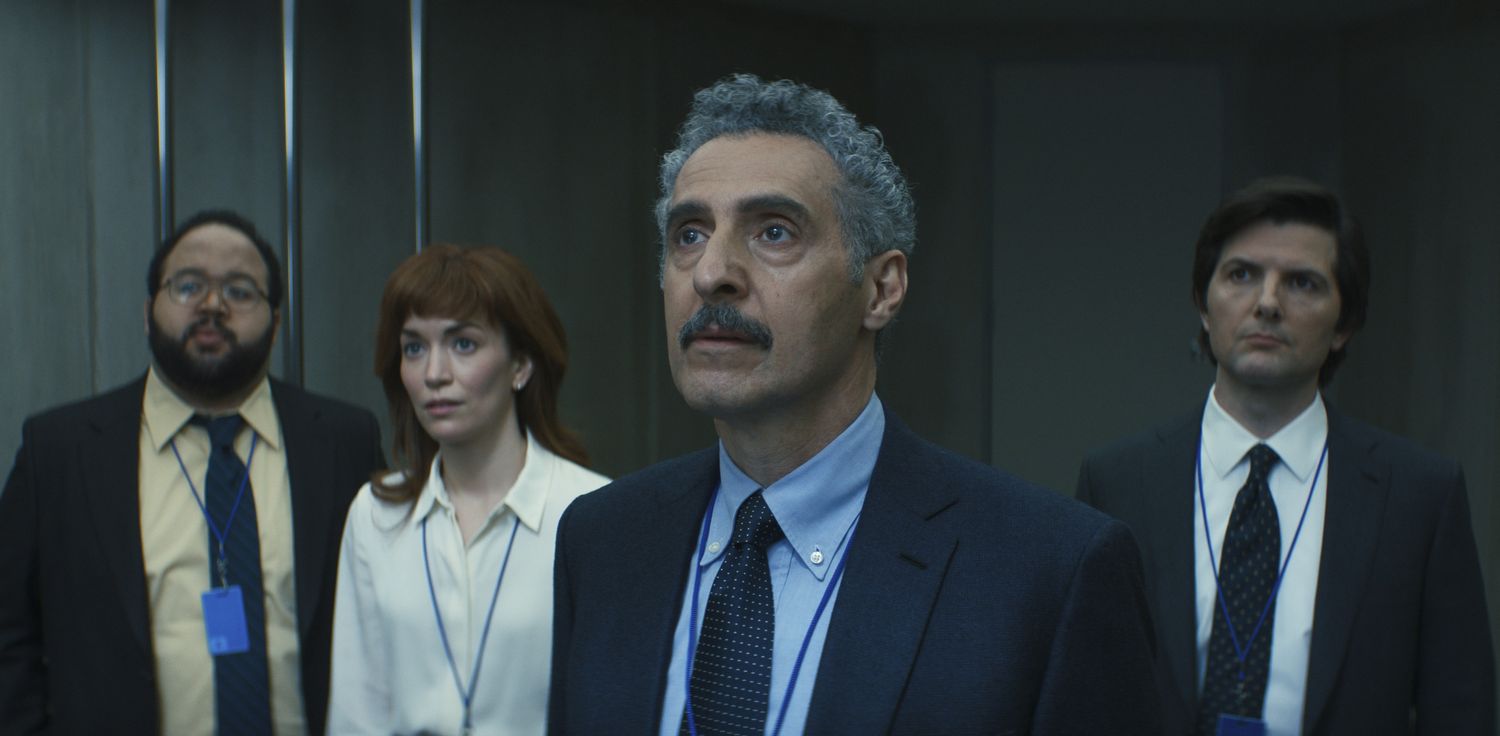
The Future of Neural Linkage and the “Petey Case”
As we look at the trajectory of real-world BCI tech, the “Petey Kilmer case” serves as a cautionary tale. While we are currently focused on using neural implants to treat paralysis or neurological disorders, the endgame of such technology often mirrors the fictional “Severance” procedure: the total integration of digital systems with biological consciousness.
Petey’s fate warns us of the dangers of proprietary neural code. When a company controls the interface through which you perceive reality, they control the reality itself. Petey’s attempt to reclaim his mind was a heroic act of digital rebellion, but it ultimately showed that the human brain is a fragile host for corporate-grade encryption.
In the end, what happened to Petey was a fatal “unhandled exception.” He was a pioneer in the field of neural reintegration, but without the proper “sandbox” environment to test the merge, his biological systems crashed. He remains a haunting reminder that in the race toward advanced human-computer interaction, the most significant bugs are the ones that affect the human, not the machine.
aViewFromTheCave is a participant in the Amazon Services LLC Associates Program, an affiliate advertising program designed to provide a means for sites to earn advertising fees by advertising and linking to Amazon.com. Amazon, the Amazon logo, AmazonSupply, and the AmazonSupply logo are trademarks of Amazon.com, Inc. or its affiliates. As an Amazon Associate we earn affiliate commissions from qualifying purchases.