
In the modern era of digital wealth management, the ability to seamlessly move data between a financial institution and a personal management tool is not just a convenience—it is a necessity. At the heart of this interoperability lies a protocol known as OFX, or Open Financial Exchange. For anyone serious about personal finance, business accounting, or investment tracking, understanding the OFX format is fundamental to mastering the tools that drive financial success.
OFX is an unified specification for the electronic exchange of financial data between financial institutions, businesses, and consumers via the Internet. Created in 1997 by a powerhouse consortium consisting of Microsoft, Intuit, and CheckFree, it was designed to replace the fragmented, manual methods of downloading bank statements. Today, it remains the backbone of how we synchronize our bank accounts with software like QuickBooks, Quicken, and various wealth-tracking platforms.

The Role of OFX in Modern Personal Finance
For the individual investor or the household budgeter, the primary value of the OFX format is the elimination of “financial friction.” Before the widespread adoption of this format, tracking expenses required manual data entry—a process prone to human error and often so tedious that it led to the abandonment of budgeting goals altogether.
Streamlining Budgeting and Wealth Tracking
When you use a personal finance app to monitor your net worth, the software typically relies on OFX to pull transaction data directly from your bank or brokerage. Unlike a simple text file, an OFX file contains structured data that identifies exactly what each piece of information represents. For example, it distinguishes between a “credit” and a “debit,” identifies the transaction date, and often provides a merchant category code.
This structure allows your financial software to automatically categorize spending. When your bank communicates in OFX, your software knows that a $50 transaction at a gas station belongs in the “Transport” category. This automation provides a real-time view of your financial health, allowing for more agile decision-making regarding savings and discretionary spending.
Connectivity Between Banks and Third-Party Apps
The “Open” in Open Financial Exchange is its most significant attribute. It creates a common language that allows a small fintech startup’s app to communicate with a massive multinational bank. For the consumer, this means freedom of choice. You are not locked into the basic interface provided by your bank’s website; instead, you can export your financial data into sophisticated analysis tools that offer deeper insights into your investment performance, tax liabilities, and long-term financial projections.
How OFX Empowers Business Financial Management
In a corporate or small business context, the stakes for data accuracy are significantly higher. For business owners, OFX is more than a convenience; it is a critical component of financial integrity and regulatory compliance.
Simplifying Bookkeeping and Tax Preparation
One of the most time-consuming tasks for any business is bank reconciliation—the process of ensuring that the company’s internal records match the bank statement. OFX facilitates “Direct Connect” features in accounting software like Xero or QuickBooks. Instead of downloading a file and uploading it manually, the software uses the OFX protocol to “talk” to the bank’s server.
This direct communication ensures that every cent is accounted for. During tax season, having a clean, OFX-generated history of transactions means that CPAs spend less time hunting for missing receipts and more time on high-level tax strategy. It transforms the accounting department from a reactive record-keeping unit into a proactive financial planning asset.
Enhancing Accuracy in Cash Flow Analysis
Cash flow is the lifeblood of any business. By utilizing OFX feeds, business owners can see their “true” cash position daily rather than waiting for a monthly statement. Because OFX supports the exchange of investment and loan data in addition to standard checking accounts, businesses can get a holistic view of their liabilities and assets. This high-fidelity data allows for more accurate forecasting, ensuring the business can meet its obligations and capitalize on growth opportunities without the risk of an unexpected liquidity crunch.
Comparing OFX with Other Financial Data Formats
To appreciate the utility of OFX, one must compare it to the alternatives that users often encounter in their banking portals, such as CSV (Comma Separated Values) or PDF.
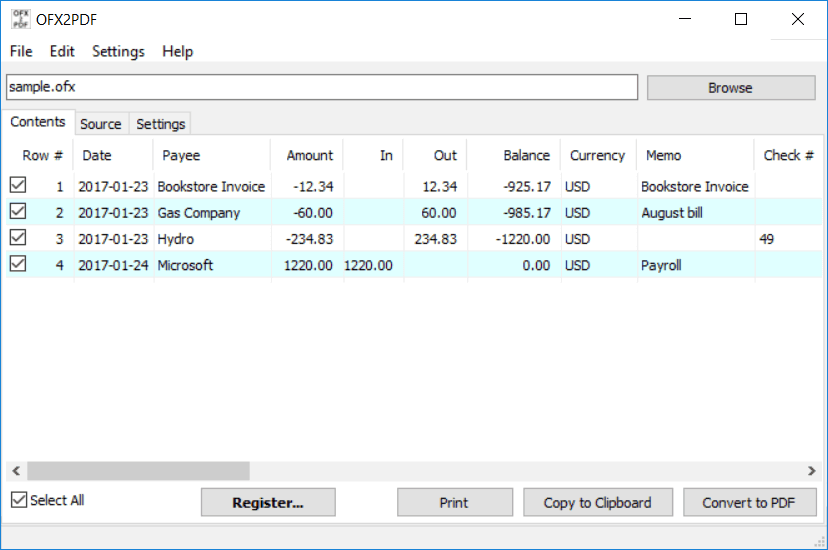
OFX vs. CSV: Why Precision Matters
Many banks offer a CSV download option, which is essentially a spreadsheet. While CSV is universal, it is “dumb” data. It lacks a standardized structure; one bank might put the date in the first column, while another puts it in the third. Furthermore, CSV files do not have unique identifiers for transactions, which often leads to “duplicate entries” when you import data multiple times.
OFX, conversely, includes a <FITID> (Financial Institution Transaction ID). This unique tag ensures that your software never imports the same transaction twice. For a serious investor or business owner, this prevents the nightmare of “ghost” expenses or inflated balances that can skew financial reports and lead to costly errors.
OFX vs. QFX and QBO: Proprietary vs. Open Standards
You may often see options for “.QFX” (Quicken) or “.QBO” (QuickBooks) files. It is important to realize that these are simply “branded” versions of the OFX format. While they are built on the same technical foundation, they often include a “licensing fee” component that banks pay to Intuit.
For the end-user, the distinction is usually about compatibility. While a generic OFX file is highly versatile, a QFX file is optimized specifically for Quicken’s internal logic. However, in terms of the actual financial data—the balances, the transaction history, and the metadata—they are functional siblings. Understanding this allows a user to navigate various banking platforms more effectively, knowing that the OFX engine is what’s truly powering the data transfer.
Security and Privacy in the Age of Open Banking
In the realm of money, data security is paramount. The OFX format was built with several layers of protection to ensure that when your financial data moves across the internet, it remains confidential and tamper-proof.
Data Encryption and Transmission Protocols
OFX uses a robust security model that typically relies on SSL/TLS encryption. When your financial software initiates an OFX request, it isn’t just asking for a list of numbers; it is engaging in a secure handshake with the bank. The protocol supports multi-factor authentication (MFA), ensuring that even if someone intercepted the data stream, they would be unable to access the sensitive financial information within.
Furthermore, unlike “screen scraping”—where a third-party app logs into your bank account as “you” and reads the screen—OFX is a structured data request. This means the app only sees the data it is authorized to see, rather than having full administrative access to your banking portal, which is a significantly safer approach for the consumer.
Direct Connect vs. Web Connect Methods
There are two primary ways OFX is utilized: Direct Connect and Web Connect.
- Web Connect involves the user manually downloading an .ofx file from their bank and uploading it to their software. This provides the user with total control over when and what data is shared.
- Direct Connect allows the software to communicate directly with the bank’s OFX server.
From a wealth management perspective, Direct Connect is the gold standard because it allows for automated, hands-off updates. However, some premium banks charge a fee for this service. Understanding these two modes allows users to weigh the cost-benefit ratio of convenience versus monthly service fees.
The Future of OFX in an API-Driven Financial Landscape
As the financial world moves toward “Open Banking” and API-driven ecosystems (like Plaid or YODLEE), some have questioned if the OFX format is becoming a relic of the past. However, the reality is that OFX remains a cornerstone of the financial system due to its stability and wide adoption.
The Shift Toward Real-Time Financial Data
While traditional OFX downloads often happen in batches, the evolution of the protocol is moving toward more real-time interactions. As consumers demand more immediate feedback on their spending and investment performance, the structured nature of OFX provides a reliable framework that newer API technologies often build upon. It serves as the legacy “source of truth” that ensures data consistency across different generations of financial technology.
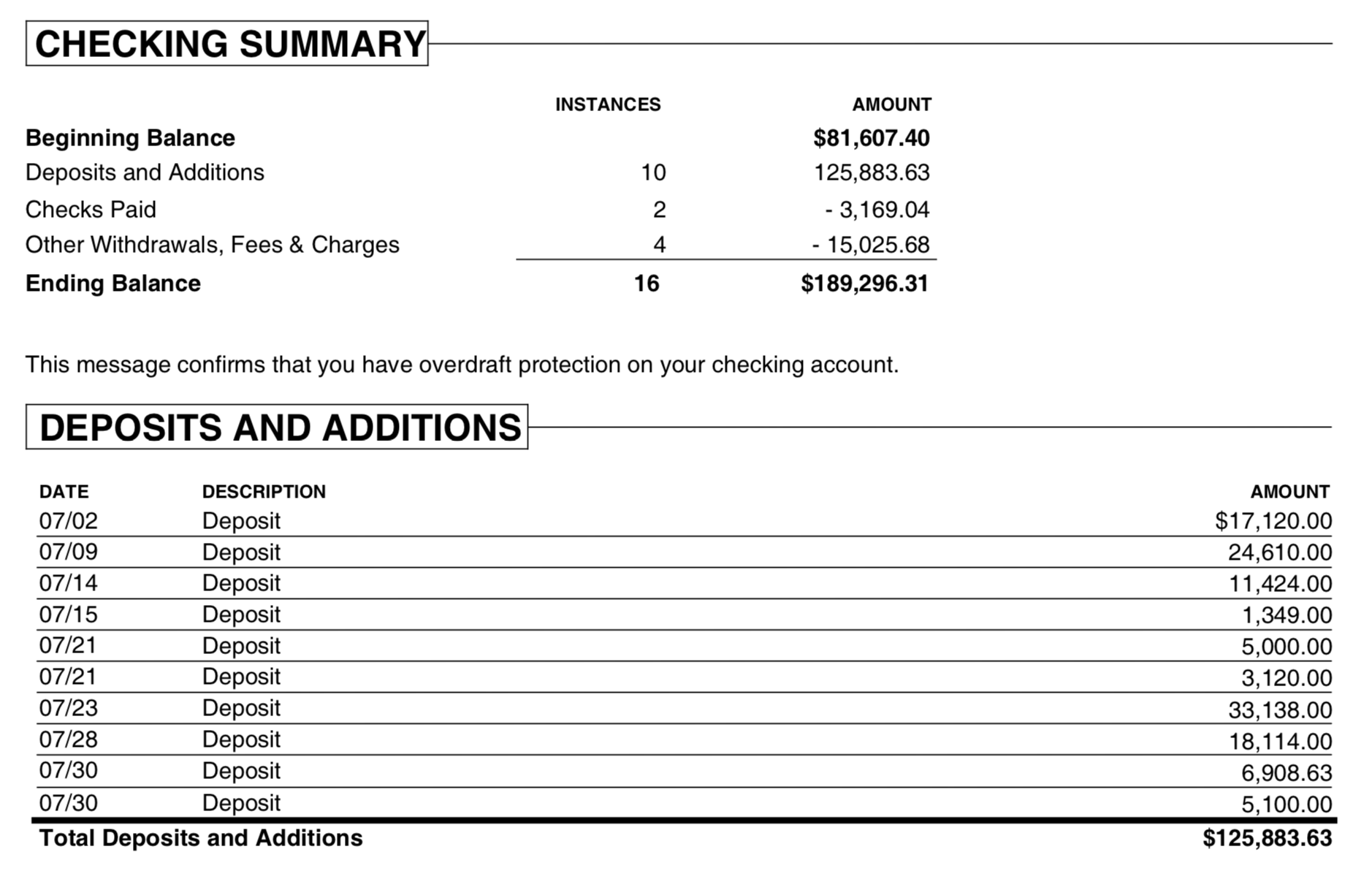
Integrating OFX with Modern Wealth Management
Even as we see the rise of decentralized finance (DeFi) and cryptocurrency, the need for a standardized “traditional finance” format remains. Many high-net-worth individuals use OFX to bridge the gap between their traditional brokerage accounts and their modern portfolio aggregators. By serving as a universal translator, OFX ensures that as the world of money becomes more complex, our ability to track and manage it remains streamlined.
In conclusion, the OFX format is far more than just a file extension. It is a vital tool in the toolkit of any financially savvy individual or business owner. By enabling the seamless, secure, and accurate flow of information, OFX empowers us to take control of our financial data, leading to better insights, more accurate accounting, and ultimately, more informed financial decisions. Whether you are reconciling a corporate ledger or simply tracking your path to retirement, the “Open Financial Exchange” is the silent partner making your financial clarity possible.
aViewFromTheCave is a participant in the Amazon Services LLC Associates Program, an affiliate advertising program designed to provide a means for sites to earn advertising fees by advertising and linking to Amazon.com. Amazon, the Amazon logo, AmazonSupply, and the AmazonSupply logo are trademarks of Amazon.com, Inc. or its affiliates. As an Amazon Associate we earn affiliate commissions from qualifying purchases.