
In the relentless pursuit of faster data transfer and more efficient system architectures, a myriad of connectivity standards have emerged, each designed to address specific needs within the vast landscape of modern computing. Among these, OCuLink stands out as a high-performance, compact, and versatile interface solution. Often operating quietly behind the scenes, OCuLink plays a crucial role in empowering everything from sophisticated enterprise storage arrays to high-octane scientific computing clusters. But what exactly is OCuLink, and why is it becoming an increasingly vital component in the technology ecosystem?
OCuLink, short for “Optical Copper Link,” is a standard developed by the PCI-SIG (PCI Special Interest Group) that leverages PCI Express (PCIe) signaling over external and internal cables. Its primary purpose is to provide high-bandwidth, low-latency connectivity for various applications, particularly those requiring direct access to PCIe lanes, such as NVMe storage devices, accelerators, and other high-performance peripherals. While its name suggests optical capabilities, the prevalent implementations today primarily utilize copper cables, offering a cost-effective and robust solution for short to medium-distance connections. This dual-naming convention reflects its design ambition: to eventually support optical transmission for even longer distances, although copper remains its dominant form. Understanding OCuLink means delving into its technical underpinnings, exploring its diverse applications, and appreciating its strategic position amidst competing and complementary technologies.
The Genesis and Core Technology of OCuLink
The evolution of computing has always been inextricably linked to the speed and efficiency of data movement. As processor capabilities soared and storage technologies matured, the need for robust, high-speed interconnects became paramount. OCuLink emerged from this necessity, building upon the ubiquitous PCIe standard to deliver external and internal connectivity where traditional interfaces fell short.
A Brief History and Standardisation
The origins of OCuLink can be traced back to the PCI-SIG, the industry organization responsible for defining and maintaining the PCI Express specification. As PCIe gained traction as the de facto internal bus for high-speed component communication within a PC, there was a growing demand to extend its reach beyond the motherboard, allowing for external chassis, storage arrays, and expansion units to directly benefit from its low-latency, high-bandwidth capabilities. Standards like SAS and SATA served well for traditional hard drives and even early SSDs, but the explosive growth of NVMe (Non-Volatile Memory Express) SSDs, which communicate directly over PCIe, necessitated a new class of external connectivity. OCuLink was developed as a direct response to this need, offering a compact and scalable solution for transmitting native PCIe signals over a cable. This direct integration with PCIe means OCuLink inherently benefits from the ongoing advancements and widespread industry support for the PCIe ecosystem.
PCIe at its Core
The fundamental strength of OCuLink lies in its direct utilization of PCI Express lanes. Unlike some other external interfaces that abstract or encapsulate PCIe signals, OCuLink literally extends the PCIe bus over a cable. This direct mapping ensures minimal protocol overhead and maintains the low latency characteristic of PCIe. OCuLink cables and connectors are designed to carry multiple PCIe lanes, typically in configurations of x4 (four lanes), x8 (eight lanes), or even x16 (sixteen lanes), mirroring the scalability of PCIe itself.
Each PCIe lane offers a significant amount of bandwidth, with generations continually increasing this throughput. For instance, a single PCIe Gen3 lane provides approximately 1 GB/s (Gigabyte per second) of theoretical bandwidth. An OCuLink x4 connection utilizing PCIe Gen3 can thus deliver around 4 GB/s, while an x8 configuration doubles that to 8 GB/s. With the advent of PCIe Gen4 and Gen5, these speeds have effectively doubled and quadrupled, respectively, with an OCuLink x4 PCIe Gen4 link offering ~8 GB/s and an x4 PCIe Gen5 link providing ~16 GB/s. This direct, high-bandwidth access makes OCuLink ideal for connecting devices that demand immediate and substantial data transfer capabilities, such as NVMe SSDs, specialized network cards, or GPU accelerators.
Design Philosophy: Copper vs. Optical
The full name, “Optical Copper Link,” is indicative of the standard’s forward-thinking design, even if current implementations heavily favor one half of that duality. Initially, and predominantly, OCuLink utilizes copper cables. Copper offers several advantages for shorter connections: it’s highly cost-effective, durable, and relatively easy to manufacture into flexible cables. For internal system connections or external connections within a server rack or between closely placed devices (typically up to a few meters), copper provides excellent signal integrity at PCIe speeds. The careful design of OCuLink copper cables, including shielding and impedance matching, ensures that signal degradation is minimized, even at the high frequencies demanded by modern PCIe generations.
The “Optical” part of its name points to the future potential for OCuLink. As data rates continue to climb and the demand for longer cable runs intensifies, transmitting PCIe signals over optical fiber becomes increasingly attractive. Optical cables can carry data over much greater distances without signal loss, are immune to electromagnetic interference, and can support even higher bandwidths. While current mainstream OCuLink products are copper-based, the standard’s architecture is designed to accommodate optical modules, allowing for a seamless transition when the need for longer-reach, ultra-high-bandwidth connections becomes more widespread and economically viable. This dual approach provides flexibility, allowing implementers to choose the most appropriate and cost-effective medium for their specific application while maintaining a unified interface standard.
Key Features and Technical Specifications
OCuLink’s adoption across various industries is driven by its robust set of features and precise technical specifications that ensure high performance, reliability, and interoperability. These characteristics distinguish it from other connectivity options and make it a preferred choice for demanding applications.
Performance Metrics and Data Transfer Rates
At the heart of OCuLink’s appeal are its impressive performance metrics. Leveraging the scalable nature of PCIe, OCuLink delivers raw data transfer rates that are crucial for modern, data-intensive workloads. As previously noted, the bandwidth scales directly with the number of PCIe lanes and the generation of PCIe being utilized.
-
PCIe Gen3: An OCuLink x4 connection provides 3.94 GB/s; an x8 provides 7.88 GB/s.
-
PCIe Gen4: An OCuLink x4 connection provides 7.88 GB/s; an x8 provides 15.75 GB/s.
-
PCIe Gen5: An OCuLink x4 connection provides 15.75 GB/s; an x8 provides 31.5 GB/s.
These theoretical maximums translate into real-world performance that is critical for saturating NVMe SSDs, feeding data to high-speed network interfaces, or providing direct access for accelerators. The low latency inherent to PCIe is also maintained through OCuLink, which is vital for applications where response time is critical, such as database transactions or real-time analytics.
Physical Form Factors and Connectivity
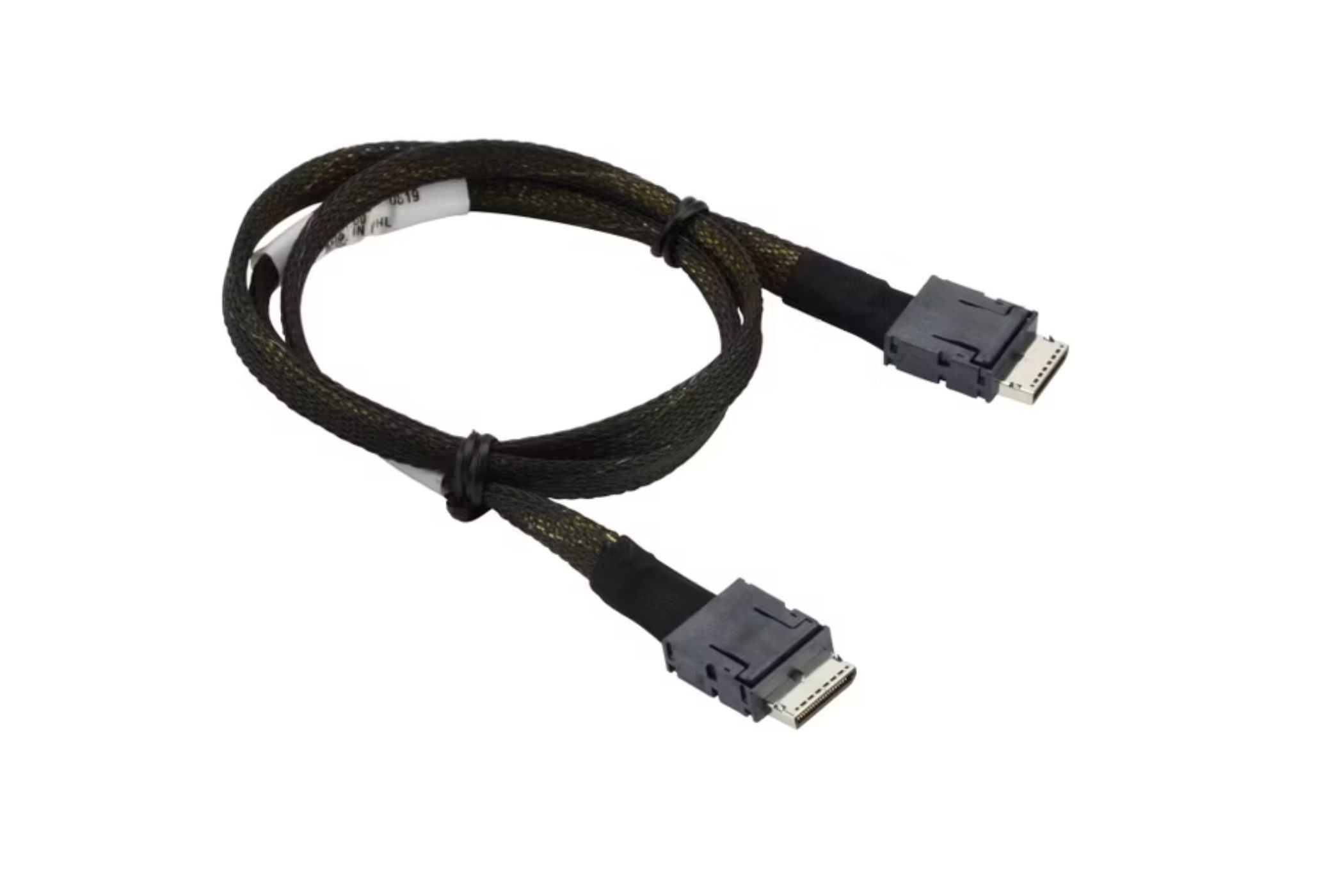
OCuLink comes in several physical form factors, catering to both internal and external connectivity needs. The connectors are designed to be compact, robust, and often feature locking mechanisms to ensure secure connections, especially in vibration-prone environments.
-
Internal Connectors: These are typically found on server motherboards or backplanes, connecting to internal NVMe SSDs or expander cards. They are usually compact, surface-mount connectors optimized for space efficiency within a chassis.
-
External Connectors: These are designed for connecting to external devices, such as storage enclosures (JBODs/JBOFs), external GPU docks, or specialized expansion chassis. External OCuLink cables and connectors are more rugged, often featuring retention clips or screws to prevent accidental disconnection. The compactness of OCuLink connectors compared to, say, larger PCIe slots or even older Mini-SAS HD connectors, allows for higher port density on devices, which is a significant advantage in rack-mounted server environments.
Hot-Plug and Power Delivery Capabilities
Modern enterprise and high-performance systems require flexibility and maintainability, which includes the ability to add or remove components without powering down the entire system. OCuLink supports hot-plug functionality, allowing devices connected via OCuLink to be added or removed while the system is running, provided the host system and operating system support this feature. This is invaluable for server maintenance, scaling storage on the fly, or replacing failed components with minimal downtime.
Beyond data transfer, OCuLink also has provisions for power delivery. While its primary role is signal transmission, some OCuLink implementations can supply a certain amount of power to connected devices. This feature can simplify cabling by eliminating the need for separate power cables for certain peripherals, further contributing to a cleaner and more organized system architecture, particularly for small form factor devices or modular systems.
Signal Integrity and EMI Considerations
Transmitting high-speed signals over copper cables, especially at PCIe Gen4 and Gen5 speeds, presents significant engineering challenges. Maintaining signal integrity—ensuring the data arrives uncorrupted—is paramount. OCuLink cables and connectors are meticulously designed with features like differential signaling, controlled impedance, and robust shielding to minimize electromagnetic interference (EMI) and crosstalk. EMI can disrupt high-frequency signals, leading to errors or reduced performance. The robust design of OCuLink ensures reliable operation even in electrically noisy environments, which are common in data centers and industrial settings. This attention to detail in signal management is critical for OCuLink to consistently deliver its promised high-performance and reliability over its intended cable lengths.

Applications and Use Cases in Modern Computing
OCuLink’s distinct advantages in terms of performance, form factor, and direct PCIe access have cemented its position across a diverse range of applications within modern computing, from the core of data centers to specialized edge devices.
Enterprise Storage Solutions
One of the most significant domains where OCuLink shines is in enterprise storage. The proliferation of NVMe SSDs, with their incredible speed and low latency, has transformed data storage. However, fully leveraging these devices often requires a direct PCIe connection. OCuLink provides the ideal conduit for connecting NVMe SSDs to host systems, especially in scenarios involving storage arrays, JBODs (Just a Bunch Of Disks), and JBOFs (Just a Bunch Of Flash).
-
NVMe Drive Connectivity: OCuLink cables directly connect NVMe drives housed in external enclosures or within a server chassis to the motherboard or a PCIe host bus adapter (HBA). This ensures that the full performance potential of NVMe drives is realized, without bottlenecks imposed by older SAS/SATA interfaces.
-
High-Density Storage Servers: In rack-mounted servers, space is at a premium. OCuLink’s compact connectors and flexible cables allow for higher drive density and cleaner cable management compared to using bulky PCIe riser cards or multiple individual SATA cables.
-
Software-Defined Storage (SDS): For SDS architectures that demand extremely high I/O operations per second (IOPS) and throughput, OCuLink provides the necessary bandwidth to aggregate performance from numerous NVMe devices, supporting demanding applications like virtual machine infrastructures, big data analytics, and high-transaction databases.
High-Performance Computing (HPC) and AI
High-Performance Computing (HPC) clusters and Artificial Intelligence (AI) workloads are characterized by an insatiable demand for processing power and rapid data movement. These environments frequently deploy specialized accelerators, GPUs, FPGAs, and other custom hardware that benefit immensely from direct, low-latency access to the host CPU and memory.
-
GPU and Accelerator Interconnect: OCuLink serves as a critical link for connecting external GPUs or other PCIe-based accelerators to servers, especially in systems designed for deep learning training, scientific simulations, or complex data processing. Its direct PCIe signaling ensures that data can be fed to these compute units with minimal overhead.
-
Modular HPC Systems: In modular HPC designs, where compute nodes might be disaggregated from specialized I/O modules, OCuLink provides a high-bandwidth pipe for interconnecting these components, maintaining system coherence and performance.
-
Low-Latency Fabric Extension: While not a primary networking protocol, OCuLink can extend PCIe-based fabrics for specific, short-distance, high-bandwidth needs within a cluster or a single server, complementing higher-level networking solutions like InfiniBand or Ethernet.
External GPU Enclosures and Docking Stations
For enthusiasts and professionals who need to augment the graphical or computational power of laptops or small form factor PCs, external GPU enclosures (eGPUs) have become a popular solution. While Thunderbolt has been a common interface for eGPUs, OCuLink presents an interesting alternative, particularly for applications where raw PCIe bandwidth is prioritized over Thunderbolt’s multi-protocol capabilities.
-
Dedicated PCIe Bandwidth: OCuLink offers a direct, dedicated PCIe connection, which can sometimes provide slightly higher effective bandwidth for GPU-intensive tasks compared to Thunderbolt, especially if the Thunderbolt controller has other devices sharing its bandwidth.
-
Professional Workstations: For compact professional workstations where internal space is limited, an OCuLink port can facilitate the connection of high-end external GPUs or specialized PCIe cards, turning a modest desktop into a powerhouse for rendering, video editing, or CAD applications.
-
Future of External Expansion: As PCIe generations advance, OCuLink’s ability to carry Gen4 and Gen5 signals positions it as a strong contender for future high-bandwidth external expansion, potentially for external NVMe RAID arrays or other extreme-performance peripherals.
Industrial and Embedded Systems
Beyond the data center and consumer high-end, OCuLink’s robustness and compact size make it suitable for industrial and embedded computing environments. These systems often operate in challenging conditions and require reliable, high-speed data acquisition or processing.
-
Machine Vision: Industrial cameras generating high-resolution, high-frame-rate images require fast data transfer to processing units. OCuLink can provide the necessary bandwidth for direct image data transfer over PCIe.
-
Automation and Robotics: In robotics or factory automation, embedded controllers often need to interface with numerous sensors, actuators, and specialized I/O boards. OCuLink can facilitate high-speed communication between these components, ensuring real-time control and data exchange.
-
Ruggedized Applications: The secure locking mechanisms and robust design of OCuLink connectors make them well-suited for applications where vibration or environmental factors are a concern, offering reliable connectivity in harsh industrial settings.
OCuLink in the Ecosystem: Comparison and Future Prospects
No technology exists in a vacuum. OCuLink operates within a dynamic ecosystem of connectivity standards, each with its strengths and target applications. Understanding its position relative to these alternatives is key to appreciating its value and predicting its future trajectory.
OCuLink vs. Alternatives (Mini-SAS HD, U.2, M.2, Thunderbolt)
OCuLink often finds itself compared to several other popular interfaces, each with its own niche:
-
Mini-SAS HD: Historically a dominant standard for SAS and SATA storage connectivity, Mini-SAS HD is mature and widely adopted. While it can also carry PCIe signals (as U.2/SFF-8639), OCuLink is generally smaller and purpose-built for direct PCIe signaling, offering a potentially more streamlined solution for NVMe.
-
U.2 (SFF-8639): This is a connector standard for NVMe SSDs, typically supporting 4 PCIe lanes. U.2 drives are robust and hot-swappable. OCuLink is often used as the cable interface to connect U.2 drives to a host, acting as the transmission medium rather than a direct competitor to the drive form factor itself.
-
M.2: Primarily an internal connector for SSDs and Wi-Fi modules, M.2 is incredibly compact and widely used in consumer PCs and laptops. It’s not designed for external cabling in the same way OCuLink is, though adapters exist. OCuLink complements M.2 by providing external expansion capabilities for systems that might use internal M.2 drives.
-
Thunderbolt: A highly versatile port that carries PCIe, DisplayPort, and USB signals over a single cable, Thunderbolt is excellent for consumer and prosumer external docking stations, eGPUs, and high-speed peripherals. However, Thunderbolt introduces a controller layer that can add slight latency and overhead compared to OCuLink’s direct PCIe extension. For applications where raw, dedicated PCIe bandwidth is paramount, OCuLink might offer a more direct path. Thunderbolt also has stricter cable length limits without active cables, and its cost can be higher.
OCuLink carves out a niche primarily in enterprise storage and specialized computing where direct, low-latency PCIe access via a compact, cost-effective copper cable is the priority. It’s less about being a universal port like Thunderbolt and more about being a highly optimized PCIe conduit.
Advantages for System Designers and Users
For system designers, OCuLink offers several compelling advantages:
-
Cost-Effectiveness: Copper OCuLink cables are generally less expensive than active optical cables or equivalent Thunderbolt solutions, especially for moderate lengths.
-
Compactness and Density: The small footprint of OCuLink connectors allows for higher port density on server backplanes, HBAs, and storage devices.
-
Performance: Unfettered, low-latency PCIe bandwidth directly translates to superior performance for NVMe storage and accelerators.
-
Flexibility: Supporting both internal and external connectivity, and various lane counts, provides significant design flexibility.
-
PCI-SIG Standard: Being a standard from the PCI-SIG ensures broad industry support, interoperability, and continued development alongside PCIe.
For end-users in data centers or HPC environments, these advantages translate to faster storage, more powerful computing, and more flexible and maintainable hardware infrastructures.
Challenges and Adoption Rates
While OCuLink offers clear benefits, its widespread adoption isn’t without challenges. One factor is its somewhat specialized nature. For mainstream consumer devices, the versatility of USB-C and Thunderbolt often takes precedence. Awareness outside of enterprise and professional circles is also lower. Furthermore, competing proprietary interconnects or highly integrated designs can sometimes limit the market for standardized cabling solutions.
Despite these factors, OCuLink’s adoption rate continues to grow steadily within its target segments, particularly as NVMe storage becomes increasingly central to data center infrastructure and as demand for PCIe Gen4/Gen5 capabilities intensifies. Major server and storage vendors now routinely offer OCuLink ports on their hardware.

The Future of High-Speed Connectivity
The trajectory of OCuLink is inextricably linked to the future of PCI Express. As PCIe Gen6 and beyond emerge, promising even more staggering bandwidths, OCuLink will likely evolve to support these higher speeds. The “Optical” aspect of its name also points to a future where photonics could play a larger role. As copper reaches its physical limits for signal integrity over longer distances at extremely high frequencies, optical OCuLink solutions may become more prevalent, extending the reach and reliability of PCIe connectivity even further.
Furthermore, with the rise of composable infrastructure, where resources like compute, storage, and acceleration are dynamically provisioned and connected, OCuLink could serve as a vital high-bandwidth link within these disaggregated architectures. Its direct PCIe tunneling capability makes it a strong candidate for connecting resources with minimal latency, supporting the modular and flexible data centers of tomorrow.
In conclusion, OCuLink might not be a household name, but it is an indispensable component in the high-performance computing landscape. By extending the power of PCI Express through robust and compact cabling, OCuLink empowers next-generation storage solutions, accelerates complex computations, and facilitates flexible system designs. As data demands continue to escalate, OCuLink is poised to remain a critical link in the chain of innovation, connecting the dots of our ever-expanding digital world.
aViewFromTheCave is a participant in the Amazon Services LLC Associates Program, an affiliate advertising program designed to provide a means for sites to earn advertising fees by advertising and linking to Amazon.com. Amazon, the Amazon logo, AmazonSupply, and the AmazonSupply logo are trademarks of Amazon.com, Inc. or its affiliates. As an Amazon Associate we earn affiliate commissions from qualifying purchases.