
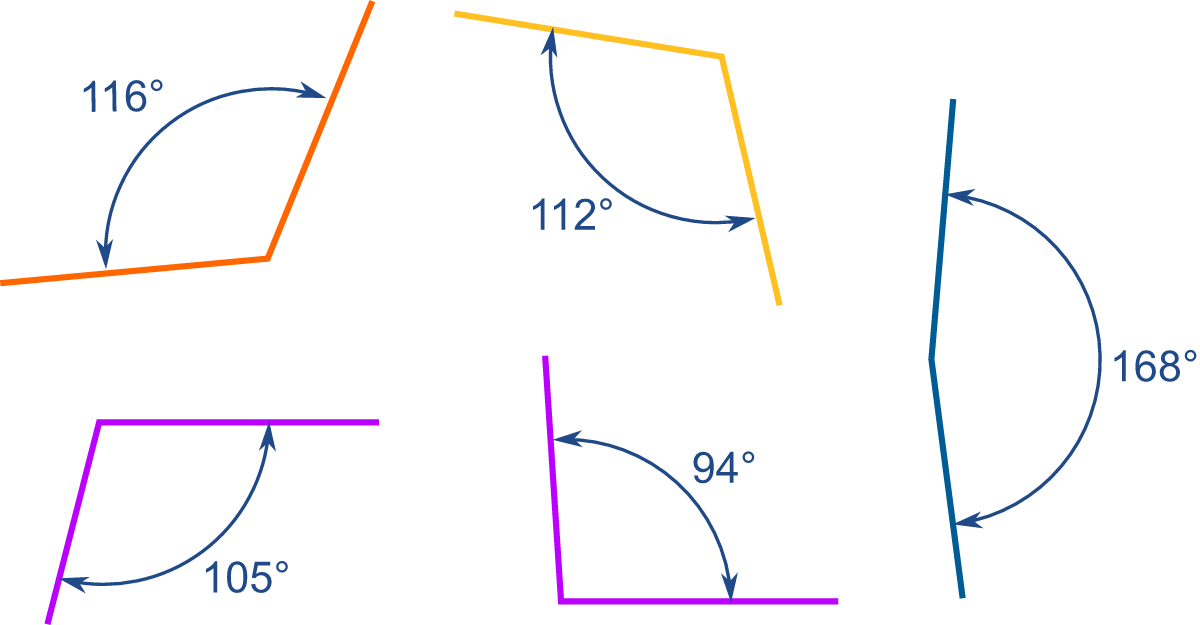
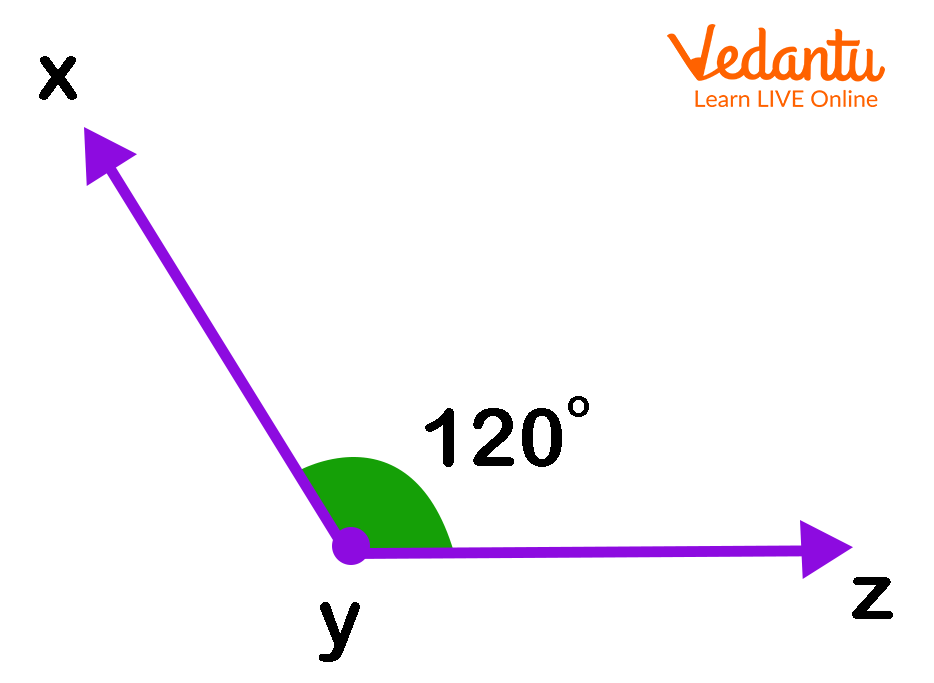
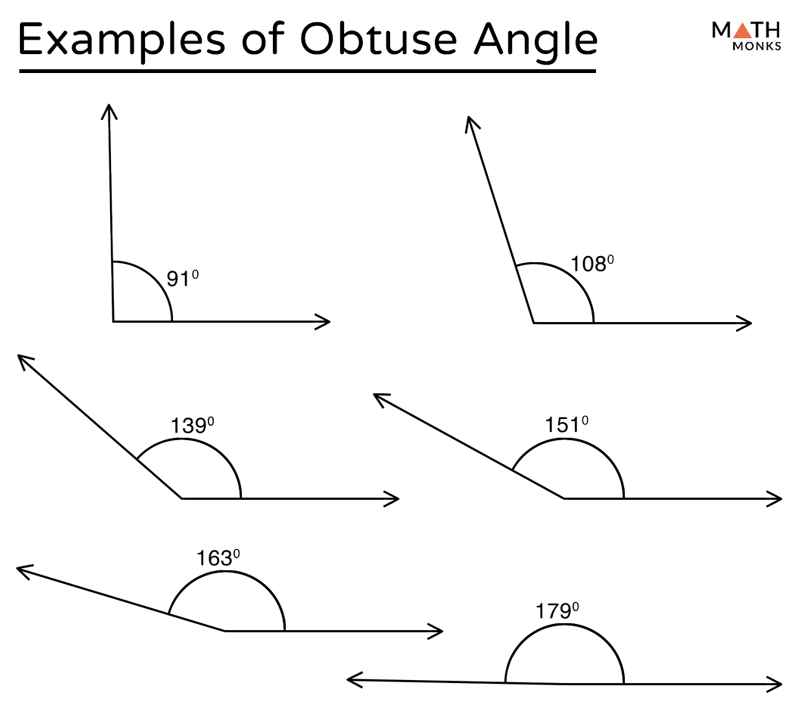
In the realm of mathematics, an obtuse angle is simply defined as an angle that measures more than 90 degrees but less than 180 degrees. It is wider than a right angle but narrower than a straight line. While this definition serves elementary geometry well, in the high-stakes world of technology, software engineering, and digital design, the obtuse angle represents a fundamental building block of spatial logic.
From the way high-end GPUs render three-dimensional environments to the subtle curves of a mobile application’s user interface, the math of the obtuse angle is baked into the code that drives our digital lives. Understanding this geometric concept through a technological lens allows us to appreciate the complexity behind the seamless digital experiences we often take for granted.
The Mathematical Engine: How Software Processes Obtuse Angles
To a computer, an angle isn’t just a visual representation; it is a set of coordinates and trigonometric functions. When developers build software that involves graphics or physical simulations, they must define how the system interprets obtuse angles to ensure accuracy and visual fidelity.
The Role of Trigonometry in Algorithm Development
In programming languages like C++, Python, or JavaScript, calculating an obtuse angle often involves the Law of Cosines. When a software program needs to determine the angle between two vectors—such as the trajectory of a character in a game or the path of a robotic arm in a manufacturing simulation—it uses dot product calculations.
If the dot product of two normalized vectors is negative, the software instantly recognizes the presence of an obtuse angle. This binary “check” is the foundation for collision detection algorithms, ensuring that digital objects interact realistically within a virtual space. Without the precise calculation of these wide angles, software would be unable to render perspective or handle complex movement.
Coordinate Systems and Vector Math
In digital design tools like Figma or Adobe Illustrator, the “obtuse angle” is a constant variable in the backend. Vector graphics rely on Bézier curves and anchor points. When you create a shape that isn’t a perfect square or rectangle, the software’s engine is constantly calculating the interior and exterior angles.
Obtuse angles are particularly important in “pathfinding” algorithms. For example, in GPS technology and mapping software, calculating the turn angle at an intersection is vital. If a turn is obtuse (a wide, gradual turn), the software provides different timing for voice prompts compared to an acute or 90-degree turn. This level of technical nuance is what makes modern navigation systems feel intuitive.
The Aesthetic of Function: Obtuse Angles in UI/UX Design
The transition from the “boxy” digital layouts of the early 2000s to the fluid, organic shapes of modern interfaces is largely a story of moving away from right angles toward obtuse and rounded geometries.
Softening the Digital Experience
In User Experience (UX) design, right angles (90 degrees) are often perceived as “sharp” or “harsh” by the human eye. Modern design languages, such as Google’s Material Design or Apple’s Human Interface Guidelines, favor “squovals” and rounded corners. When a corner is rounded, the transition between the vertical and horizontal planes technically involves a series of infinitesimal obtuse angles.
By utilizing wide, obtuse transitions in button designs and card layouts, developers can create a sense of approachability and flow. These angles guide the user’s eye across the screen more naturally than a sharp 90-degree stop, reducing cognitive load and making the digital environment feel more “human.”
Visual Hierarchy and Diagonal Flow
Obtuse angles are also used strategically to create a sense of movement. Many modern “SaaS” (Software as a Service) landing pages use diagonal section breaks rather than horizontal ones. These diagonals usually form obtuse angles with the edge of the browser window.
Technically, these angles are used to break the “grid” and direct the user’s gaze toward a Call to Action (CTA). By implementing CSS transforms and skewing elements at obtuse angles, front-end developers create a dynamic visual hierarchy that feels modern and tech-forward.
3D Modeling and Game Engines: The Geometry of Realism
In 3D environments, such as those created in Unity or Unreal Engine, the world is constructed from “polygons”—mostly triangles. The arrangement of these triangles determines the shape and smoothness of 3D models.
Polygon Optimization and Mesh Integrity
When a 3D artist creates a character model, they must manage the “topology” of the mesh. Ideally, triangles should be as close to equilateral as possible. However, when modeling organic shapes like a human face or a curved car hood, the software must generate obtuse-angled triangles to cover larger surface areas efficiently.
This is a critical technical trade-off: using a few large triangles with obtuse angles can reduce the “poly-count,” making the game run faster on lower-end hardware. However, if an angle becomes too obtuse (approaching 180 degrees), it can cause “shading artifacts,” where the lighting engine fails to calculate shadows correctly, leading to visual glitches.
Lighting Calculations and Ray Tracing
One of the most significant breakthroughs in recent tech is Real-Time Ray Tracing. This technology simulates the way light bounces off surfaces. When a light ray hits a surface at an obtuse angle, the physics engine must calculate the “angle of reflection.”
If the surface is angled obtusely relative to the light source, the light scatters differently than it would on a flat or acute surface. This calculation is performed millions of times per second by the GPU. The ability of modern hardware to handle the complex trigonometry of obtuse-angled reflections is what gives modern games their photorealistic quality.
Engineering and CAD: Precision in Digital Manufacturing
In Computer-Aided Design (CAD), used by engineers to design everything from microchips to skyscrapers, the obtuse angle is a matter of structural integrity and manufacturability.
Computational Geometry in Structural Design
Engineers using software like AutoCAD or SolidWorks must consider the stress loads on various angles. In structural engineering, an obtuse angle often distributes force differently than a right angle. For example, in the design of a bridge or a drone frame, obtuse joins are frequently used to provide lateral stability.
The software utilizes Finite Element Analysis (FEA) to simulate how these angles will hold up under pressure. If an obtuse angle is too wide, the software might flag it as a potential point of failure. The precision required here is down to the thousandth of a degree, showcasing how a basic geometric concept becomes a high-stakes technical requirement.
Error Handling in Automated Blueprints
Modern tech has also introduced “Generative Design,” where AI algorithms suggest the most efficient shape for a part based on specific constraints. These AI-driven designs often look “alien” or organic, featuring a complex web of obtuse angles that a human designer might never have conceived.
The software must ensure that these angles are “machineable.” For example, a 3D printer or a CNC machine has physical limits on the angles it can navigate. If the digital model contains an obtuse angle that is too shallow, the software’s “slicer” must interpret how to translate that geometry into physical toolpaths without causing a mechanical error.
The Future: AI and Geometric Intelligence
As we move toward a future defined by Augmented Reality (AR) and Artificial Intelligence (AI), our devices’ ability to understand and interpret obtuse angles in the physical world is becoming even more critical.
Machine Learning in Shape Recognition
Computer Vision, the tech that allows self-driving cars to “see,” relies on identifying shapes and angles in real-time. When a Tesla camera identifies a stop sign or a lane marking, it is essentially performing high-speed geometric analysis.
If a car is approaching a turn at an angle, the AI must determine if the intersection is acute or obtuse to calculate the necessary steering torque. Machine learning models are trained on millions of images to recognize these geometric patterns, allowing the “digital brain” to navigate a world that isn’t built on a perfect 90-degree grid.
Spatial Computing and AR
In Spatial Computing (like with the Apple Vision Pro or Meta Quest), the software must map the geometry of your room. It identifies the obtuse angle between a wall and a sloped ceiling to “pin” digital windows to your environment. This process, known as SLAM (Simultaneous Localization and Mapping), involves constant geometric updates.
The tech must understand the obtuse angles of your furniture and walls to ensure that digital objects don’t clip through physical ones. In this context, the obtuse angle is no longer just a math definition; it is a coordinate in a hybrid reality where the physical and digital worlds converge.
Conclusion
While the “obtuse angle” might seem like a simple relic of middle-school geometry, it is an indispensable component of the modern technological landscape. It is the math that allows our GPUs to render beautiful worlds, the logic that makes our user interfaces feel intuitive, and the structural foundation that ensures our physical products are built to last.
As technology continues to evolve—moving away from the rigid grids of the past toward the fluid, intelligent systems of the future—our ability to calculate, manipulate, and utilize the obtuse angle will remain a cornerstone of innovation. Whether you are a coder, a designer, or a tech enthusiast, recognizing these “wide angles” provides a deeper insight into the geometric DNA of the digital age.
aViewFromTheCave is a participant in the Amazon Services LLC Associates Program, an affiliate advertising program designed to provide a means for sites to earn advertising fees by advertising and linking to Amazon.com. Amazon, the Amazon logo, AmazonSupply, and the AmazonSupply logo are trademarks of Amazon.com, Inc. or its affiliates. As an Amazon Associate we earn affiliate commissions from qualifying purchases.