
In the modern era of automotive engineering, a vehicle is no longer merely a mechanical assembly of gears, pistons, and levers. It is a sophisticated, mobile data center. At the heart of this digital transformation is a network of sensors that monitor every micro-adjustment of the internal combustion process. Among these, the Oxygen Sensor—commonly referred to as the O2 sensor—stands as one of the most critical components in the “Internet of Vehicles” ecosystem.
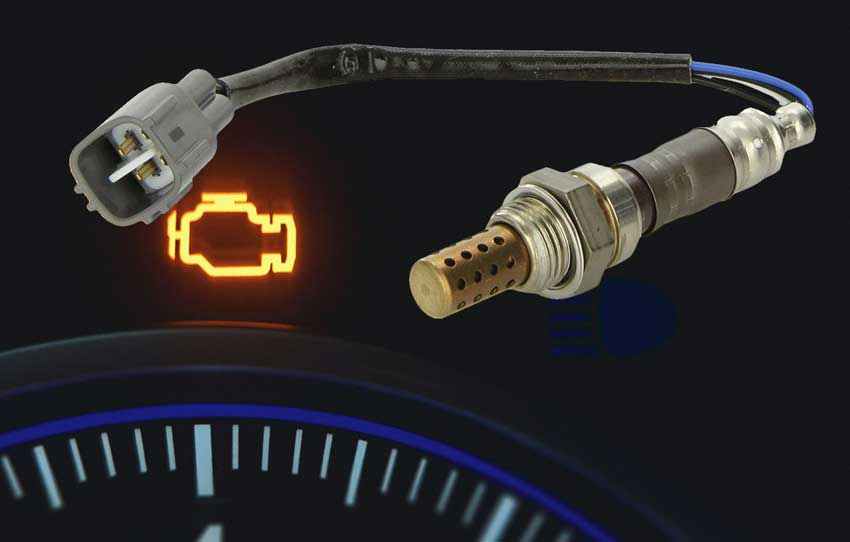
Essentially the “nose” of the car’s computer, the O2 sensor is a high-tech transducer that translates chemical concentrations into electrical signals. This article explores the technical intricacies of the O2 sensor, its integration with engine management software, and its role in the broader landscape of automotive technology.

1. The Anatomy of Modern Sensing: How the O2 Sensor Operates
To understand the O2 sensor from a technical perspective, one must view it as a solid-state electrochemical device. Unlike mechanical components that wear down through physical friction, the O2 sensor operates on the principles of chemistry and physics to provide real-time telemetry to the vehicle’s central processor.
Zirconia and Titania: The Chemistry of Data
The most common type of O2 sensor utilizes a ceramic element made of zirconium dioxide (zirconia), coated with a thin layer of platinum. This isn’t just a housing; it functions as a Nernst cell. When the sensor reaches its operating temperature (typically above 600°F or 315°C), the zirconia becomes a semi-conductor for oxygen ions.
The sensor compares the oxygen content of the ambient air (outside the exhaust) with the oxygen content of the exhaust gases. The differential in oxygen concentration creates a migration of ions, which in turn generates a voltage. In a tech-centric view, this is the hardware layer converting a biological-like “smell” into a digital language the car can understand.
Voltage Signals and Binary Logic
The output of a standard zirconia O2 sensor is an analog voltage signal ranging from approximately 0.1V to 0.9V. In the logic of the Engine Control Unit (ECU):
-
0.1V to 0.4V: Indicates a “Lean” condition (too much oxygen, not enough fuel).
-
0.6V to 0.9V: Indicates a “Rich” condition (too much fuel, not enough oxygen).
-
0.45V: Represents the stoichiometric “sweet spot,” where the air-fuel ratio is exactly 14.7:1.
This constant fluctuation between lean and rich creates a sine wave pattern of data. The speed at which the sensor can “switch” between these states is a primary metric of its health and technological efficiency.
2. Integration with the ECU: The Software Behind the Hardware
The O2 sensor does not work in a vacuum. It is a vital node in a complex feedback loop controlled by the Engine Control Unit (ECU), the car’s primary software hub. This relationship is a prime example of cyber-physical systems where software dictates physical outcomes based on sensor input.
Closed-Loop vs. Open-Loop Systems
When you first start a car, the engine operates in “Open-Loop” mode. During this phase, the O2 sensor is too cold to provide accurate data, so the ECU relies on pre-programmed maps (static software instructions) to manage fuel injection.
However, once the sensor reaches operating temperature, the system enters “Closed-Loop” mode. This is where the true tech kicks in. The ECU begins to use the live data stream from the O2 sensor to dynamically adjust fuel delivery. It is a continuous feedback loop: the sensor reports the exhaust composition, the software calculates the necessary adjustment, the fuel injectors execute the command, and the sensor reports the result. This happens dozens of times per second.
Fuel Trim Algorithms: STFT and LTFT
The software uses specific algorithms known as Fuel Trims to maintain engine efficiency.
-
Short-Term Fuel Trim (STFT): This represents the immediate, momentary adjustments the ECU makes. If the O2 sensor detects a lean spike, the STFT software immediately instructs the injectors to stay open a few milliseconds longer.
-
Long-Term Fuel Trim (LTFT): This is a “learning” algorithm. Over hours of driving, the ECU tracks the trends of the STFT. If the engine consistently runs lean, the LTFT software updates the baseline “map” to compensate for permanent factors like a small vacuum leak or an aging fuel pump. This is essentially a primitive form of machine learning within the vehicle’s firmware.
3. Diagnostic Technology and Error Protocols
For tech enthusiasts and DIY mechanics, the O2 sensor is most visible through the lens of diagnostics. When a sensor fails or detects an irregularity, it triggers the On-Board Diagnostics (OBD-II) system, a standardized protocol that allows external hardware to interface with the car’s internal software.
OBD-II Architecture: Decoding the Data
The OBD-II system uses a standardized set of Diagnostic Trouble Codes (DTCs). When an O2 sensor sends data that falls outside of “rationality” parameters—for instance, if the voltage stays stuck at 0.5V regardless of engine load—the software flags an error.
-
P0130 – P0135: These codes usually indicate a circuit malfunction or a failure in the sensor’s internal heater.
-
P0420: This is a high-level software calculation where the ECU compares the data from the upstream O2 sensor (before the catalytic converter) with the downstream O2 sensor (after the converter). If the data waves look too similar, the software concludes the catalytic converter is no longer “scrubbing” the exhaust.
Oscilloscope Testing: Visualizing Data Waves
While basic code readers can tell you if a code is present, professional automotive technicians use digital storage oscilloscopes (DSO) to visualize the O2 sensor’s output. By graphing the voltage over time, one can see the “latency” of the sensor. A “lazy” sensor might still be functional enough to avoid a dashboard light, but the oscilloscope will reveal a slow response time, indicating that the sensor’s hardware is degrading and affecting the software’s ability to optimize combustion.
4. The Evolution of Automotive Tech: From Analog to Wideband
As emission standards become stricter and engines more complex, the technology of oxygen sensing has had to evolve. We are moving away from simple “switching” sensors toward high-resolution data collection.
Standard O2 Sensors vs. Wideband AFR Sensors
Traditional O2 sensors are essentially “binary”—they can tell if you are rich or lean, but they struggle to tell exactly how rich or lean you are. Enter the Wideband Air-Fuel Ratio (AFR) Sensor.
A wideband sensor is a significantly more complex piece of tech. Instead of a simple voltage switch, it uses a “pump cell” and sophisticated controller circuitry within the ECU to maintain a specific internal balance. It provides a linear signal (usually 0V to 5V) that corresponds exactly to the air-fuel ratio. This allows for much more precise software control, enabling “lean-burn” engines that achieve massive fuel economy gains without sacrificing power.
Future Outlook: Environmental Tech and Smart Exhaust Systems
As we transition toward hybrid and eventually fully electric fleets, the role of the O2 sensor is shifting. In hybrid vehicles, the O2 sensor must be even more robust, as the engine frequently cycles on and off, requiring the sensor’s internal heating element to manage thermal shocks constantly.
Furthermore, the data generated by these sensors is increasingly being used in “Connected Car” applications. Telemetry data can be sent to manufacturers to monitor fleet-wide emissions performance in real-time, identifying software bugs or hardware defects before they become widespread recalls.

Conclusion: The Critical Node in the Digital Chassis
The O2 sensor is a perfect distillation of modern automotive technology. It bridges the gap between the raw, chaotic chemical reactions of an internal combustion engine and the precise, logical world of computer software. By translating oxygen concentrations into actionable data, it allows the ECU to maintain a delicate balance between performance, economy, and environmental responsibility.
Whether you are a developer interested in the logic of feedback loops, a gadget enthusiast exploring OBD-II scanners, or simply a driver curious about the “Check Engine” light, understanding the O2 sensor is key to understanding the modern car. It is not just a part; it is a vital data-gathering instrument that ensures our vehicles remain as efficient and “smart” as the rest of our digital lives. As we move forward, the sensors may change—evolving into NOx sensors or battery health monitors—but the underlying principle of high-speed data feedback remains the cornerstone of automotive tech.
aViewFromTheCave is a participant in the Amazon Services LLC Associates Program, an affiliate advertising program designed to provide a means for sites to earn advertising fees by advertising and linking to Amazon.com. Amazon, the Amazon logo, AmazonSupply, and the AmazonSupply logo are trademarks of Amazon.com, Inc. or its affiliates. As an Amazon Associate we earn affiliate commissions from qualifying purchases.