
In the modern era of smartphones, we are surrounded by a plethora of wireless technologies. We use Wi-Fi for high-speed internet, Bluetooth for our headphones, and 5G for mobile data. However, there is a quieter, more subtle technology sitting inside your device that has revolutionized how we interact with the physical world: Near Field Communication, or NFC.
Despite its ubiquity in high-end and mid-range smartphones, many users are unaware of what NFC actually is or the full extent of its capabilities. At its core, NFC is a short-range wireless connectivity technology that allows devices to communicate with each other when they are brought within a few centimeters of one another. It is the magic behind “tapping to pay” at a grocery store and the secret to instant device pairing.

In this comprehensive guide, we will delve into the mechanics of NFC, its diverse applications, its security protocols, and what the future holds for this indispensable piece of mobile hardware.
1. Understanding the Basics: How NFC Works
NFC technology is an evolution of Radio Frequency Identification (RFID) technology. While RFID can be used from several meters away (like the tags used in warehouse inventory), NFC is strictly designed for close-quarter interactions. This limitation is actually its greatest strength, as it prevents accidental triggers and enhances security.
The Science Behind the Connection
NFC operates on the 13.56 MHz frequency and is based on magnetic field induction. When two NFC-enabled devices—such as a smartphone and a payment terminal—come into close proximity, their antenna coils interact. One device (the initiator) creates a small magnetic field that powers the other device (the target). This allows for the transmission of data without the need for a complex pairing process or a shared Wi-Fi network.
NFC vs. Bluetooth vs. Wi-Fi
While all three are wireless technologies, they serve vastly different purposes. Wi-Fi is built for high-speed data over a large area. Bluetooth is designed for continuous data streams (like music) over a range of about 10 meters. NFC, by contrast, is designed for near-instantaneous, low-bandwidth bursts of data.
The primary advantage of NFC over Bluetooth is its “zero-setup” nature. There is no searching for devices or entering PIN codes. The physical act of “tapping” serves as the intent to connect, making it significantly faster for one-off transactions.
Active vs. Passive NFC Devices
NFC devices fall into two categories:
- Active Devices: These can both send and receive data. Your smartphone is an active device; it can read data from a tag and also act as a credit card or a digital key.
- Passive Devices: These do not have their own power source. They consist of a small chip and an antenna. Common examples include NFC tags, smart posters, and contactless credit cards. They only “wake up” when an active device (like your phone) is brought near them.
2. Practical Applications: How We Use NFC Every Day
While most people associate NFC exclusively with payments, the technology has permeated various aspects of digital life, offering convenience through automation and seamless data transfer.
Contactless Payments and Mobile Wallets
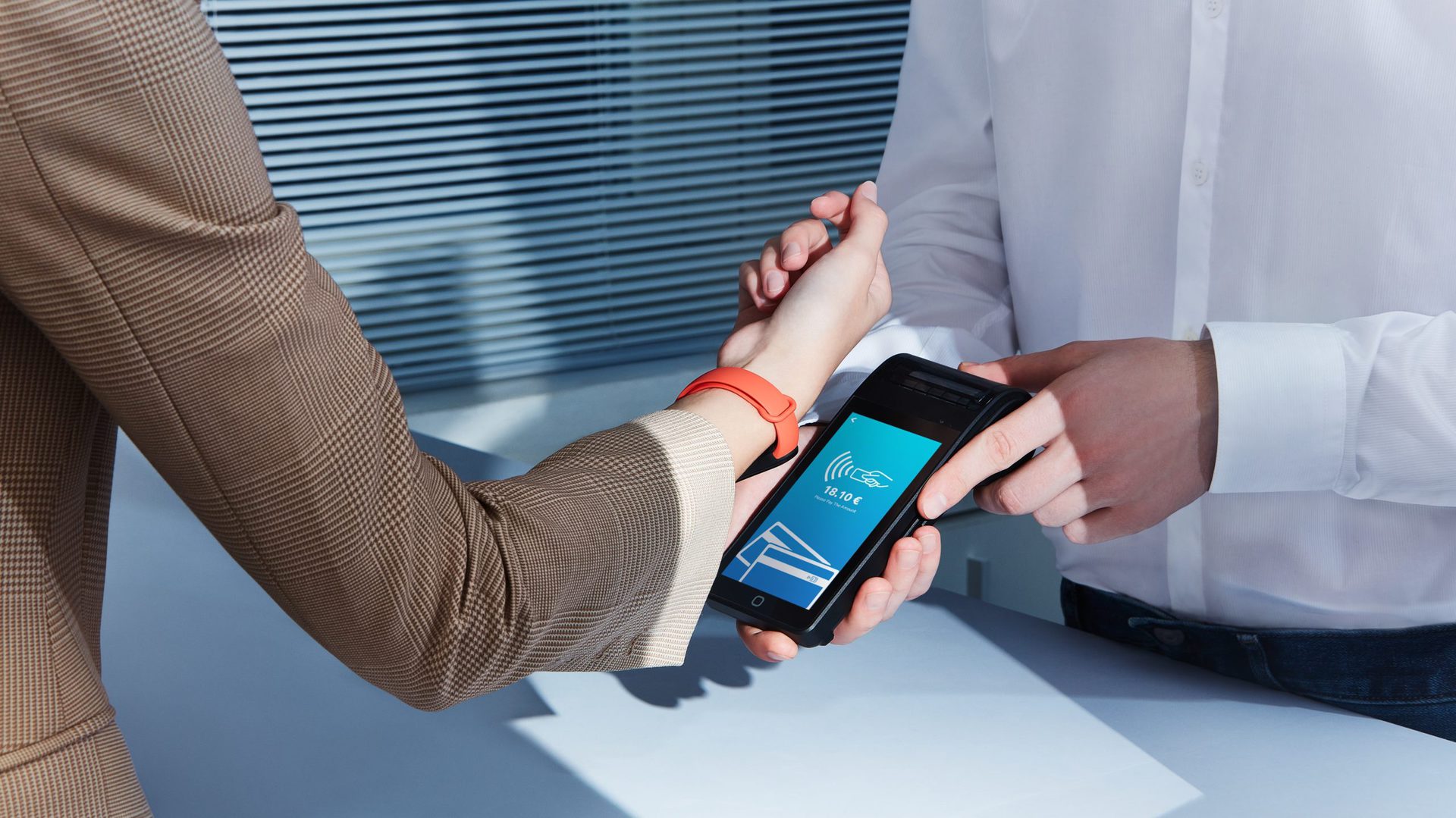
The most recognizable use of NFC is through mobile wallets like Apple Pay, Google Pay, and Samsung Pay. When you hold your phone near a payment terminal, the NFC chip transmits encrypted payment information to the merchant. This has not only speeded up the checkout process but has also drastically reduced the need to carry physical wallets.
In many parts of the world, NFC has made the “contactless” lifestyle the standard, especially in the wake of global shifts toward more hygienic, touch-free interactions.
Smart Automation with NFC Tags
For tech enthusiasts, NFC tags are a gateway to home and personal automation. These small, inexpensive stickers can be programmed to trigger specific actions on your phone.
- In the car: You can place an NFC tag on your dashboard that, when tapped, automatically turns on Bluetooth, launches Spotify, and opens Google Maps.
- By the bed: A tag on your nightstand could set your alarm, enable “Do Not Disturb” mode, and dim your smart lights.
- At the office: A tag on your desk could instantly toggle your phone to silent mode and log your start time in a productivity app.
Public Transit and Digital Keys
Many major cities have replaced traditional paper tickets and magnetic stripe cards with NFC-based systems. Commuters in London, New York, and Tokyo can simply tap their smartphones at turnstiles to pay for fares.
Furthermore, the automotive and hospitality industries are rapidly adopting NFC. Many modern cars allow owners to unlock and start their vehicles using a digital key stored in their phone’s secure element. Similarly, major hotel chains now offer “digital keys” via their apps, allowing guests to bypass the front desk and unlock their room doors with a tap of their phone.
Quick Pairing and Data Sharing
NFC is often used as a “handshake” for other technologies. For example, some high-end cameras and headphones feature NFC. Instead of diving into Bluetooth settings to pair a new device, you simply tap your phone against the “N” logo on the gadget, and the NFC connection automatically handles the Bluetooth pairing process for you.
3. Security and Privacy: Is NFC Safe?
Whenever wireless data transmission involves financial information or personal identity, security is a paramount concern. Fortunately, NFC is engineered with several layers of protection that make it one of the most secure ways to transmit data.
Short-Range Protection
The most basic security feature of NFC is its range. Because the devices must be within 4 centimeters (about 1.5 inches) of each other, it is extremely difficult for a malicious actor to “sniff” or intercept the signal from a distance. Unlike Wi-Fi or Bluetooth, which can be intercepted from across a room or even from outside a building, NFC requires physical proximity, which acts as a natural deterrent to remote hacking.
Encryption and Tokenization
When you use NFC for payments, your actual credit card number is never transmitted. Instead, mobile wallets use a process called tokenization. The system generates a random, one-time string of numbers (a token) for each transaction. Even if a hacker managed to intercept this data, the token would be useless for any subsequent transactions.
Additionally, most smartphones require biometric authentication (FaceID, TouchID, or a fingerprint) before the NFC chip is activated for a payment. This means that even if your phone is stolen, the thief cannot use it to make purchases without your biometric signature.
Potential Vulnerabilities and Mitigation
While highly secure, NFC is not entirely immune to risks. “Eavesdropping” is theoretically possible with specialized high-gain antennas, and “Data Corruption” can occur if a malicious device tries to jam the signal. However, these are highly sophisticated attacks that are rarely seen in the real world. To stay safe, users should:
- Keep their phone’s operating system updated to ensure they have the latest security patches.
- Enable biometric locks for all payment apps.
- Disable NFC in the settings menu when it is not in use if they are in high-risk environments.
4. The Future of NFC Technology
As we move toward a more “connected” world, the role of NFC is expanding beyond simple payments and into the realms of the Internet of Things (IoT), healthcare, and identity management.
Digital Identity and Government Integration
In the near future, the physical wallet may become entirely obsolete. Several countries and states are already experimenting with digital driver’s licenses and national ID cards stored on smartphones. These IDs use NFC to allow police officers or airport security to verify identity securely. The encrypted nature of the chip ensures that your personal data cannot be copied or forged as easily as a plastic card.
Healthcare and Wearables
NFC is making significant inroads into medical technology. We are seeing the rise of NFC-enabled glucose monitors and smart patches that can transmit vital signs to a doctor’s smartphone with a simple tap. This allows for non-invasive, real-time health monitoring that was previously impossible. Furthermore, wearable devices like rings and fitness trackers are increasingly incorporating NFC, allowing users to leave even their phones behind while still maintaining the ability to pay for items or access buildings.
Advancements in Range and Utility
The NFC Forum (the body that governs NFC standards) is constantly working on improving the technology. Future iterations of NFC are expected to slightly increase the effective range—allowing for more “graceful” taps—and increase the power delivery capabilities. This could allow NFC to charge very small devices, like a stylus or a pair of earbuds, directly from the back of a smartphone.
5. How to Check and Enable NFC on Your Device
If you are ready to start using NFC, the first step is ensuring your device supports it and that the feature is turned on.
Finding NFC Settings on Android
Most Android phones produced in the last five years have NFC. To check:
- Open Settings.
- Search for “NFC” in the search bar or look under Connected Devices or Connection Preferences.
- Toggle the NFC switch to the “On” position.
- Ensure your default payment app (like Google Pay) is set up under the “Contactless Payments” section.
NFC on iPhone: The Apple Ecosystem
On iPhones, the situation is slightly different. NFC has been included in every iPhone since the iPhone 6, but Apple tightly controls how it is used.
- For Payments: NFC is always “on” for Apple Pay; you don’t need to enable a specific setting. Just double-click the side button (on FaceID models) to activate it.
- For Tag Reading: iPhone 7 and newer can read NFC tags. On newer models (iPhone XS and later), “Background Tag Reading” is always active, meaning you can just tap a tag without opening any specific app.

Conclusion
NFC is a perfect example of technology that works best when it is invisible. By facilitating instant connections through a simple physical gesture, it has bridged the gap between our digital lives and our physical actions. Whether you are catching a train, securing your home, or simply buying a cup of coffee, the NFC chip in your phone is the silent engine of modern convenience. Understanding how to use it—and the security measures protecting it—allows you to navigate the digital landscape with both efficiency and peace of mind.
aViewFromTheCave is a participant in the Amazon Services LLC Associates Program, an affiliate advertising program designed to provide a means for sites to earn advertising fees by advertising and linking to Amazon.com. Amazon, the Amazon logo, AmazonSupply, and the AmazonSupply logo are trademarks of Amazon.com, Inc. or its affiliates. As an Amazon Associate we earn affiliate commissions from qualifying purchases.